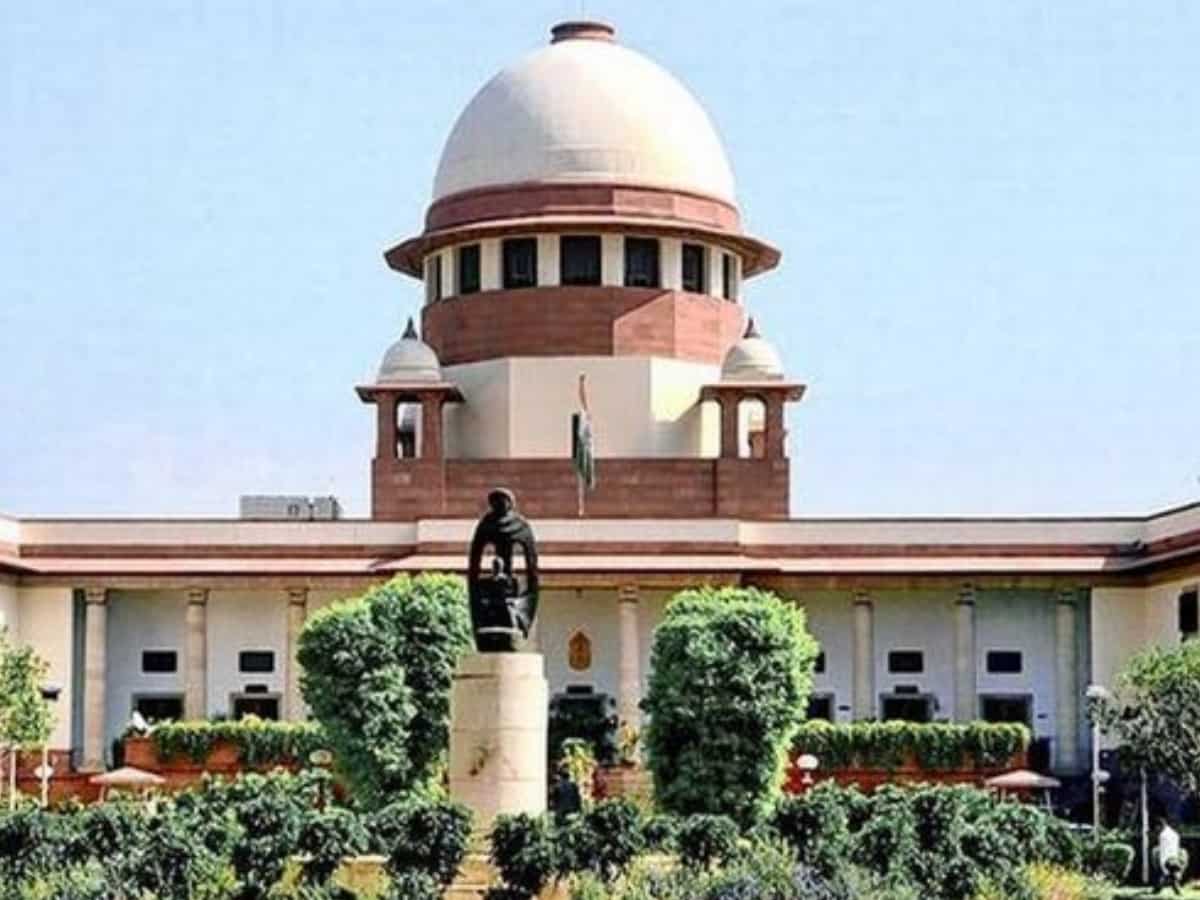
Air India Crash: Probe meant to find causes, not fix blame, says Supreme Court
Published on 13/11/2025 04:10 PM
The Supreme Court on Thursday observed that the ongoing investigation into the Air India flight crash in Ahmedabad on June 12—which claimed over 260 lives—is aimed at determining the causes of the tragedy, not assigning blame.
A Bench comprising Justices Surya Kant and Joymalya Bagchi said the primary objective of the Aircraft Accident Investigation Bureau (AAIB) probe was to ensure that systemic gaps are identified and future accidents are prevented, IANS reported.
The court was hearing petitions filed by the family of late Captain Sumeet Sabharwal, the Pilot-in-Command of the ill-fated flight, and by aviation safety NGO Safety Matters Foundation, which alleged procedural lapses in the AAIB investigation.
Solicitor General Tushar Mehta, appearing for the Centre, clarified that no individual or entity had been blamed for the crash. “There is an international convention and a structured regime under the International Civil Aviation Organisation (ICAO). Foreign representatives are also involved because some victims were from abroad,” he said.
“The Ministry of Civil Aviation has issued a press note that there is no blame attributed to anybody,” Mehta added.
Justice Kant emphasised that the AAIB’s mandate was “not for apportionment of responsibility but to clarify the cause and give recommendations to avoid such cases in future.” He added that “a supplemental government investigation may get into questions of apportionment” if required.
However, Senior Advocate Gopal Sankaranarayanan, representing Captain Sabharwal’s 91-year-old father, argued that “the probe regime has not been properly followed” and called for “an independent and credible investigation.”
Advocate Prashant Bhushan, appearing for Safety Matters Foundation, submitted that the magnitude of the disaster warranted a formal court of inquiry rather than a routine AAIB investigation. “A serious accident that causes loss of lives requires a court of enquiry, not merely an AAIB investigation,” he argued.
Earlier, in its September hearing, the Supreme Court had criticised the “selective leak” of the preliminary AAIB report, which had allegedly led to narratives blaming pilot error. The Bench underscored that confidentiality must be maintained until the investigation is complete.
The apex court also dismissed reports by certain foreign media outlets suggesting pilot fault. “That is nasty reporting. No one in India believes it was the pilot’s fault,” the Bench remarked during an earlier hearing, asserting that the investigation must remain free from speculation or bias.
The matter will next be heard after the AAIB submits its progress report on the ongoing probe.