Bitter cold, dense fog tighten grip on West Bengal after coldest January in 13 years; Kashmir still waits for snowfall — Check IMD forecast
Published on 07/01/2026 04:27 PM
Winter has tightened its grip across large parts of eastern and northern India, with West Bengal experiencing one of its coldest spells in over a decade, while Jammu and Kashmir continues to endure an unusually dry and cold winter that is worrying farmers and residents alike. Weather officials say the conditions are likely to persist over the next few days, bringing dense fog, cold-wave pockets and limited relief from the biting chill.
West Bengal has been gripped by a sharp drop in temperatures, with Kolkata witnessing its coldest day in the last 13 years earlier this week. On Tuesday, the city’s minimum temperature fell to 10.2 degrees Celsius, a level not seen in more than a decade. The cold conditions continued on Wednesday as well, when the minimum settled at 10.3 degrees Celsius, around 3.6 degrees below normal for this time of the year.
According to the Regional Meteorological Centre (RMC) in Alipore, the cold spell is set to linger across south Bengal until at least Saturday. Officials said minimum temperatures may dip further over the next couple of nights before a slight rise of 2 to 3 degrees Celsius is expected over the weekend.
The maximum temperature has also remained well below seasonal norms. On Tuesday, Kolkata recorded a maximum of 18 degrees Celsius, nearly 6.7 degrees below normal. However, clearer skies on Wednesday morning allowed fog to lift relatively early, which could help daytime temperatures inch up marginally.
Colder conditions have been even more pronounced in areas outside the city. Dum Dum, on the outskirts of Kolkata, recorded a minimum of 9.8 degrees Celsius on Wednesday morning. Sriniketan in Birbhum district emerged as the coldest location in south Bengal, with temperatures plunging to 6.6 degrees Celsius.
Weather officials warned that districts such as East Burdwan and Birbhum are likely to experience cold-wave conditions on Thursday, with Birbhum possibly continuing under cold-wave conditions until Friday morning. In addition, several districts are expected to face ‘cold day’ conditions, where both minimum and maximum temperatures remain significantly below normal.
These districts include Hooghly, North 24 Parganas, South 24 Parganas, West Burdwan, Murshidabad and Nadia. Meteorologists clarified that no cold-wave conditions are currently expected in north Bengal.
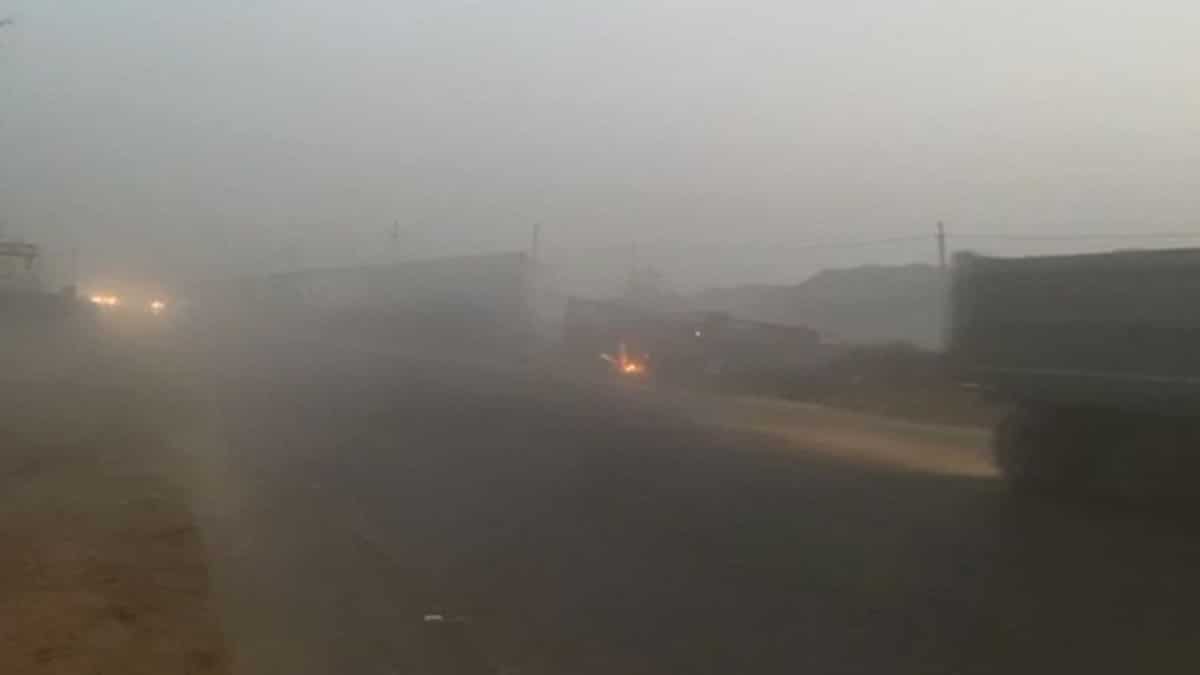
Alongside the cold, fog is emerging as a major concern across south Bengal. All districts, including Kolkata, are likely to remain foggy until Saturday. Visibility in some areas may drop sharply, ranging between 999 metres and as low as 200 metres during early morning hours. Darjeeling and Jalpaiguri districts are also under dense fog warnings, adding to travel concerns in the region.
In Jammu and Kashmir, night temperatures improved marginally on Wednesday due to partial cloud cover, but the broader picture remains one of concern. Srinagar recorded a minimum temperature of minus 1.6 degrees Celsius, while Gulmarg and Pahalgam registered minus 7.6 and minus 7.2 degrees Celsius respectively.
Other parts of the Union Territory also reported cold nights, with Jammu city at 8.7 degrees Celsius, Katra at 6.2, Batote at 3.1, Banihal at 2.3 and Bhaderwah dipping to minus 2.6 degrees Celsius. The Meteorological Department has forecast cold, cloudy and largely dry weather across Jammu and Kashmir till January 20, barring a few weak western disturbances that may bring light snowfall to higher reaches.
The absence of a major snowfall in the Kashmir Valley, particularly the lack of the season’s first snowfall in the plains, has sparked anxiety among residents.
Adding to the concern is the ongoing ‘Chillai Kalan’ - the harshest 40-day winter period which began on December 21 and will end on January 30. Weather experts warn that if significant snowfall does not occur during the remaining days of Chillai Kalan, snowfall in February and March may offer little long-term benefit, as it tends to melt quickly.
The cold and dry weather is already taking a toll on daily life in the Valley. Medical experts have advised people with chest and heart ailments to take extra precautions. Elderly residents and young children have been cautioned against stepping out before 10 am, as the intense morning chill could worsen health conditions.
Ankit Kumar is a Senior Sub Editor at Zee Business, where he writes and edits across economy, international affairs, politics, climate policy, financial markets, business, perso