Budget Update 2026: Cabinet gives green signal to the Budget
Published on 01/02/2026 11:14 AM
The cabinet meeting has taken place, and the Budget has received approval, paving the way for its formal rollout.
The Union Cabinet on Sunday approved the Union Budget 2026–27 at a meeting held in Parliament and chaired by Prime Minister Narendra Modi. The meeting took place at Sansad Bhawan at 10 a.m., clearing the final hurdle ahead of the Budget’s presentation in Parliament.
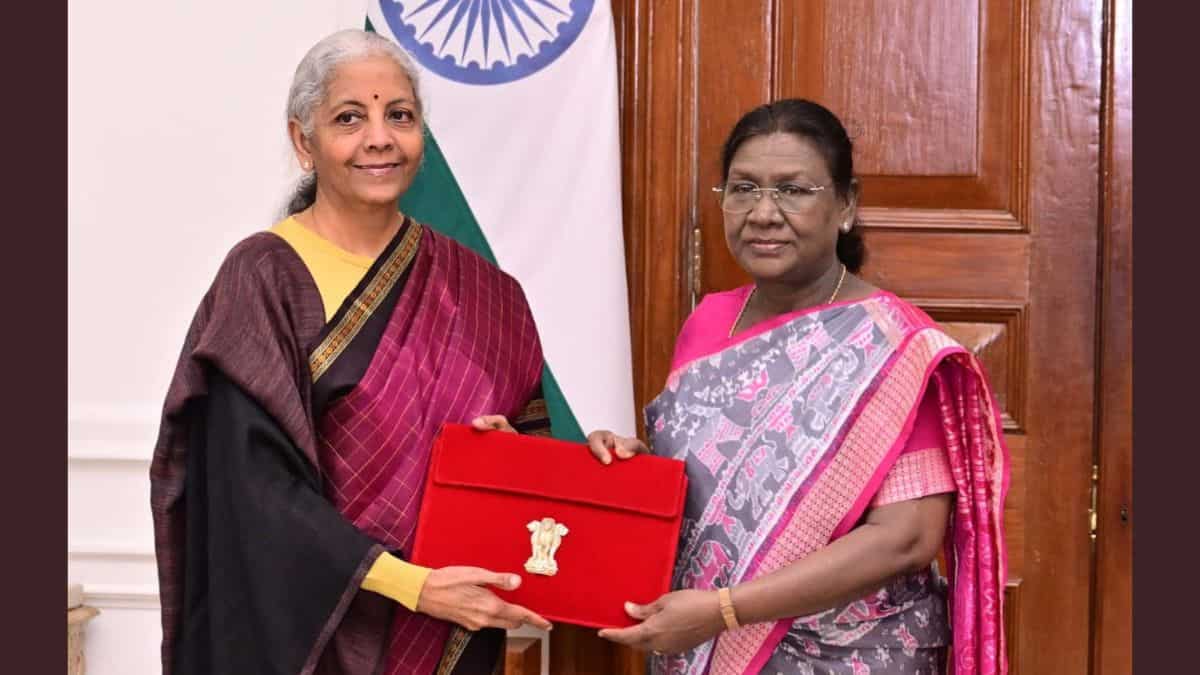
Following the Cabinet’s approval, Finance Minister Nirmala Sitharaman proceeded to Parliament to present the Budget. Earlier in the day, she met President Droupadi Murmu at Rashtrapati Bhavan and presented her with a copy of the digital Budget. As per tradition, the President offered ‘dahi-cheeni’ (curd and sugar) to wish her well ahead of the presentation.
Sitharaman was seen carrying her trademark ‘bahi-khata’—a red pouch holding a digital tablet wrapped in red cloth with a golden national emblem. She switched to a digital format for Budget papers in 2021, reinforcing a modern and eco-friendly approach. The Finance Minister was accompanied by Minister of State for Finance Pankaj Chaudhary, Chief Economic Adviser Dr V. Anantha Nageswaran, CBDT Chairman Ravi Agrawal, and other senior officials.
Sitharaman has delivered her ninth Union Budget presentation at the Lok Sabha through the 2026-27 Budget. She selected a deep maroon Kanjeevaram saree from Tamil Nadu, which had a contrasting border and subtle gold detailing, and she wore it with a yellow blouse.
Economists expect the Budget to strike a careful balance between sustaining growth momentum and maintaining fiscal consolidation. The organisation has developed a plan that will assist them in handling immediate problems that originate from the current unstable international political situation, IANS reported.
Economists predict that the Budget will concentrate on capital expenditure across key sectors, which the government considers vital for national security because of current international relations. The FY26 Budget created tax reliefs to increase middle-class spending, while the FY27 Budget will use targeted methods to raise overall consumption.
Finance Minister Sitharaman will begin presenting the Budget in the Lok Sabha at 11:00 am today. Her speech will take between 90 and 120 minutes to complete, after which she will introduce the Finance Bill.
The Union Budget serves as the government’s primary financial statement through which it establishes its economic goals and budgetary plan for the upcoming fiscal period. Finance Minister Sitharaman will deliver her presentation today, which includes the Government of India's financial projections for the 2026-27 fiscal year. The presentation will reveal expected government revenue, planned government expenditures, and which sectors will receive increased funding and prioritisation.
The Finance Bill serves as an essential document because it gives legal authority to governmental financial plans, while it includes modifications to taxation and duty regulations and all other financial rules, and enables the government to carry out its declared Budget policies. The Budget proposals require Finance Bill passage because they cannot be executed without it.
Salaried taxpayers are tracking Part B (taxation) of Finance Minister Nirmala Sitharaman’s Budget speech, as this is where the most relevant, “kitchen-table” announcements are typically made. Changes to income tax slabs, standard deduction, TDS/TCS norms, capital gains rules, and other fine print that directly impact take-home pay are usually unveiled in this section. Today’s announcements could determine whether salaried incomes actually see a meaningful boost or not.