Cabinet approves Pradhan Mantri Dhan-Dhanya Krishi Yojana; Rs 20,000 crore investment by NTPC to boost renewable energy capacity
Published on 16/07/2025 03:23 PM
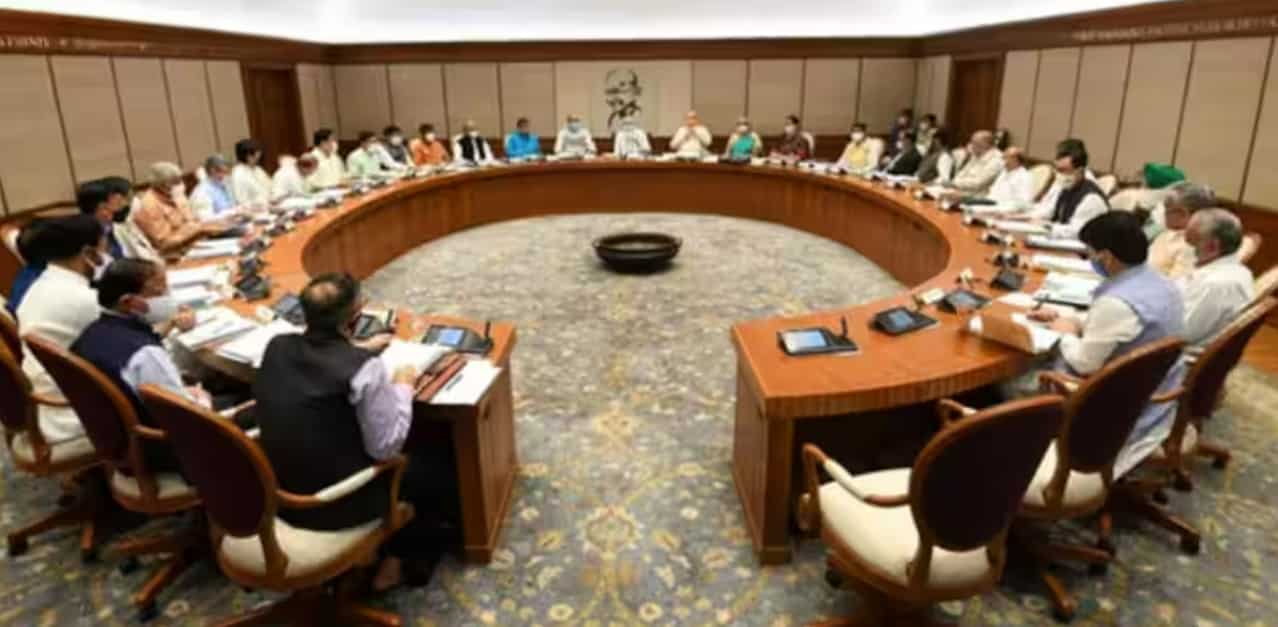
The Cabinet Committee on Economic Affairs (CCEA), chaired by Prime Minister Narendra Modi, on Wednesday, July 16 approved the Prime Minister Dhan-Dhaanya Krishi Yojana. The scheme was initially announced in the Budget for 2025-26. The cabinet has also approved up to Rs 20,000 crore investment by NTPC to boost renewable energy capacity.
The scheme aims to enhance agricultural productivity, increase crop diversification and sustainable agricultural practices, augment post-harvest storage, improve irrigation facilities and facilitate availability of credit. This programme will help 1.7 crore farmers, Union Minister Ashwini Vaishnaw told reporters today after the weekly Cabinet meeting. A financial outlay of Rs 24,000 crore will be earmarked per year, at least for 6 years starting 2025-26.
Motivated by the success of the Aspirational Districts Programme, Finance Minister Nirmala Sitharaman had on February 1 proposed that the government will undertake a 'Prime Minister Dhan-Dhaanya Krishi Yojana' in partnership with states.
It is in pursuance of Budget announcement for 2025-26 to develop 100 districts under "Prime Minister Dhan-Dhaanya Krishi Yojana". The Scheme will be implemented through convergence of 36 existing schemes across 11 Departments, other State schemes and local partnerships with the private sector.
100 districts will be identified based on three key indicators of low productivity, low cropping intensity, and less credit disbursement. The number of districts in each state/UT will be based on the share of Net Cropped Area and operational holdings. However, a minimum of 1 district will be selected from each state.
Committees will be formed at District, State and National level for effective planning, implementation and monitoring of the Scheme. A District Agriculture and Allied Activities Plan will be finalized by the District Dhan Dhaanya Samiti, which will also have progressive farmers as members. The District Plans will be aligned to the national goals of crop diversification, conservation of water and soil health, self-sufficiency in agriculture and allied sectors as well as expansion of natural and organic farming. Progress of the Scheme in each Dhan-Dhaanya district will be monitored on 117 key Performance Indicators through a dashboard on monthly basis. NITI will also review and guide the district plans. Besides Central Nodal Officers appointed for each district will also review the scheme on a regular basis.
As the targeted outcomes in these 100 districts will improve, the overall average against key performance indicators will rise for the country. The scheme will result in higher productivity, value addition in agriculture and allied sector, local livelihood creation and hence increase domestic production and achieving self-reliance (Atmanirbhar Bharat). As the indicators of these 100 districts improve, the national indicators will automatically show an upward trajectory.
As India achieves 50 per cent of its installed electricity capacity from non-fossil fuel sources, the Cabinet also approved enhanced delegation of power to NTPC Ltd for investing in NTPC Renewable Energy Ltd and its other joint ventures/subsidiaries to set up renewable energy capacity with an outlay of up to Rs 20,000 crore.
The Cabinet granted enhanced delegation of power to NTPC Limited from the extant guidelines of delegation of power to Maharatna CPSEs for making investment in NTPC Green Energy Limited (NGEL), a subsidiary company and subsequently, NGEL investing in NTPC Renewable Energy Limited (NREL) and its other JVs/subsidiaries, "beyond the earlier approved prescribed limit of Rs 7,500 crore up to an amount of Rs 20,000 crore for renewable energy (RE) capacity addition to achieve 60 GW capacity by 2032".
According to an official statement, the enhanced delegation given to NTPC and NGEL will facilitate the accelerated development of renewable projects in the country.
"This move will also play a vital role in strengthening power infrastructure and ensuring investment in providing reliable, round-the-clock electricity access across the nation," according to a Cabinet note.
Renewable Energy projects will also generate direct and indirect employment opportunities for the local people at the construction stage as well as during operations and maintenance (O&M) stage.
This will provide a boost to local suppliers, local enterprises/ MSMEs and shall encourage entrepreneurship opportunities within the country, besides promoting employment and socio-economic development of the country.
India has achieved a landmark in its energy transition journey by reaching 50 per cent of its installed electricity capacity from non-fossil fuel sources -- five years ahead of the target set under its Nationally Determined Contributions to the Paris Agreement.
The country is aiming to reach 500 GW of non-fossil energy capacity by 2030.
As a Central Public Sector Enterprise and the leading Power Utility of the Country, NTPC aims to add 60 GW of Renewable Energy Capacity by 2032, which will help the country in achieving the aforesaid target and move towards the larger aim of having 'Net Zero' emissions by 2070.
With inputs from agencies
Get Latest Business News, Stock Market Updates and Videos; Check your tax outgo through Income Tax Calculator and save money through our Personal Finance coverage. Check Business Breaking News Live on Zee Business Twitter and Facebook. Subscribe on YouTube.
LATEST NEWSBy accepting cookies, you agree to the storing of cookies on your device to enhance site navigation, analyze site usage, and assist in our marketing efforts.