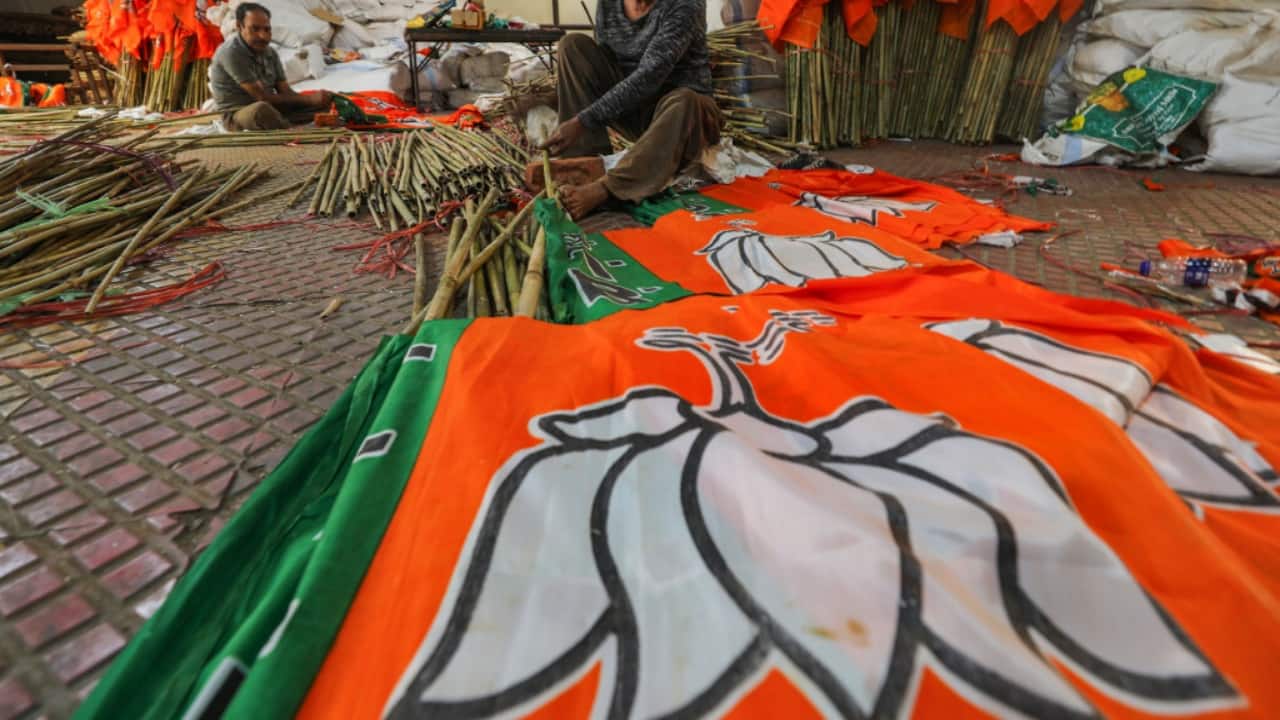
Caste census: Why BJP's big move can be double-edged sword in Uttar Pradesh
Published on 01/05/2025 05:18 PM
In a move laden with political significance, the Narendra Modi-led central government has announced its intent to conduct a caste-based census — a decision that has already begun to reshape the political discourse in Uttar Pradesh, India’s most populous and electorally crucial state. By taking the wind out of the sails of opposition parties such as the Samajwadi Party (SP) and Congress, the BJP has struck a preemptive blow that could have far-reaching consequences for caste dynamics, electoral strategies, and social justice politics.
For decades, the slogan “Jiski jitni sankhya bhaari, uski utni hissedari” (Participation in proportion to population) has been the ideological cornerstone of parties like the SP and the Bahujan Samaj Party (BSP). But now, with the BJP owning the caste census narrative, the traditional parties of social justice find themselves on the backfoot.
“This is a very important phase of Indian politics,” said SP president Akhilesh Yadav. “The caste census will not only shape social and economic policies, but its ripple effect will be deeply felt in Uttar Pradesh.” His party had aggressively raised the issue during the 2024 Lok Sabha elections in alliance with the Congress, positioning itself as the voice of the marginalised. The SP had even begun releasing district-wise data on the representation of PDA — Pichhda (backward castes), Dalit, and Alpsankhyak (minorities) — in administrative services.
The BJP's decision is seen by analysts as a masterstroke timed to impact the upcoming Bihar elections but aimed equally at long-term dominance in states like UP. Deputy Chief Minister Keshav Prasad Maurya and Apna Dal (S) leader Anupriya Patel had been vocal about the need for a caste census. Their persistent pressure, coupled with the political gains observed in the 2024 elections where caste mobilisation shaped voter preferences, likely compelled the central leadership to act.
“In the 2024 general elections, the opposition’s narrative around backward caste empowerment and social justice did find some resonance,” said political analyst Rajeev Srivastava. “By announcing the caste census, the BJP is attempting to neutralize that momentum and recast itself as a party not only of development but also of representation.”
Yet, this bold move could prove to be a double-edged sword. Once the caste data is officially released, there is likely to be a surge in demands for “quota within quota” — especially from numerically smaller or historically overlooked caste groups. This may fracture existing reservation structures and force political parties to engage in more complex negotiations with their support bases.
Senior journalist Manoj Bhadra said, “Caste remains the core of Uttar Pradesh politics. The moment you introduce fresh data, you open the door to new aspirations, new claims, and potentially, new fault lines. The BJP may have blunted the opposition now, but managing the fallout will require extraordinary political skill.”
The BJP is expected to link the census with its long-standing slogan of Sabka Saath, Sabka Vikas, positioning the exercise as a step towards inclusive governance. It hopes to consolidate its growing support among OBCs and Dalits — a shift that became more evident in the 2024 elections. However, the BJP also counts on strong backing from upper-caste communities such as Brahmins, Thakurs, Banias, and Kayasthas. Should the census reflect a lower-than-expected population share for these groups or fuel demands for redistributing reservation benefits, dissatisfaction may brew.
“The general category has historically formed the BJP’s ideological and financial backbone,” said Prof. Ravi Kumar, a retired political science professor from JNU. “Balancing their expectations while addressing the aspirations of the backward and Dalit communities will be a tightrope walk.”
Moreover, if the opposition — especially SP and Congress — manage to portray the BJP’s move as tactical rather than transformative, they may still find electoral space. BSP chief Mayawati, too, has voiced support for caste census intermittently, seeking to reclaim lost ground among Dalits.
“This is not just about data collection,” Srivastava added. “It’s about social power, policy formation, and electoral arithmetic. The caste census has the potential to redraw the lines of Indian politics, especially in a state like Uttar Pradesh, where caste identity is deeply interwoven with governance and daily life.”
As Uttar Pradesh inches closer to its next round of assembly polls, the caste census could become the central issue around which parties will reframe their manifestos, ticket distribution, and alliance strategies. Whether it brings clarity or chaos remains to be seen — but what’s certain is that the caste census is no longer just a demand. It is the new political battleground.
Discover the latest Business News, Budget 2025 News, Sensex, and Nifty updates. Obtain Personal Finance insights, tax queries, and expert opinions on Moneycontrol or download the Moneycontrol App to stay updated!
${res.must_watch_article[0].headline}
Stock Market Holiday MI vs RR Live Score Jammu Kashmir News Live GST Collections in April Heatwave in India Q4 Results 2025 Live Hit 3 Review JKBOSE 10th Result 2025 Kolkata News IPL Points Table 2025
Business Markets Stocks India News City News Economy Mutual Funds Personal Finance IPO News Startups
Home Currencies Commodities Pre-Market IPO Global Market Bonds
Home Loans up to 50 Lakhs Credit Cards Lifetime Free Finance TrackerNew Fixed Deposits Fixed Deposit Comparison Fixed Income
Home MC 30 Top Ranked Funds ETFs Mutual Fund Screener
Income Tax Calculator EMI Calculator Retirement Planning Gratuity Calculator
Stock Markets
News18 Firstpost CNBC TV18 News18 Hindi Cricketnext Overdrive Topper Learning
About Us Contact Us Advisory Alert Advertise with Us SupportDisclaimer Privacy Policy Cookie Policy Terms & Conditions Financial Terms (Glossary) Sitemap Investors
You are already a Moneycontrol Pro user.