Cloud Seeding in Delhi: Did it rain? IIT Kanpur explains what could have gone wrong wrong—Will there be a 3rd attempt?
Published on 29/10/2025 02:05 PM
The much-anticipated attempt to induce artificial rain through cloud seeding over parts of Delhi turned out to be “not completely successful.” According to IIT Kanpur Director Manindra Agrawal, the failure was mainly due to insufficient moisture in the clouds, stressing that cloud seeding is not a permanent fix but an emergency measure for Delhi’s pollution crisis, IANS reported.
The IIT Kanpur team seeded the clouds with a combination of 20 per cent silver iodide and rock salt. On Tuesday, 14 flares were detonated over a 25-nautical-mile path along Khekra-Burari, at 4,000–5,000 feet. Though no rains were significant, experts called the operation a technical success, a milestone for one of India's most sophisticated urban cloud seeding experiments.
As per a preliminary Delhi government report, the trial brought moderate improvements to air quality.
Rainfall: 0.1 mm in Noida and 0.2 mm in Greater Noida
PM 2.5 levels: Fell from 221–230 to 203–207
PM 10 levels: Decreased from 206–209 to 163–177
Delhi Forest and Environment Minister Manjinder Singh Sirsa confirmed that two seeding operations were conducted — in the morning and in the evening — with the help of IIT Kanpur. "The results are yet to be compiled," he replied, stating that the government still wants to look into scientific alternatives to the city's polluting air.
Agrawal explained that cloud seeding must be considered an interim SOS solution during severe pollution crises, not a permanent one. "The permanent solution is to manage the sources of pollution. Ideally, there would be no necessity for cloud seeding when emissions are minimized," he explained.
He further indicated that although the present operating expenses are high, primarily due to flights being flown from Uttar Pradesh, costs may decline substantially in subsequent attempts.
Read Also: Delhi to conduct third cloud seeding trial after IIT Kanpur's second test
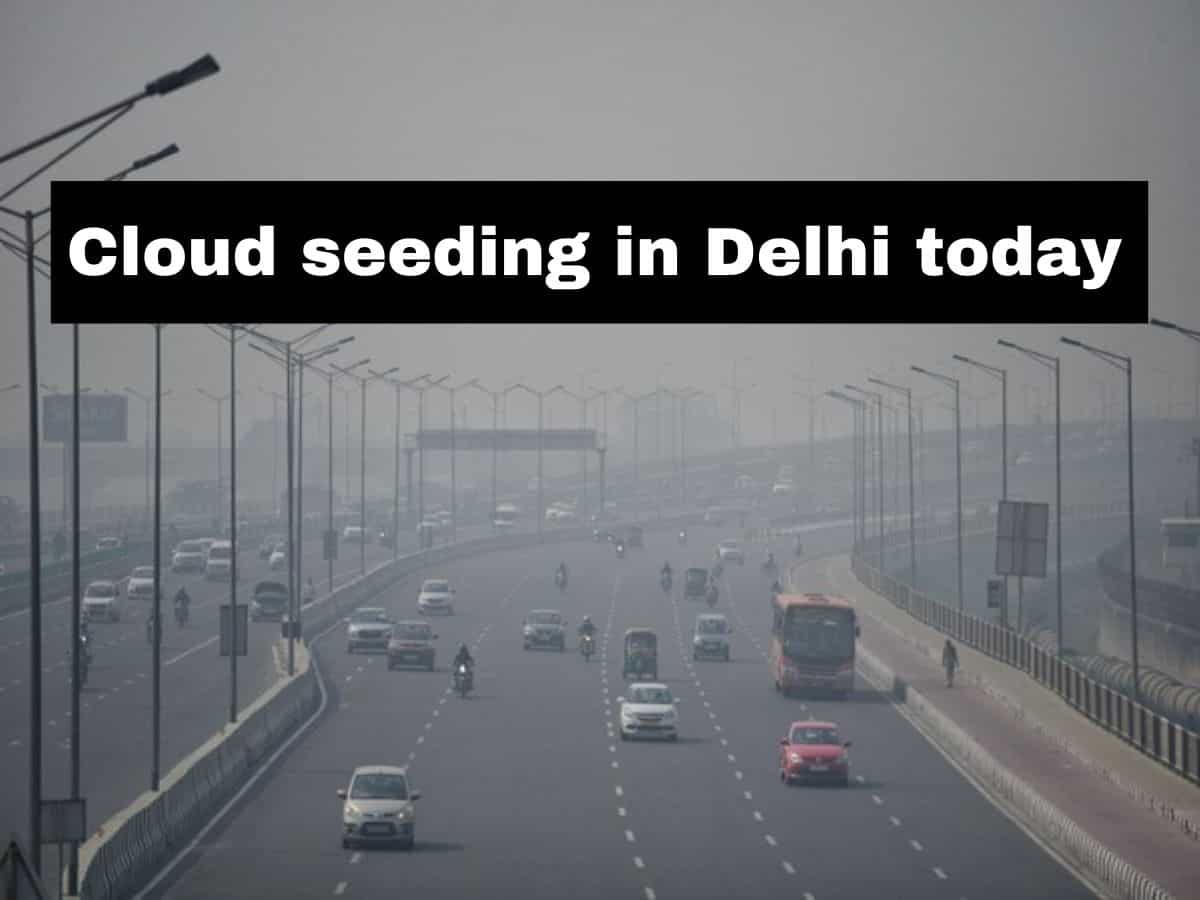
The trial came as Delhi’s AQI remained in the ‘poor to very poor’ range following Diwali celebrations, with thick smog blanketing large parts of the city. Cloud seeding, which involves dispersing particles like silver iodide or dry ice into clouds to trigger rainfall, is often used globally to combat drought and reduce air pollution.
Here’s a look at today’s AQI levels across key cities in the region.
Delhi
What is cloud seeding?
Cloud seeding involves dispersing substances like silver iodide nanoparticles, iodized salt, and dry ice into the atmosphere to stimulate cloud condensation and trigger rainfall. It is often used in regions suffering from water scarcity, or to reduce hail and fog.
Akanksha is a writer who covers personal finance and commodities, with prior experience in cryptocurrency reporting. She has also covered political elections a