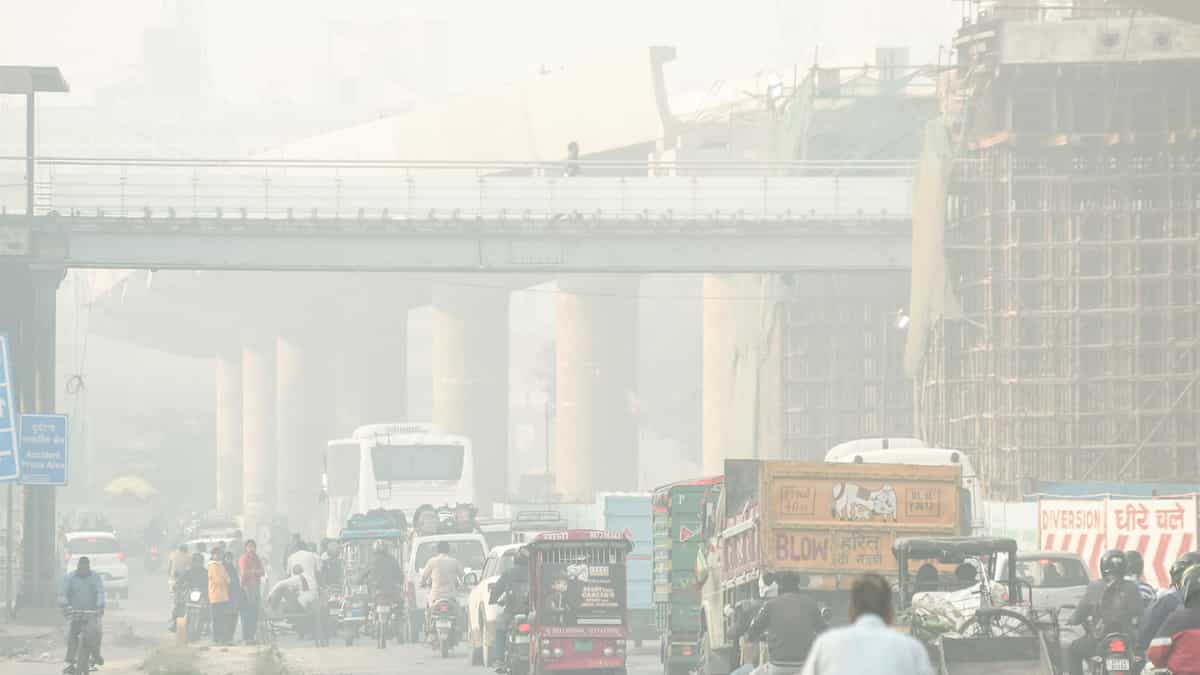
Cold weather keeps Delhi choking as overall AQI falls under 'poor' Category
Published on 07/01/2026 10:34 AM
Delhi experienced severe air pollution problems on Wednesday morning when the cold winter conditions kept hanging over the city.
The Central Pollution Control Board (CPCB) data indicated that the overall Air Quality Index (AQI) for the national capital was 205, which categorized it as ‘poor’.
Different areas in Delhi recorded disturbing pollution levels and the air quality turned out to be uneven plus unsafe in many parts of the city.
Thick smog, which is often associated with winter, was the first thing that greeted the residents together with low visibility, a phenomenon that is seen when pollution levels are high during this period of the year.
Anand Vihar was again one of the most polluted spots in Delhi as per the Delhi Pollution Control Committee (DPCC) it had an AQI of 349. This figure indicates a 'very poor' category of air quality, and thus, the health risks are serious, especially for the infants, the old, and the people with lung or heart diseases.
In addition, Okhla Phase-2 also indicated that there were harsh levels of pollution with an AQI of 342 (DPCC), while Sirifort was following quite closely with an AQI of 342 as well, according to the CPCB data.
All these measurements reveal that the air is highly polluted, and thus, anyone in the vicinity for a long time will experience breathing difficulties and may also have their health problems exacerbated.
The industrial zones still indicated the alarming situation of air quality. Wazirpur and Punjabi Bagh were two of the places where the air quality was 'very poor' with AQI of 324 (DPCC) and 320 respectively.
Dwarka Sector-8 was also one of the polluted areas with an AQI of 331, making it another area of concern in the city regarding pollution.
According to the data provided by IMD, Burari Crossing had the highest level of pollution among all the monitored locations showing an AQI of 270. This area is still classified as poor, but, it is very unhealthy for sensitive groups and they must take precautions.
The site around Indira Gandhi International Airport (Terminal 3) was the least polluted area in the whole city. The IMD reported that its AQI was 241, which put it in the ‘poor’ category but still better than many residential and industrial zones, therefore, health experts still recommend caution for the long duration of outdoor activities.
Cold weather is a significant factor in the enhancement of pollution levels.
Delhi's winter has been the primary reason for the pollutants being stuck at ground level; the city is under a heavy shroud of smog.
The low temperature, still air, and high humidity prevent dispersal of air pollutants, thus resulting in the accumulation of the toxins in the air. The meteorologists are optimistic that such weather patterns will continue to prevail and thus the levels of pollution will remain high.
Health professionals have recommended the public to stay indoors particularly at sunrise and dusk when the pollution levels are at their highest. The use of masks, air purifiers in living spaces, and drinking plenty of water are the top suggestions.
The polluted air problem in Delhi and the northern areas like Kashmir having the coldest and driest weather are two sides of the same coin, thus showing the sharp contrast in winter problems throughout the country.