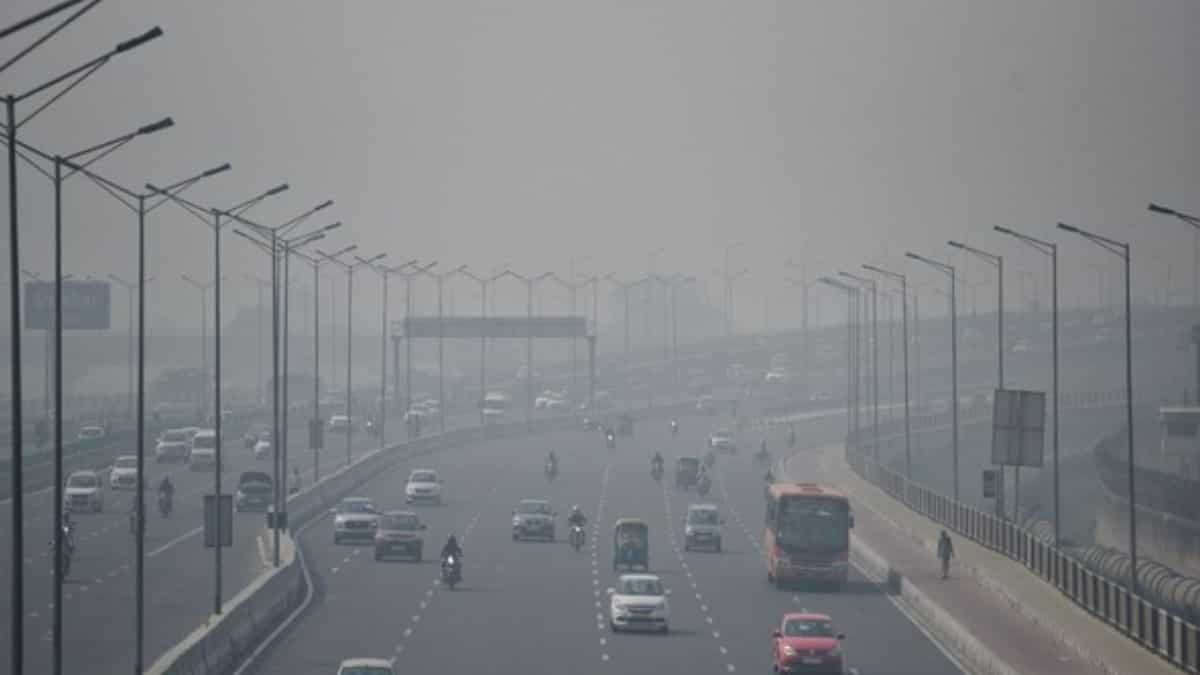
Delhi government steps up health measures amid worsening air quality
Published on 20/12/2025 03:48 PM
Delhi Minister Pankaj Kumar Singh on Saturday detailed the measures being taken to safeguard public health as the city battles deteriorating air pollution. Authorities have issued health advisories and ensured the availability of essential medicines in hospitals to treat respiratory ailments.
“We have issued advisories and ensured that all essential medicines are available in hospitals. There is no shortage of supplies, and patients who come in are being provided immediate and proper treatment for respiratory problems,” Singh told IANS, highlighting the government’s preparedness to manage pollution-related health risks.
As per the data from the Central Pollution Control Board (CPCB), the air quality in Delhi and the National Capital Region (NCR) has become worse, as indicated by the AQI levels that often fall within the 'very poor' to 'severe' category. The city's problem with smoke and dust falling in the air has not only made the situation worse but also caused concern for the affected population regarding their breathing and heart health.
The authorities have resorted to the implementation of the Graded Response Action Plan (GRAP), which is a set of actions taken to curb air pollution whenever the air quality is declared hazardous. Under GRAP, some schools can be allowed to close, construction work is controlled and emission from vehicles and industries is reduced.
Also Read: Delhi govt's big decision for construction workers hit by GRAP curbs, announces Rs 10,000 compensation: Check details
Municipal bodies and hospitals are to strictly follow government advisories regarding healthcare readiness as dictated by the city administration. This rational use of medicines for respiratory conditions is included in the case of both children and adults. The IMD (India Meteorological Department) is also involved in public health alerts and early-warning systems for the sharing of information to help residents prepare for severe pollution episodes. However, the authorities keep on advising that the vulnerable groups like the elderly, children, and those with pre-existing medical conditions should limit their outdoor activities during peak smog hours.
Environmental specialists emphasise that the long-term factors of air quality-poor, consisting mainly of vehicular emissions, construction dust, and seasonal change are still the most significant health challenge. Although the government claimed that there was no direct link between AQI levels and long-term lung disease, the medical community admitted that air pollution not only provokes respiratory conditions but is also a major health risk.
Also Read: ‘Total failure’: Supreme Court slams Delhi pollution measures, says ad-hoc steps won’t work
Indira Gandhi International Airport (IGI) issued a passenger advisory on Saturday as fog continued to blanket the capital. Low visibility procedures remain in effect, though all flight operations are continuing.
"Low Visibility Procedures are still in progress at Delhi Airport. All flight operations are functioning normally. Passengers are advised to contact their respective airlines for the latest flight updates," the airport said in a 7:00 am statement.
Earlier, the airport reported that cold weather and dense fog had affected flight operations on Friday, though visibility was gradually improving.
"Flight operations were earlier impacted by dense fog; however, visibility is now improving. Arrivals and departures are continuing, though some delays may still occur. Our on-ground staff is coordinating with all stakeholders to assist passengers across the terminals. For the latest flight status, please check with your airline or visit Delhi Airport's official website. We regret the inconvenience and thank you for your understanding," the statement added.
Delhi’s air quality continued to worsen on Saturday morning, with an overall AQI of 384 at 8 am, placing it in the 'very poor' category, according to CPCB data. AQI readings at 3 pm at several city locations were as follows:
According to AQI categorisation, 0–50 is 'good', 51–100 'satisfactory', 101–200 'moderate', 201–300 'poor', 301–400 'very poor', and 401–500 'severe'.