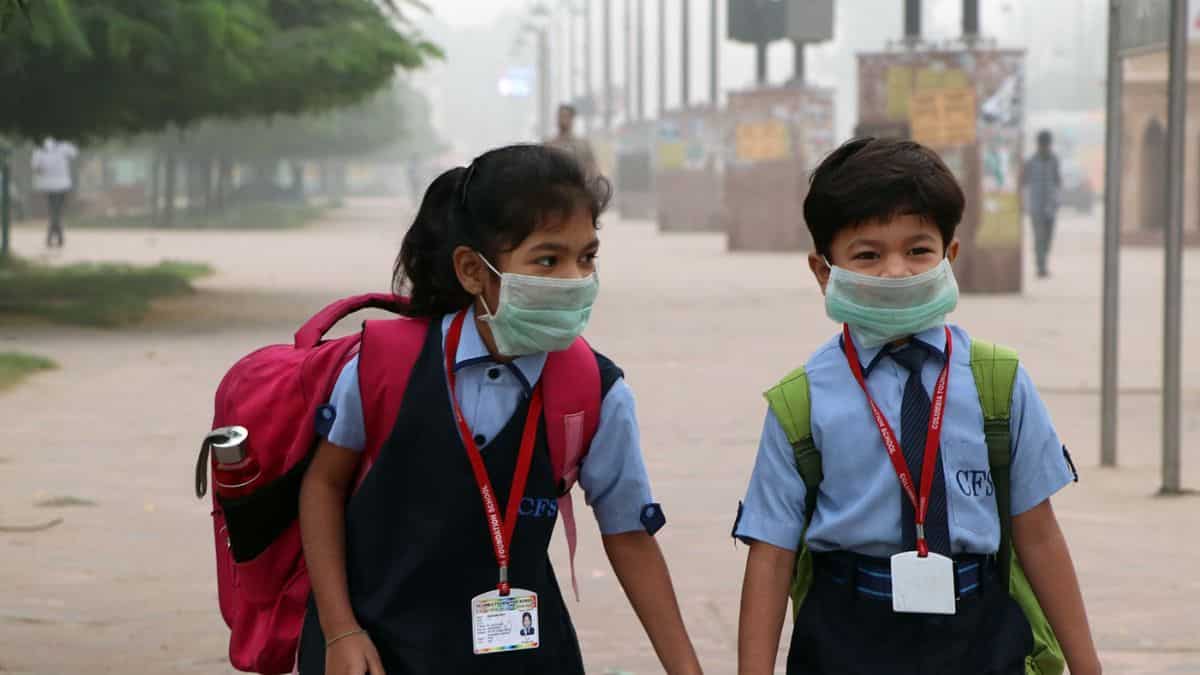
Delhi Pollution Crisis: Supreme Court steps in; seeks postponement of school sports activities
Published on 19/11/2025 05:00 PM
The national capital region remains affected by the extremely poor air quality, the Supreme Court has recommended that all school sports activities planned for the month of November and December to be postponed to later.
The court made this recommendation after stressing that children are highly exposed to the effects of severe pollution, with several areas recording an Air Quality Index (AQI) above 450. Places like Wazirpur and Greater Noida’s Knowledge Park-5 reported AQI levels above 550, leading to unsafe conditions for outdoor activities.
Many schools in Delhi have moved primary classes to a hybrid format under GRAP Stage 3 to reduce students exposure to pollution.The court also directed that the public interest litigation (PIL) related to Delhi’s air quality should be heard every month.
This change is meant to ensure that pollution control efforts are monitored throughout the year, instead of only during the winter season when the situation becomes critical. According to the bench, monitoring the progress regularly is essential to ensure that pollution-control measures are actually implemented and not forgotten once the peak season passes.
In addition to children’s safety, the court focused on the challenges, pollution-control measures create for workers. It ordered the governments of Delhi- NCR, to provide aid for construction workers disturbed by the GRAP Stage 3 restrictions. The court stressed that while strong measures are needed to address pollution, they should not harm the livelihoods of people who depend on their daily wages.
The court further added the need for long-term and sustainable solutions to Delhi’s pollution crisis. It stated that short-term measures that do not last for weeks cannot solve the issue, and that a clear plan is required to gradually reduce pollution every year.
Simultaneously, the India Meteorological Department expects the skies to remain hazy for the next two days, which suggests little immediate improvement.
The increasing pollution has made residents more frustrated prompting several social groups, students, and local communities to protest and demand stronger and faster action from the authorities.