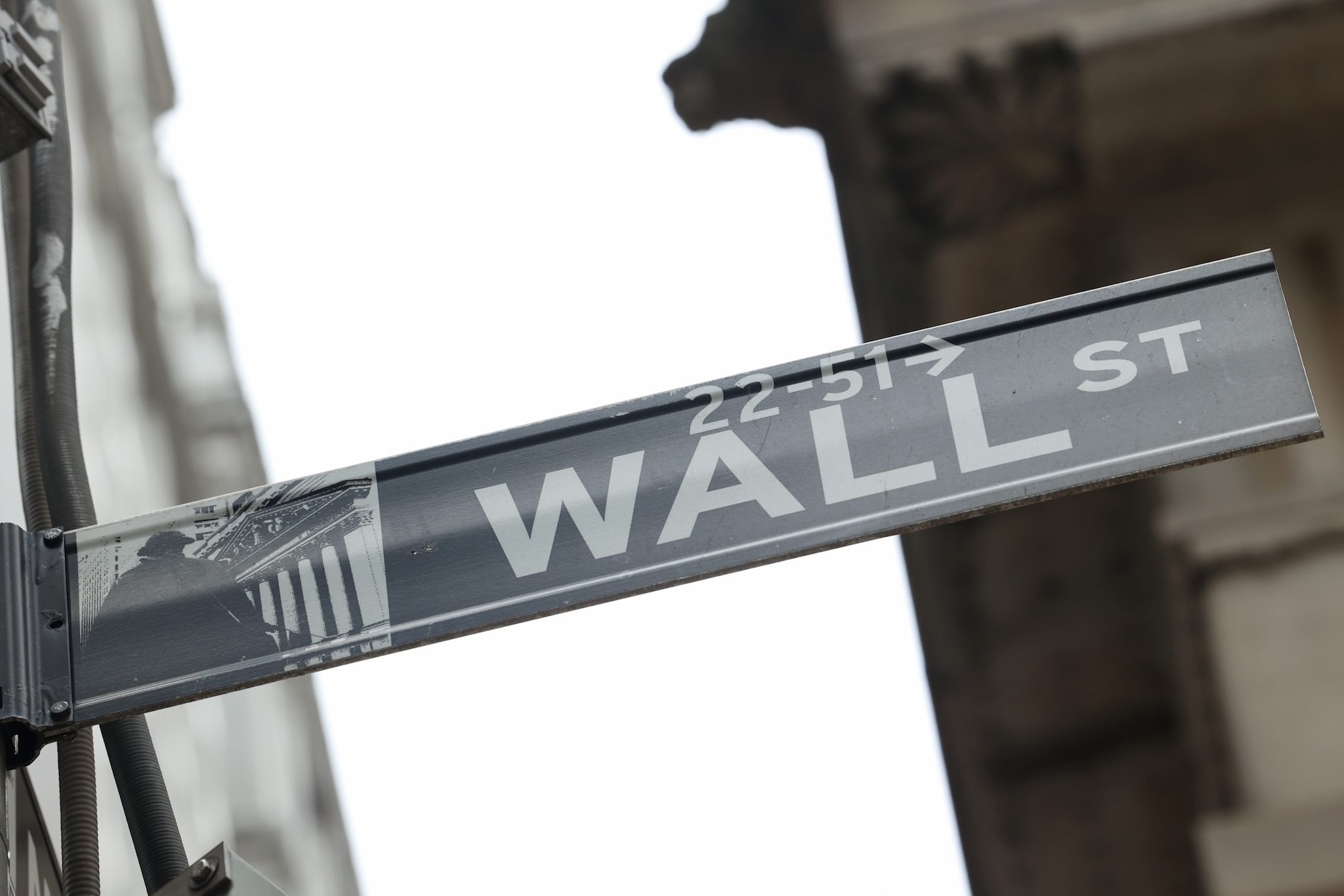
Dow Jones Today | US Stock Market Highlights: Dow slides 600 points as Iran war jitters push Nasdaq into correction
Published on 21/03/2026 01:37 AM
We will now wrap up the blog. Good night, folks!
US Stocks extended their losses on Friday (March 20) as tensions between the US, Israel and Iran persisted, driving a sharp surge in oil prices. The Dow Jones Industrial Average fell 446.51 points, or 0.97%.
The S&P 500 declined 1.51%, while the Nasdaq Composite dropped 2.01%. The small-cap Russell 2000 entered correction territory, marking a 10% fall from its recent peak, with the Dow and Nasdaq also nearing similar levels.
Bond traders are scrambling for a new strategy after the oil-driven inflation shock triggered by the war in Iran scuppered the popular bet on interest-rate cuts from the Federal Reserve.
The trade suffered a total blowout this week as warnings from key central banks on inflation sent short-maturity yields soaring, and as traders fully erased expectations for further Fed easing in 2026.
By Friday, with global benchmark oil prices holding around the highest since 2022, the sentiment had flipped to such a degree that at one point, traders even saw a 50% chance of a Fed rate hike by October.
Stocks sold off on Friday (March 20), with declines intensifying into the final hour of the session as traders grappled with escalating conflict in the Middle East and higher oil prices.
The Dow Jones Industrial Average shed 630 points, or 1.4%. The S&P 500 fell 2%, while the Nasdaq Composite lost 2.6%. The Dow, the Nasdaq and the small-cap Russell 2000 all slipped into correction territory — that is, a 10% decline from their latest high.
The Dow is set to record its longest weekly negative run in years. The blue-chip index is tracking to finish the week down nearly 2%. It would mark the 30-stock average’s fourth straight down week, a first since 2023.
Goldman Sachs says that consumer staples stocks will be disproportionately hit by rising oil prices.
“Within our coverage, we see the highest risk to our CY26 EPS estimates for PRMB & COTY from rising oil-related input costs, followed by other beauty & HPC companies owing to a more structural reliance on oil & oil derivatives (e.g., petrochemicals/resins) as part of the manufacturing process,” analyst Bonnie Herzog wrote.
US officials say the White House is sending hundreds of Marines to the Middle East as it weighs a plan to seize Iran’s Kharg Island oil export hub. Deploying even a small number of troops on the ground in Iran carries huge risks for President Donald Trump.
Any effort to seize and hold Iran’s energy facilities would put US troops in far greater danger than they’ve already been exposed to so far in the conflict, which has seen 13 US fatalities to date. It would also add to the cost and scope of the conflict beyond an air campaign.
Turmoil in the Middle East sparked fresh losses across stocks and bonds amid worries about the spillover effects of elevated energy costs to inflation and economic growth, with hostilities showing no signs of a letup.
The S&P 500 fell 1.5%, set for its longest weekly slide in a year. The drop accelerated as CBS reported the US is preparing to deploy ground forces into Iran. Brent topped $112.
A rout in Treasuries deepened, with traders pricing in a 50% chance of a Federal Reserve hike by October. The UK’s 10-year yield hit 5% for the first time since 2008. Gold headed for its worst week in four decades.
SoftBank Group Corp. is working to build a massive AI data center on federally owned land in Ohio that it’s planning to power with roughly $33 billion worth of natural gas-fired electricity to be installed by the end of the decade.
SoftBank is seeking to build the AI computing complex, capable of drawing 10 gigawatts of power, at a former uranium enrichment complex owned by the US Energy Department, according to a statement issued Friday.
For context, a single gigawatt of capacity can power roughly 750,000 homes at any given moment. The company expects the first phase of the data center project to include about 800 megawatts of power, cost $30 billion to $40 billion and be completed in early 2028.
A roller-coaster day for oil prices showed how they are dictating where financial markets and maybe even the global economy are heading. Stocks tumbled in Europe and Asia when oil prices shot higher early on Thursday, but U.S. stocks pared their sharp losses as the day progressed and oil prices fell back.
The morning began with the shock of Brent crude, the international standard, briefly rising above $119 per barrel, up from roughly $70 before the war with Iran began.
The jump followed intensified attacks by Iran on oil and gas facilities around the Persian Gulf in response to an Israeli attack on an important Iranian natural gas field. They worsened fears that the war could knock out oil and gas production in the Middle East for a long time, which would mean high prices could last a while and cause inflation to rip higher around the world.
Roblox Corp. will take a share of revenue from sponsorships in its games as part of a major overhaul of its advertising policies.
Starting May 4, the company will update its guidelines to provide more clarity around what an ad is on the platform, according to a memo Roblox shared. Content will be identified as an ad if it involves compensation from a brand or promotes an off-platform product.
Travellers getting an early start to the weekend faced a rude awakening on Friday when they ran into long, snaking security lines at select airports, including those in Houston and Atlanta.
Social media was abuzz with posts about queues that at times backed up to baggage claim. George Bush Intercontinental Airport in Houston and Hartsfield-Jackson Atlanta International Airport were among the worst, with morning wait times as long as three hours and more than an hour, respectively.
The disruptions come amid an ongoing partial government shutdown affecting the Department of Homeland Security, with lawmakers at an impasse over new guardrails for immigration enforcement. The funding lapse means airport screeners at the Transportation Security Administration, which is part of DHS, are working without pay, leading to higher rates of workers calling off the job.
US stocks declined for a third day on Friday as earlier hopes for a quick resolution to the war in the Middle East faded. Meanwhile, traders braced for a historic amount of March options expiry.
The S&P 500 Index fell 1% as of 1:53 p.m. in New York, on course for a fourth week of losses — the longest losing streak in a year. Energy and financials were the only sectors in the green with the consumer discretionary and tech among the biggest losers.
Tech-heavy Nasdaq 100 declined 1.6%, set for the lowest close since September, dragged down by Nvidia Corp. and Micron Technology Inc. Brent crude oil prices climbed to $111 while the Cboe Volatility Index rose to around 26.
Oil headed for another weekly gain as the Iran war raged on, with the Strait of Hormuz all but closed, attacks continuing across the region, and analysts warning the crisis may deepen.
Brent traded above $110 a barrel, up by about 7% this week, after closing at the highest since mid-2022 on Thursday. The most active US crude futures traded near $98 a barrel, and both benchmarks sharply rose after Bloomberg reported Iranian officials have become reluctant to even discuss reopening the Strait of Hormuz as they focus on surviving the US-Israeli onslaught.
In a Friday note from the Chief Investment Office of UBS Global Wealth Management, the firm wrote that it’s sticking to a bullish view by end of year.
“Looking ahead, we maintain a constructive view on markets, and expect global equities to rise by end-2026 but with periodic bouts of volatility, as investors digest economic, technological, and geopolitical developments,” strategist Sagar Khandelwal penned.
Iranian officials have become reluctant to even discuss reopening the Strait of Hormuz as they focus on surviving the US-Israeli onslaught, according to a person involved in direct, high-level contacts with Tehran.
Energy infrastructure attacks and strikes on high-profile Iranian officials, including the killing of security chief Ali Larijani, mark an escalation that is slowing attempts to get commercial ships moving again, the person added, speaking anonymously to discuss private talks.
Gold prices saw a mild rebound on Friday, but the recovery lacked conviction. Silver, meanwhile, remained under pressure after a sharp sell-off in the previous session.
Spot gold edged slightly higher, while futures posted modest gains. But the bigger picture remains weak—both metals are on track for significant weekly losses, with gold down nearly 9% and silver falling more than 10%.
The backdrop is clear: rising uncertainty around the economic fallout of the Iran conflict has triggered a broader sell-off across asset classes. Even traditional safe havens like gold haven’t been immune.
Silver’s sharper decline reflects its dual role as both a precious and industrial metal, making it more vulnerable when growth concerns rise.
The brief rebound in European markets didn’t last long. Stocks slipped back into the red on Friday as rising oil prices and cautious signals from central banks rattled investor confidence.
The pan-European Stoxx 600 erased early gains to fall sharply, with all major sectors and markets trading lower. The trigger? A familiar one—energy. Oil prices surged earlier in the session, briefly touching $119 a barrel, reigniting fears of an inflation shock as tensions in the U.S.-Iran conflict persist.
That’s the problem markets are grappling with right now. Higher oil means higher costs across the economy—fuel, transport, manufacturing—all feeding into inflation just when central banks are trying to keep it under control. Even corporate news added to the gloom, with Smiths Group shares sliding after disappointing results.
US authorities have charged several individuals linked to a server maker with illegally diverting billions of dollars worth of Nvidia-powered servers to China, in a major escalation of tech export enforcement.
The indictment, unsealed by the Southern District of New York, alleges a coordinated effort to bypass US export controls designed to restrict advanced chips from reaching China. Among those named is Yih-Shyan “Wally” Liaw, a co-founder of Super Micro Computer.
The case highlights Washington’s growing concern over how high-performance chips are slipping through restrictions, even as US AI firms face rising competition from Chinese players.
Markets reacted sharply. Shares of Super Micro plunged 25% following the news, underscoring the high stakes of regulatory scrutiny in the global chip war.
At its core, this isn’t just a legal case—it’s part of a broader battle over who controls the future of artificial intelligence.Liquefied natural gas (LNG) exporters extended gains on Friday, capping a strong week after Iranian missile strikes reportedly caused “extensive damage” to Qatar’s Ras Laffan Industrial City, the world’s largest LNG export hub.Shares of Venture Global, NextDecade, and Cheniere Energy climbed 10%, 9%, and 2%, respectively.For the week, the stocks are up 20%, 37%, and 14%, while month-to-date gains stand at 62%, 46%, and 22%.
The bank will convert UBS Bank USA into a nationally chartered bank to expand its North America presence.
Shares slipped about 2% after the announcement.
UBS says the move will strengthen its US platform and support future growth.
The broader banking sector has been under pressure, with names like Citigroup, JPMorgan Chase, and Bank of America all down in recent weeks.
The bank upgrades the stock to “buy” from “hold,” citing lower Middle East exposure than peers.
HSBC also lifts its price target to $215, pointing to modest upside from current levels.
Analyst Kim Fustier says Chevron looks more attractive than ExxonMobil, trading at a discount with better leverage to rising oil prices.
Shares are already up about 32% this year.
CNBC
UK government borrowing costs have jumped to their highest levels since the 2008 financial crisis, as investors brace for rising inflation and possible interest rate hikes.
The yield on the benchmark 10-year gilt crossed the 5% mark on Friday, climbing sharply amid a broader sell-off in bonds. Short-term borrowing costs have also surged, with the 2-year yield rising even faster.
The spike comes as markets reprice risks linked to the escalating Iran conflict, which has pushed up energy prices and stoked inflation concerns. In just over two weeks, 10-year yields have jumped significantly, reflecting a rapid shift in investor expectations.
Since bond prices move inversely to yields, the sharp rise signals heavy selling pressure in UK government debt.
The move underscores growing unease in financial markets, as higher borrowing costs could weigh on economic growth and government finances in the months ahead.
FedEx shares jumped over 7% in premarket after a strong third-quarter beat.The bank kept its “buy” call and raised its price target to $440, pointing to more than 20% upside.Analyst Ken Hoexter flagged higher fiscal 2026 guidance and the company’s biggest US market share gains in two decades.He also pointed to network improvements, better pricing, and a planned freight spin-off as key positives.Bottom line: FedEx is gaining share and tightening costs, even as global trade stays shaky.
Costco Wholesale could emerge as an unlikely beneficiary of rising fuel prices, even as higher costs strain consumer budgets, according to Gordon Haskett.
The brokerage maintained its “buy” rating on the stock, noting a sharp uptick in traffic at Costco gas stations in early March, coinciding with a surge in fuel prices amid the ongoing Iran conflict. Analyst Chuck Grom said footfall accelerated as prices climbed more than 15% through mid-March.
While elevated fuel costs typically act as a drag—raising logistics expenses and squeezing household spending—Costco appears relatively insulated. Its higher-income customer base and strong value proposition tend to draw more traffic during inflationary periods.
Historically, the retailer has seen increased demand when fuel prices rise, as consumers look to save on essentials like gasoline.
Gordon Haskett has set a $1,200 price target on the stock, implying about 23% upside from current levels.
Wall Street is staring at its fourth straight week of losses, but the mood isn’t quite as bearish as the numbers suggest. The S&P 500, Dow, and Nasdaq have all edged lower, with the Dow and Nasdaq now uncomfortably close to correction territory.
Yet, despite the ongoing geopolitical tensions, markets seem to be pricing in resilience rather than risk. That’s where the disconnect lies.
According to market voices like Bob Elliott, investors may be underestimating the economic hit from the conflict. Rising costs and uncertainty are quietly eroding household purchasing power—by as much as 1–2% in real terms.
Short-end Treasuries headed for a fourth day of declines on Friday as global benchmark oil prices above $100 a barrel reinforced fears of an inflation surge.
US two-year yields, which are among the most sensitive to monetary policy, climbed as much as 10 basis points to 3.89% before paring the rise to 3.85%.
Money markets have begun to price in a risk that the Federal Reserve will raise interest rates this year, abandoning their expectation from before the Feb. 28 start of the Iran war for two quarter-point cuts.
Copper and other industrial metals traded in a narrow range as the US and Israel tried to ease concerns about the deepening conflict in the Middle East,
The war in the Persian Gulf has dented the demand outlook for industrial metals, with copper and aluminium selling off heavily on Thursday on fears that higher energy prices would result in a global economic slowdown.
The conflict has also roiled markets by threatening a wave of supply disruptions, especially in a global aluminium market that gets about a 10th of its output from the region.
The Trump Organisation’s lawsuit accusing Capital One Financial Corp. of illegally closing its accounts in 2021 for political reasons is set to face a key test in a Florida courtroom.
A federal judge in Miami is holding arguments on Friday on Capital One’s request to toss out the so-called de-banking suit. The civil complaint was filed a year ago by President Donald Trump’s sprawling real estate company and its executive vice president, his son Eric Trump.
Capital One argues the suit should be dismissed because Trump’s business has failed to demonstrate that it has any evidence backing its theory about why the accounts were closed a few months after Trump’s first term ended. The bank in court filings has called the claims “threadbare.”
Gold rose on Friday (March 20), rebounding off a two-month low as a stronger US dollar and a more hawkish Federal Reserve weighed on the precious metal.
Spot gold rose 0.5% to $4,670.89 per ounce, rebounding from a near two-month low hit in the previous session. US gold futures for April delivery rose 1.4% to $4,668.90.NewsLive TVMarketPopular CategoriesCalculatorsTrending NowLet's Connect with CNBCTV 18Network 18 Group :©TV18 Broadcast Limited. All rights reserved.