Exclusive: HAL may miss 2026 Tejas delivery target; indigenous radar dropped
Published on 29/10/2025 03:36 PM
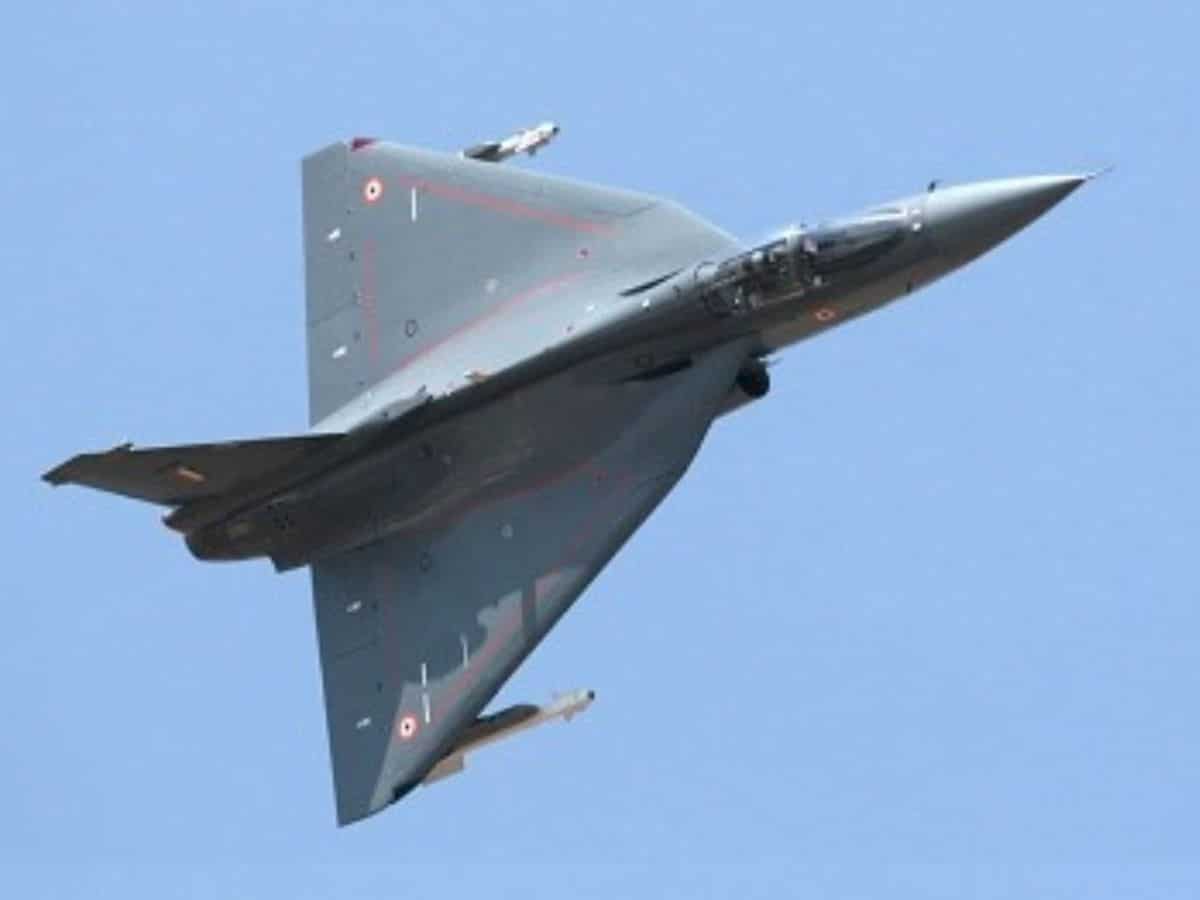
Hindustan Aeronautics Limited (HAL) is likely to miss its 2026 delivery target for the Tejas Mk-1A fighter jet programme, highly placed sources told Zee Business. The delay comes amid technical challenges, slipping production schedules, and growing concerns within the Indian Air Force (IAF) about the aircraft’s combat readiness and mission capability.
According to the sources, the indigenous content in the Mk-1A variant has declined, primarily due to the inability to integrate the Uttam Active Electronically Scanned Array (AESA) radar developed by DRDO’s LRDE. In its place, HAL has installed the Israeli Elta EL/M-2052 radar, resulting in a reduced level of indigenization in what was envisioned as a flagship ‘Make in India’ platform.
“We want an aircraft that is war-worthy, not just fly-worthy. The Air Force needs a fighter capable of surviving and winning in real combat — not merely passing technical checklists," a senior official directly involved in the Tejas Mk-1A programme told Zee Business.
The remark captures the IAF’s growing emphasis on battlefield performance and operational reliability over rushed production timelines.
Delivery delays and production backlog
HAL has so far delivered 38 out of 40 Tejas Mk-1 aircraft ordered under the first two contracts, while two units remain undelivered.
The initial contract signed in March 2006 for 20 aircraft (IOC configuration) was scheduled for completion by 2011, while the second order in December 2010 for another 20 (FOC configuration) was expected by 2016. Both deadlines were missed.
The largest contract, signed on February 3, 2021, covers 83 Tejas Mk-1A aircraft -- 73 fighters and 10 trainers -- worth Rs 45,696 crore. The first Mk-1A delivery, initially targeted for March 2024, has now been postponed to March 2026.
However, sources suggest that even this revised schedule may face further slippage.
IAF’s concerns and capability gaps
Officials within the IAF have expressed concerns that the Mk-1A still falls short on key performance parameters, including avionics integration, radar performance, and electronic warfare capabilities.
The failure to operationalise the indigenous Uttam radar and the subsequent reliance on the Israeli Elta system have not only lowered the indigenous component of the aircraft but also raised questions about the maturity of India’s domestic radar development efforts.
Engine supply delays and integration challenges have compounded the issue, slowing both testing and certification processes. “The fighter must not only fly — it must fight. That’s where the gap still exists,” said a senior IAF official.
The symbol of ‘Atmanirbhar Bharat’ under pressure
The Tejas project, regarded as a symbol of India’s Atmanirbhar Bharat and Make in India missions, was meant to showcase India’s ability to design, develop, and manufacture an indigenous 4.5-generation combat aircraft.
However, repeated schedule overruns, dependency on imported subsystems, and limited production capacity have undermined confidence in the programme’s execution. HAL’s production rate -- and its ability to deliver a combat-ready platform -- will be critical in determining whether India can sustain its indigenous fighter ecosystem in the coming decade.
HAL did not respond to Zee Business’s email seeking comment on the delivery delays and the radar substitution.
HAL shares
The HAL stock traded 0.7 per cent lower at Rs 4,690.9 apiece on BSE, having seesawed in a range of Rs 4,684.4-4,747.7 in intraday trade.