Explainer: What's at stake in Singapore's May 3 election?
Published on 30/04/2025 10:55 AM
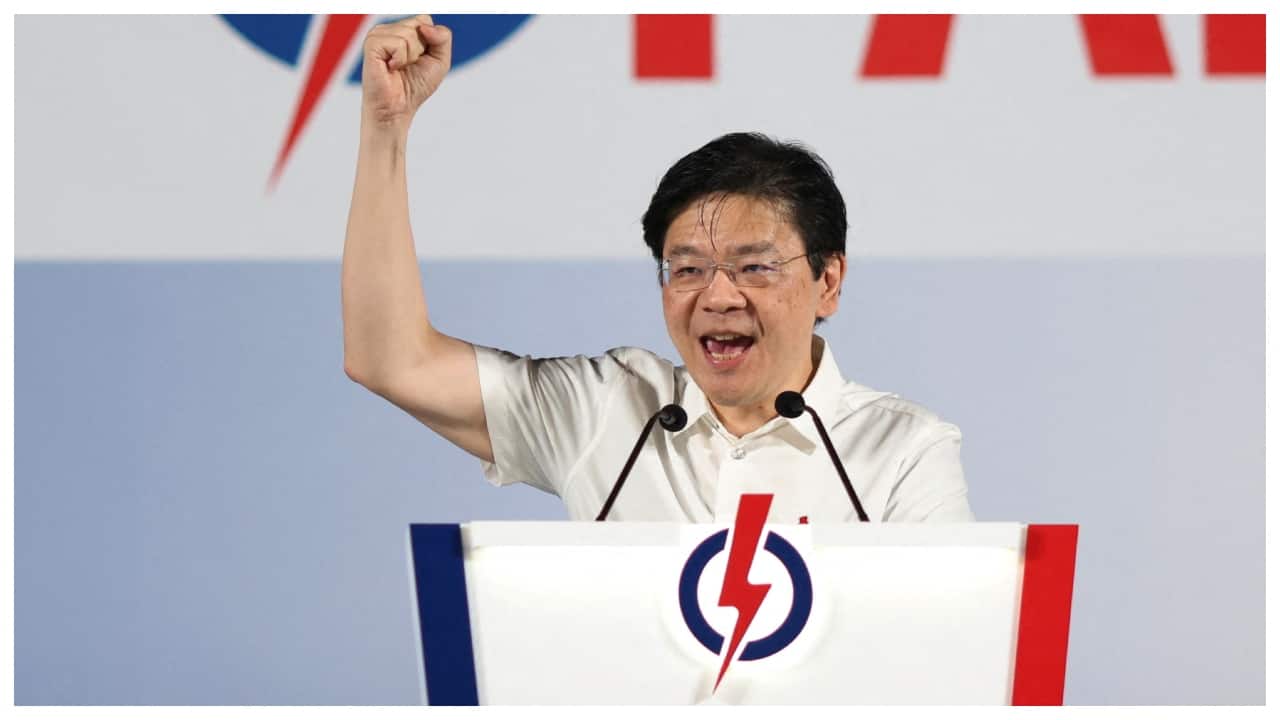
Singapore holds a parliamentary election on May 3, the first big test for new Prime Minister Lawrence Wong as his People's Action Party seeks to extend its unbroken rule of the city-state and emerge with a stronger mandate.
How will it play out?
The PAP is almost certain to win most seats in the election as it has every election since Singapore's independence in 1965, with candidates fielded in all 33 constituencies for 97 seats in parliament.
With a track record of good governance, attracting investment and ensuring stability of the trade-reliant economy, the PAP remains the dominant force in Singapore politics with resources that dwarf its opponents and a big party membership to draw from. Of the total 211 election candidates running, 46% are PAP.
No opposition party can mount a challenge alone, with the PAP's biggest rival, the Workers' Party, running in only a quarter of the races, meaning the most it can win is 26 seats. The third party from the previous parliament, the Progress Singapore Party, is contesting only 13 seats.
What's at stake?
Despite the odds overwhelmingly in the PAP's favour and defeat highly unlikely, the election has the potential to alter the dynamic of Singapore politics in the years ahead and create a path towards greater political plurality.
Steady gains by the opposition in recent elections have been widely interpreted as signs of disenchantment with the ruling party's monopoly and a desire among some Singaporeans, particularly younger voters, for more diverse politics, with alternative voices and ideas, greater policy scrutiny and more robust debate.
The PAP's share of the popular vote fell to 61% in 2020 from 70% in 2015. If it sees another decline and the opposition Workers' Party builds on its record 10 seats in 2020, it could be interpreted as a sign that after six decades in charge, the PAP's mandate and grip on power is slowly weakening.
Senior Minister Lee Hsien Loong, who was premier for two decades, warned at a PAP rally on Sunday that opposition seat gains would "weaken the ruling party's ability to govern" and result in the loss of experienced ministers.
What are the key issues?
The opposition is taking aim at the PAP over living costs and housing availability, a perennial problem in Singapore, among the world's most expensive cities.
The PAP has sought to head that off with a raft of giveaways in February's budget, including groceries vouchers, tax rebates and cash handouts. Wong has pledged more if Singapore's economy suffers collateral damage from global trade tensions, with recession possible.
Some opposition parties are also campaigning for tighter controls on foreign workers in high-paid jobs and free or reduced-price healthcare, an issue for Singapore's ageing population. Wong has warned of "many tempting proposals" from opponents that could weaken public finances and hurt investment and incomes.
What advantage does PAP have?
Wong called the election at short notice on April 15, giving opponents little preparation time. Singapore's unique model also works favourably for his party, with both single- and multi-member constituencies, where teams of up to six candidates run.
Unlike the PAP, opposition parties struggle to recruit enough candidates for multi-member contests and steep deposits of S$13,500 ($10,280) per candidate are a deterrent.
More than half of constituencies are multi-member and the PAP already has five seats in the bag after a walkover in one of those when no opposition parties contested.
Singapore also regularly revises electoral divisions, ostensibly to reflect population shifts, which has worked to the PAP's advantage. It has previously denied allegations of gerrymandering.
What's considered a good PAP mandate?
The PAP watches its share of the popular vote closely, even though its worst performance of 60.1% in 2011 still translated to 93% of seats and would still be considered a landslide in many democracies.
Some analysts say a vote share of 60% to 65% would look good for Wong in his first election as premier.
"Anything that indicates a significant dip from the last election would likely be attributed to voters’ perception of weakening confidence in the new leadership," said National University of Singapore sociologist Tan Ern Ser.
Discover the latest Business News, Budget 2025 News, Sensex, and Nifty updates. Obtain Personal Finance insights, tax queries, and expert opinions on Moneycontrol or download the Moneycontrol App to stay updated!
${res.must_watch_article[0].headline}
Sensex Today Jammu Kashmir News Live DC vs KKR Live Score Canada Election Results Q4 Results 2025 Live Ather Energy IPO GMP JKBOSE 10th Result 2025 TS SSC Results 2025 NEET Admit Card 2025 IPL Points Table 2025
Business Markets Stocks India News City News Economy Mutual Funds Personal Finance IPO News Startups
Home Currencies Commodities Pre-Market IPO Global Market Bonds
Home Loans up to 50 Lakhs Credit Cards Lifetime Free Finance TrackerNew Fixed Deposits Fixed Deposit Comparison Fixed Income
Home MC 30 Top Ranked Funds ETFs Mutual Fund Screener
Income Tax Calculator EMI Calculator Retirement Planning Gratuity Calculator
Stock Markets
News18 Firstpost CNBC TV18 News18 Hindi Cricketnext Overdrive Topper Learning
About Us Contact Us Advisory Alert Advertise with Us SupportDisclaimer Privacy Policy Cookie Policy Terms & Conditions Financial Terms (Glossary) Sitemap Investors
You are already a Moneycontrol Pro user.