FM Sitharaman’s Budget 2026 Full Speech: Major reforms, sectoral focus, growth roadmap
Published on 01/02/2026 02:10 PM
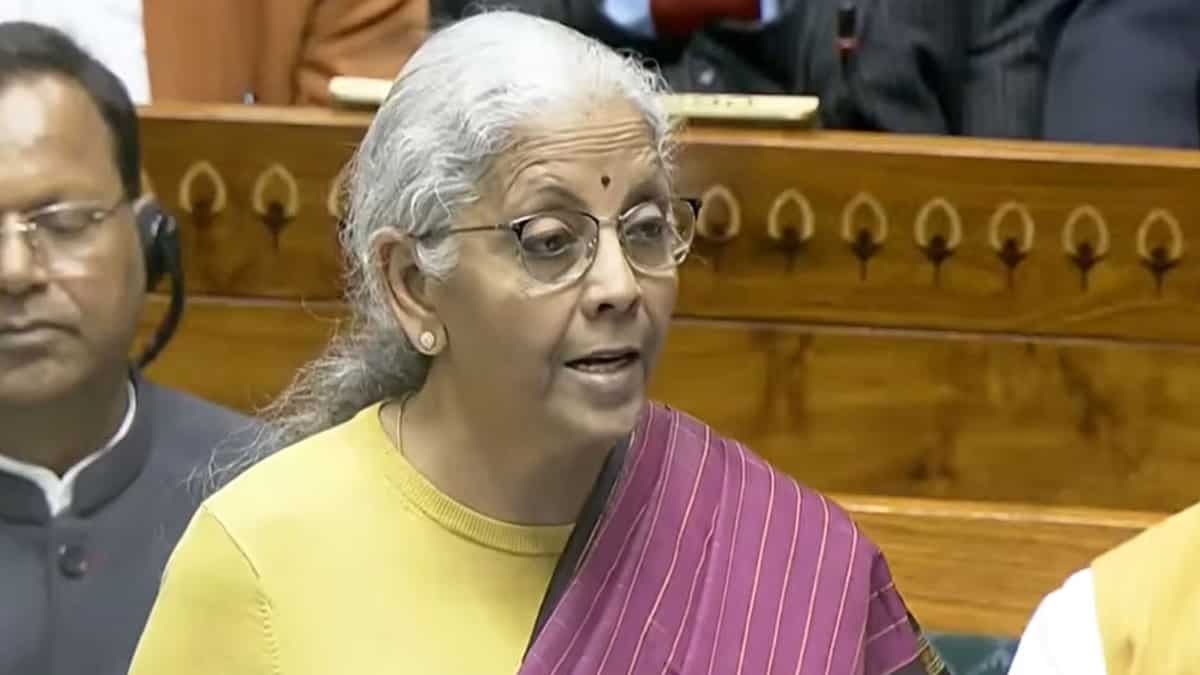
Union Budget 2026, FM Sitharaman Full Speech: The Finance Minister Nirmala Sitharaman delivered the Union Budget for the fiscal year 2026-27during her budget presentation at 11 AM on February 1. She presented her ninth consecutive Budget by introducing new initiatives which will enhance infrastructure, healthcare, railway services, tax systems and other key sectors aimed at supporting economic growth and public welfare. The Budget provides funding for economic development and public service enhancements and long-term growth initiatives.
Here is the full budget speech FM Sitharaman delivered on Tuesday:
Hon’ble Speaker,
On the sacred occasion of Magha Purnima and the birth anniversary of Guru Ravidas, I present the Budget for the year 2026-2027.
1. Since we assumed office 12 years ago, India’s economic trajectory has been marked by stability, fiscal discipline, sustained growth and moderate inflation. This is the result of conscious choices we have made, even in times of heightened uncertainty and disruption. Our Government, led by Hon’ble Prime Minister Modi, has decisively and consistently chosen action over ambivalence, reform over rhetoric and people over populism.
2. We have pursued far reaching structural reforms, fiscal prudence and monetary stability whilst maintaining a strong thrust on public investment. Keeping atmanirbharta as a lodestar, we have built domestic manufacturing capacity, energy security and reduced critical import dependencies. Simultaneously, we have ensured that citizens benefit from every action of the Government, undertaking reforms to support 2 employment generation, agricultural productivity, household purchasing power and universal services to people. These measures have delivered a high growth rate of around 7% and helped us make substantial strides in poverty reduction and improvement in the lives of our people.
3. Today, we face an external environment in which trade and multilateralism are imperilled and access to resources and supply chains are disrupted. New technologies are transforming production systems while sharply increasing demands on water, energy and critical minerals.
4. India will continue to take confident steps towards Viksit Bharat, balancing ambition with inclusion. As a growing economy with expanding trade and capital needs, India must also remain deeply integrated with global markets, exporting more and attracting stable long-term investment.
5. As I begin Part A, I want to express my gratitude to the people for standing firmly with us as we forge our way together towards becoming one of the largest economies of the world.
6. Our aim is to transform aspiration into achievement and potential into performance, as we ensure that the dividends of growth reach every farmer, the scheduled caste, the scheduled tribes, the nomads, the youth, the poor and the women.
7. In the Viksit Bharat Young Leaders Dialogue 2026, several innovative ideas were shared with our Prime Minister, which have inspired many of the proposals, making this a unique Yuva Shakti-driven Budget.
8. Our Government’s ‘Sankalp’ is to focus on our poor, underprivileged and the disadvantaged. To deliver on this Sankalp, and given that this is the first Budget prepared in Kartavya Bhawan, we are inspired by 3 kartavya:
9. Our first kartavya is to accelerate and sustain economic growth, by enhancing productivity and competitiveness, and building resilience to volatile global dynamics.
10. Our second kartavya is to fulfil aspirations of our people and build their capacity, making them strong partners in India’s path to prosperity.
11. Our third kartavya, aligned with our vision of Sabka Sath, Sabka Vikas, is to ensure that every family, community, region and sector has access to resources, amenities and opportunities for meaningful participation.
12. This threefold approach requires a supportive ecosystem. The first requirement is to sustain the momentum of structural reforms— continuous, adaptive, and forward-looking. Second, a robust and resilient financial sector is central to mobilising savings, allocating capital efficiently and managing risks. Third, cutting-edge technologies, including AI applications, can serve as force multipliers for better governance.
13. Our Government has undertaken comprehensive economic reforms towards creating employment, boosting productivity and accelerating growth. After the Prime Minister’s announcement on Independence Day in 2025, over 350 reforms have been rolled out. These include GST simplification, notification of Labour Codes, and rationalisation of mandatory Quality Control Orders. High Level Committees have been formed and in parallel, the Central Government is working with the State Governments on deregulation and reducing compliance requirements.
14. The Reform Express is well on its way and will maintain its momentum to help us fulfil our kartavya. I now move to the specific proposals.
15. Under our first kartavya to accelerate and sustain economic growth, I propose interventions in six areas: i) Scaling up manufacturing in 7 strategic and frontier sectors; ii) Rejuvenating legacy industrial sectors; iii) Creating “Champion MSMEs”; iv) Delivering a powerful push to Infrastructure; v) Ensuring long-term energy security and stability; and vi) Developing City Economic Regions.
16. Biopharma SHAKTI (Strategy for Healthcare Advancement through Knowledge, Technology and Innovation) – India’s disease burden is observed to be shifting towards non-communicable diseases, like diabetes, cancer and autoimmune disorders. Biologic medicines are key to longevity and quality of life at affordable costs. To develop India as a global Biopharma manufacturing hub, I propose the Biopharma SHAKTI with an outlay of ₹ 10,000 crores over the next 5 years. This will build the ecosystem for domestic production of biologics and biosimilars. The Strategy will include a Biopharma-focused network with 3 new National Institutes of Pharmaceutical Education and Research (NIPER) and upgrading 7 existing ones. It will also create a network of over 1000 accredited India Clinical Trials sites. We propose to strengthen the Central Drugs Standard Control Organisation to meet global standards and approval timeframes through a dedicated scientific review cadre and specialists.
17. India Semiconductor Mission (ISM) 1.0 expanded India’s semiconductor sector capabilities. Building on this, we will launch ISM 2.0 to produce equipment and materials, design fullstack Indian IP, and fortify supply chains. We will also focus on industryled research and training centres to develop technology and skilled workforce.
18. The Electronics Components Manufacturing Scheme, launched in April 2025 with an outlay of ₹22,919 crore, already has investment commitments at double the target. We propose to increase the outlay to ₹40,000 crore to capitalise on the momentum.
19. A Scheme for Rare Earth Permanent Magnets was launched in November 2025. We now propose to support the mineral-rich States of Odisha, Kerala, Andhra Pradesh and Tamil Nadu to establish dedicated Rare Earth Corridors to promote mining, processing, research and manufacturing.
20. To enhance domestic chemical production and reduce importdependency, we will launch a Scheme to support States in establishing 3 dedicated Chemical Parks, through challenge route, on a cluster-based plug-and-play model.
21. Strong capital goods capability is a determinant of productivity and quality across different sectors. Towards building this capacity, I propose the following:
(a) Hi-Tech Tool Rooms will be established by CPSEs at 2 locations as digitally enabled automated service bureaus that locally design, test, and manufacture high-precision components at scale and at lower cost.
(b) A Scheme for Enhancement of Construction and Infrastructure Equipment (CIE) will be introduced to strengthen domestic manufacturing of high-value and technologically-advanced CIE. This can range from lifts in a multi-story apartment, fire-fighting equipment, large and small, to tunnel-boring equipment for building metros and high-altitude roads.
(c) I also propose a Scheme for Container Manufacturing to create a globally competitive container manufacturing ecosystem, with a budgetary allocation of ₹10,000 crore over a 5 year period.
22. For the labour-intensive Textile Sector, I propose an Integrated Programme with 5 sub-parts:
(a) The National Fibre Scheme for self-reliance in natural fibres such as silk, wool and jute, man-made fibres, and new-age fibres;
(b) Textile Expansion and Employment Scheme to modernise traditional clusters with capital support for machinery, technology upgradation and common testing and certification centres;
(c) A National Handloom and Handicraft programme to integrate and strengthen existing schemes and ensure targeted support for weavers and artisans;
(d) Tex-Eco Initiative to promote globally competitive and sustainable textiles and apparels;
(e) Samarth 2.0 to modernize and upgrade the textile skilling ecosystem through collaboration with industry and academic institutions.
23. Further, I propose to set up Mega Textile Parks in challenge mode. They can also focus on bringing value addition to technical textiles.
24. I propose to launch the Mahatma Gandhi Gram Swaraj initiative to strengthen khadi, handloom and handicrafts. This will help in global market linkage and branding. It will streamline and support training, skilling, quality of process and production. This will benefit our weavers, village industries, One - District – One - Product initiative and rural youth.
25. India has the potential to emerge as a global hub for high quality, affordable sports goods. I propose a dedicated initiative for sports goods that will promote manufacturing, research and innovation in equipment design as well as material sciences.
26. I propose to introduce a Scheme to revive 200 legacy industrial clusters to improve their cost competitiveness and efficiency through infrastructure and technology upgradation.
27. Recognising MSMEs as a vital engine of growth, I propose a threepronged approach to help them grow as ‘Champions’: Equity Support
28. I propose to introduce a dedicated ₹10,000 crore SME Growth Fund, to create future Champions, incentivizing enterprises based on select criteria.
29. I also propose to top up the Self-Reliant India Fund set up in 2021, with ₹2,000 crore to continue support to micro enterprises and maintain their access to risk capital.
30. With TReDS, more than ₹7 lakh crore has been made available to MSMEs. To leverage its full potential, I propose 4 measures: (i) mandate TReDS as the transaction settlement platform for all purchases from MSMEs by CPSEs, serving as a benchmark for other corporates; (ii) introduce a credit guarantee support mechanism through CGTMSE for invoice discounting on TReDS platform; (iii) link GeM with TReDS for sharing information with financiers about government purchases from MSMEs, encouraging cheaper and quicker financing; (iv) introduce TReDS receivables as asset-backed securities, helping develop a secondary market, enhancing liquidity and settlement of transactions.
31. Government will facilitate Professional Institutions such as ICAI, ICSI, ICMAI to design short-term, modular courses and practical tools to develop a cadre of ‘Corporate Mitras’, especially in Tier-II and Tier-III towns. These accredited para-professionals will help MSMEs meet compliance requirements at affordable costs.
32. During this past decade our Government has undertaken several initiatives for large-scale enhancement of public infrastructure including through new financing instruments such as Infrastructure Investment Trusts (InVITs) and Real Estate Investment Trusts (REITs) and institutions like NIIF and NABFID. We shall continue to focus on developing infrastructure in cities with over 5 lakh population (Tier II and Tier III), which have expanded to become growth centres.
33. Public capex has increased manifold from ₹2 lakh crore in FY2014-15 to an allocation of ₹11.2 lakh crore in BE 2025-26. In FY2026-27, I propose to increase it to ₹12.2 lakh crore to continue the momentum.
34. To strengthen the confidence of private developers regarding risks during infrastructure development and construction phase, I propose to set up an Infrastructure Risk Guarantee Fund to provide prudently calibrated partial credit guarantees to lenders.
35. Over the years, REITs have emerged as a successful instrument for asset monetisation. I propose to accelerate recycling of significant real estate assets of CPSEs through the setting up of dedicated REITs.
36. To promote environmentally sustainable movement of cargo, I propose to: a) Establish new Dedicated Freight Corridors connecting Dankuni in the East, to Surat in the West; b) operationalise 20 new National Waterways (NW) over next 5 years, starting with NW-5 in Odisha to connect mineral rich areas of Talcher and Angul and industrial centres like Kalinga Nagar to the Ports of Paradeep and Dhamra. Training Institutes will be set up as Regional Centres of Excellence for development of the required manpower. This will benefit youth in the entire stretch of the waterways to train and acquire skills. Further, a ship repair ecosystem catering to inland waterways will also be set up at Varanasi and Patna; c) launch a Coastal Cargo Promotion Scheme for incentivising a modal shift from rail and road, to increase the share of inland waterways and coastal shipping from 6 % to 12 % by 2047.
37. To enhance last-mile and remote connectivity, and promote tourism, I propose to give incentives to indigenize manufacturing of seaplanes. A Seaplane VGF Scheme will be also be introduced to provide support for operations.
38. Aligning with the roadmap launched in December 2025, CCUS technologies at scale will achieve higher readiness levels in end-use applications across five industrial sectors, including, power, steel, cement, refineries and chemicals. An outlay of ₹20,000 crore is proposed over the next 5 years.
39. Cities are India’s engines of growth, innovation, and opportunities. We shall now focus on Tier II and Tier III cities, and even temple-towns, which need modern infrastructure and basic amenities. This Budget aims to further amplify the potential of cities to deliver the economic power of agglomerations by mapping city economic regions (CER), based on their specific growth drivers. An allocation of ₹ 5000 crore per CER over 5 years is proposed for implementing their plans 9 through a challenge mode with a reform-cum-results based financing mechanism.
40. In order to promote environmentally sustainable passenger systems, we will develop seven High-Speed Rail corridors between cities as ‘growth connectors’, namely i) Mumbai-Pune, ii) Pune-Hyderabad, iii) Hyderabad-Bengaluru, iv) Hyderabad-Chennai, v) Chennai-Bengaluru, vi) Delhi-Varanasi, vii) Varanasi-Siliguri.
41. The Indian banking sector today is characterised by strong balance sheets, historic highs in profitability, improved asset quality and coverage exceeding 98% of villages in the country. At this juncture, we are wellplaced to futuristically evaluate the measures needed to continue on the path of reform-led growth of this sector.
42. I propose setting up a “High Level Committee on Banking for Viksit Bharat”, to comprehensively review the sector and align it with India’s next phase of growth, while safeguarding financial stability, inclusion and consumer protection.
43. The vision for NBFCs for Viksit Bharat has been outlined with clear targets for credit disbursement and technology adoption. In order to achieve scale and improve efficiency in the Public Sector NBFCs, as a first step, it is proposed to restructure the Power Finance Corporation and Rural Electrification Corporation.
44. I propose a comprehensive review of the Foreign Exchange Management (Non-debt Instruments) Rules to create a more contemporary, user-friendly framework for foreign investments, consistent with India’s evolving economic priorities.
45. I propose to introduce a market making framework with suitable access to funds and derivatives on corporate bond indices. I also propose to introduce total return swaps on corporate bonds.
46. To encourage the issuance of municipal bonds of higher value by large cities, I propose an incentive of ₹100 crore for a single bond issuance 10 of more than ₹1000 crore. The current scheme under AMRUT which incentivises issuances up to ₹200 crore, will also continue to support smaller and medium towns.
47. Individual Persons Resident Outside India (PROI) will be permitted to invest in equity instruments of listed Indian companies through the Portfolio Investment Scheme. It is also proposed to increase the investment limit for an individual PROI under this scheme from 5% to 10%, with an overall investment limit for all individual PROIs to 24%, from the current 10%.
48. 21st Century is technology driven. Adoption of technology is for the benefit of all people - farmers in the field, women in STEM, youth keen to upskill and Divyangjan to access newer opportunities. The Government has taken several steps to support new technologies through AI Mission, National Quantum Mission, Anusandhan National Research Fund, and Research, Development and Innovation Fund.
49. Our second kartavya is to fulfil aspirations and build capacity. Close to 25 crore individuals have come out of multidimensional poverty through a decade of our Government’s sustained and reform-oriented efforts.
50. Our Government has therefore decided to place a renewed emphasis on the Services Sector to provide a pathway to fulfilling aspirations of a youthful India, with the following measures.
51. I propose to set up a High-Powered ‘Education to Employment and Enterprise’ Standing Committee to recommend measures that focus on the Services Sector as a core driver of Viksit Bharat. This will make us a global leader in services, with a 10% global share by 2047. The Committee will prioritise areas to optimise the potential for growth, employment and exports. They will also assess the impact of emerging technologies, including AI, on jobs and skill requirements and propose measures thereof.
52. To create a new range of skilled career pathways for our youth, I propose interventions in the following sectors:
53. Existing institutions for Allied Health Professionals (AHPs) will be upgraded and new AHP Institutions established in private and Government sectors. This will cover 10 selected disciplines, including optometry, radiology, anesthesia, OT Technology, Applied Psychology and Behavioural Health and add 100,000 AHPs over the next 5 years.
54. A strong Care Ecosystem, covering geriatric and allied care services will be built. A variety of NSQF-aligned programmes will be developed to train multiskilled caregivers combining core care and allied skills, such as, wellness, yoga and operation of medical and assistive devices. In the coming year, 1.5 lakh caregivers will be trained.
55. To promote India as a hub for medical tourism services, I propose to launch a Scheme to support States in establishing five Regional Medical Hubs, in partnership with the private sector. These Hubs will serve as integrated healthcare complexes that combine medical, educational and research facilities. They will have AYUSH Centres, Medical Value Tourism Facilitation Centres and infrastructure for diagnostics, post-care and rehabilitation. These Hubs will provide diverse job opportunities for health professionals including doctors and AHPs.
56. Ancient Indian yoga, already respected in several parts of the world, was given mass global recognition when Hon’ble PM took it to the UN. Post-COVID, Ayurveda gained a similar global acceptance and recognition.
57. Exporting quality Ayurvedic products helps farmers who grow the herbs and the youth who process the products. To meet growing global demand, a few more steps are being taken.
58. I propose to (i) set up 3 new All India Institutes of Ayurveda; (ii) upgrade AYUSH pharmacies and Drug Testing Labs for higher standards of certification ecosystem, and make available more skilled personnel; (iii) upgrade the WHO Global Traditional Medicine Centre in Jamnagar to bolster evidence-based research, training and awareness for traditional medicine.
59. Livestock contributes close to 16% of farm income, including of poor and marginal households. To scale up availability of veterinary professionals by more than 20,000, I propose to roll out a loan-linked capital subsidy support scheme for establishment of veterinary and paravet colleges, veterinary hospitals, diagnostic laboratories and breeding facilities in the private sector. Collaboration between Indian and foreign institutions will also be facilitated.
60. India’s Animation, Visual Effects, Gaming and Comics (AVGC) sector is a growing industry, projected to require 2 million professionals by 2030. I propose to support the Indian Institute of Creative Technologies, Mumbai in setting up AVGC Content Creator Labs in 15,000 secondary schools and 500 colleges.
61. The Indian design industry is expanding rapidly and yet there is a shortage of Indian designers. I propose to establish through challenge route, a new National Institute of Design to boost design education and development in the eastern region of India.
62. Our Government will support States, through challenge route, in creating 5 University Townships in the vicinity of major industrial and logistic corridors. These planned academic zones will host multiple universities, colleges, research institutions, skill centres and residential complexes.
63. In Higher Education STEM institutions, prolonged hours of study and laboratory work pose some challenges for girl students. Through VGF/capital support, 1 girls’ hostel will be established in every district.
64. To promote Astrophysics and Astronomy via immersive experiences, 4 Telescope Infrastructure facilities will be set up or upgraded -the National Large Solar Telescope, the National Large Opticalinfrared Telescope, the Himalayan Chandra Telescope and the COSMOS2 Planetarium.
65. The Tourism sector has the potential to play a large role in employment generation, forex earnings and expanding the local economy.
66. I propose to set up a National Institute of Hospitality by upgrading the existing National Council for Hotel Management and Catering Technology. It will function as a bridge between academia, industry and the Government.
67. I also propose a pilot scheme for upskilling 10,000 guides in 20 iconic tourist sites through a standardized, high-quality 12-week training course in hybrid mode, in collaboration with an Indian Institute of Management.
68. A National Destination Digital Knowledge Grid will be established to digitally document all places of significance—cultural, spiritual and heritage. This initiative will create a new ecosystem of jobs for local researchers, historians, content creators and technology partners.
69. India has the potential and opportunity to offer world-class trekking and hiking experience. We will develop ecologically sustainable (i) Mountain trails in Himachal Pradesh, Uttarakhand and Jammu and Kashmir; Araku Valley in the Eastern Ghats and Podhigai Malai in the Western Ghats. (ii) Turtle Trails along key nesting sites in the coastal areas of Odisha, Karnataka and Kerala; and (iii) Bird watching trails along the Pulikat lake in Andhra Pradesh and Tamil Nadu.
70. Under the visionary leadership of Honorable Prime Minister, we established the International Big Cat Alliance in 2024. This year, India is hosting the first ever Global Big Cat Summit, where heads of governments and ministers from 95 range countries will deliberate on collective strategies for conservation.
71. I propose to develop 15 archeological sites including Lothal, Dholavira, Rakhigarhi, Adichanallur, Sarnath, Hastinapur, and Leh Palace into vibrant, experiential cultural destinations. Excavated landscapes will be opened to the public through curated walkways. Immersive storytelling skills and technologies will be introduced to help conservation labs, interpretation centres, and guides.
72. The Sports Sector provides multiple means of employment, skilling and job opportunities. Taking forward the systematic nurturing of sports talent which is set in motion through the Khelo India programme, I propose to launch a Khelo India Mission to transform the Sports sector over the next decade.
73. The Mission will facilitate: a) An integrated talent development pathway, supported by training centres (foundational, intermediate and elite levels); b) systematic development of coaches and support staff; c) integration of sports science and technology; d) competitions and leagues to promote sports culture and provide platforms; and, e) development of sports infrastructure for training and competition.
74. Our third kartavya aligns with our vision of Sabka Sath, Sabka Vikas towards a Viksit Bharat.
75. This requires targeted efforts for a) Increasing farmer incomes through productivity enhancement and entrepreneurship, with special attention to small and marginal farmers; b) Empowering Divyangjan through access to livelihood opportunities, training and high-quality assistive devices; c) Empowering the vulnerable to access mental health and trauma care; d) Focus on the Purvodaya States and the North-East Region to accelerate development and employment opportunities.
76. Fisheries: We will undertake initiatives (i) for integrated development of 500 reservoirs and Amrit Sarovars (ii) strengthen the fisheries value chain in coastal areas and enable market linkages involving start-ups and women-led groups together with Fish Farmers Producer Organisations.
77. Animal Husbandry: To provide quality employment opportunities in rural and peri-urban areas, we will support the Animal Husbandry Sector in entrepreneurship development through: (a) a Credit-Linked Subsidy Programme (b) scaling-up and modernisation of livestock enterprises (c) enhance creation of livestock, dairy and poultry-focused integrated-value chains and (d) encourage creation of Livestock Farmer Producers Organisations.
78. High Value Agriculture: To diversify farm outputs, increase productivity, enhance farmers’ incomes, and create new employment opportunities, we will support high value crops such as coconut, sandalwood, cocoa and cashew in our coastal areas. Agar trees in North East and nuts such as, almonds, walnuts and pine nuts in our hilly regions will also be supported.
79. India is the world’s largest producer of coconuts. About 30 million people, including nearly 10 million farmers, depend on coconuts for their livelihood. To further enhance competitiveness in coconut production, I propose a Coconut Promotion Scheme to increase production and enhance productivity through various interventions including replacing old and non-productive trees with new saplings/plants/varieties in major coconut growing States.
80. A dedicated programme is proposed for Indian cashew and cocoa to make India self-reliant in raw cashew and cocoa production and processing, enhance export competitiveness and transform Indian Cashew and Indian Cocoa into premium global brands by 2030.
81. Sandalwood is closely linked to India’s social and cultural heritage. Our Government will partner with State Governments to promote focused cultivation and post-harvest processing to restore the glory of the Indian Sandalwood ecosystem.
82. To rejuvenate old, low-yielding orchards and expand high-density cultivation of walnuts, almonds and pine nuts, we will support a dedicated programme to enhance farmer incomes and in bringing value addition by engaging youth.
Bharat-VISTAAR (Virtually Integrated System to Access Agricultural Resources)
83. I propose to launch Bharat-VISTAAR—a multilingual AI tool that shall integrate the AgriStack portals and the ICAR package on agricultural practices with AI systems. This will enhance farm productivity, enable better decisions for farmers and reduce risk by providing customised advisory support.
SHE-Marts for Rural Women-led Enterprises
84. Building on the success of the Lakhpati Didi Programme, I propose to help women take the next step from credit-led livelihoods to being owners of enterprises. Self-Help Entrepreneur (SHE) Marts will be set up as community-owned retail outlets within the cluster level federations through enhanced and innovative financing instruments.