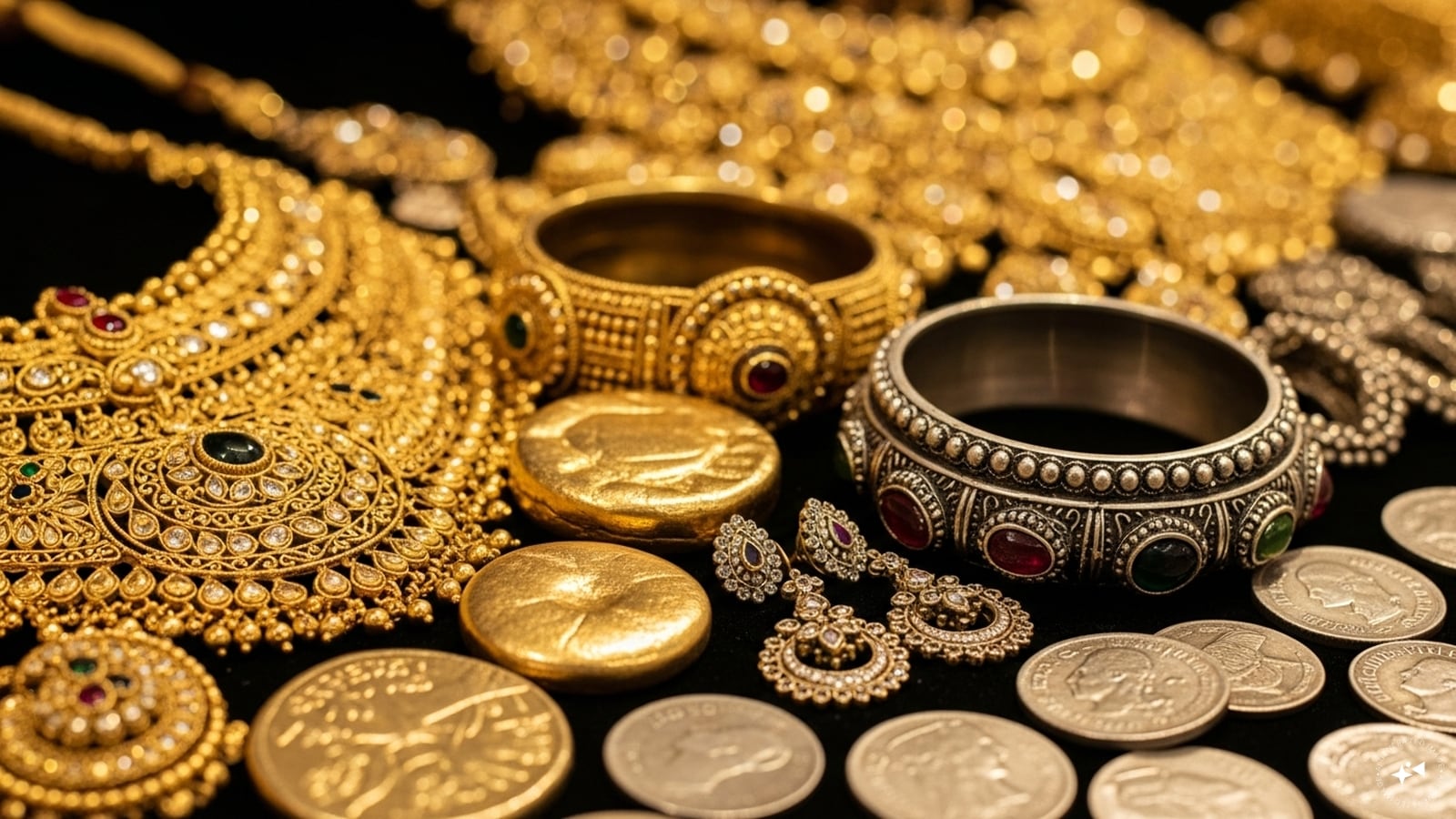
Gold, silver prices steady: What's driving bullion today
Published on 27/02/2026 08:14 AM
Gold, silver prices steady: What's driving bullion todayGold and silver held multi-week highs as geopolitical tensions and US–Iran talks lifted demand. SEBI tied ETF values to local prices amid strong retail interest.By Anshul February 27, 2026, 8:14:34 AM IST (Updated)3 Min ReadGold and silver prices held firm on Friday (February 27) as geopolitical tensions supported safe-haven demand, while a stronger US dollar limited further upside.
Spot gold was steady at $5,187.39 per ounce, after touching a more than three-week high earlier this week. US gold futures for April delivery rose 0.2% to $5,204.10 an ounce.
Spot silver gained 0.6% to $88.81 per ounce, following a three-week high hit on Wednesday (February 25).
The dollar hovered near three-week highs, making dollar-denominated bullion more expensive for holders of other currencies and tempering buying interest.
Rate-cut expectations, data signals shape sentiment
Investors continued to assess the US economic outlook and the Federal Reserve’s policy trajectory. Data showed new applications for US jobless benefits rose slightly last week, while the unemployment rate appeared steady in February, pointing to a stable labour market.
Markets are currently pricing in three 25-basis-point rate cuts by the Federal Reserve this year, according to CME’s FedWatch Tool. However, improving economic sentiment and signs of resilience in growth have narrowed expectations of aggressive early easing.
Reuters technical analyst Wang Tao said gold appears neutral in a $5,158–$5,201 per ounce range, with a breakout likely to signal direction. He added that the bias could tilt upward toward $5,243 or higher if resistance is cleared.
US–Iran talks lend geopolitical support
In Geneva, the US and Iran made progress in discussions over Tehran’s nuclear programme, according to mediator Oman, though talks ended without a breakthrough. The lack of a concrete resolution, coupled with ongoing military posturing, kept geopolitical risks elevated and underpinned demand for safe-haven assets.
SEBI’s valuation shift ties ETFs closer to domestic prices
Amid elevated bullion prices, the Securities and Exchange Board of India (SEBI) on February 26 directed mutual funds to use domestic stock exchange spot prices to value their physical gold and silver holdings from April 1.
Under the revised framework, fund houses can use polled spot prices from recognised stock exchanges that settle physically delivered bullion derivatives contracts. The move replaces reliance on London Bullion Market Association benchmarks for valuing exchange-traded fund (ETF) holdings.
The regulatory change comes at a time when international and domestic prices have diverged intermittently due to currency movements, import dynamics and local demand. By linking ETF valuation to domestic spot prices, the new norms are expected to make fund NAVs more reflective of Indian market conditions — particularly relevant in a phase of heightened volatility and strong retail participation.
Structural repricing theme complements regulatory shift
The longer-term price trajectory has drawn attention after Motilal Oswal Financial Services, in its latest Precious Metals Quarterly Report, described gold’s rally as a “structural repricing phase” rather than a cyclical spike.
The brokerage noted that gold crossed $5,000 per ounce in early 2026 and has continued to hold above that threshold. It expects Comex gold to move towards $6,000 per ounce — translating to roughly ₹1.85 lakh per 10 grams domestically — over the next 12 months, with a potential medium-term move towards $7,500 per ounce if geopolitical and fiscal pressures intensify.
MOFSL said gold’s resilience between 2023 and 2025 despite positive real interest rates signals a shift in investor behaviour. According to the report, rising global debt, fiscal stress, reserve diversification away from dollar-centric assets, and sustained central bank purchases — estimated at around 1,000 tonnes annually for four consecutive years — have underpinned demand.
The brokerage also flagged tight global supply conditions, including limited mine output and shrinking inventories across major exchanges, as supportive factors.
Silver, while benefiting from safe-haven flows, continues to track industrial demand trends and currency movements, keeping near-term price action volatile.
-With Reuters inputsContinue ReadingNote To ReadersDisclaimer: This article is for informational purposes only and should not be construed as investment advice. Readers should consult certified experts before making any investment decisions.First Published: Feb 27, 2026 8:12 AM ISTTagsgoldGold Pricessilversilver prices