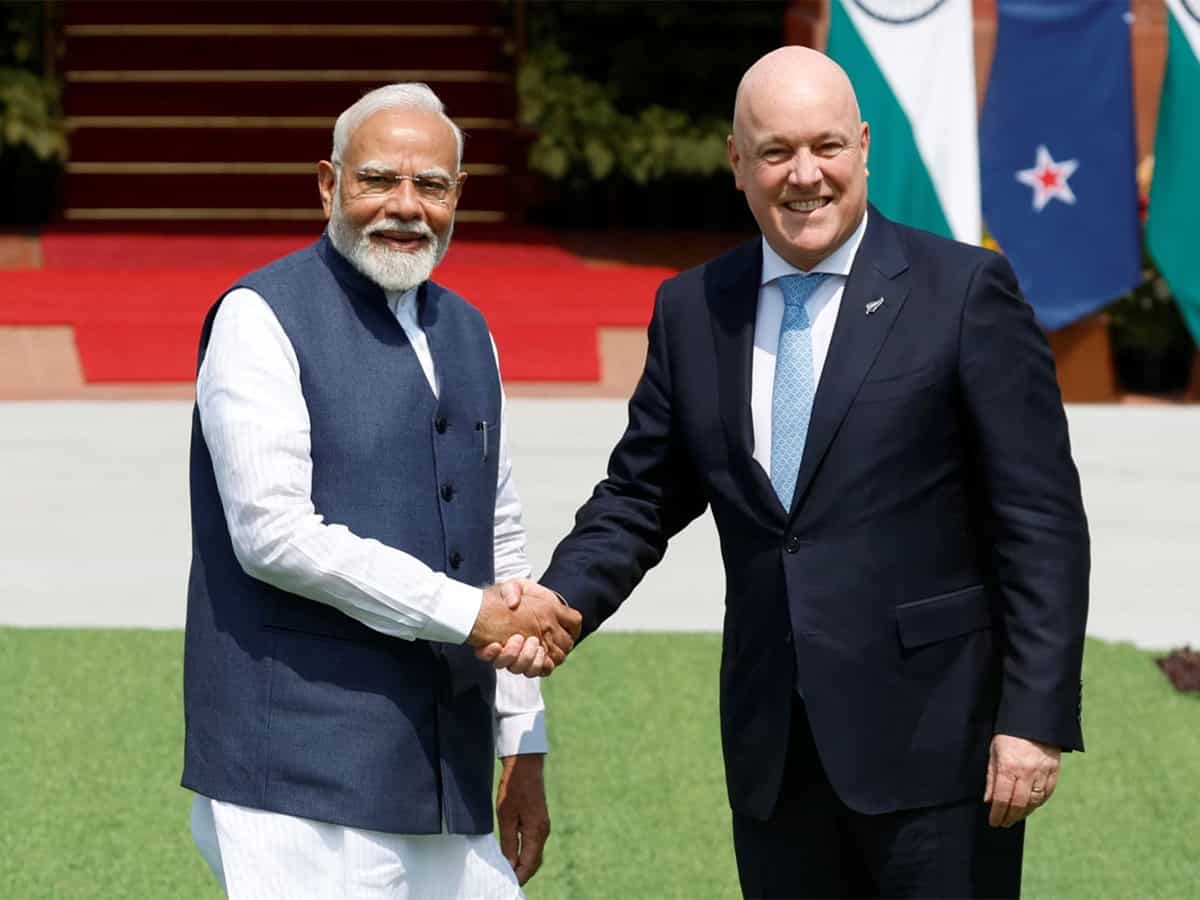
India, New Zealand hold fourth round of FTA talks in Auckland to boost trade ties: Here’s what was discussed
Published on 03/11/2025 10:58 PM
India and New Zealand on Monday, November 3, 2025, opened the fourth round of negotiations for a Free Trade Agreement (FTA) in Auckland, signalling renewed momentum in efforts to finalise a comprehensive and mutually beneficial trade pact. The discussions, to continue till November 7, focus on advancing market access in goods and services, and ironing out key aspects related to Rules of Origin.
According to India’s Ministry of Commerce and Industry, this round builds on the direction set by Prime Minister Narendra Modi and his New Zealand counterpart, Prime Minister Christopher Luxon, during their meeting in March 2025. The FTA process was officially launched on March 16, 2025, following discussions between Commerce and Industry Minister Piyush Goyal and New Zealand’s Minister for Trade and Investment Todd McClay.
In its statement, the ministry said both sides are working to reach convergence on outstanding issues and move towards an early conclusion of the agreement. “Both sides are working constructively to build on the progress achieved in earlier rounds, to reach convergence on outstanding issues and move towards the early conclusion of the FTA,” the ministry noted.
Officials from both nations reiterated their commitment to developing an inclusive and forward-looking trade framework that promotes sustainable economic growth. The proposed FTA aims to improve market access, ease investment flows, and enhance supply chain resilience, supporting both economies’ long-term growth ambitions.
The negotiations also seek to align trade standards and regulatory cooperation to encourage fair competition and sustainable development. For New Zealand, the deal is expected to open a gateway to one of the world’s largest consumer markets, while India views it as an opportunity to diversify trade partnerships in the Indo-Pacific.
India’s engagement with New Zealand is part of its wider trade diplomacy agenda. The government is simultaneously negotiating or advancing trade agreements with nearly a dozen countries and blocs, including the United States, the European Union, Australia, Sri Lanka, and Qatar.
Over the last five years, India has concluded several major trade agreements, such as the India-Mauritius Comprehensive Economic Cooperation and Partnership Agreement (CECPA) in 2021, the India-UAE Comprehensive Economic Partnership Agreement (CEPA) and the India-Australia Economic Cooperation and Trade Agreement (ECTA) in 2022, the India-European Free Trade Association (EFTA) Trade and Economic Partnership Agreement (TEPA) in 2024, and the India-UK Comprehensive Economic and Trade Agreement (CETA) signed earlier this year.
Negotiations for a comprehensive deal with Oman, launched in 2023, have also been concluded. Collectively, these agreements reflect India’s expanding role in shaping global trade architecture and driving economic resilience through diversified partnerships.
The India-New Zealand FTA is viewed as a key step in strengthening India’s trade footprint across the Indo-Pacific region. Both sides see it as more than a trade negotiation - a pathway to deeper strategic and economic cooperation based on shared values of openness and sustainability. If finalised, the agreement could pave the way for greater market integration, improved supply chain collaboration, and expanded export opportunities for sectors including agriculture, technology, education, and services.
Ankit Kumar is a Senior Sub Editor at Zee Business. He covers international affairs, politics, climate change, business, finance and global elections. With experience acros