India–Oman free trade pact likely to be operational within three months: Piyush Goyal
Published on 19/12/2025 07:36 PM
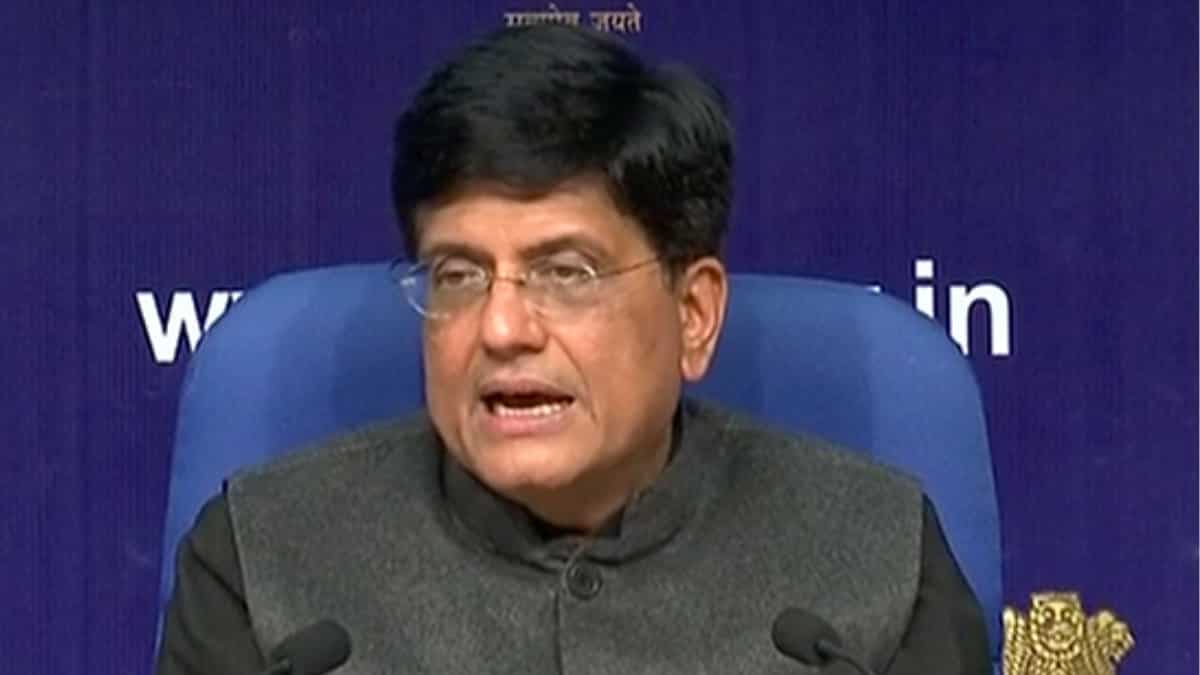
Commerce and Industry Minister Piyush Goyal on Friday said the Comprehensive Economic Partnership Agreement (CEPA) between India and Oman is expected to become operational within the next three months, significantly faster than similar past trade agreements.
Recalling earlier experiences, Goyal said the Oman–United States trade agreement signed in 2006 took nearly three years to be implemented. “Learning from that experience, India and Oman have decided to operationalise this agreement much faster,” he said at a briefing, adding that both sides are keen to ensure early benefits for businesses and exporters.
The CEPA provides for automatic approvals within 90 days for Indian pharmaceutical products and manufacturing units that are already recognised by multiple countries. This is expected to ease market access for Indian drug makers and boost exports to Oman.
India and Oman signed the CEPA on Thursday during the second day of Prime Minister Narendra Modi’s visit to Muscat, marking a major milestone in bilateral economic ties.
Under the agreement, Oman has offered zero-duty access on 98.08 per cent of its tariff lines, covering 99.38 per cent of India’s exports to the country. Major labour-intensive sectors such as gems and jewellery, textiles, leather, footwear, sports goods, plastics, furniture, agricultural products, engineering goods, pharmaceuticals, medical devices, and automobiles will enjoy full tariff elimination.
India, in turn, has agreed to tariff liberalisation on 77.79 per cent of its tariff lines, accounting for 94.81 per cent of imports from Oman by value. For products sensitive to India but of export interest to Oman, market access will largely be through tariff-rate quotas (TRQs).
To safeguard domestic industries, India has excluded several sensitive products from concessions. These include agricultural items such as dairy products, tea, coffee, rubber and tobacco, along with gold and silver bullion, jewellery, certain labour-intensive products like footwear and sports goods, and scrap of various base metals.
The services sector may be gaining the most advantage from the agreement. For the first time Oman’s total services imports are $12.52 billion and India’s share is only 5.31 per cent suggesting there is a large gap to be filled by the Indian service providers.
The deal encompasses a complete package of services and Oman makes promises in various fields like IT services, professional and consulting services, media, R&D, education, and health. The results are anticipated to be new avenues for investments, the creation of high-skilled job positions, and an increase in business relations.
A major highlight of the CEPA is the enhanced mobility framework. For the first time, Oman has made extensive commitments under Mode 4, increasing the quota for intra-corporate transferees from 20 per cent to 50 per cent. The permitted stay for contractual service suppliers has also been extended from 90 days to two years, with the possibility of a further two-year extension.
The pact also allows more liberal entry and stay conditions for skilled professionals in areas such as accountancy, taxation, architecture, and medical and allied services, paving the way for stronger people-to-people and professional ties between India and Oman.