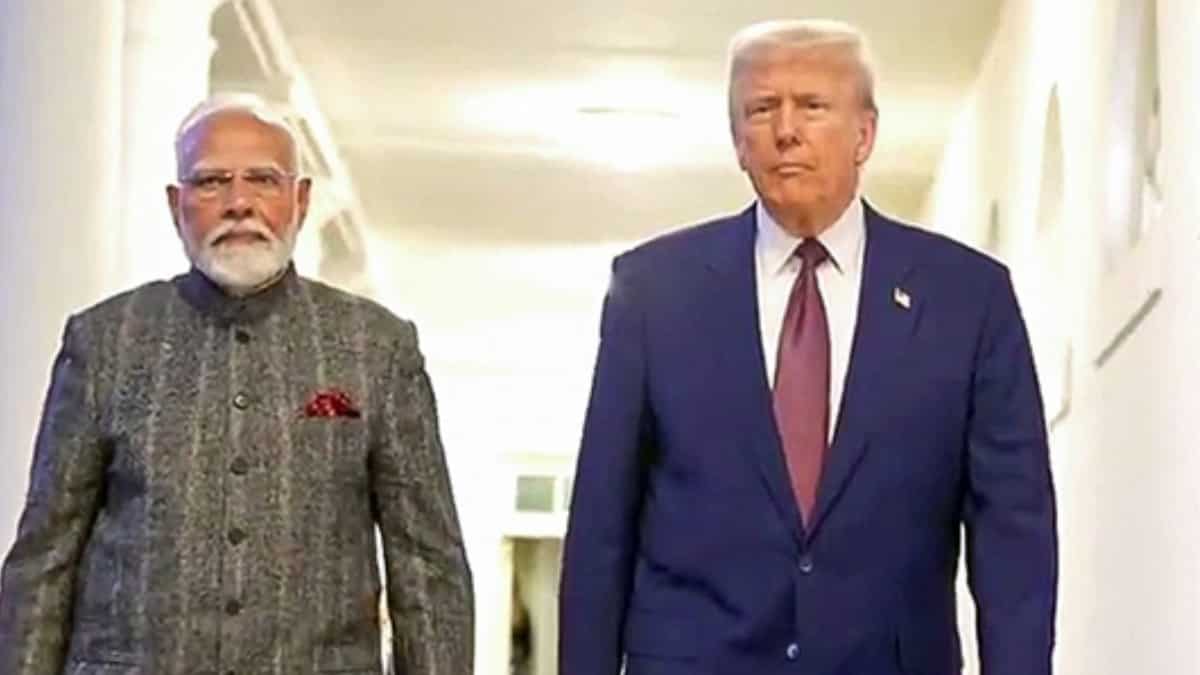
India–US Trade Deal| BTA could be ‘finalised any day now’ as negotiations edge closer: Report
Published on 29/01/2026 02:03 PM
India–US Trade Deal Update: In the latest development, the long-awaited India–US trade breakthrough appears closer than ever. Sources in the Ministry of External Affairs said that even while talks with the EU were underway, negotiations on the India–US trade deal had been moving at a steady pace, ANI reported.
This comes just days after India wrapped up negotiations with the European Union on a Free Trade Agreement (FTA), being hailed as the “mother of all deals”.
According to the ANI sources, the agreement could be “finalised any day now”, with only minor formalities left. What remains, they said, is “just the dotting of the Is and the crossing of the Ts”, adding that recent rounds of talks have been marked by a strong degree of robustness.
The BTA, which was formally proposed in February following directions from the leadership of both countries, aims to more than double bilateral trade from the current USD 191 billion to USD 500 billion by 2030. Earlier, Commerce Secretary Rajesh Agrawal indicated that the much-awaited first tranche of the India–US Bilateral Trade Agreement (BTA) was “very near”, though he refrained from offering a specific timeline.
Talks were first announced during Prime Minister Narendra Modi’s visit to Washington in February 2025, signalling a renewed push to deepen economic ties between the two democracies.
On the other hand, Union Finance Minister Nirmala Sitharaman on Thursday tabled the Economic Survey of India in Parliament for the financial year 2025-26 ahead of Budget presentation which is set to be unveiled on Sunday.
The Economic Survey 2026 said India’s exports have remained strong even after the United States imposed higher tariffs. It noted that India has the capacity to deal with uncertain and challenging global trade conditions.
The Survey pointed out that the US announced reciprocal tariffs of 25 per cent in April, when India was expecting some relief. In August, an additional 25 per cent penal tariff was imposed on most Indian goods, surprising many and leading to lower growth forecasts. Despite unfavourable conditions, India’s exports have stayed stable, supported by diversification into other markets and strong domestic fundamentals.
The Economic Survey 2025–26 also warned that global trade is facing fresh disruptions due to unilateral tariff measures and rising geopolitical tensions. However, it said India’s economy has continued to show resilience despite these global challenges.
The Survey observed that trade policy globally is increasingly driven by strategic and political considerations rather than multilateral rules. "Trade policy is now shaped primarily by security and political considerations rather than efficiency or multilateral rules," it said, warning that the system has become “less coordinated, more risk-averse, and more exposed to non-linear outcomes”.
Referring to US tariff actions, the Survey said the additional penal duties came as a surprise, especially when India was expected to be “one of the early winners in the new tariff regime of the United States”.
Despite heightened volatility and downward revisions in global growth forecasts, the Survey maintained that India’s economic momentum remains intact. "Growth is good; the outlook remains favourable; inflation is contained; banks are healthy; and corporate balance sheets are strong," it said, crediting policy dynamism and structural reforms for sustaining activity amid external pressures.
However, it flagged a broader paradox. "The paradox of 2025 is that India's strongest macroeconomic performance in decades has collided with a global system that no longer rewards macroeconomic success with currency stability, capital inflows, or strategic insulation."
US Treasury Secretary Scott Bessent had earlier hinted at a possible rollback of the 25 per cent tariffs imposed on India over its Russian oil purchases. “I would imagine that there is a path to take them off,” Bessent said on the sidelines of the World Economic Forum.
When asked about tariffs linked to India’s purchase of Russian oil, the US Trade Representative Jamieson Greer said Washington expects New Delhi to gradually reduce these imports.
"They have made a lot of progress on this. I am in frequent contact with my counterpart in India. I have a great working relationship with him, but they still have ways to go on this point. They like the discount that you get from Russian oil, so it's hard for them. The Treasury Department has put into place, you know, a few weeks ago now, more significant sanctions, so we expect India to continue to wind that down, but we're watching it closely," he said.
With the landmark EU deal now sealed, officials suggest the India–US agreement could be the next major trade announcement on the horizon.