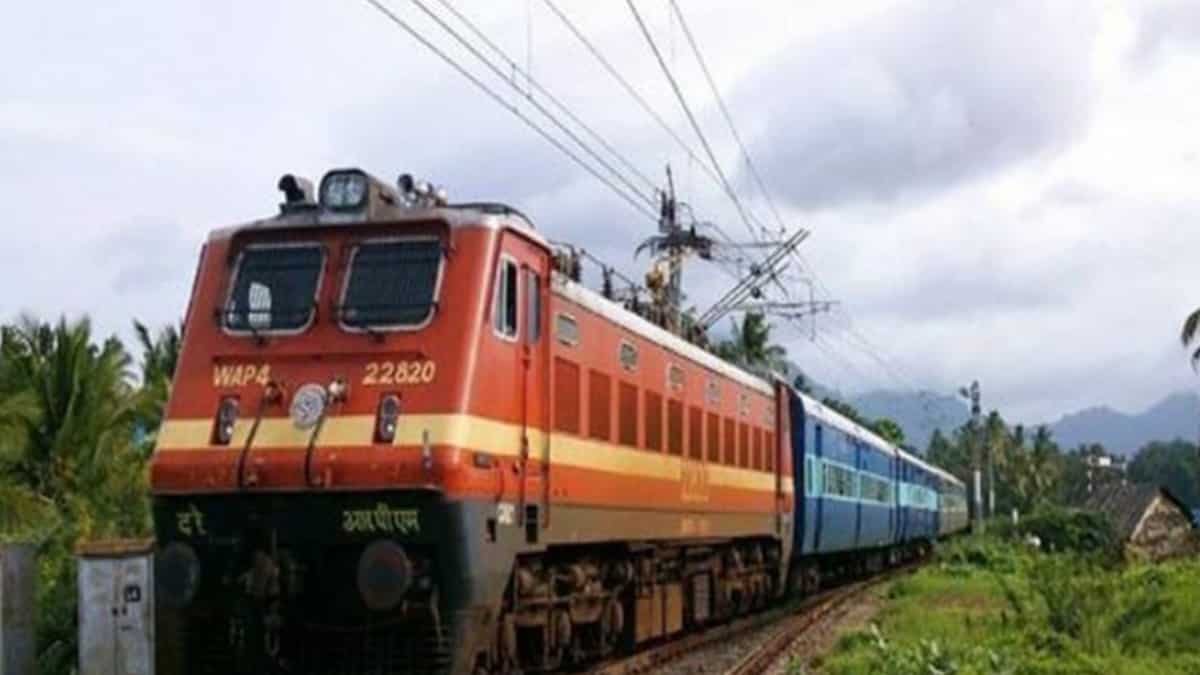
Indian Railways plans to double train capacity in these cities over next five years
Published on 06/02/2026 08:29 PM
Indian Railways has announced a major plan to double the train-handling capacity of big cities over the next five years to meet growing passenger demand, reduce congestion, and improve connectivity by expanding existing stations, building new terminals, and upgrading infrastructure to run more trains efficiently across the network.
In order to reach the goal set for 2030, Indian Railways will enhance the current terminals by constructing more platforms, adding stabling lines, pit lines, and shunting facilities. Besides, new terminals will be constructed at and near the main urban areas for the purpose of distributing traffic more fairly, according to an official statement.
The strategy comprises constructing maintenance infrastructures like mega coaching complexes, enhancing sectional capacity through signalling upgrades, multitracking, and facility improvements at significant spots along the route.
The capacity enhancement will not only be restricted to the main stations but also adjacent ones will be improved to support the well-balanced traffic movement and operational efficiency. For example, in Pune case, besides Pune station, Hadapsar, Khadki and Alandi have been singled out for enlarging the capacity along with creating new platforms and stabling lines.
The project will include both suburban and non-suburban networks, however, distinct needs of each segment will be considered.
Also Read: Train tickets to get costlier from December 26? Indian Railways hikes fares — What passengers should know
The plan covers Delhi, Mumbai, Kolkata, Chennai, Hyderabad, Bangalore, Amdavad, Patna, Lucknow, Pune, Nagpur, Varanasi, Kanpur, Gorakhpur, Mathura, Ayodhya, Agra, Chandigarh, Ludhiana, Amritsar, Indore, Bhopal, Ujjain, Jammu, Jodhpur, Jaipur, Vadodara, Surat, Madgaon, Cochin, Puri, Bhubaneshwar, Vishakhapatnam, Vijaywada, Tirupati, Haridwar, Guwahati, Bhagalpur, Muzaffarpur, Darbhanga, Gaya, Mysore, Coimbatore, Tatanagar, Ranchi, Raipur, and Bareilly.
Also Read: Fog safety devices in Indian Railways increased 288 times to 25,900 in last 11 years: Ashwini Vaishnaw
A comprehensive plan covering 48 major cities is currently under preparation, which will include projects that are already sanctioned, under execution or proposed, with clearly defined timelines and outcomes. Although the overall goal is to double capacity by 2030, the Railways aims to deliver incremental benefits over the next five years. Actions will be categorised as immediate, short-term and long-term to ensure steady progress.
Zonal railways have also been directed to plan capacity enhancements across their divisions, addressing not just terminal constraints but also operational bottlenecks at stations, yards and key sections.
Union Railway Minister Ashwini Vaishnaw said, “We're expanding coaching terminals, enhancing sectional and operational capacities in various cities to meet rising passenger demand and reduce congestion. This move will upgrade our railway network and improve nationwide connectivity.”