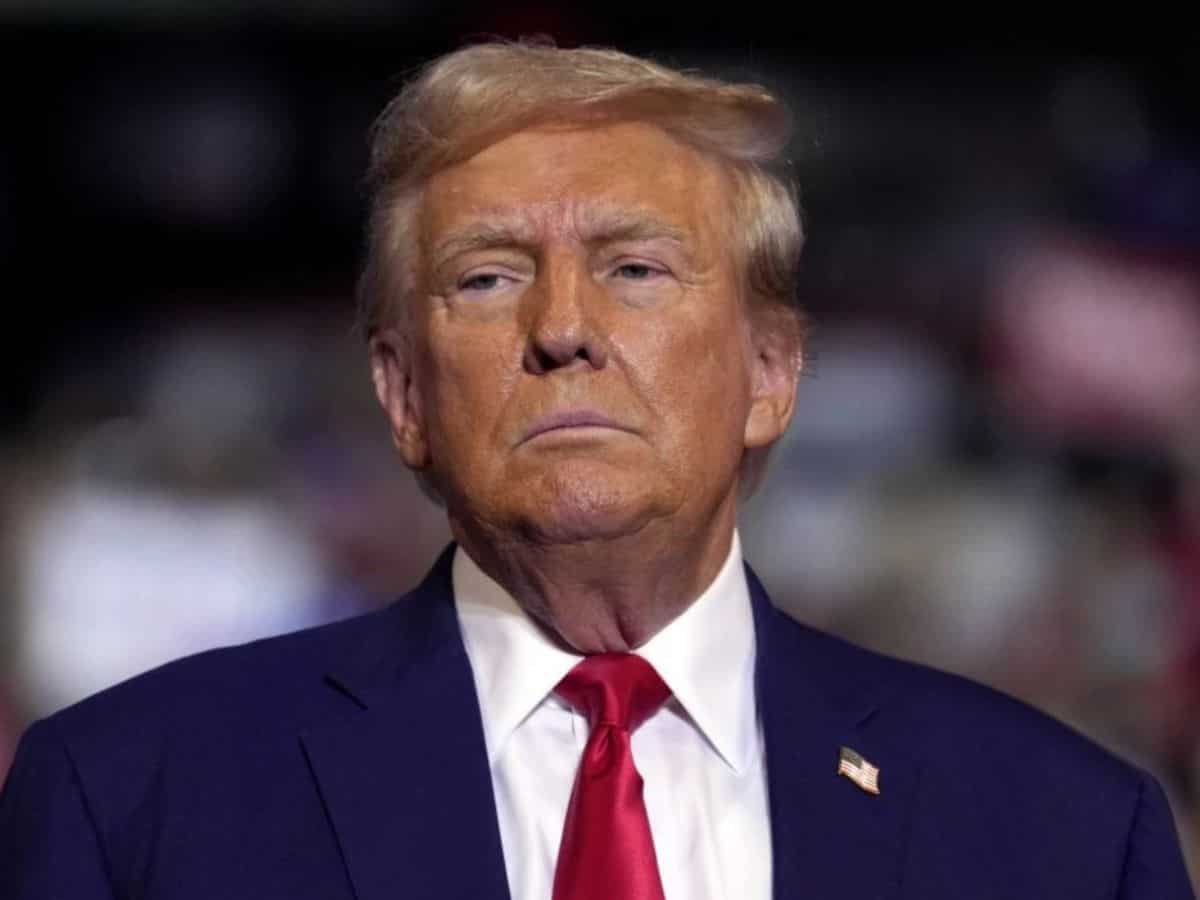
It's official! Longest US govt shutdown ends as Trump signs bill
Published on 13/11/2025 01:28 PM
US President Donald Trump on Wednesday signed a funding bill, officially ending a record 43-day government shutdown in the world’s largest economy. The development took place late on November 12 (Thursday morning in India). The bill reached the White House after being cleared by the US House of Representatives, following the Senate’s approval of a series of amendments.
Normal government operations will resume in America, said the American president.
The news sent a bout of optimism across markets globally, with normalcy set to return amid affected federal employees, delayed food assistance, and disrupted flights due to air traffic control staffing shortages.
In afternoon deals India time, Dow futures -- an early indicator of the Dow Jones Industrial Average benchmark -- traded over 100 points, or 0.2 per cent, higher, suggesting a positive start to the session on Wall Street on Thursday. Most Asian markets registered mild gains, with MSCI's broadest gauge of Asia Pacific shares outside Japan up 0.2 per cent.
In Mumbai, the Sensex jumped as much as 372.3 points, or 0.4 per cent, to 84,838.8 during the session, on track to finish higher for the fourth session in a row, taking positive cues from global markets.
The American government had shut down on October 1 after lawmakers failed to agree on a budget extension before the end of the fiscal year. In the US, the government's fiscal year begins on October 1 and ends on September 30 the year after.
The development follows a group of Democrats agreeing to move forward with the amended bill without a guaranteed extension of healthcare subsidies.
Can you guess the second-longest government shutdown in American history? The second-longest American federal government shutdown was during Trump's first term, in 2018.
Who brokered the move in Senate?
Democratic Senators Maggie Hassan and Jeanne Shaheen brokered the agreement, which came on the 40th day of the shutdown, according to foreign media reports.
Trump had pushed for replacing subsidies under the Affordable Care Act (ACA) -- which support health insurance marketplaces -- with direct payments to individuals. These subsidies were at the heart of the standoff, with Republicans saying that they were willing to revisit the issue only after government funding was restored.
Here's a summary of key disruptions due to the just-resolved shutdown: