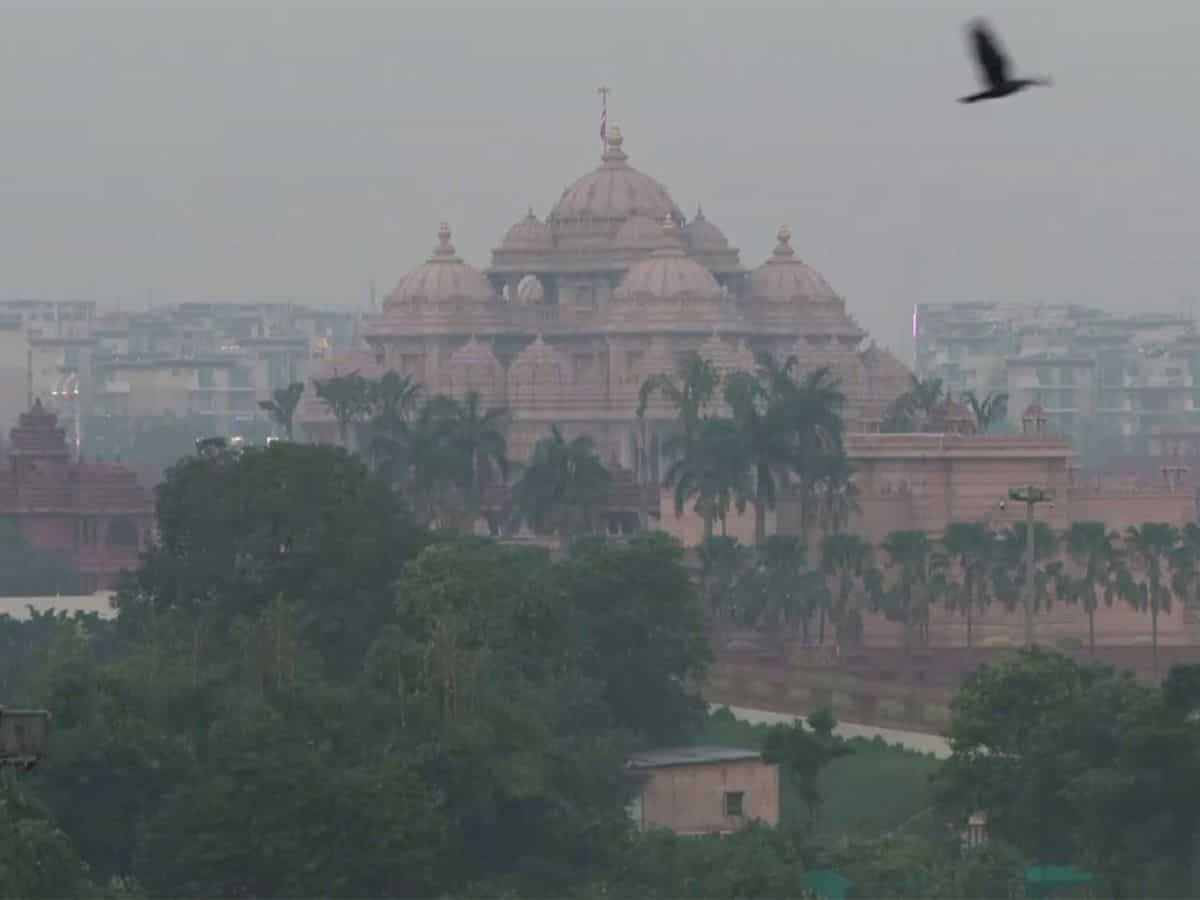
It's that time of the year! Delhi AQI worsens to 'severe' from 'very poor' amid Diwali dazzle
Published on 20/10/2025 06:39 PM
Have you ever thought about whether the air you’re breathing is actually good for your health, especially if you’re living in Delhi-NCR? The truth is, it’s not. But what factors are responsible for that?
The reality is that many factors contribute to the poor air quality, from vehicle emissions and industrial pollution to construction dust and garbage burning in nearby areas, resulting GRAP-2 invoked in Delhi.
As Diwali approaches, excitement fills the air, some people wait to invest in gold, while others wait to burst crackers. But amidst all the celebrations, the rising AQI adds another layer to our worries. Gold prices might be going up, it is costly but still a long-term investment.
However, an increase in the AQI gives no benefit at all. It only leads to bigger health problems in the future, something we simply can’t afford to ignore.
Delhi Air Quality Index (AQI) has remained in the category of poor and very poor from past few days. As per the data of Central Pollution Control Board (CPCB), yesterday Delhi recorded an AQI of 296 which falls under poor category.
Few days before GRAP-1 was imposed in Delhi-NCR region and now, the Commission for Air Quality Management (CAQM), has imposed stage 2 of the GRAP with immediate effect.
"Actions under Stage-1 and 2 of the extant GRAP shall be implemented, monitored and reviewed in right earnest by all the agencies concerned in the entire NCR to ensure that the AQI levels do not slip further. All implementing agencies shall keep strict vigil and vigil and intensify measures to the extent of the GRAP schedule. Citizens may be requested to strictly adhere to the citizen charter under GRAP Stage-1 and 2," ANI report cited CAMQ order.
Delhi
Anand Vihar: 391 (poor)
Akshardham: 411 (severe)
Ashok Vihar: 403 (severe)
Bawana: 383 (very poor)
Chandni Chowk: 339 (very poor)
Dwarka-Sector 8: 367 (very poor)
NSIT Dwarka: 414 (severe)
Okhla Phase-2: 354 (very poor)
NCR
Sector-125, Noida: 287 (poor)
Sector-1, Noida: 337 (very poor)
Sector-116, Noida: 361 (very poor)
Indirapuram, Ghaziabad: 346 (very poor)
Vasundhara, Ghaziabad: 356 (very poor)
Now, how do we even know how bad the air is? That’s where or not. the AQI (Air Quality Index) comes in. It tells us the level of pollution in the air and helps us understand if it’s safe to breathe.
So, as per National Air Quality Index data, the below mentioned categories tells what AQI value tells us, is it safe for us or not:
0-50: It is considered good-quality air, indicating minimal or no health impact.
51-100: Air quality at this level is satisfactory but may lead to slight discomfort among sensitive groups.
101-200: Considered moderate, this air quality can lead to discomfort for individuals suffering from asthma, lung, or heart diseases.
201-300: Classified as poor, this air quality can lead to respiratory discomfort and health problems with extended exposure.
311-400: Cities falling under this range are classified as having very poor air quality, an alarming condition that can lead to respiratory illnesses with prolonged exposure.
Akanksha