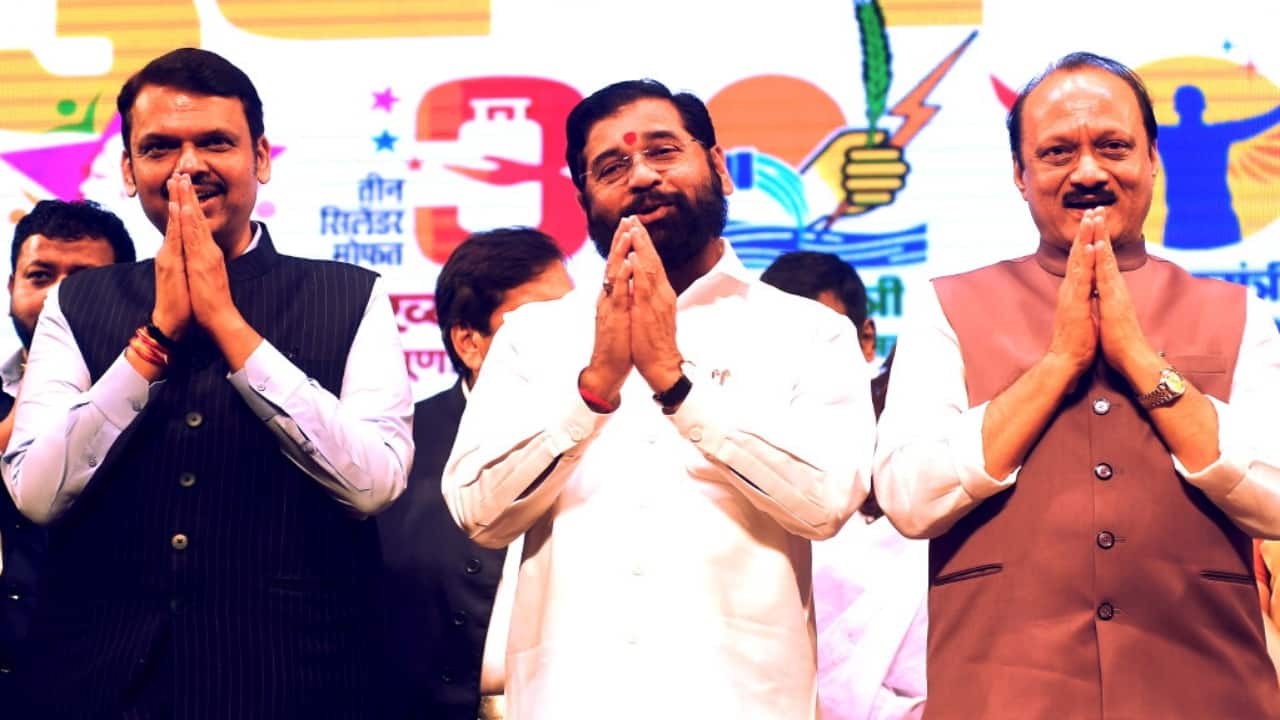
Maharashtra Cabinet to meet in Ahilyanagar on May 6: Mahayuti's messaging and political significance of meeting venue explained
Published on 28/04/2025 12:45 PM
The Maharashtra Cabinet under the leadership of Chief Minister Devendra Fadnavis is set convene its first meeting in Ahilyanagar (formerly Ahmednagar). While the agenda for the said meeting is yet to be finalised, the meeting assumes significance in view of the 300th birth anniversary of 18th-century warrior queen Ahilyabai Holkar who was born in the district.
The meeting of the Mahayuti Cabinet is likely to focus on a comprehensive development package for the district with a special focus on the renovation of historical monuments.
Elaborate arrangements underway
As per reports citing sources, the meeting will see all 42 ministers of the Cabinet in attendance, including CM Fadnavis and Deputy CMs Eknath Shinde (Shiv Sena) and Ajit Pawar (NCP).
The meeting, which was earlier scheduled for April 29, was pushed ahead to May 6 to allow the administration more time to make adequate arrangements.
The preparations for the meeting is being led by state Legislative Council chairman Ram Shinde and Water Resources Minister Radhakrishna Vikhe-Patil, along with half a dozen departments. The Public Works Department has issued a Rs 1.5 crore tender to make arrangements and build basic infrastructure in Chondi for the meeting.
Why Ahilyanagar?
While the Fadnavis government holds cabinet meetings every week in Mumbai, past governments including those led by Congress-NCP and Shiv Sena-BJP have held Cabinet meetings in Chhatrapati Sambhajinagar (formerly Aurangabad) to send a message of their commitment to the development of the drought-prone region.
The Mahayuti government's decision to hold a full-fledged Cabinet meeting in Ahilyanagar marks the first for any government in the state.
The Cabinet meeting will witness the government show its reverence to the warrior queen and her extraordinary contributions. Though highly revered by all castes and communities in the state, the Holkars of present day belong to the Dhangar community, an influential vote bank that comprises 9 percent of the state's population that wields considerable sway in at least 9 Lok Sabha seats and 35-40 Assembly constituencies.
BJP's past attempts to woo Dhangar community
The BJP's efforts to woo the Dhangar community traces its origin to the 1980s when state BJP ideologue Vasant Bhagwat articulated the MADHAV formula – Mali, Dhangar and Vanjari – as part of the party’s social engineering efforts to consolidate its electoral base amongst the state’s prominent Other Backward Class (OBC) and tribal communities.
The meeting also assumes significance amid the BJP's efforts to placate the anger of the community in view of the government's yet-to-be-fulfilled promise of providing Dhangars reservation under the Scheduled Tribe (ST) category in 2012-13.
The Dhangars are currently listed under the Nomadic Tribe C list with a 3.5 percent reservation in government jobs and educational institutions. However, they have been agitating for reservation under the ST category. Over the years though, the Fadnavis-led governments, both in his first tenure from 2014 to 2019 and the current one since 2024, have earmarked welfare schemes and funds for the Dhangar community.
Who was Ahilyabai Holkar?
Born in May 1725 in Chondi (located in present-day Ahilyanagar), Ahilyabai was married at the age of 12 to Khanderao Holkar, the son of Subedar Malhar Rao Holkar, a prominent Maratha ruler. She was the daughter of Patil Mankoji Shinde belonged to the Dhangar clan, a shepherd community that played a crucial role during the Maratha resurgence.
After the untimely death of her husband Khanderao in 1754 and her father-in-law Malhar Rao in 1766, Ahilyabai ascended to the throne in the face of intense opposition. However, she is fondly remembered as an empowered woman ruler who made an extraordinary mark with her administrative ability and vision.
Her tenure at the throne was marked by her administration’s public welfare efforts and immense contributions to the renovation and building of places of worship. In 1780, Ahilyabai had the Kashi Vishwanath temple in Varanasi rebuilt, nearly a century after Mughal emperor Aurangzeb ordered its destruction. Apart from holy sites such as Badrinath, Dwarka, Omkareshwari, Gaya, and Rameswaram, Holkar also supported the construction of resting lodges for travellers, and of public ghats.
Discover the latest Business News, Budget 2025 News, Sensex, and Nifty updates. Obtain Personal Finance insights, tax queries, and expert opinions on Moneycontrol or download the Moneycontrol App to stay updated!
${res.must_watch_article[0].headline}
Sensex Today Jammu Kashmir News Live Ather Energy IPO JNU Poll Results GIFT Nifty India Economy Apple App Store Dalai Lama TS SSC Results 2025 IPL Points Table 2025
Business Markets Stocks India News City News Economy Mutual Funds Personal Finance IPO News Startups
Home Currencies Commodities Pre-Market IPO Global Market Bonds
Home Loans up to 50 Lakhs Credit Cards Lifetime Free Finance TrackerNew Fixed Deposits Fixed Deposit Comparison Fixed Income
Home MC 30 Top Ranked Funds ETFs Mutual Fund Screener
Income Tax Calculator EMI Calculator Retirement Planning Gratuity Calculator
Stock Markets
News18 Firstpost CNBC TV18 News18 Hindi Cricketnext Overdrive Topper Learning
About Us Contact Us Advisory Alert Advertise with Us SupportDisclaimer Privacy Policy Cookie Policy Terms & Conditions Financial Terms (Glossary) Sitemap Investors
You are already a Moneycontrol Pro user.