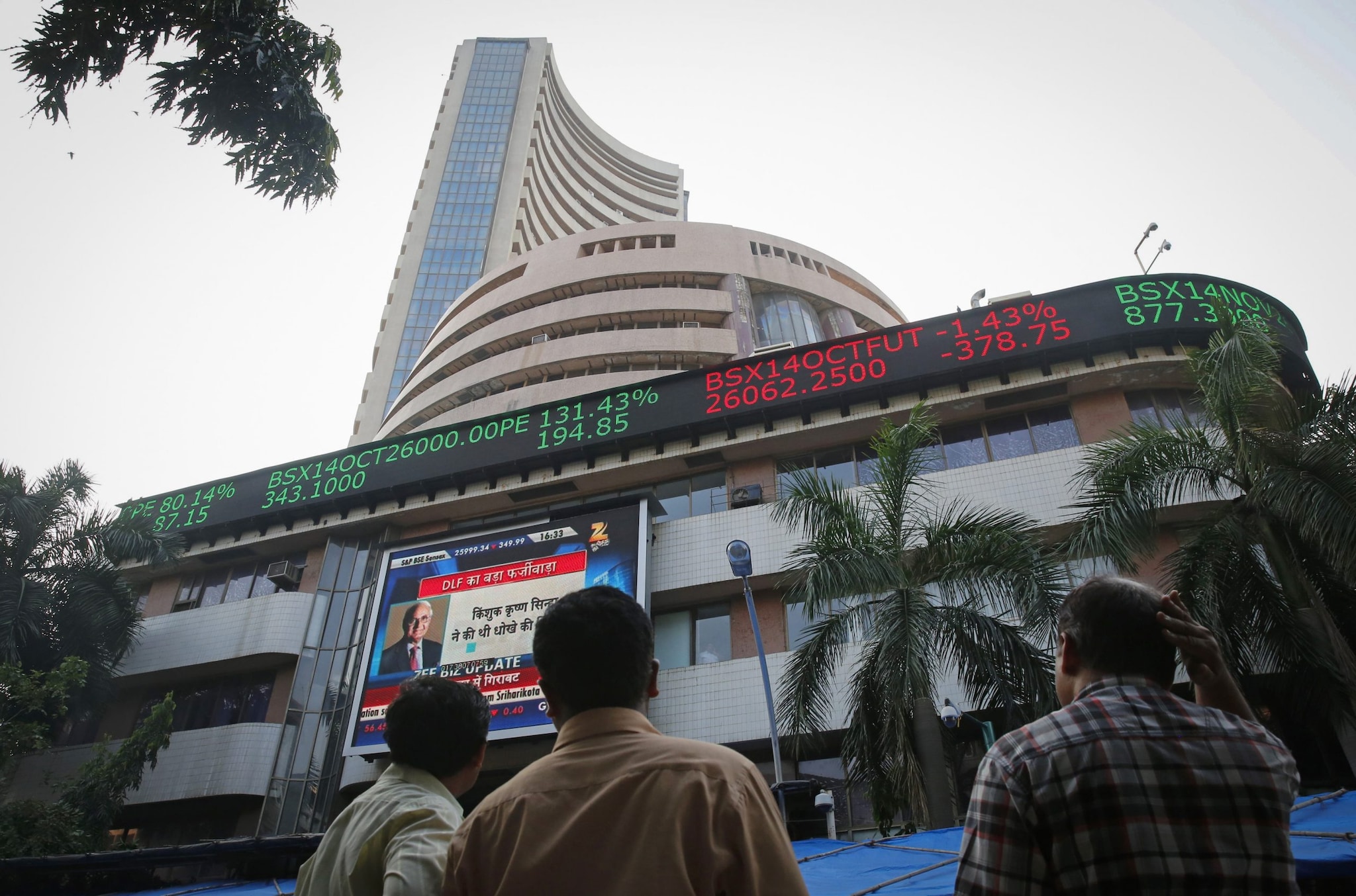
Markets in capitulation phase; worst of panic likely behind: Quant MF’s Sandeep Tandon
Published on 25/03/2026 08:53 PM
Markets in capitulation phase; worst of panic likely behind: Quant MF’s Sandeep TandonSandeep Tandon and Harish Krishnan see the oil shock led correction as capitulation, with India equities turning attractive and poised to outperform into 2026.By Prashant Nair | Nigel D'Souza March 25, 2026, 8:53:43 PM IST (Published)7 Min ReadMarkets are showing clear signs of capitulation and the worst of the ongoing panic may already be behind, according to Sandeep Tandon, Founder & CIO of Quant Mutual Fund, who believes the recent correction has created a strong opportunity for investors to increase equity exposure.
Speaking at CNBC-TV18’s Market Townhall, Tandon said, “We think we are getting signs of capitulation, where even bullish sentiment is fading,” adding that this phase typically marks the final leg of market declines. He maintained that while crude prices may stay elevated in the near term, the spike is unlikely to sustain, noting, “By the end of the year, I believe crude will be below $70. So the concern is overstated.”
Tandon reiterated that 2026 was always expected to be a “fragile” year marked by price-to-earnings contraction and global equity corrections. However, he argued that markets have already priced in much of the news flow and India could start outperforming global peers from April, potentially hitting new highs later in the year.
“We are increasing equity exposure and deploying cash,” he said, calling the current phase a strong opportunity after a prolonged period of underperformance.
Echoing a constructive stance, Harish Krishnan, CIO of Equity at Aditya Birla Sun Life AMC Ltd, said the recent 8–9% market correction following the oil shock should be viewed in the context of broader structural improvements in the economy.
He highlighted policy resets over the past 18 months, including tax cuts, rate easing, sovereign rating upgrades and trade agreements, which have strengthened India’s growth outlook.
Krishnan argued that near-term volatility should not distract long-term investors.
“We should look at this correction favourably rather than worry about it,” he said, adding that valuations have turned “reasonably attractive in many parts of the market.”
On the global energy shock, he cautioned that the world may struggle to absorb a prolonged spike in crude prices, increasing the likelihood of a coordinated de-escalation response.
In that scenario, he advised investors to focus on companies that are becoming more competitive amid disruptions rather than tracking short-term market moves.
Both fund managers indicated that despite near-term challenges for sectors such as manufacturing and logistics, the broader market environment is turning favourable, with the current correction offering a window to reposition portfolios for the next cycle.
Also Read | Is India's worst March since 2020 the buying opportunity investors were waiting for?
Edited excerpts:
Q: We were having this conversation early on the earlier panel, right? It's not just this one shock. It's like shock after shock after shock. Start with the tariff one. Then there was the AI one, and now this is the oil shock. Let's start with the latest, which is this oil shock that we've seen and the 8–9% correction in the index. Have valuations become reasonable? Harish, let me start with you.
Krishnan: So clearly, as you said, this is a here-and-now situation, but I just want to contextualise that over these 18 months, we've focused on five key resets that have happened. We've had domestic demand getting fired by tax cuts. You've seen rate cuts happening. You've seen a currency upgrade in the form of a sovereign upgrade. You've seen trade deals with 70% of the world's economic output. And then you are also starting to see a transmission of the rate cut cycle. This is what had happened before the war broke out in the Middle East.
So when you are a farmer and you start looking at owning the farm for the next, say, 50 or 70 quarters, what happens in the first two quarters has very little meaning compared to the overall competitiveness that eventually comes through. Therefore, we think that in this kind of framework, where we have done a lot of heavy policy shifts in response to earlier issues, we should look at this correction favourably rather than worry about it. That is point number one.
Secondly, to your question about the energy shock, is it only India that is going to get impacted, or will it have a cascading impact on the rest of the world? Let us draw our attention to what happened during the Ukraine conflict. At its peak, when there was an overall commodity boom, agri-commodities went through the roof. The overall crude shock was roughly about 5.3% of world GDP. At today’s prices, it is close to about 4.6–4.7% of world GDP, if annualised over the next year.
So there is still some gap, but the bigger point is that the Western world had far lower interest rates at that time. Today, a lot of that is already priced in, and that is going to have a far bigger knock-on effect. So if I were to contextualise whether the world can absorb such a large shock, the answer is no. That means there will likely be a more pragmatic response, with administrations and the Gulf countries working towards de-escalation.
If that is the base premise, we think valuations are reasonably attractive in many parts of the market. Rather than getting obsessed about the next three to six months, we should look at companies that have become more competitive and are on the right side of these disruptions.
Q: But Sandeep, to kickstart, you use many tools to analyse whether markets have priced in enough damage or if more correction is likely. What do you say?
Tandon: So, at the beginning of the year, I had described 2026 as a “fragile” year and a PE contraction year. We also talked about a correction in global equities, particularly in developed markets, and a massive correction in silver and gold, which had seen a euphoric move.
Now, if you really look at it, markets have corrected a lot. We think we are getting signs of capitulation, where even bullish sentiment is fading. This is typical when global houses make aggressive crude forecasts—it’s not the first time. It’s a human reaction.
However, the relevance of oil has declined compared to earlier periods. Gas and renewables are gaining importance. Based on our predictive analytics, oil may remain elevated in the near term, but this phase will not last long. We are in the final leg of this crisis, though it may extend by a few days.
By the end of the year, I believe crude will be below $70. So the concern is overstated. Our market-implied analytics suggest this, and we follow the data. We are not overly concerned despite the panic.
Yes, manufacturing, utilities, inputs, and logistics face challenges. But every crisis presents opportunity. India has already corrected significantly. We turned negative in July 2024, and by January 2026, conditions looked similar again. Now we see signs of improvement.
From April onwards, India could outperform global equities, fall less in downturns, and potentially hit new all-time highs by mid-year or year-end. This is a classic capitulation phase. We are increasing equity exposure and deploying cash. It is a strong opportunity after two years of underperformance.
Q: You’ve maintained that India will outperform despite 2026 being challenging. Given that, what are the top two themes you are looking at?
Tandon: If you want to play the data centre story, power is a key theme—similar to how copper played into the EV story earlier. Energy is a major opportunity, and we have significant exposure there.
Second is pharma. Not all companies, but many generics players look attractive. Some will face input cost pressures due to crude-linked derivatives, so stock selection is important.
We also like BFSI, particularly private sector banks, insurance, asset management, and wealth management companies. These are long-term opportunities.
Consumption, especially FMCG, is still expensive but underperforming. Many stocks are neglected, creating opportunities, including in food processing.
On the other hand, manufacturing is uncertain due to unclear demand and cost dynamics. We are cautious there and prefer to reduce exposure until clarity improves.Continue ReadingTagsindian equity marketiran crisis