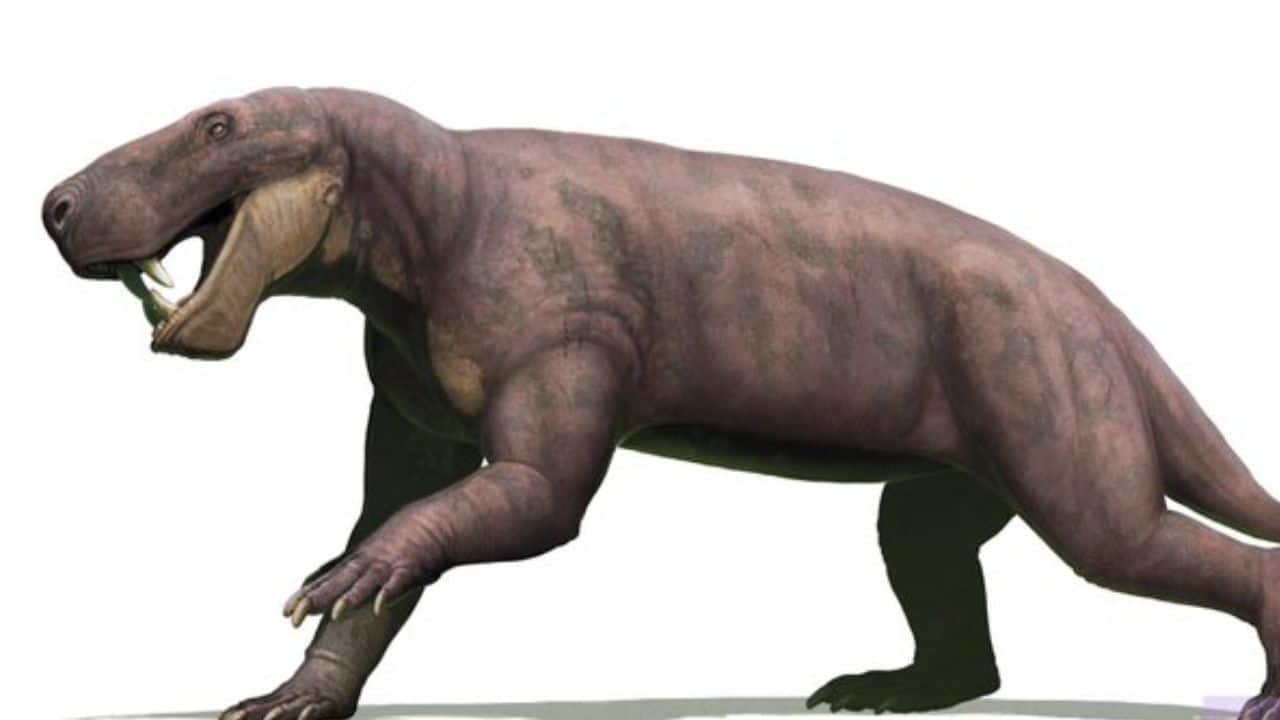
Meet Inostrancevia: The ancient predator that roamed before dinosaurs after Earth's worst extinction
Published on 28/04/2025 05:57 PM
It is difficult to picture how Earth nearly died. About 250 million years ago, life on the planet was hanging by a thread. Scientists refer to this horrific period as the "Great Dying", where it became uncommon and valuable to survive. Today, recent research exposes that a formidable killer known as Inostrancevia emerged during this era of devastation.
The Permian-Triassic extinction eliminated almost 90 percent of all species. The devastating loss came after violent volcanic eruptions throughout the Siberian Traps. The eruptions fuelled lethal climate changes, ocean acidification and global loss of oxygen. Ecosystems broke down in these circumstances, paving the way for newcomers. One of them was Inostrancevia, a gruesome top predator that survived for a brief period amidst the turmoil.
Inostrancevia was one of the gorgonopsians, an order of old carnivorous therapsids. It was distinguished by its huge, saber-like canines and robust, massive body. Its leathery skin probably looked similar to that of today's elephants or rhinoceroses. It weighed up to 400 kilograms and reached almost four metres in length, ruling its environment with very few natural competitors. Inostrancevia primarily fed on dicynodonts and pareiasaurs, herbivorous reptiles with tusks, to place itself at the top of the food chain.
Previously, Inostrancevia fossils were restricted to Russia. Things changed with discoveries reported in 2010 and 2011. Two incomplete skeletons were discovered by palaeontologists in South Africa's Karoo Basin. The NMQR 4000 and NMQR 3707 fossils contained nearly complete skulls and other parts. The implications of the discoveries are that Inostrancevia traveled over 7,000 miles on Pangaea, the ancient supercontinent, to occupy vacant predator niches caused by extinction in the southern districts.
This extensive journey underscores the strength and flexibility of ancient organisms. As the Permian came to a close, numerous top predators in the south went extinct. Inostrancevia probably migrated south, exploiting newly open ecological niches. Although surviving for a while, the predator eventually succumbed to the deteriorating environmental conditions. Its extinction is a poignant reminder of the fragility of life in the midst of severe change.
Now, researchers hope that studying animals such as Inostrancevia can be of value. With the climate crisis and destruction of habitats menacing contemporary ecosystems, learning from historical extinctions has never been more important. Safeguarding diversity is still imperative if humans ever want to stop repeating the earth's blackest pages.
Discover the latest Business News, Budget 2025 News, Sensex, and Nifty updates. Obtain Personal Finance insights, tax queries, and expert opinions on Moneycontrol or download the Moneycontrol App to stay updated!
${res.must_watch_article[0].headline}
Sensex Today Jammu Kashmir News Live Ather Energy IPO JNU Poll Results GIFT Nifty India Economy Apple App Store Dalai Lama TS SSC Results 2025 IPL Points Table 2025
Business Markets Stocks India News City News Economy Mutual Funds Personal Finance IPO News Startups
Home Currencies Commodities Pre-Market IPO Global Market Bonds
Home Loans up to 50 Lakhs Credit Cards Lifetime Free Finance TrackerNew Fixed Deposits Fixed Deposit Comparison Fixed Income
Home MC 30 Top Ranked Funds ETFs Mutual Fund Screener
Income Tax Calculator EMI Calculator Retirement Planning Gratuity Calculator
Stock Markets
News18 Firstpost CNBC TV18 News18 Hindi Cricketnext Overdrive Topper Learning
About Us Contact Us Advisory Alert Advertise with Us SupportDisclaimer Privacy Policy Cookie Policy Terms & Conditions Financial Terms (Glossary) Sitemap Investors
You are already a Moneycontrol Pro user.