Pahalgam to Moscow, Kabul to London: Why Pakistan is a factory for global terror exports
Published on 01/05/2025 04:03 PM
On April 22, India once again found itself grappling with a brutal reminder of cross-border terror when 26 innocent people, mostly tourists, were brutally killed by terrorists in Jammu and Kashmir’s Pahalgam. The responsibility was claimed by The Resistance Front – not any new terror outfit, but a proxy of Pakistan-based Lashkar-e-Taiba.
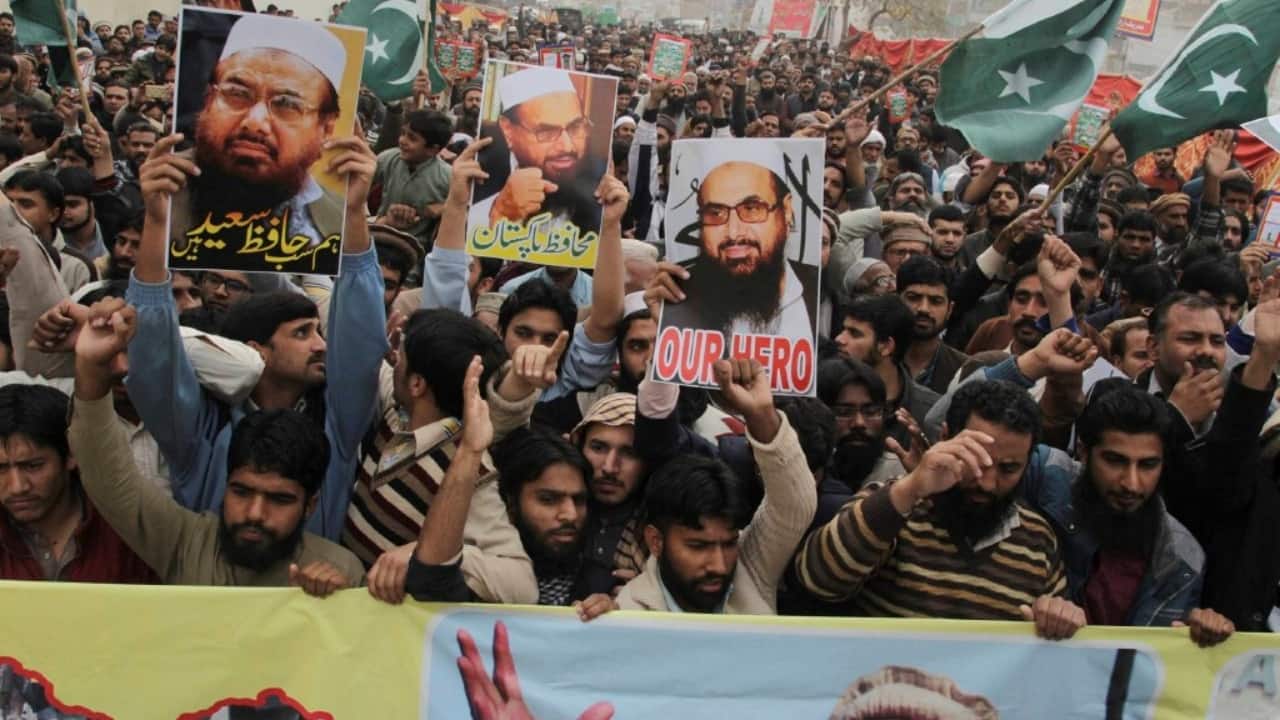
For New Delhi, the attack is yet another proof of Islamabad’s sustained campaign of exporting terror across borders. But Pahalgam is not an incident in isolation. Rather, it brings to light a long and disturbing pattern of how Pakistan, over the years, has become a global epicentre of terrorism, with its state institutions, especially the military and the Inter-Services Intelligence (ISI), deeply enmeshed in training, funding, and protecting terror groups.
From India to Afghanistan, Russia to Iran, and even the United Kingdom, Pakistan’s fingerprints are visible in attacks that have claimed hundreds of lives and destabilized entire regions.
Several defence experts, in resent conversations with Moneycontrol, have also pointed towards “Pakistan adopting terrorism as a foreign policy tool” – with India, with Afghanistan and others – since its inception.
India: The Perpetual Target
India has borne the brunt of Pakistan’s terror export for decades. The 2008 Mumbai terror attacks, in which 166 people were killed, were orchestrated by LeT, operating openly from Pakistani soil. Even Nawaz Sharif, Pakistan’s former Prime Minister, hinted at his government’s complicity in shielding the attackers.
Former Pakistani military ruler Pervez Musharraf openly admitted that his regime trained jihadis to wage war in Kashmir, calling global terrorists like Osama bin Laden and Jalaluddin Haqqani “heroes.”
The recent Pahalgam attack falls squarely within this pattern. TRF, like its parent organization LeT, operates with impunity inside Pakistan, changing names but not intentions. These rebranded terror outfits serve one purpose: to provide Pakistan plausible deniability while keeping the terrorist pressure on India alive.
Afghanistan: A Decades-Long Proxy War
Pakistan’s role in destabilizing Afghanistan is even more entrenched. The ISI has been repeatedly linked to the Afghan Taliban and the Haqqani Network, both responsible for some of the deadliest attacks on Afghan soil. From the 2008 bombing of the Indian embassy in Kabul to the 2011 assault on the US embassy, these attacks have often had logistical and ideological roots tracing back to Pakistan.
As journalist Carlotta Gall wrote, the ISI’s role in these attacks was not the work of rogue agents, but rather operations “sanctioned and monitored by senior officials.”
While the Taliban’s takeover in 2021 may have been celebrated in Islamabad, the blowback has been severe. Taliban fighters no longer obey Pakistan’s directives blindly, and the Tehrik-i-Taliban Pakistan (TTP)—a group once cultivated by the ISI—has turned its guns on the Pakistani state.
Russia: The Moscow Link
Even thousands of miles away, in Moscow, Pakistan’s terror networks have left a mark. Following the 2024 Crocus City Hall attack, in which over 140 people died, Russian investigators found possible links to Pakistani extremist ecosystems. While the attackers were Tajik nationals, their radicalization, training, or logistical support is under scrutiny, with Pakistani territory flagged in intelligence sharing between Moscow and New Delhi.
This has prompted Russia to privately pressure Islamabad, even as it refrains from publicly accusing Pakistan—yet.
Iran: Direct Military Retaliation
For years, Iran has accused Pakistan of harbouring Jaish ul-Adl, a Sunni terror group that regularly attacks Iranian forces from bases in Balochistan. But tensions reached a boiling point in January 2024, when Iran launched drone and missile strikes inside Pakistan, targeting Jaish hideouts. This was not just retaliation—it was a declaration that Iran no longer trusted Pakistan to deal with terrorists on its own soil.
The Iranian leadership’s frustration lies in Pakistan’s double game: feigning victimhood of terror while exporting it across borders for strategic gain.
The UK: The Quiet Radicalization
The tentacles of Pakistan-linked radical networks have even reached London. The 7/7 London bombings in 2005, which killed 52 people, were carried out by four British nationals—three of whom had spent time in Pakistan prior to the attacks. Intelligence reports confirmed that the bombers had received ideological training and possibly explosives training during their trips.
Osama bin Laden and Abbottabad: The Smoking Gun
Nothing exposed Pakistan’s duplicity more clearly than the discovery of Osama bin Laden living undisturbed in Abbottabad, just a stone’s throw from Pakistan’s Military Academy. The 2011 U.S. Navy SEAL raid that killed him wasn’t just a victory for counterterrorism—it was a searing indictment of Pakistan’s security establishment.
The fact that the world’s most wanted terrorist could live for years in a compound next to a military base without detection stretches credibility. It laid bare the ISI’s protective ring around radical elements, confirming long-standing fears in global intelligence circles.
Bangladesh: The Rohingya Connection
Pakistan’s ISI has also been accused of meddling in Bangladesh through its support of Jamaat-ul-Mujahideen Bangladesh (JMB). The group was behind the 2016 Dhaka café attack, which killed 20 hostages, including foreigners. In 2015, Pakistani diplomats were expelled from Dhaka after being caught transferring funds to JMB operatives.
Perhaps more alarming is the 2020 revelation that ISI helped train Rohingya refugees in Cox’s Bazar, through JMB networks, to infiltrate India. This cross-border terror strategy, enabled via Gulf-based funding channels and Pakistani handlers, reflects the transnational scope of Pakistan’s terror playbook.
Pakistan’s Terror Infrastructure
Pakistan’s terror machinery isn’t limited to rogue groups. It’s backed by a state-run infrastructure – training camps in PoK, Waziristan, Punjab and Khyber Pakhtunkhwa, where training is given to outfits like LeT, JeM, Hizbul Mujahideen, and even ISIS-K.
A 2019 report by the US State Department described Pakistan as a country that “continues to serve as a safe haven for regionally focused terrorist groups.” The European Foundation for South Asian Studies went further, calling the Pakistan Army-ISI-terror alliance “an unholy alliance.”
Even insiders have come clean. Brigadier Shah, a retired Pakistani officer, admitted on national TV that Pakistan spent crores to "mainstream" Jamaat-ud-Dawa—a front for LeT.
The Normalization of Terrorism
Perhaps most damning is the normalization of terrorism within Pakistan’s official narrative. Former president Pervez Musharraf publicly called jihadis “heroes,” lumping Osama bin Laden and Haqqani in with those revered by Pakistan’s military establishment.
Recently, Pakistan’s Defence Minister Khawaja Asif admitted to Pakistan’s involvement in supporting and funding terrorist organisations for the past three decades, often acting on behalf of Western interests during the Cold War era. Asif's admission not only exposes Pakistan's complicity in terrorism but also highlights the enduring consequences of such policies.
It also exposes Islamabad’s double game – on the one hand, it continues to nurture and sponsor these terror outfits, and on the other hand, it plays victim card, calling itself the “biggest victim at the hands of terrorism.”
Discover the latest Business News, Budget 2025 News, Sensex, and Nifty updates. Obtain Personal Finance insights, tax queries, and expert opinions on Moneycontrol or download the Moneycontrol App to stay updated!
${res.must_watch_article[0].headline}
Stock Market Holiday Jammu Kashmir News Live Waves Summit 2025 Live GST Collections in April Heatwave in India Q4 Results 2025 Live Hit 3 Review JKBOSE 10th Result 2025 Kolkata News IPL Points Table 2025
Business Markets Stocks India News City News Economy Mutual Funds Personal Finance IPO News Startups
Home Currencies Commodities Pre-Market IPO Global Market Bonds
Home Loans up to 50 Lakhs Credit Cards Lifetime Free Finance TrackerNew Fixed Deposits Fixed Deposit Comparison Fixed Income
Home MC 30 Top Ranked Funds ETFs Mutual Fund Screener
Income Tax Calculator EMI Calculator Retirement Planning Gratuity Calculator
Stock Markets
News18 Firstpost CNBC TV18 News18 Hindi Cricketnext Overdrive Topper Learning
About Us Contact Us Advisory Alert Advertise with Us SupportDisclaimer Privacy Policy Cookie Policy Terms & Conditions Financial Terms (Glossary) Sitemap Investors
You are already a Moneycontrol Pro user.