Rafale vs F-16: 3 things to know about India and Pakistan's top fighter jets
Published on 09/05/2025 03:02 PM
As tensions between India and Pakistan escalate following Operation Sindoor, comparisons have resurfaced between two frontline fighter jets India’s Dassault Rafale and Pakistan’s F-16 Fighting Falcons. While both jets are powerful in their own right, they differ in generation, technology, and mission capability.
The key advantage lies in the Meteor missile, with a 150+ km range and a large "no-escape zone". Pakistan’s F-16s carry the AIM-120C AMRAAMs, which are limited to a 100 km range and have a smaller kill zone. This means Rafale can fire first, and stay out of reach.
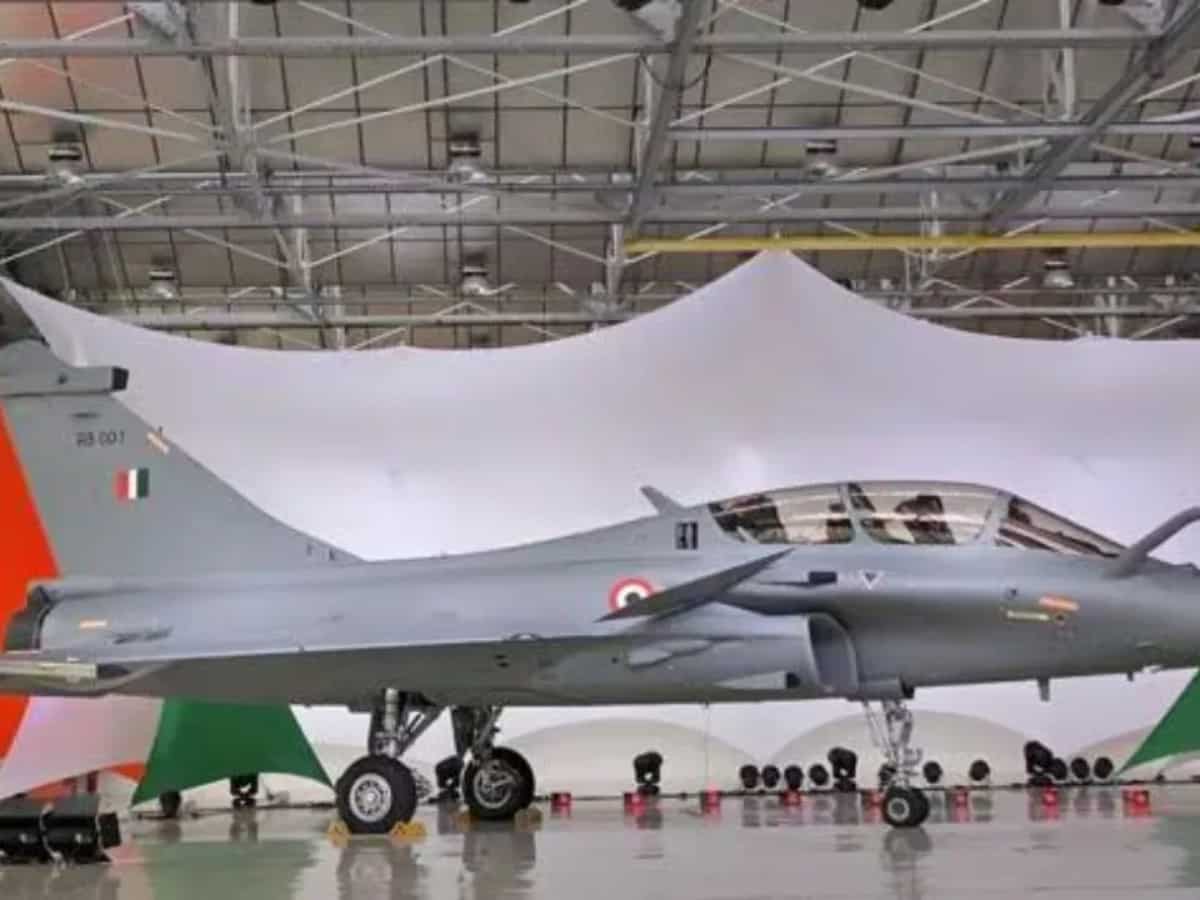
The Rafale, designed by France’s Dassault Aviation, is considered a 4.5-generation multirole fighter. It was inducted into the Indian Air Force in 2020 and comes with features like enhanced radar, electronic warfare systems, and multi-role capabilities.
Also Read: Defence Ministry to brief media on Operation Sindoor at 10 AM today
On the other hand, Pakistan’s F-16s, supplied by the US, belong to the older fourth-generation category. Most of Pakistan’s fleet comprises the F-16 Block 50/52 variants.
One of Rafale’s notable weapons is the Meteor missile, developed by MBDA, with an estimated range of over 150 km and a wider target engagement envelope. Pakistan’s F-16s are known to carry the AIM-120C AMRAAMs, which reportedly have a shorter effective range of about 100 km, as per U.S. Air Force data.
Additionally, the Indian Air Force Rafales are equipped with SCALP cruise missiles, which were reportedly used during Operation Sindoor. These air-launched missiles are designed for deep-strike precision, with a range of around 300 km according to manufacturer MBDA. Pakistan’s F-16s typically rely on JDAMs and other shorter-range precision-guided bombs, and as per public information, they do not have a comparable cruise missile system.
The Rafale’s AESA radar can detect threats 200 km out and track 40 targets at once. Pakistani F-16s are mostly equipped with mechanically scanned radars or basic AESA variants with shorter ranges. This gives Rafale "first-look, first-shoot" superiority in beyond-visual-range combat.
Pakistan’s use of the F-16 is also governed by end-user agreements with the US, which are understood to restrict their deployment in offensive roles against India. This has been a point of discussion in the past, including after the 2019 Balakot strikes. Rafale, by contrast, is fully integrated into India’s indigenous war doctrine alongside Su-30MKIs and Mirage-2000s.
Also Read: PIB Fact Check debunks seven instances of misinformation amid escalated tension
While comparisons between aircraft can be useful, air combat outcomes depend on many variables including pilot skill, mission planning, and support systems. Both aircraft are capable platforms with strengths in different areas. In the current situation, Rafales have reportedly demonstrated deep-strike capabilities, but it's important to note that actual combat performance involves more than just technical specifications.
Get Latest Business News, Stock Market Updates and Videos; Check your tax outgo through Income Tax Calculator and save money through our Personal Finance coverage. Check Business Breaking News Live on Zee Business Twitter and Facebook. Subscribe on YouTube.
LATEST NEWSBy accepting cookies, you agree to the storing of cookies on your device to enhance site navigation, analyze site usage, and assist in our marketing efforts.