Rajnath Singh flags off first locally built BrahMos missiles from Lucknow, calls it a milestone in India’s defence self-reliance
Published on 18/10/2025 02:15 PM
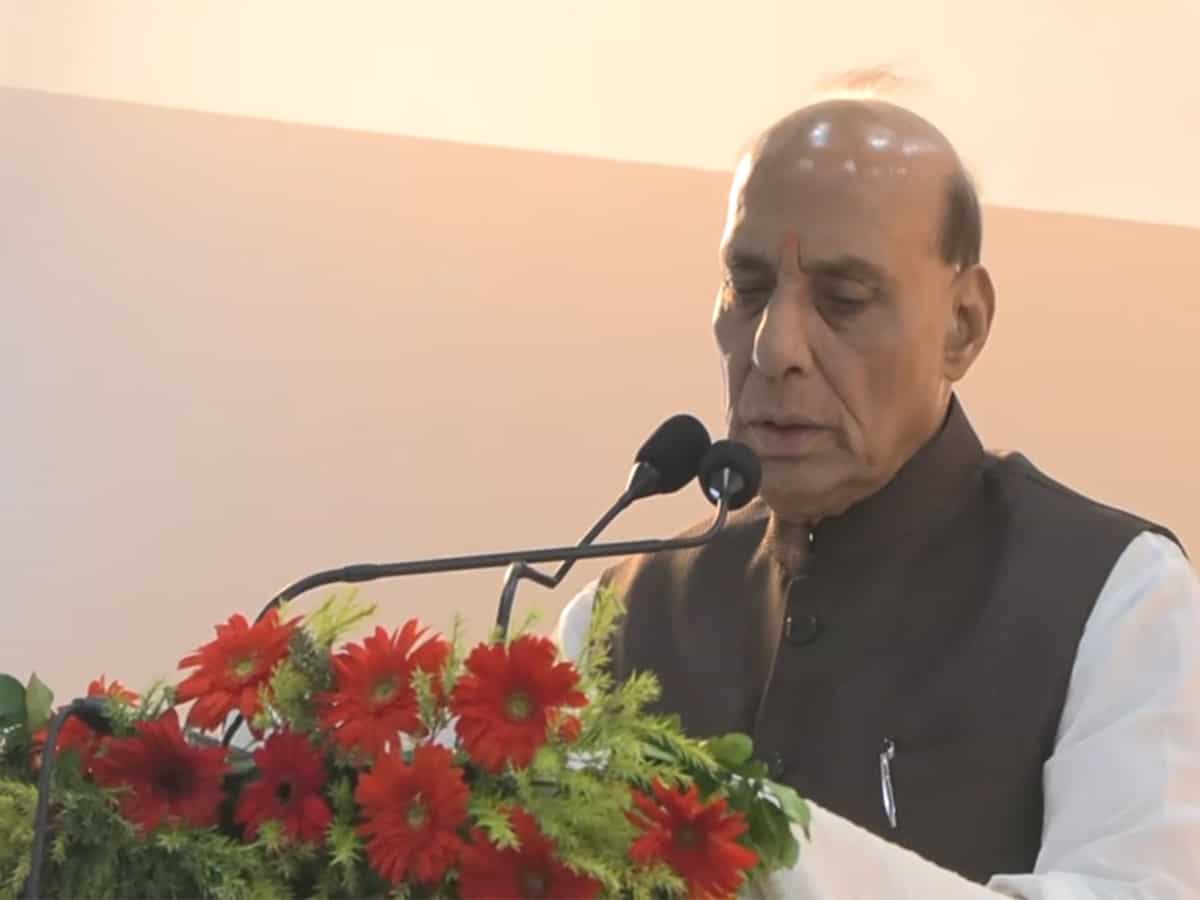
India reached another landmark in its defence manufacturing journey on Saturday, October 18, as Defence Minister Rajnath Singh flagged off the first batch of locally built BrahMos missiles from the BrahMos Aerospace production facility in Lucknow. Singh was joined by Uttar Pradesh Chief Minister Yogi Adityanath and Deputy Chief Minister Brajesh Pathak at the ceremony. The Defence Minister described the day as “historic”, saying that Lucknow’s emergence as a centre for advanced missile production reflected the country’s growing confidence and capability under the Atmanirbhar Bharat mission.
“This project symbolises India’s growing strength and self-belief. Lucknow is now known not just for its culture, but for its technological excellence,” Singh said.
The Lucknow production unit, inaugurated five months ago, is part of the Uttar Pradesh Defence Industrial Corridor. Built on nearly 200 acres at a cost of about Rs 380 crore, the facility is expected to produce around 100 BrahMos missiles each year, supplying all three armed forces.
The complex includes state-of-the-art booster and warhead buildings, which Singh inaugurated during his visit. The Defence Minister also witnessed a live virtual strike demonstration of a BrahMos missile launched from an Indian Air Force Sukhoi-30 aircraft.
Chief Minister Yogi Adityanath called the launch a “moment of accomplishment” for both the state and the nation. “Through this facility, we are fulfilling Prime Minister Narendra Modi’s vision of ‘Make in India’ and ensuring that India meets its own defence requirements with indigenous technology,” he said.
The BrahMos facility is expected to create direct and indirect employment for hundreds of skilled workers, engineers and technicians in Uttar Pradesh. The state government has provided more than 2,500 acres across six nodes for defence projects, which officials say has already generated jobs for over 15,000 people. Adityanath noted that the plant will also boost local revenue, with the state expected to earn Rs 150–200 crore annually in GST once production scales up. “We are ready to provide more land for defence research and manufacturing. This is the foundation of a self-reliant India,” he said.
The BrahMos missile, jointly developed by India’s Defence Research and Development Organisation (DRDO) and Russia’s NPO Mashinostroyeniya, is one of the fastest cruise missiles in operation today. Designed for precision strikes, the missile can be launched from land, air, sea and sub-sea platforms. Singh noted that the system’s reliability was proven during Operation Sindoor, where it played a decisive role in neutralising hostile targets. “BrahMos has become the backbone of our armed forces,” he said, adding that the Lucknow facility will further strengthen India’s deterrence capabilities.
“This project shows that India can not only defend its borders but also contribute to global security through indigenous innovation,” Singh said, calling the event a “historic achievement within five months of the unit’s inauguration.”
Ankit Kumar is a Senior Sub Editor at Zee Business. He covers international affairs, politics, climate change, business, finance and global elections. With experience acros