Rajya Sabha clears SHANTI Bill day after Lok Sabha nod; AERB to get statutory status
Published on 18/12/2025 09:04 PM
Parliament on Thursday passed a bill aimed at increasing the share of nuclear energy in India’s overall energy mix, promoting innovation in nuclear science and technology, and granting statutory status to the Atomic Energy Regulatory Board (AERB).
The Sustainable Harnessing and Advancement of Nuclear Energy for Transforming India Bill, 2025 (SHANTI Bill) was cleared by the Rajya Sabha, a day after it was passed by the Lok Sabha.
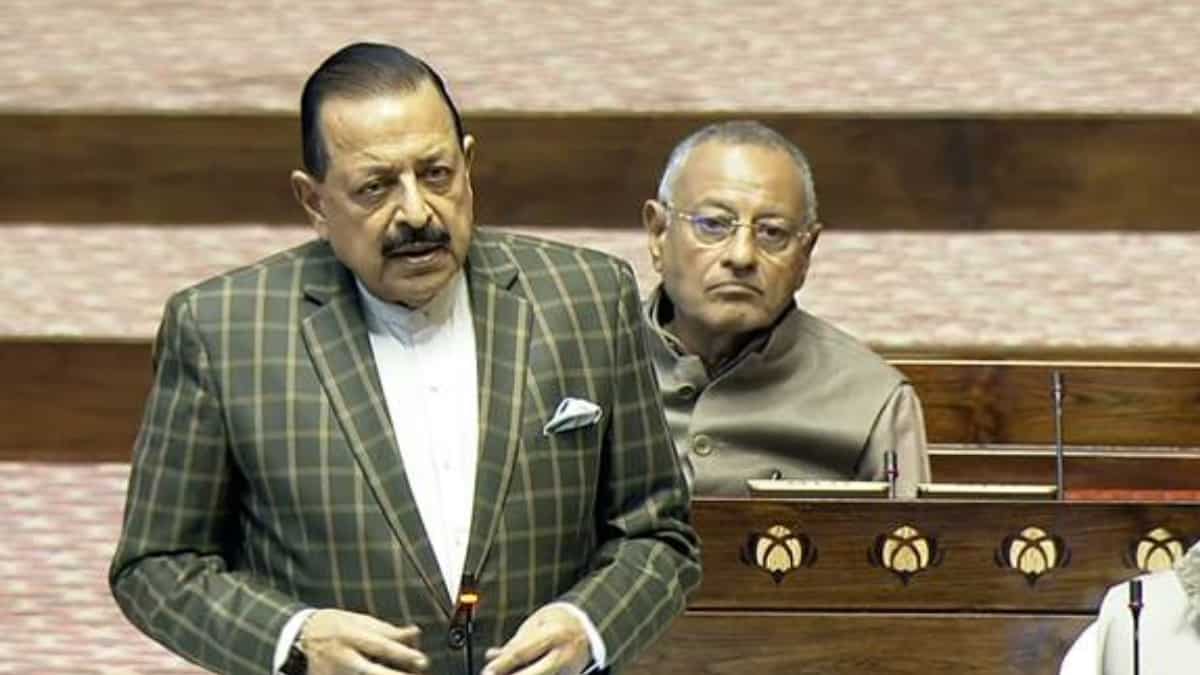
Replying to the debate, Science and Technology Minister Jitendra Singh sought to allay concerns raised by Opposition members, asserting that nuclear safety norms have not been diluted. The Bill repeals the Atomic Energy Act, 1962, and the Civil Liability for Nuclear Damage Act, 2010, consolidating their provisions into a modern legislative framework.
Singh said the new legislation is aligned with the objective of expanding nuclear energy’s role in India’s power mix, facilitating innovation in atomic science, extending its applications beyond power generation, and continuing to honour India’s obligations related to safety, security, safeguards and nuclear liability.
India has established a long-term plan which includes energy independence and the adoption of a carbon-free economy by the year 2070 with 100 gigawatts of nuclear power installed by 2047 as one of its milestones. The legislation particularly highlights the importance of domestic nuclear energy in the world's nuclear energy network, thus strengthening India’s role. The minister pointed out that, besides renewables, nuclear energy will be the major supporter in satisfying the growing demand in data processing, healthcare, and industry sectors.
Also Read: 'Reforming MGNREGA for Viksit Bharat': Lok Sabha passes Viksit Bharat-G RAM G Bill 2025
Opposition members strongly demanded that the Bill be referred to a standing or select committee, citing its long-term implications. They alleged dilution of liability provisions and questioned whether the legislation was being brought under external pressure. Amendments moved by Opposition members were subsequently negatived.
Responding to these concerns, Jitendra Singh said extensive consultations were held before finalising the Bill.
"Jairam Ramesh ji started his intervention with a suggestion that when the rules are framed, the views of others and all stakeholders should be taken into consideration. I have no hesitation to say that the bill has taken one year or so, or more than that, with very serious and multiple considerations, consultations at different levels inter-ministerial levels, sectoral level--with industry leaders, scientific experts, business potential partners, and even the startups. So all sections of stakeholders have been involved, and the process is continuing because it is a new experience for us (government) also," he said.
The minister said the Bill is part of India’s larger nuclear energy ecosystem, which includes small modular reactors. He also highlighted a Rs 1 lakh crore Research, Development and Innovation (RDI) fund aimed at encouraging private sector participation.
The Bill opens the atomic energy sector to private players while retaining government control over sensitive materials, spent fuel management, and regulatory inspections. Jitendra Singh said safety norms, security controls over fissile material, heavy water, and periodic inspections will remain firmly under government oversight.
He clarified that private entities will not have control over sensitive nuclear materials and that spent fuel management will continue to be handled by the government, as has been the practice for decades.
On liability, the minister said the Bill does not dilute compensation for victims. Operator liability has been rationalised through graded caps linked to reactor size to promote newer technologies such as small modular reactors, while ensuring full compensation through a multi-layered mechanism.
He said this includes operator liability, a proposed government-backed Nuclear Liability Fund, and additional international compensation through India’s participation in the Convention on Supplementary Compensation. Supplier liability, he added, was removed after considering global practices and advancements in reactor safety, while negligence and penal provisions remain enforceable.
Rejecting claims that the Bill weakens public sector capability, Jitendra Singh said the Department of Atomic Energy’s budget has increased by nearly 170 per cent over the past decade, and installed nuclear capacity has doubled since 2014.
The Bill, he said, enables responsible private and joint-venture participation to bridge resource constraints, reduce project timelines, and support the national goal of achieving 100 GW nuclear capacity by 2047 without compromising national security or public interest.
The minister noted that nuclear energy has applications beyond electricity generation, including cancer care, agriculture and industrial use. For the first time, the Bill explicitly recognises environmental and economic damage within the definition of nuclear harm. He said the legislation aims to create an enabling ecosystem for clean and reliable energy as India approaches the centenary of Independence, while reaffirming its commitment to the peaceful use of atomic energy.
In his remarks, Jairam Ramesh said India has made significant progress in the peaceful use of atomic energy and is operating nuclear reactors of varying capacities. He urged Indian private players to build on domestic strengths rather than depend on foreign companies.