Road to minerals to run through water! Waterways to get a slice of record capex—How to play theme on D-Street
Published on 05/02/2026 08:18 AM
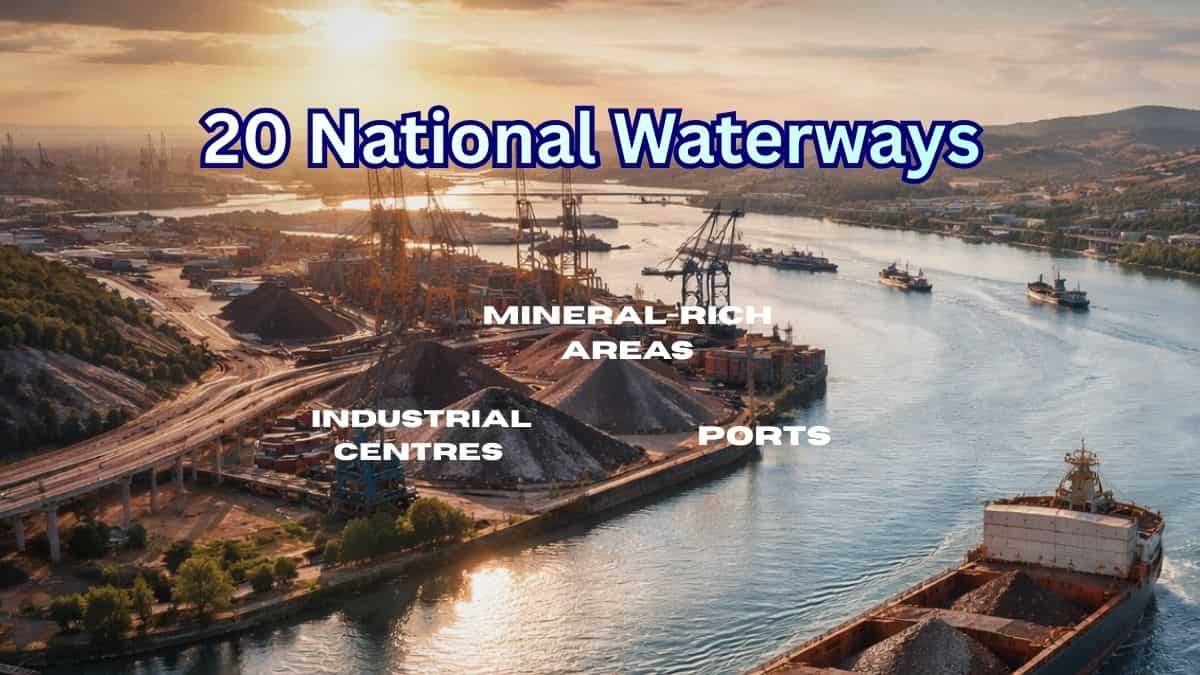
The Union Budget has proposed to establish 20 additional National Waterways in the next five years to connect mineral-rich areas and industrial centres with ports. With the proposed waterways sharing the overall logistics demand, the development is seen enhancing connectivity in the country, indirectly aiding the next leg of industrial and urban expansion in its economy.
A portion of the Centre's record capex will go into developing these waterways, which are set to share some of the burden on roadways and railways within the logistics space.
Most analysts are upbeat about this move for three main reasons:
The central government aims to promote environmentally sustainable movement of cargo.
The NW-5 project in Odisha will be connecting Talcher and Angul (significant mineral-rich regions in the state) and Kalinga Nagar (a key industrial centre) with the Paradeep and Dhamra ports.
The Union Budget has earmarked a record capital expenditure of Rs 12.2 lakh crore for FY27, an 8.9 per cent increase over the previous year.
According to consulting giant PwC, the higher allocation is expected to enable sustaining momentum in infrastructure creation required to support long-term economic growth.
The Infra Risk Guarantee Fund is expected to reduce risk during construction and early project phases and encourage greater private sector participation, according to PwC.
Budget Capex is utilised in projects expected to provide economic benefits over multiple years, including infrastructure.
By spending money this way, the government creates a multiplier effect that leads to private investment and enhanced capacity over years.
According to Ambit Capital, if executed well, this will make mining and processing more competitive in the country, which has one of the highest logistics costs in the world. However, it is difficult to build any impact on valuation at this stage, it adds.
The Centre also proposed an Infrastructure Risk Guarantee Fund to provide prudently calibrated partial credit guarantees to lenders, in a bid to boost private developers' confidence regarding risks during infrastructure development and construction phase.
It will also establish training institutes to train and skill youth around the waterways.
National Waterways
The country already has plans for 111 inland National Waterways, covering about 20,275 km across several states. However, only some of these routes are operational yet.
Official data shows that the domestic cargo movement hit a record 145.5-145.84 million tonnes in FY25 across developed national waterways, with operational length growing to around 4,894 km by the previous financial year.
How to play waterways theme on Dalal Street
Brokerage Elara Capital expects the record capex outlay to enhance connectivity with multi-modal execution in the infrastructure space, with a positive outlook on structural beneficiaries like construction equipment manufacturers, EPC companies, logistics players, railways, ports, CPSE REIT beneficiaries and select clean-energy enablers.
Within the energy and water space, its preferred picks are: Hindustan Construction Company (HCC), KNR Construction and PNC Infratech.
Its other picks from the broader infrastructure bucket include:
Ambit has a neutral outlook on metals.
Here are answers to a few frequently asked questions (FAQs) on the subject:
What is a National Waterway?
A National Waterway (NH) is a river or canal developed specially for inland water transport, including cargo and passengers.
When did India get its first National Waterway?
The first National Waterway in the country -- called NW-1 -- started operations in October 1986 the formation of the Inland Waterways Authority of India (IWAI).
How is a National Waterway different from a National Highway?
National Waterways are water-based routes -- operated on rivers or canals -- that enable pocket-friendly and eco-friendly cargo transfers.
National Highways are land-based roads enabling interstate travel and meant for private and commercial use.
Why does an economy need waterways?
Waterways enable enhanced economic activity while sharing some of the traffic on roads and railways and thereby strengthening the country's logstics space.
What are the examples of National Waterways in India?
Key examples include NW-1 -- Ganga-Bhagirathi-Hooghly, NW-2 -- Brahmaputra, and NW-3 (West Coast Canal, Kerala.
How many National Waterways does India have?
The country has 111 National Waterways defined under the National Waterways Act, 2016, meant to cover 20,275 km across several states. However, many of these waterways are not operational.
How many additional NWs have been announced in Budget 2026?
The Union Budget for FY27 has proposed the establishment of 20 new National Waterways over the next five years.
What is the main advantage of these routes?
They offer greener, cost-effective logistics while easing the burden on roads and railways.
What is the purpose of the Infrastructure Risk Guarantee Fund?
The fund is meant to provide credit guarantees to lenders, reducing construction-related risks in order to encourage private participation.