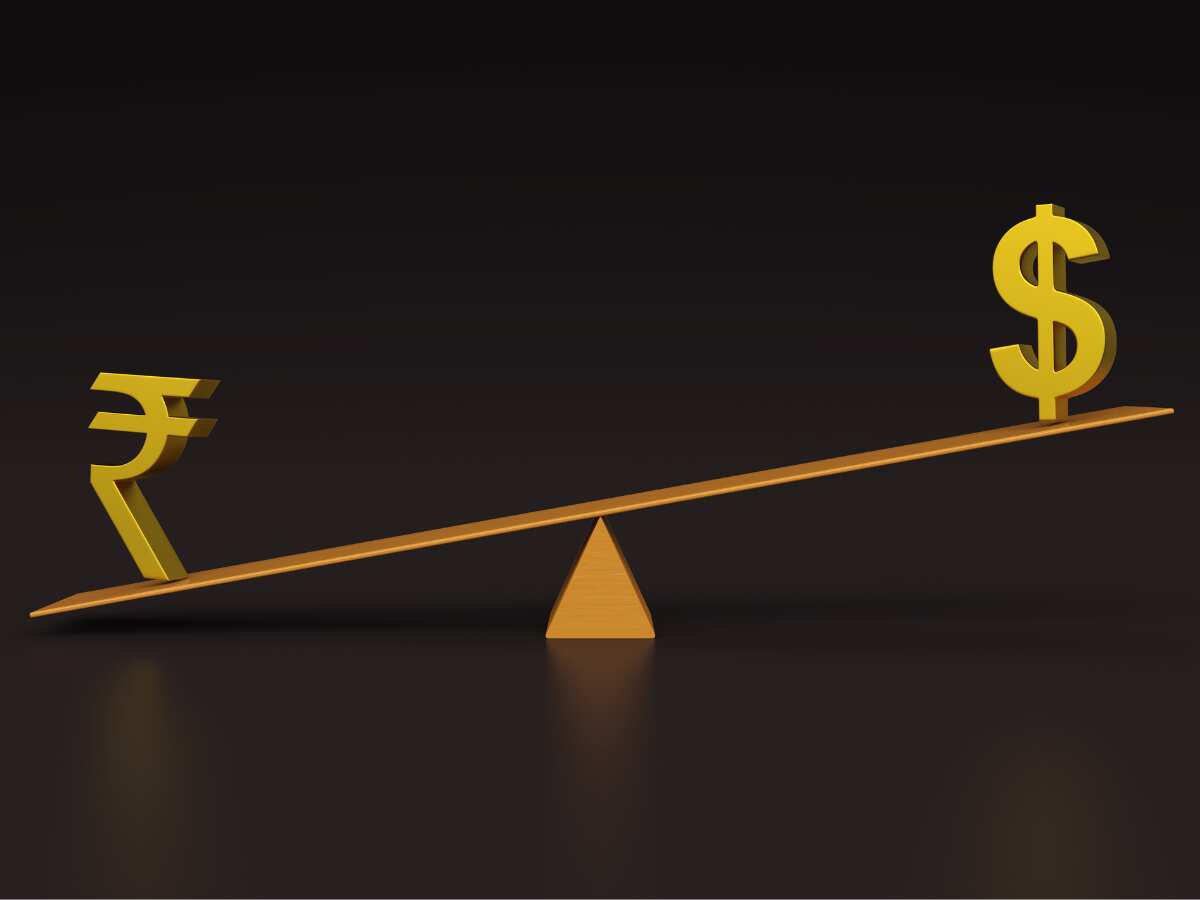
Rupee headed to 90 a dollar and is there a silver lining?
Published on 24/09/2025 03:08 PM
The Indian currency plunged to an all-time low of 88.80 vs US dollar in futures trading today, Wednesday, as persistent trade headwinds, portfolio outflows, and tariff tensions with the United States continued to weigh heavily on world's fourth and Asia’s second largest economy.
The domestic currency had settled at 88.7656 in Tuesday’s spot session and was last quoted at 88.7514 in current session.
The currency has already depreciated nearly 3.6 per cent so far in 2025, making it one of the worst-performing major Asian currencies. Analysts warn the rupee could test 90 levels in the near term, with some cautioning of further downside if policy action and trade negotiations do not materialise soon.
Add Zee Business as a Preferred Source
Trump's tariff jitters hurt rupee: The domestic currency's slide has a lot to do with Washington. US President Donald Trump’s administration earlier decision of slapping a 50 per cent tariff on Indian exports, the steepest in Asia. “Bilateral tariff tensions with the US are the major contributor to the rupee’s depreciation among other Asian currencies,” Manoj Kumar Jain, Director, Prithvi Finmart said.
For India, which normally runs a trade surplus with the US, the tariffs mean a hit to competitiveness and wider trade gaps. Brokerage Motilal Oswal Financial Services pointed out that the current account deficit touched $2.4 billion--0.2 per cent of GDP--in April-June 2025.
US H-1B visa shock IT: It’s not just goods. Services are under pressure too. A steep hike in H-1B visa fees--now $100,000 for new applicants--has spooked India’s IT sector. Indians make up 71 per cent of H-1B approvals, higher costs could slow the deployment of Indian professionals in the US and reduce remittance inflows, dampening investor sentiment, Sugandha Sachdeva, analyst and founder-SS WealthStreet said.
Analysts also warned that this development could hurt Indian IT companies in the long run if not overturned by US courts.
Investors head for exit: Foreign portfolio investors have pulled Rs 1.40 lakh crore out of Indian markets this year, unnerved by expensive stock valuations and US trade tensions. “FPIs are continuously selling their positions in India due to higher valuations and trade tensions with the US,” Jain said.
According to Brokerage Motilal Oswal Financial Services, this exodus, combined with strong demand for dollars from importers, has capped any chance of a near-term rebound.
“The major challenge for the rupee is hurting exports to the US due to higher trade tariffs and higher gold prices,” Jain explained. With India importing more than 800 tonnes of gold annually, its trade deficit stays under strain--something export-driven economies like China and Thailand don’t have to worry about.
Analysts warn that the downward momentum remains firmly in place. “Going forward, the rupee could extend losses towards 90.50 per dollar, with immediate support seen at 86.80,” Sachdeva noted.
Adding to the caution, Jain observed: “If the rupee slips below 89.10, it may weaken to 90.40–91.00 by year-end. Absent a breakthrough in trade negotiations with the US, the currency could even test 94 by 2026.”
Motilal Oswal Financial Services struck a similarly wary note: “We believe USD/INR could drift higher toward 90 with a breach of 86. Conversely, if the dollar index softens below 96, the pair could retrace toward 89.”
Despite the gloom, some silver linings are emerging. India’s forex reserves have risen significantly in 2025, providing a buffer against external shocks. Domestic GDP growth remains resilient, offsetting some negative sentiment.
A weaker rupee typically boosts exporters by raising dollar revenues, particularly in the IT sector. “While higher visa fees pose a challenge, rupee depreciation continues to offer some cushion for IT and export-oriented companies,” Sachdeva said.
Sachdeva added that the rupee’s near-term trajectory hinges on the RBI’s upcoming policy meeting, where a final 25-bps rate cut is expected. “If trade tensions ease and tariffs are rolled back, the rupee could stage a rebound towards 86–84 levels over the medium term,” she said.
Analysts point to 89.10 as a key resistance level. A breach could push the rupee towards 90.40–91.00 in the short term, and without policy action, even to 94 by end-2026. Conversely, strong US dollar momentum could send USDINR as high as 102, though a pullback below 96 would offer near-term relief. “The rupee’s fall is a warning sign for policymakers,” Jain cautioned. “If depreciation continues unchecked, it could stoke inflation, make imports costlier, and derail the RBI’s easing cycle.”
Get Latest Business News, Stock Market Updates and Videos; Check your tax outgo through Income Tax Calculator and save money through our Personal Finance coverage. Check Business Breaking News Live on Zee Business Twitter and Facebook. Subscribe on YouTube.
Shrishti Bisht is a journalist at Zee Biz, where she covers a wide range of topics from IPOs, startups, and market trends to global developments and economic shifts shaping the world. She cl ...LATEST NEWSBy accepting cookies, you agree to the storing of cookies on your device to enhance site navigation, analyze site usage, and assist in our marketing efforts.