The viral report that broke Wall Street has a scary prediction for India too
Published on 24/02/2026 03:04 PM
The viral report that broke Wall Street has a scary prediction for India tooThe Citrini Research hypothesis has pushed the Nifty IT Index to the lowest since 2008.By Ribhu Ranjan February 24, 2026, 3:04:11 PM IST (Updated)3 Min ReadA viral report from Citrini Research, titled "The 2028 Global Intelligence Crisis," has sent shockwaves through the global tech markets and also impacting Indian IT sector.
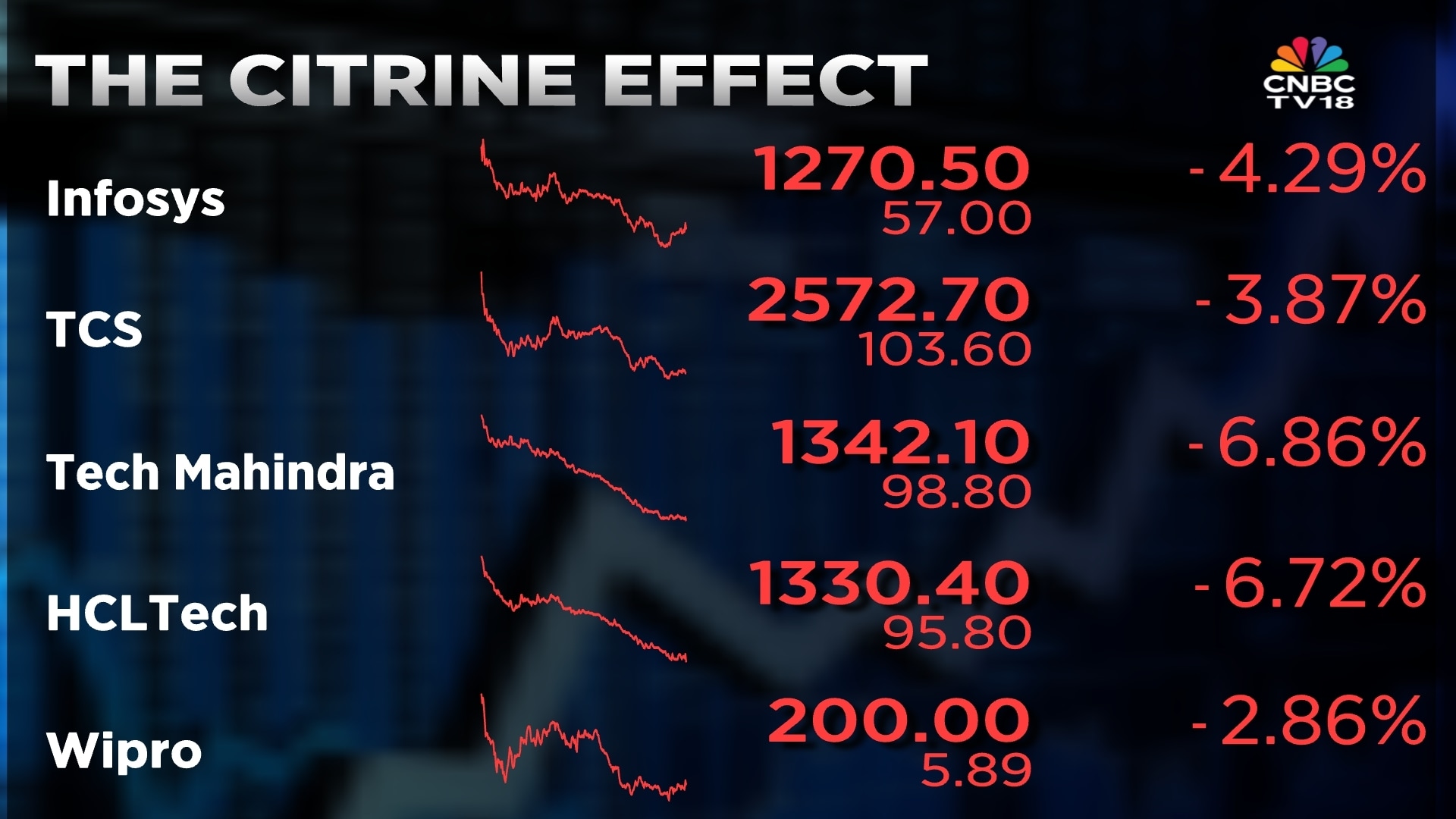
The NSE Nifty IT Index is down about 21% so far this month, wiping out more than $54 billion in market value, according to a Bloomberg report.
The Indian tech gauge plunged 4.9% in a single day—the worst drop since August 2023 —impacting Indian services firms amid the AI scare-driven trade sell-off.
The sell-off started with the unveiling of Claude Cowork Agent, and now, with the Citrine report, the index seems set for its worst month since September 2008, when Lehman Brothers collapsed and triggered the global financial crisis.
The Citrine Research report doesn't just predict a slowdown; it presents a structural hypothesis in which the very foundation of Indian outsourcing— the "labour arbitrage" model — evaporates.
AI impacting cost advantage
For decades, the value proposition for Indian IT giants such as TCS, Infosys, and Wipro was simple: high-quality developers at a fraction of the cost of their American counterparts. However, Citrini Research notes that Agentic AI is neutralising this model.
The report highlighted a shift, stating that while Indian developers are affordable, the marginal cost of an AI coding agent has collapsed to "essentially the cost of electricity."
Also Read: AI fears hit Indian IT stocks—but is the panic overdone?
As AI agents become capable of autonomous coding and project management, Western clients are beginning to bypass external vendors. The report presents a scenario in which contract cancellations accelerate through 2027, leading to the evaporation of a service surplus.
Macroeconomic fallout: The rupee and the IMF
The implications extend far beyond stock prices. Industry lobby NASSCOM has projected the combined annual turnover of India's software industry at $315 billion at the end of March 2026, employing about 6 million people.
Aside from being a significant generator of employment, India's IT services export stood at $491.8 billion between April and October 2025, making a substantial contribution to curbing the trade deficit to just $78.2 billion.
A lower trade deficit reduces the net outflow of domestic currency. The recent fall in the value of the rupee would have been much worse if not for software exports, which bring in precious dollars.
However, according to the Citrini hypothesis, the rupee could fall by as much as 18% against the dollar in just four months as the services surplus vanishes.
By the first quarter of 2028, the International Monetary Fund (IMF) would begin "preliminary discussions" with New Delhi to stabilise the economy, the report added.
India has not had to seek a bailout from the IMF since 1991, when it took an emergency loan of $2.2 billion in exchange for pledging its gold.
Productivity may rise as machines do more, but if that output doesn't translate into human wages, consumer spending—the bedrock of the economy, accounting for over 60% of gross domestic product (GDP)—collapses.
The Call for an 'AI Tax'
Alap Shah, co-author of the report and CIO at Lotus Technology Management, suggests that the only way to cushion this blow is through policy.
He proposes an AI Tax on windfall gains from automation. Without such measures, he warns that 5% of white-collar workers could be displaced within 18 months, triggering a negative feedback loop where job cuts lead to lower consumption, forcing even more AI-driven cost-cutting.
: A private credit giant has 70% of its portfolio in software cos, and its investors want their money back
Beware of grand narrativesContinue Reading(Edited by : Sriram Iyer)First Published: Feb 24, 2026 2:44 PM ISTTagsArtificial IntelligenceIndia IT sectorIndian IT stocksshare market today