Union Budget 2026–27: FM Nirmala Sitharaman’s three kartavyas for growth, jobs and resilience
Published on 01/02/2026 11:40 AM
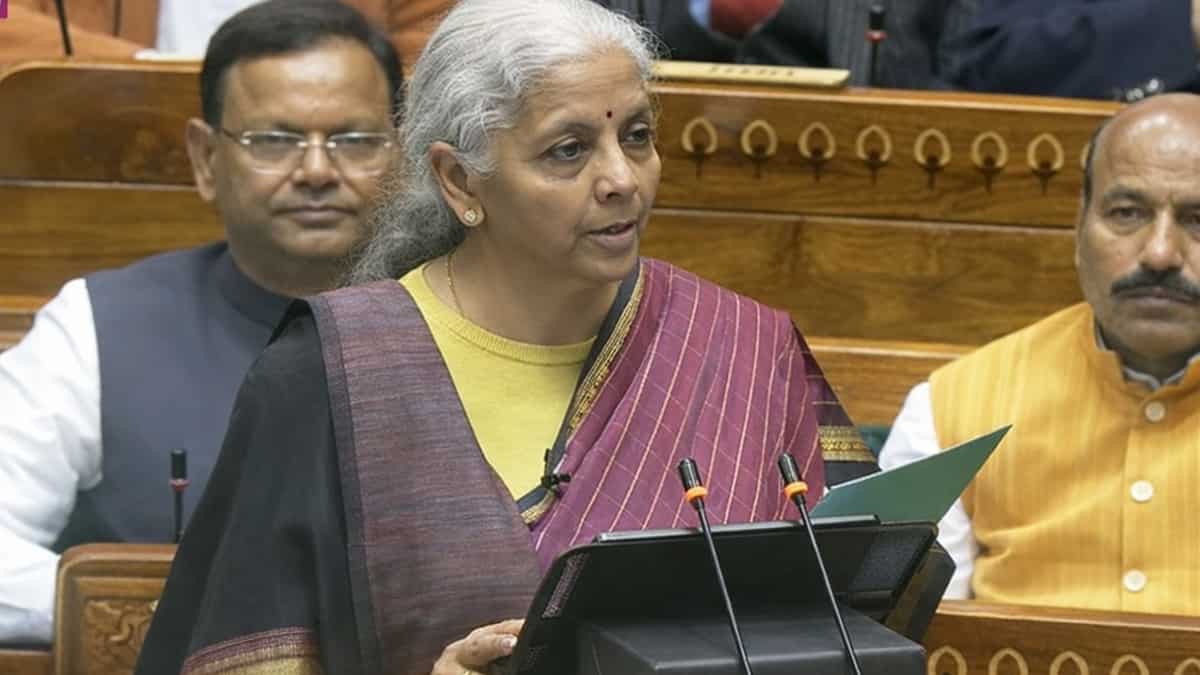
Union Budget 2026: Finance Minister Nirmala Sitharaman on Sunday presented her ninth consecutive Union Budget in Parliament, marking a first in India’s history as the Budget was tabled on a Sunday. The presentation at Kartavya Bhavan set the tone for Union Budget 2026–27, which she described as being guided by a clear sense of duty and long-term vision.
Union Budget 2026: Guided by three Kartavyas
Opening her speech, Sitharaman said the Budget is “inspired by three kartavyas,” outlining the government’s priorities amid global uncertainty. She noted that since the Modi government came to power, India’s economy has been characterised by stability, fiscal discipline, sustained growth and moderate inflation.
The finance minister added that Atmanirbharta has remained the government’s “north star,” helping India achieve a high growth rate of around 7 per cent. She highlighted the challenges in the global environment, including disruptions to trade, multilateral frameworks, supply chains, and access to resources.
“India must remain deeply integrated with global markets,” Sitharaman said, stressing the need to boost exports and attract stable, long-term investments amid volatile global dynamics.
Describing the Union Budget 2026–27 as a “yuva shakti-driven” Budget, she said the government’s sankalp is to prioritise the poor, the underprivileged and the disadvantaged, empowering people to be active partners in India’s growth story.
Three Kartavyas at the core
The three kartavyas guiding the Budget include:Accelerating and sustaining economic growth while enhancing productivity, competitiveness, and resilience to global volatility.Fulfilling the aspirations of citizens by building their capacity and enabling them to participate in India’s prosperity.Ensuring that every family, sector, and region has access to resources, amenities, and opportunities for meaningful participation.
To achieve these goals, Sitharaman emphasised that a supportive ecosystem is essential, including the continuation of structural reforms, a robust financial sector, and adoption of cutting-edge technologies such as AI applications.
Six targeted interventions for economic growth
Highlighting the first Kartavya—accelerating and sustaining economic growth—the Finance Minister said the government has proposed targeted interventions in six key areas:
1. Scaling up manufacturing in strategic sectors
“The reform express is running on its way and will maintain its momentum to help us fulfill our Kartavya,” Sitharaman said, explaining that expanding manufacturing in seven strategic and frontier sectors will strengthen India’s industrial capabilities.
2. Rejuvenating legacy industrial sectors
Reviving traditional industries remains critical, she noted, to sustain growth, preserve jobs, and support regions reliant on these sectors.
3. Championing Micro, Small and Medium Enterprises (MSMEs)
Sitharaman said, “MSMEs continue to play a vital role in economic activity and employment, and supporting their growth is essential for broader economic stability.”
4. Infrastructure development push
Infrastructure remains a key pillar for expansion, she said, supporting both short-term activity and long-term productivity.
5. Ensuring long-term security and stability
Maintaining stability across the economy is essential for sustained growth and investor confidence, the finance minister added.
6. Developing city economic regions
Finally, Sitharaman highlighted the creation of city economic regions to drive urban economic activity and support regional growth.
The finance minister said these six interventions collectively reflect the government’s commitment to fulfilling its Kartavya and maintaining the momentum of reforms, underlining a vision for inclusive, resilient, and high-growth India.