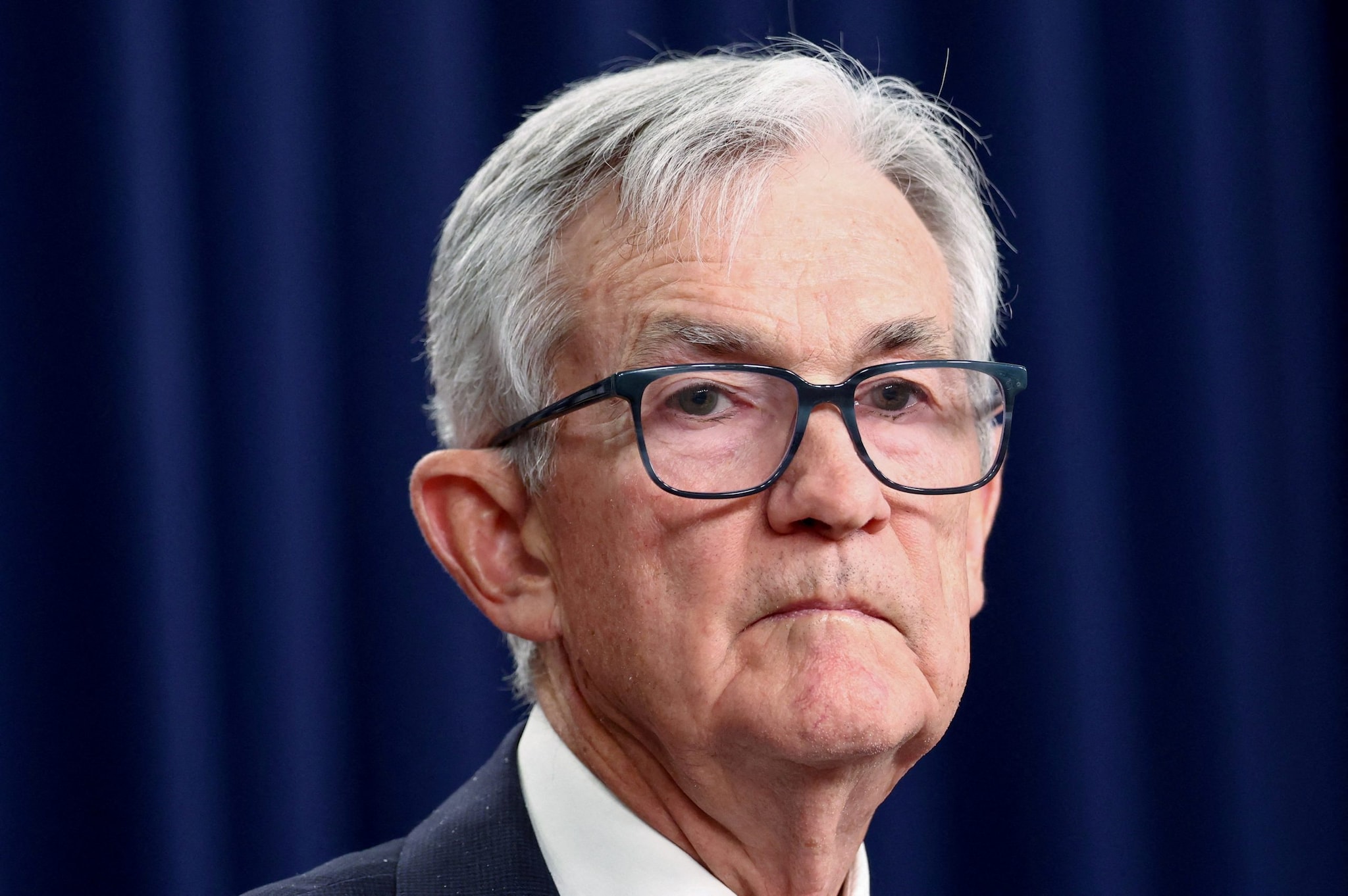
US Fed policy Highlights: Fed keeps interest rates unchanged as Jerome Powell signals he will remain on the Fed board
Published on 30/04/2026 12:44 AM
We will now wrap up the blog. Good night, folks!
Chair Powell said he is staying on the Fed because of the legal actions taken against him and will leave when he thinks “it’s appropriate to do so.”
“I had long planned to be retiring,” he said. “The things that have happened really in the last three months have, I think, left me no choice but to stay until I see them through at least that long.”
Powell said he congratulated and had a “nice chat” with Kevin Warsh, President Donald Trump’s nominee for Fed Chair, at a dinner in January.
“This is, and will be, a very normal, standard kind of a transition process,” Powell said. Powell said he has not seen Warsh since the dinner.
In his final remarks at the head of the central bank, Federal Reserve Chair Jerome Powell conveyed his regards to Kevin Warsh as he moves forward with his nomination, and expressed his faith in the core tenets of the Fed.
“This is my last press conference as chair, and I will close with a few thoughts,” he told reporters in the post-meeting presser. “First, I want to congratulate Kevin Warsh on his advancement out of the Senate Banking Committee this morning. This is an important step forward, and I wish him well as that process continues.”
“The Federal Reserve exists for one fundamental purpose, to foster the economic conditions in which American families and businesses can thrive, stable prices, a strong job market and a financial system they can depend on,” Powell continued. “Every decision we make, whether about interest rates or regulatory and supervisory matters or other issues, is made in service of that purpose.”
Powell said that the actions of the Trump administration are undermining the Federal Reserve, as he explained what went into his thinking to stay on as a Fed governor after his term as chair ends.
“These legal actions by the administration are unprecedented in our 113-year history, and there are ongoing threats of additional such actions,” he said. “I worry that these attacks are battering the institution and putting at risk the thing that really matters to the public, which is the ability to conduct monetary policy without taking into consideration political factors.”
Federal Reserve Chair Jerome Powell on Wednesday (April 29) said he will stay on the Board of Governors for an indefinite period while a probe into the renovation of the central bank’s headquarters continues.
“I’ve said that I will not leave the board until this investigation is well and truly over with transparency and finality, and I stand by that. I’m encouraged by recent developments, and I’m watching the remaining steps in this process carefully,” Powell said near the beginning of his post-meeting news conference.
“My decisions on these matters will continue to be guided entirely by what I believe is in the best interest of the institution and the people we serve after my term as chair ends on May 15, and will continue to serve as a governor for a period of time to be determined,” he added.
Dissenters are sending a warning to Warsh Jeff Kilburg in an appearance on CNBC’s “Power Lunch” said that three dissenters for the Fed’s decision to keep interest rates unchanged are sending a warning to Trump nominee of Kevin Warsh.
“This is a new quarterback hitting the portal,” the founder and CEO of KKM Financial said, referring to Warsh. “This was the rest of the players letting him know, we’re not going to let you lead us here.”
Three of the four dissenters did not vote with the rest of the FOMC, not because they disagreed to keep rates unchanged, but because they believed the easing bias from the statement should have been removed, signalling they’re not keen on cutting rates.
The Fed meeting was clearly about the risk that the Iran war has brought to both sides of the central bank’s mandate, said Art Hogan, chief market strategist for B. Riley Wealth.
“One gets the sense that there will be several meetings at least before we see any rate changes by the FOMC, agnostic to who the Chair of the Fed is,” he said. “The real news will come during the press conference.”
Wall Street traders left stocks and bonds lower after a widely expected Federal Reserve decision to hold rates, with a rally in oil fueling worries about an energy crunch that could boost inflation and weaken the economy.
With no end in sight to the US-Iran conflict, Brent crude hit its highest since 2022. Money markets all but abandoned wagers on a rate cut this year and began pricing in the chances of a hike in 2027.
Treasury 10-year yields rose to a one-month high, hitting 4.4%. Most shares in the S&P 500 fell ahead of results from Alphabet Inc., Amazon.com Inc., Meta Platforms Inc. and Microsoft Corp.
US equities traded lower on Wednesday (April 29), while oil prices extended gains after the US imposed a blockade on Iranian ports and the Federal Reserve kept its benchmark interest rate unchanged at what could be Jerome Powell’s final policy meeting. Investors were also awaiting quarterly results from four members of the “Magnificent Seven.”
The S&P 500 and Nasdaq Composite each fell 0.3%, while the Dow Jones Industrial Average dropped 364 points, or 0.8%, weighed down by declines in Boeing and Goldman Sachs.
In a surprise outcome, the Federal Open Market Committee voted 8-4 to keep its benchmark policy rate unchanged, despite broad expectations of a routine unanimous decision.
The split reflected differing views among policymakers on the rate path, marking the first time since October 1992 that as many as four FOMC members dissented.
An unusually divided Federal Reserve on Wednesday (April 29) held its key interest rate steady as policymakers grappled with the policy impact of persistent inflation and awaited a looming leadership transition at the central bank.
Investors looking for clues on which direction the stock market is headed in the coming weeks will get a rapid-fire reading as soon as trading ends on Wednesday.
Four of the biggest companies in the US — Alphabet Inc., Amazon.com Inc., Meta Platforms Inc. and Microsoft Corp. — are due to report earnings after the bell. And if they hit at the same time as last quarter, it will all play out in just 80 seconds.
US crude exports surged to a record last week as the Iran war sends overseas buyers hunting for replacements to Middle Eastern oil.
Even as the US and Iran hold on to a fragile ceasefire, oil buyers across the world are still grappling with the worst disruption to global energy supplies in history. American exports have been critical to help fill the gap, with President Donald Trump pushing for more US production as part of his energy dominance agenda.
That has sent US crude exports above 6 million barrels a day, eclipsing a previous high of nearly 5.3 million set in late 2023, according to data published Wednesday from the US Energy Information Administration.
Universal Music Group NV reported that first-quarter subscription revenue grew more than expected, highlighting the strength of the company’s artist roster after billionaire investor Bill Ackman pitched an offer valuing the world’s largest record label at $65 billion.
The label also said it would monetise half of its equity stake in Spotify Technology SA and increased its share buyback authorisation to €1 billion. Universal plans to start another €500 million share buyback program once it completes the buyback announced in March.
The label, home to some of the world’s best-selling stars, including Taylor Swift, Kendrick Lamar, Billie Eilish and the Beatles, said subscription revenue grew 12.5% on a constant-currency basis, to €1.3 billion ($1.5 billion). Analysts had expected 10.1% growth.
The Bank of Canada held interest rates steady, saying adjustments to borrowing costs would be likely be small if the economy and inflation evolve as expected.
Officials led by Governor Tiff Macklem kept the policy rate at 2.25% on Wednesday, matching expectations of markets and economists in a Bloomberg survey.
“A policy rate close to current settings looks appropriate to support adjustment in the economy and return inflation to target,” Macklem said in an opening statement.
Oil prices jumped about 7% on Wednesday afternoon at 12:40 p.m. ET, as markets reacted to an Axios report suggesting that President Donald Trump plans to maintain the U.S. naval blockade against Iran until a nuclear deal is reached. The spike pushed West Texas Intermediate crude above $106 per barrel, while the international benchmark also climbed above $119.
The sharp rise in energy prices has added fresh uncertainty to the inflation outlook just as the Federal Reserve prepares for its policy decision. While central bankers often treat short-lived oil shocks as transitory, the escalating tensions between Iran and the U.S. raise concerns about prolonged disruption risks.
Analysts warn that sustained conflict could threaten shipping through the Strait of Hormuz, a critical global oil transit route. Any prolonged blockage or instability in the region could keep energy prices elevated and complicate the Fed’s efforts to assess the true trajectory of inflation.
For Americans already struggling with higher gas prices and broader affordability pressures, the central bank’s decision to keep interest rates unchanged offers little immediate relief. Borrowing costs across most categories are expected to remain elevated in the near term.
Short-term lending rates, such as credit cards, are closely linked to the Federal Reserve’s benchmark federal funds rate, meaning they are likely to stay high. Auto loan rates are influenced by a mix of factors, including the Fed’s policy stance, and are also expected to remain elevated.
Longer-term borrowing costs, including home loans, are more sensitive to inflation trends and broader economic conditions. However, ongoing geopolitical uncertainty is also keeping mortgage rates higher than expected, limiting any meaningful easing in housing affordability.
As attention builds around what Jerome Powell may signal at his potentially final meeting regarding his future as a Federal Reserve governor, prediction markets suggest he is likely to remain in the role for a short period after his term as Fed Chair ends.
On the betting platform Kalshi, traders assign a 30% probability that Powell steps down as a member of the Federal Reserve Board of Governors by June. However, confidence rises for later timelines, with 66% odds for an exit by August and 81% by the end of the year.
If Powell remains through August, he would attend at least two more policy meetings—June and late July. His term as a Federal Reserve governor officially extends until 2028.
Meanwhile, on prediction market platform Polymarket, sentiment points more strongly toward an earlier exit, with an 87% chance that Powell steps down between May 15 and May 22.
Shares of Amazon edged up 0.8%, while Microsoft and Meta Platforms slipped 1.6% and 0.3%, respectively, ahead of earnings. All four mega-cap stocks are slated to announce their earnings after US stock market close today. Wall Street analysts broadly praised Starbucks after its second-quarter earnings beat, with several firms highlighting signs of a turnaround.Wells Fargo analyst Lauren Silberman called the results a strong signal that “Starbies is back,” pointing to improving sentiment and long-term growth potential.Deutsche Bank analyst Zachary Fadem said the beat could help restore investor confidence, signaling an inflection point for both revenue and profit growth.Meanwhile, Goldman Sachs analyst Christine Cho maintained a more cautious stance, noting progress in the turnaround but calling for more clarity on cost savings and margins.Shares of Starbucks were last up about 9% following the results.
Investors who have been feasting on stocks will know by this evening whether the party will continue.
Wednesday marks a make-or-break day for US equities as a Federal Reserve interest-rate decision will be quickly followed by mega-cap companies Microsoft Corp., Meta Platforms Inc, Google-parent Alphabet Inc. and Amazon.com Inc. all reporting quarterly results after the closing bell.
Those four names alone account for roughly one-fifth of the S&P 500’s market capitalisation and have provided a third of the index’s gains since its recent low on March 30.
And it all comes at a time when a variety of measures of equity-market positioning show investors are loaded up on stocks.
Gold extended a decline, as investor focus remained on the prospect of talks between the US and Iran, with the indefinite closure of the Strait of Hormuz continuing to heighten inflation risks.
Bullion dipped as much as 1.9% to trade just above $4,500 an ounce, after falling 2.4% over the previous two sessions. The US signalled it would stick with a naval blockade of Iranian ports, as it tries to choke off Tehran’s oil exports and force it back to the negotiating table.
Mediators in Pakistan expect Tehran will submit a revised proposal in the next few days, CNN reported.Rising oil prices are a key factor likely to keep the Federal Reserve from resuming interest rate cuts.Crude has surged following disruptions in the Strait of Hormuz amid the U.S.-Iran conflict, raising concerns that lower rates could further fuel inflation.Markets widely expect the Federal Reserve to hold the federal funds rate steady at what could be one of the final meetings led by Jerome Powell.Attention is also on whether Jerome Powell will remain on the board after stepping down as chair, following criticism from Donald Trump over the pace of rate cuts.Sachin Neema, co-founder of Garud Investments, expects the Federal Reserve to keep interest rates steady through mid-2026.He said the central bank may deliver just one reluctant 25-basis-point rate cut later in the year, driven more by political pressures than economic conditions.Neema also flagged rising uncertainty and risk aversion ahead of a leadership transition at the Federal Reserve.
The Senate Banking Committee voted on party lines Wednesday to approve Kevin Warsh as the next chair of the Federal Reserve to replace Jerome Powell, a long-time target of President Trump’s insults for not cutting borrowing costs as far as the president wanted.
The vote was 13-11, with all Republican senators voting in favor and Democrats opposed.
Warsh is a former top Fed official but has also been a sharp critic of the institution and Powell’s leadership. He has called the inflation spike to 9.1% in 2022 the central bank’s biggest policy mistake in four decades. A vote on his nomination probably won’t take place until next month, but he could be confirmed by the time Powell’s term as chair ends May 15.
The Senate Banking vote is the first of two key events surrounding the future of the Fed’s leadership. Also Wednesday, Powell is presiding over what will probably be his last meeting of the Fed’s interest rate-setting committee. At a news conference Wednesday afternoon, Powell may indicate whether he will remain as a member of the central bank’s board of governors after his term as chair ends.
APThe S&P 500 opened Wednesday’s session little changed, trading near the flatline alongside the Dow Jones Industrial Average.The Nasdaq Composite slipped about 0.2% in early trading.
Investors expect the Federal Reserve to keep interest rates unchanged at its Wednesday meeting, as policymakers remain cautious amid persistent inflation and a still-resilient labor market.
The decision, which could be among the final meetings led by Chair Jerome Powell, comes with inflation still above the central bank’s 2% target and limited urgency to begin rate cuts.
Economist Roger Ferguson said the Fed is likely to stay on hold, noting that while the labor market appears stable, inflation — hovering near 3% — still requires more progress before easing policy.
Seagate Technology — Shares surged nearly 18% after strong guidance, with fourth-quarter revenue and earnings outlook topping expectations. The company also beat estimates on both revenue and profit in the third quarter.
Booking Holdings — The stock fell about 4.5% after trimming its full-year earnings growth forecast, citing lingering impacts from the Middle East conflict, despite a first-quarter beat.
Expedia Group — Shares slipped around 3% in sympathy with Booking’s decline.
Mondelez International — The Oreo maker gained 1.5% after reporting better-than-expected first-quarter earnings and revenue.Investor focus is shifting to Big Tech earnings, with four “Magnificent Seven” companies set to report after the bell: Alphabet, Amazon, Meta Platforms, and Microsoft.Analysts at JPMorgan said the results could act as a positive catalyst for markets, though current positioning suggests a rising likelihood of a near-term top and potential consolidation before the broader bull run resumes.NewsLive TVMarketPopular CategoriesCalculatorsTrending NowLet's Connect with CNBCTV 18Network 18 Group :©TV18 Broadcast Limited. All rights reserved.