US-Israel-Iran war: Asia’s commodity markets under pressure amid Middle East conflict
Published on 02/03/2026 12:45 PM
US-Israel-Iran war: Asia’s commodity markets under pressure amid Middle East conflictMoody’s Analytics warns Middle East conflict may hurt Asia’s energy importers like Japan, South Korea, Taiwan, Singapore, and Hong Kong due to rising oil prices.By Gareema Bangad | Ritu Singh March 2, 2026, 12:45:25 PM IST (Published)2 Min ReadThe escalating conflict in the Middle East is injecting fresh uncertainty into the global trade outlook and poses significant risks for Asia’s commodity-importing economies, Moody’s Analytics said.
The warning comes amid escalating hostilities between the United States, Israel and Iran, after Washington and Tel Aviv launched coordinated strikes on Iranian targets, prompting retaliatory missile and drone attacks across West Asia.
According to the agency, high-income Asian economies that rely heavily on imported energy are particularly vulnerable to the direct economic fallout.
Also read | Iran’s national security chief says ‘will not negotiate’ after Trump signals talks
Japan, South Korea, Taiwan (China), Singapore, and Hong Kong import more than 80% of the energy they consume domestically, leaving them exposed to price shocks and supply disruptions.
A broader or prolonged conflict could also intensify pressures on emerging Asian economies, particularly those that have struggled in recent years with external debt repayment, Moody’s warned.
India faces a complex situation as it imports large volumes of crude oil from the Middle East and has agreed to wind down purchases of Russian oil as part of a trade deal with the United States.
Market participants are already watching crude closely.
Rohit Srivastava, Founder of Indiacharts and Strike Money Analytics, told CNBC-TV18 that the primary “war trade” is not gold but oil.
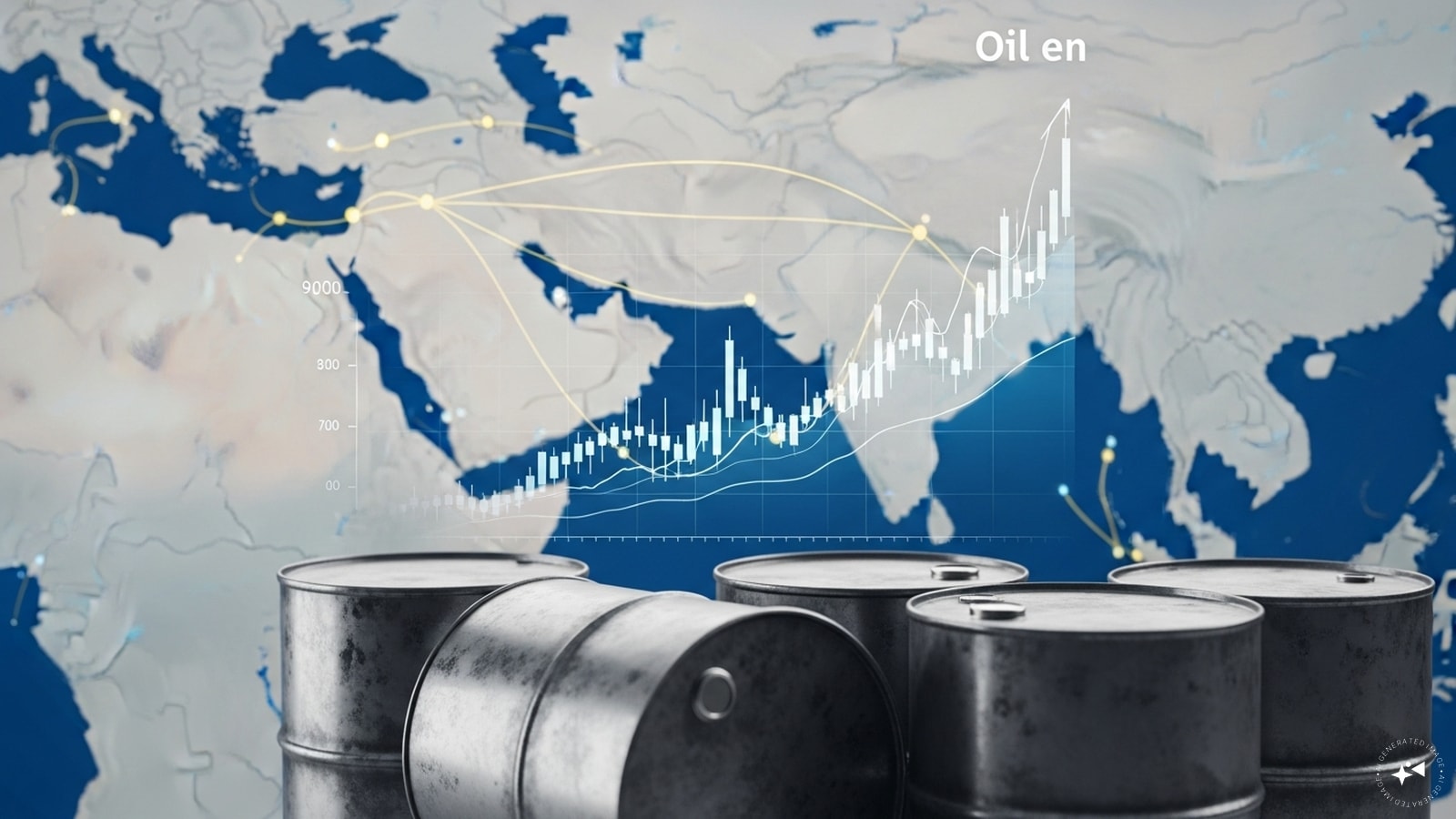
“The real trade during war times is actually in oil, and oil is actually breaking out today,” Srivastava said
Also read | Iran raises red flag over mosque after Ayatollah Khamenei's assassination: What it really means
He noted that West Texas Intermediate (WTI) crude had broken above a key technical level. “The trend line of all the tops of the last one year was at around 70.5 WTI, and we are trading above 70.5,” he said
“If we stay above 70.5, we can even go towards $100 if the situation remains grim or even worsens,” Srivastava added
Higher oil prices would disproportionately affect Asian economies that are net importers of energy and raw materials.
Moody’s Analytics said that while the immediate impact is centred on energy markets, the broader trade outlook has become more uncertain, especially if supply chains are disrupted or shipping routes face heightened risk.
The agency cautioned that a drawn-out conflict would amplify financial vulnerabilities across emerging Asia, particularly in economies with weaker fiscal buffers or high external borrowing needs.Continue ReadingTagsasian marketsCrude oil priceglobal tradeGlobal Trade NewsMiddle EastMoody's