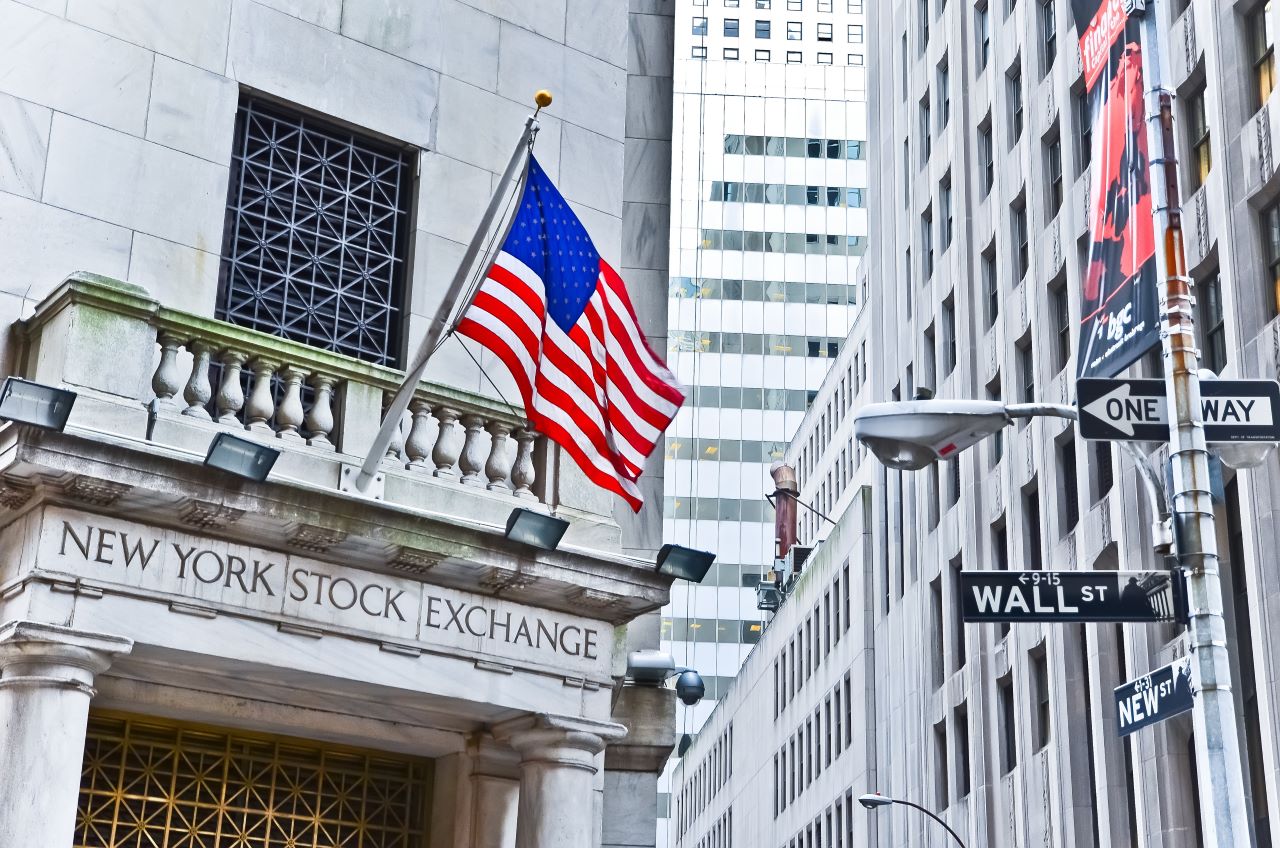
US Stock Market Highlights: Dow falls 200 points after report says Trump pushing for at least a 15% tariff on EU imports
Published on 19/07/2025 01:40 AM
We will now wrap up the blog. Bye, folks!
The Dow Jones Industrial Average slid Friday after President Donald Trump reportedly pushed for greater tariffs on the European Union. The 30-stock Dow fell 142 points, or 0.3%. The S&P 500 lost 0.01% after hitting a record high earlier in the day, while the Nasdaq Composite added 0.05%.
Trump is demanding a minimum tariff of between 15% and 20% in any deal with the EU, the Financial Times reported, citing three people briefed on the talks. The EU is attempting to reach a trade deal with the U.S. ahead of Trump’s Aug. 1 deadline, when Trump has vowed to begin implementing 30% tariffs on the bloc.
The Food and Drug Administration plans to ask Sarepta Therapeutics Inc. to pause shipments of its Elevidys treatment after three deaths were linked to the company’s gene therapies, according to a person familiar with the matter.
Two teenage boys died of acute liver failure in recent months after taking Elevidys. They were being treated for Duchenne muscular dystrophy and weren’t able to walk because of the muscle-wasting disease. Separately, the company said Friday that a 51-year-old patient died of acute liver failure last month in an early-stage trial of a gene therapy to treat limb-girdle muscular dystrophy.
The head of the FDA said in an interview with Bloomberg Friday that the agency will “take a hard look” at Elevidys. Reuters subsequently reported that the agency would ask the company to halt shipments.
Banks sold a larger-than-planned $4.5 billion of debt backing Sycamore Partners’ acquisition of the Boots pharmacy chain, selling $250 million more than intended to a market hungry for new deals.
The Boots Group is issuing $3.25 billion-equivalent of leveraged loans across dollars, euros and sterling and a further $1.25 billion-equivalent of high-yield bonds in euros and sterling. The additional $250 million will go toward reducing a preferred equity contribution to the deal, according to people familiar with the situation.
Pricing on the loans and yields on the bonds tightened during the sales process, reflecting strong investor demand. Accessing multiple investor bases allowed the banks to play the different markets against each other, securing more favourable terms for the borrower.
The Trump administration’s decision allowing Nvidia Corp. to resume shipments of its H20 artificial intelligence chips to China risks bolstering Beijing’s military capabilities and expanding its capacity to compete with the US in AI, according to the head of the US House Select Committee on China.
“The H20, which is a cost-effective and powerful AI inference chip, far surpasses China’s indigenous capability and would therefore provide a substantial increase to China’s AI development,” Chairman John Moolenaar, a Michigan Republican, said Friday in a letter to Commerce Secretary Howard Lutnick, whose agency oversees semiconductor export controls. “We must not allow US companies to sell these vital artificial intelligence assets to Chinese entities.”
The Trump administration’s decision allowing Nvidia Corp. to resume shipments of its H20 artificial intelligence chips to China risks bolstering Beijing’s military capabilities and expanding its capacity to compete with the US in AI, according to the head of the US House Select Committee on China.
“The H20, which is a cost-effective and powerful AI inference chip, far surpasses China’s indigenous capability and would therefore provide a substantial increase to China’s AI development,” Chairman John Moolenaar, a Michigan Republican, said Friday in a letter to Commerce Secretary Howard Lutnick, whose agency oversees semiconductor export controls. “We must not allow US companies to sell these vital artificial intelligence assets to Chinese entities.”
Investors bid down prices on around $2.7 billion of bonds backed by warehouses leased to Amazon.com Inc., as concern mounted that debtholders won’t get paid back in full, after similar securities ran into trouble this week.
The $2.7 billion of bonds, sold by Affinius Capital, traded as low as 81 cents on the dollar on Wednesday, a sign that investors aren’t expecting to get all their money back. Fortress Investment Group was struggling to refinance around $2 billion in debt on a different set of securities, also secured by Amazon warehouses, and faced an important deadline earlier this week.
Opendoor Technologies Inc. shares are on pace to more than double this week following a hedge fund manager’s social-media endorsement, making it the latest stock to experience a speculative retail-driven rally.
Shares in the online platform for buying and selling US real estate jumped as much as 39% as of 2:15 p.m. in New York. If the gains hold through the session, the stock would gain more than 175% this week. The surge started after Eric Jackson, founder of Toronto-based hedge fund EMJ Capital, started to praise the stock on X late last week, garnering traders’ attention.
“We haven’t gone away from the ‘Wall Street Bets, GameStop world’,” Mark Hackett, chief strategist at Nationwide said in an interview. “Every time it works, the retail investor just gets more and more confident.”
Canada’s top oil-producing province of Alberta is injecting C$2.8 billion ($2 billion) into its provincial wealth fund, advancing a plan to wean itself off volatile resource revenue in the decades ahead.
The investment brings the balance in Alberta’s Heritage Savings Trust Fund to a record C$30 billion, the provincial government said Friday. The government also appointed board members to a new corporation that will oversee the fund.
Premier Danielle Smith is overhauling Alberta’s investment strategy in an effort to give the government more power over the province’s financial future.
Hedge fund managers, including Citadel Advisors, Adage Capital Management and HBK Investments, are reaping a windfall as the year’s largest pending corporate tie-up — Chevron Corp.’s $53 billion takeover of Hess Corp. — finally crosses the finish line.
Firms that specialise in merger arbitrage — essentially betting on a deal’s outcome — have long wagered that the acquisition would go through, despite a challenge from Exxon Mobil Corp. that threw the transaction into limbo for 20 months. The deal’s closure on Friday following a ruling by an arbitration court marks a huge victory to those who had stuck to their bets.
Hess was the most widely held position for merger arbs in the US, which collectively amassed roughly $10 billion worth of Hess shares as of the end of March, according to a Morgan Stanley calculation.
Federal Reserve Chair Jerome Powell, in a Thursday letter, countered criticisms levelled at the central bank by a top White House official over a $2.5 billion renovation project.
“We take seriously the responsibility to be good stewards of public resources as we fulfill the duties given to us by Congress on behalf of the American people,” Powell wrote in the letter addressed to Russ Vought, director of the White House Office of Management and Budget.
Powell’s letter, which largely repeated information available on a new “Frequently Asked Questions” page on the Fed’s website about the construction project, was in response to correspondence from Vought on July 10.
Bond yields fell alongside the dollar as Federal Reserve Governor Christopher Waller reiterated his case for a July rate cut, while data showed an improvement in consumer expectations for inflation. Stocks halted their rally as traders parsed a handful of earnings.
Following an advance to all-time highs, the S&P 500 edged lower. Short-dated Treasuries led gains after Waller hinted he would dissent if his colleagues vote to hold rates steady in July. Bonds also rose as University of Michigan data showed consumers expect prices to increase at an annual rate of 4.4% over the next year, down from 5% in the prior month.
Shares of Sarepta Therapeutics plunged more than 30% on Friday as the future of its approved gene therapy treatment appeared at risk.
The Food and Drug Administration will request that the company voluntarily stop all shipments of the treatment, Elevidys, a person familiar with the matter told CNBC.
Separately, FDA Commissioner Marty Makary told Bloomberg News the agency is considering whether the company’s gene therapy should stay on the market.
The European Union’s latest round of Russian sanctions have added yet more pressure on an already tight diesel market in the region that is a large importer of the fuel.
The EU confirmed on Friday that it would press ahead with a ban on the import of diesel that is made from Russian crude. Prior to the decision, some traders had been skeptical that the bloc would go through with such a step.
Even before the decision, there were signs of stress in Europe’s diesel market. Independently held inventories are low — as they are in the US — while spreads indicate tightness of the industrial fuel. The bloc gets about 15% of its seaborne diesel — about 240,000 barrels a day — from countries like India and Turkey that purchase crude from Russia, creating a question mark about what will become of that flow.
Gold gained after Federal Reserve Governor Christopher Waller hinted that he would dissent if his colleagues vote to hold interest rates steady at their July meeting, making his case for a rate cut to support the labour market.
While it’s important not to dissent regularly, officials should take the step “if you make it very clear you think at this moment in time this is an important thing to do,” Waller said Friday in a Bloomberg TV interview.
Bond yields and the dollar pushed lower after Waller’s comments, helping lift bullion as much as 0.7%. The precious metal typically benefits in a lower rate environment as it pays no interest.
The Dow Jones Industrial Average took a leg lower Friday after President Donald Trump reportedly pushed for greater tariffs on the European Union. The 30-stock Dow fell 242 points, or 0.5%. The S&P 500 lost 0.1%, while the Nasdaq Composite shed about 0.1%.
Trump is demanding a minimum tariff of between 15% and 20% in any deal with the EU, the Financial Times reported, citing three people briefed on the talks. The EU is attempting to reach a trade deal with the U.S. ahead of Trump’s August 1 deadline, when Trump has vowed to begin implementing 30% tariffs on the bloc.
Traders also pored through the latest earnings reports and new U.S. economic data.
The founder of fashion platform CaaStle Inc. has been charged by federal prosecutors with defrauding investors out of more than $300 million following the collapse her tech start-up.
Christine Hunsicker, 48, turned herself in to face the charges on Friday morning, the US Attorney’s Office in Manhattan confirmed. The Securities and Exchange Commission also filed a lawsuit against Hunsicker on Friday, according to court records.
The legal moves come months after Hunsicker resigned as CaaStle’s chief executive officer over allegations she lied to investors about the company’s financial success. She faces charges including securities fraud, identity theft and money laundering.
Ally Financial Inc. shares fell after the lender left most of its forecast unchanged despite strong second-quarter consumer auto-loan originations and earnings.
The digital bank said its full-year net interest margin is still expected to fall between 3.4% and 3.5%, unchanged from its previous forecast, according to a company presentation Friday. A handful of Wall Street analysts said they’d hoped the firm would improve its guidance for NIM and other metrics.
“The charge-off guide is tightened to 2.00 to 2.15%, from 2.00-2.25% before,” Truist Securities analysts Brian Foran and Chris Lian said in a note. “Some may call this disappointing, as investors were hoping the low end would also come down.”
Ally shares dropped 2% to $39.42 at 11:59 a.m. in New York. Chief Financial Officer Russ Hutchinson said the guidance takes into account what the firm is seeing currently as well as anticipated changes this year.
Oil was little changed as traders weigh fresh efforts from the European Union to crimp Russian energy exports. West Texas Intermediate crude earlier gained as much as 2.1% to trade above $68 a barrel after the EU agreed to a lower price cap for Moscow’s crude as part of a package of sanctions on Moscow.
The measures include curbs on fuels made from Russian petroleum, additional banking limitations and a ban on a large oil refinery in India. The Asian country, which buys large amounts of Russian crude, is a major exporter of refined products to Europe, where markets for fuels like diesel have been tight.
The federal government workforce in and around the nation’s capital has shrunk by about 22,100 in the year through May, a new report shows, and that number is poised to mount.
Federal workers across Washington, DC, Maryland and Virginia found themselves particularly vulnerable to the Trump administration’s efforts to reduce government jobs and spending. Maryland saw the steepest decline in its federal workforce, dropping 5.4%, followed by Virginia, according to a report by the Federal Reserve Bank of Richmond.
Prosus NV has offered to sell down its holding in Delivery Hero SE to help pave the way for regulatory approvals for its acquisition of Just Eat Takeaway.com NV, according to people familiar with the matter.
The European Commission had pressed Amsterdam-based Prosus to significantly reduce or divest its stake in the German food delivery firm, the people said, asking not to be identified discussing private information. It’s unclear how much of the stake Prosus will ultimately sell and no final decisions have been made, they said.
The Dutch technology investor, which is controlled by the South African Naspers Group, owns 27% of Delivery Hero and is its largest shareholder.
Northern Dynasty Minerals Ltd. plunged for a second day on concerns that talks with environmental regulators to end a veto on its giant Alaska mining project are stagnating.
At stake is the Pebble mine project in southwest Alaska, which the company touts as the world’s largest undeveloped copper and gold resource. The contentious project was effectively blocked under former US President Joe Biden over concerns it would hurt the region’s fisheries industry.
The founder of fashion platform CaaStle Inc. has surrendered to face fraud charges over the multimillion dollar collapse of the tech start-up.
Christine Hunsicker turned herself in to authorities on Friday morning, the US Attorney’s Office in Manhattan confirmed. The Securities and Exchange Commission filed a lawsuit against Hunsicker Friday morning, according to court records.
The legal moves come months after Hunsicker resigned as CaaStle’s chief executive officer over allegations she lied to investors about the company’s financial success. Lawyers for Hunsicker didn’t immediately return messages seeking comment.
BC Partners has agreed to sell a majority stake in compliance software firm Navex to a consortium led by Goldman Sachs Asset Management in a deal valued at more than $2.5 billion, according to people familiar with the matter.
Blackstone Inc. will also become a minority investor in Navex as part of the transaction, said the people, who asked not to be identified because the information is private. BC Partners, which is set to retain a stake as well, could announce a deal as soon as the next few days, the people said.
The transaction also comes as exits have been challenging for buyout firms in a tough dealmaking environment. Navex develops risk and compliance management software and counts Diageo Plc, Verizon Communications Inc. and Sharp Corp. among its customers, its website shows.
Zayo Group Holdings Inc. is nearing a tentative agreement with creditors that would extend maturities on some of the fiber-network operator’s multibillion-dollar debt pile, according to people familiar with the situation.
The framework would entail lenders of a nearly $5 billion secured loan due 2027 being partially paid and unsecured creditors receiving a coupon bump in return for agreeing to extend due dates, said the people, who asked not to be identified discussing a private matter.
Some added that the tentative deal would also address how Zayo plans to finance its pending acquisition of Crown Castle Inc. fiber assets.
US stocks shuffled between small gains and losses on Friday as declines in technology and growth shares offset gains elsewhere, with the S&P 500 Index still on track for a weekly advance after consumer sentiment rose to a five-month high.
The benchmark equities gauge was down less than 0.1% as of 10:30 a.m. in New York, after notching a fresh record a day earlier. The Nasdaq 100 Index fell 0.2% after also finishing at a fresh all-time high on Thursday.
While Netflix Inc.’s earnings results beat expectations on every major metric, broader gains were kept in check after the stock fell 4.8% following a nearly 40% rally since April. Netflix was the worst performer in the Nasdaq 100.
Talen Energy Corp. shares surged the most ever in intraday trading after announcing a $3.8 billion deal to buy two of the most efficient power plants on the largest US grid, joining a wave of deals by independent generators snapping up gas units to feed AI’s surging demand.
Talen will buy Caithness Energy’s Moxie Freedom Energy Center in Pennsylvania and Caithness and BlackRock’s Guernsey Power Station in Ohio, it said Thursday. Both assets are combined-cycle gas-fired plants and their combined capacity is nearly 3 gigawatts — enough to power about 2.4 million homes.
Talen’s shares rose as much as 24%, to about $324, at 9:54 am in New York. The stock has climbed 61% so far this year and is testing all-time highs, like many of its peers, as more gigawatt-sized data centers get announced.
Alternative asset manager Pollen Street Capital has raised €2 billion ($2.3 billion) for its private equity strategy, helped by increased appetite for mid-market deals in Europe, particularly from investors in North America.
The London-based firm’s Private Equity Fund V has secured €1.5 billion in commitments, exceeding its initial target of raising €1 billion, according to a statement reviewed by Bloomberg News. The latest fund is also 85% larger than its predecessor fund that raised £700 million ($943 million) in 2021.
Pollen Street also drew in an additional €500 million of associated co-investment capital as part of the private equity strategy.
Garuda is paying twice as much to lease its latest Boeing Co. 737 Max jet than it does for the older 737 planes in its fleet, another potential blow to its finances as it tries to return to profitability.
The struggling Indonesian airline is paying around $400,000 per month for the 737 Max 8 it has leased from BOC Aviation Ltd., according to people familiar with the matter.
The state-owned carrier pays on average $200,000 a month for its existing older Boeing 737-800 fleet, the people said, asking not to be identified discussing details that are private.
3M Co. raised its profit forecast and beat Wall Street’s estimates for the second quarter as Chief Executive Officer William Brown’s effort to reinvigorate the company gained momentum.
Adjusted earnings will be $7.75 to $8 a share this year, including the expected impact of tariffs, the maker of Post-it notes and Ace bandages said Friday in a statement. That was up from a prior range that topped out at $7.90, while analysts had expected about $7.70 on average in estimates compiled by Bloomberg.
Under Chief Executive Officer William Brown, 3M has put measures in place to mitigate tariffs, including shifting production and pricing changes. The maker of Post-it notes and Ace bandages had previously guided that tariffs could have a negative impact of as much as 40 cents a share on full-year earnings. In its latest outlook, 3M sees a net headwind of just 10 cents.NewsLive TVMarketPopular CategoriesCalculatorsTrending NowLet's Connect with CNBCTV 18Network 18 Group :©TV18 Broadcast Limited. All rights reserved.