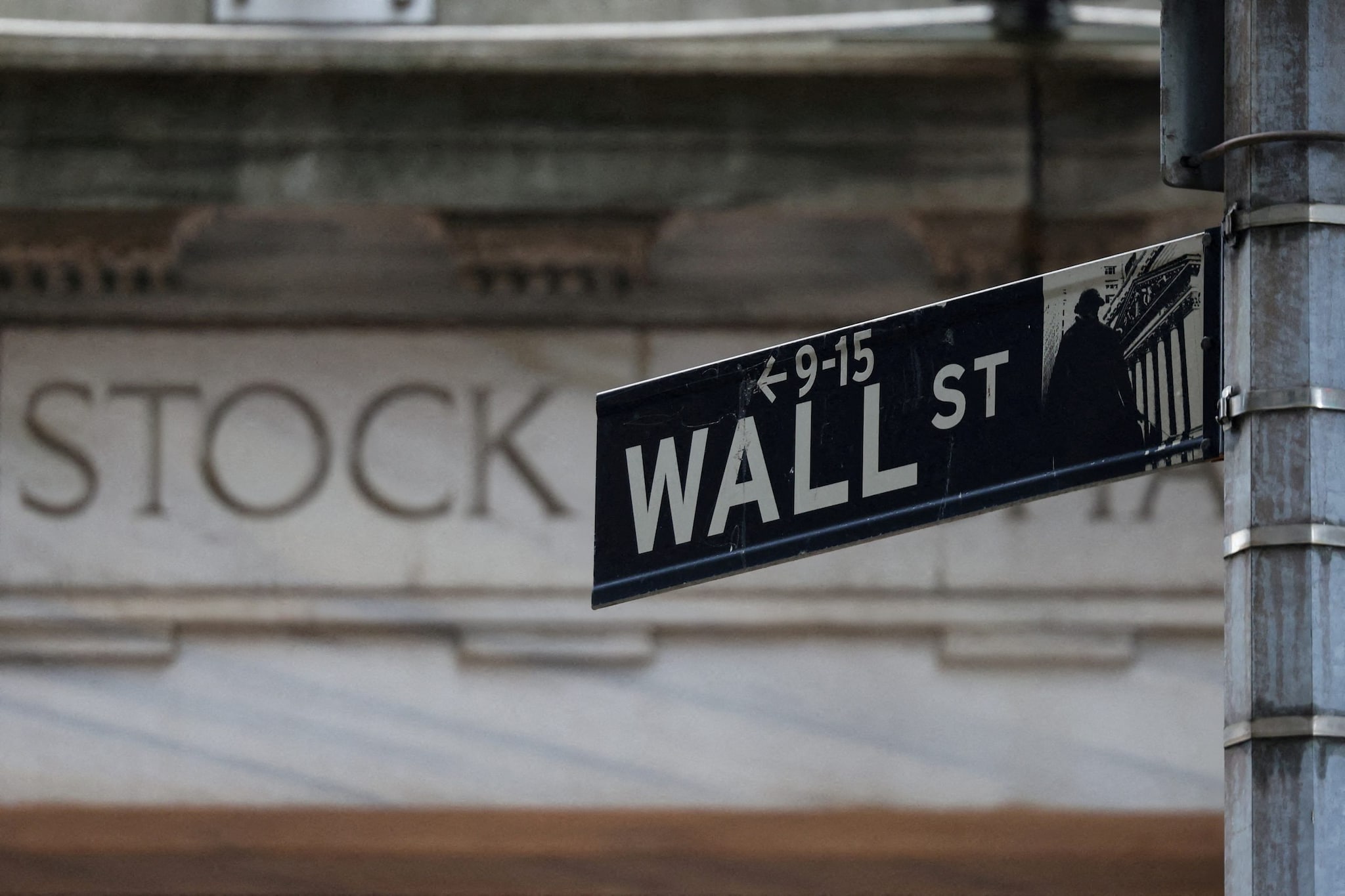
US Stock Market Highlights: Dow falls 280 points, S&P logs weekly loss as Trump trade war escalates
Published on 12/07/2025 01:42 AM
We will now wrap up the blog. Bye, folks!
Stocks closed lower Friday, a day after the S&P 500 posted a new record high, after President Donald Trump announced a 35% tariff on Canada and threatened higher tariffs across the board.
The Dow Jones Industrial Average lost 279.13 points, or 0.63%, to close at 44,371.51. The S&P 500 slid 0.33% to end at 6,259.75, and the Nasdaq Composite ended the day 0.22% lower at 20,585.53.
Trump cited fentanyl as a reason for higher Canadian duties, adding that they would go higher if the country retaliates. “If Canada works with me to stop the flow of Fentanyl, we will, perhaps, consider an adjustment to this letter,” Trump said in a letter posted on Truth Social.
Some bank lenders to Colisee Group SAS are offloading their exposure to the cash-strapped care home operator at steep discounts, as an August deadline looms over restructuring talks between the firm and its debt holders.
A €20 million ($23.4 million) portion of the EQT-owned company’s revolving credit facility was sold recently at a price below 60 cents on the euro, according to people familiar with the matter. There have been several similar trades executed lately, the people added, asking not to be identified as the matter is private.
The deeply discounted sales come amid increasingly tense negotiations between the French firm, its private equity sponsor and fund managers that own Colisee’s €1.17 billion of term loans over how to rework its debt stack. What was expected to be a relatively quick process has turned into a tussle between EQT and Colisee’s lenders.
Oil gained as traders braced for fresh US efforts to crimp Russian energy exports.
West Texas Intermediate advanced almost 3% to settle above $68 a barrel after President Donald Trump said he plans to make a “major statement” on Russia on Monday and reiterated criticism of President Vladimir Putin. One sanctions bill, which at least 85 senators have endorsed, would levy 500% tariffs on China and India if they make any purchases of Russian energy.
Stocks slid from all-time highs as Donald Trump intensified his trade offensive, sending the dollar higher. Concerns about the potential inflationary impacts of tariff hikes weighed on the Treasury market. Oil rallied as traders braced for fresh US efforts to crimp Russian energy exports.
Following a rally that drove the S&P 500 to its fifth record in nine trading days, equity bulls took a breather. While about 400 shares in the benchmark retreated, Nvidia Corp. led a rebound in big tech, pushing the market away from session lows. Kraft Heinz Co. jumped as the Wall Street Journal reported the company is preparing to break itself up. The six biggest US banks are set to report earnings next week, with analysts predicting trading-revenue increases.
Kraft Heinz Co. is preparing to break itself up, people familiar with the matter said. Under the plan, the company could spin off a large part of its grocery business into a new entity, according to the people. This would allow it to focus on faster-growing segments such as sauces, they said.
Kraft Heinz is still finalising details of the split, which could be announced in the coming weeks, the people said, asking not to be identified discussing confidential information.
Shares of Kraft Heinz were trading 1.3% higher at 2:30 p.m. in New York on Friday, giving the company a market value of about $31.7 billion. The Wall Street Journal reported on the plans earlier on Friday.
Mediobanca SpA rejected once again a takeover by Banca Monte dei Paschi di Siena SpA saying the offer is too low and the deal is lacking rationale, ahead of the start of the offer period Monday.
The bank said a combination between the two lenders would be “unnatural, and highly value-destructive,” according to a statement issued after a board meeting Friday. The board of directors also reiterated that Monte Paschi offer is “not fair”.
The deal is part of a series of competing bids that are reshaping the finance landscape in Italy. Monte Paschi, which was bailed out and nationalised before returning to private ownership, stunned investors earlier this year with an all-share offer to acquire the larger rival.
BPER Banca SpA is set to take control of rival Banca Popolare di Sondrio SpA after its bid won the backing of a majority of investors.
Shareholders tendered 58.3% of Popolare Sondrio’s capital, above the minimum threshold of 50% plus one share set by BPER, according to a Milan stock exchange statement.
The deal marks the second successful bank takeover this year in Italy, where a series of proposed mergers are reshaping the industry. Several of those transactions, however, are stuck amid political resistance and clashing investor agendas.
Given the provisional results of the offer, BPER Banca said in a statement later Friday that it will re-open the offer period from July 21 to July for more shareholders to join the deal.
Rio Tinto Plc says it has a “strong desire” to invest in US copper mining following President Donald Trump’s plans to levy imports of the critical metal.
“There is increasing recognition by the US government of the need for domestic sources of copper and other critical materials to support manufacturing and to power the country’s energy future,” the company’s copper head Katie Jackson said in an emailed statement. “We have a strong desire to invest more in American copper and we see significant opportunities to grow our business in the United States.”
Trump’s plans to slap 50% tariffs on copper imports are expected to raise costs across a broad section of the US economy that relies on the metal for consumer electronics, automobiles, home construction and more. The levies are aimed at supporting a robust domestic supply chain for the commodity, though analysts warn that permitting obstacles and litigation still stand in the way of building mines quickly.
Food and Drug Administration Commissioner Marty Makary said his agency may fast-track new drugs from pharmaceutical companies that “equalise” the cost of their medicines between the US and other countries, an unusual proposition from the regulator that’s long avoided contentious pricing debates.
The comments, made in an interview on Bloomberg Television’s Wall Street Week with David Westin, offer insight into an idea floated to help the administration achieve one of President Donald Trump’s main health-care goals: ensuring foreign countries aren’t getting a better deal on drugs. Trump demanded that Americans get similar or lower prices as consumers in other countries in an executive order signed in May.
The U.S. government posted a surplus in June as tariff receipts gave an extra bump to a sharp increase in receipts, the Treasury Department said Friday.
With government red ink swelling throughout the year, last month saw a surplus of just over $27 billion, following a $316 billion deficit in May.
That brought the fiscal year-to-date deficit down to $1.34 trillion, a 1% decline from the same period a year ago. In June 2024, the deficit totalled $71 billion. There are three months left in the current fiscal year, which ends Sept. 30.
A 13% increase in receipts from the same month a year ago helped bridge the gap, with outlays down 7%. For the year, receipts are up 7% while spending has risen 6%. The government last posted a June surplus in 2017, during President Donald Trump’s first term.
Judicial nominee Emil Bove wouldn’t directly answer if President Donald Trump could serve a third term in office under the Constitution, instead telling lawmakers in written questions it would be “improper” to comment on the issue.
Bove, who has been nominated for a seat on the US Court of Appeals for the Third Circuit, provided the responses following scrutiny from Senate Democrats into his conduct at the Justice Department, including allegations that he told government lawyers to consider disregarding court orders.
Responding to questions from Sen. Chris Coons (D-Del.) and Sen. Cory Booker (D-N.J.) on Trump’s eligibility to run again, Bove said that it “would not be appropriate” to address how the constitutional amendment setting presidential term limits “would apply in an abstract hypothetical scenario.”
Money managers from Aberdeen Group Plc to Franklin Templeton are staying bullish on Brazil, betting the country will withstand its unexpected turn in the epicenter of Donald Trump’s trade war.
One reason: The fairly closed Brazilian economy, which depends much more on China than the US, can probably withstand the 50% tariffs even if they do come into effect, they say. But on top of that there’s a suspicion the spat between Trump and President Luiz Inacio Lula da Silva might follow a familiar playbook: a brief market shock, followed by a rebound as the US president dials down his threats — a pattern behind what has become widely known as the TACO trade.
“It’s too early to make big changes,” said Greg Lesko, a portfolio manager at Deltec Asset Management LLC focused on emerging-market stocks who is keeping an overweight stance on Brazil. “Even if tariffs stay high, it’s not the end of the world.”
The State Department began laying off more than 1,300 US-based diplomats and other employees on Friday, after the Supreme Court ruled that the Trump administration could go ahead with plans to slash the size of the
federal workforce.
The layoffs affect 1,107 civil servants and 246 foreign service officers on domestic assignments, according to a notice dated July 11 and seen by Bloomberg News. They are expected to be notified via email and placed on administrative leave immediately. Nearly 3,000 employees will leave the department as part of the reorganisation, the document said.
“The objective from the start was clear: focus resources on policy priorities and eliminate redundant functions,” Deputy Secretary of State Michael Rigas said in a separate memo.
Carvana Co.’s largest shareholder, Ernie Garcia II, who is also the father of the auto retailer’s founder and chief executive officer, extended his recent run of stock sales by filing to dispose of $245 million in shares this week.
Garcia’s sales over the past six weeks have now reached $515 million, according to data compiled by Bloomberg, on top of the $1.4 billion in shares he sold between April and November last year. His son, CEO Ernest Garcia III, filed to sell his largest-ever stake at $192 million this past May.
Trades by the Garcia family are closely watched by investors, who have seen the stock’s value almost triple over the past 12 months. The shares have been on a rapid ascent since the company flirted with bankruptcy speculation in late 2022. Insider sales in high volumes can be viewed as a sign that the sellers believe the company’s value may be nearing its peak.
Ukrainian President Volodymyr Zelenskiy said the US resumed shipping military aid to Ukraine, which was unexpectedly put on hold last week.
“According to all reports, the supply has been renewed,” Zelenskiy said late Friday in his daily video address to the nation. “We will continue to work with the American side at the military level, in particular our military with General Keith Kellogg.”
Kellogg is a retired general and the US special envoy for Ukraine and Russia.
Saudi Arabia is asking the companies that OPEC uses for independent analysis of oil-production levels to submit a lower figure for the kingdom’s June output, according to people familiar with the matter.
Riyadh is arguing that the standard practice — measuring oil production — wasn’t appropriate for the month, and that they should instead adopt a different metric called supply-to-market, said several people at the firms, who asked not to be identified as the process is private.
Such requests are unusual and would allow Saudi Arabia to stay within output quotas that Riyadh encourages other producer nations to stick to. The metric they’re being asked to use would give a figure that’s about 400,000 barrels a day lower over the month, one of the people said.
Brightline Trains Florida, the Fortress Investment Group-backed passenger railroad, plans to defer a July 15 interest payment on its 10% and 12% unrated tax-exempt bonds, according to people familiar with the matter.
Brightline notified holders of the delay through the Depository Trust Company, said the people who asked not to be identified because they’re not authorised to speak publicly. The incident is not considered an event of default, according to the bond documents. A default only occurs if the railroad misses three consecutive interest payments, the documents state.
The unpaid portion, as well as subsequent interest payments due, will continue to accrue at the coupon rate in addition to an extra 2% until interest is paid, according to the bond documents.
The debt was sold in 2024 through a state borrower known as the Florida Development Finance Corp. The private rail line currently connects Miami and Orlando.
Rio Tinto Plc says it has a “strong desire” to invest in US copper mining following President Donald Trump’s plans to levy imports of the critical metal.
“There is increasing recognition by the US government of the need for domestic sources of copper and other critical materials to support manufacturing and to power the country’s energy future,” Chief Executive Officer Katie Jackson said in an emailed statement. “We have a strong desire to invest more in American copper and we see significant opportunities to grow our business in the United States.”
Trump’s plans to slap 50% tariffs on copper imports are expected to raise costs across a broad section of the US economy that relies on the metal for consumer electronics, automobiles, home construction and more. The levies are aimed at supporting a robust domestic supply chain for the commodity, though analysts warn that permitting obstacles and litigation still stand in the way of building mines quickly.
BASF SE warned that earnings will come in lower than previously expected this year as US tariffs and geopolitical uncertainties weigh on demand.
Ebitda before special items is expected to be between €7.3 billion ($8.5 billion) and €7.7 billion in 2025, compared to earlier guidance of €8 billion to €8.4 billion, the chemicals maker said Friday.
In the second quarter, sales declined by 2.1% to €15.77 billion, while Ebitda before special items dropped to €1.77 billion from €1.96 billion in the year-earlier period.
BASF is among industrial manufacturers struggling with high energy costs and tepid demand, especially in China, a former profit driver. German companies are especially vulnerable to tariffs as they rely on exports for a significant share of their sales.
Ukrainian telecommunications infrastructure is coming under constant cyberattacks from Russia as part of the war, according to the chief executive officer of the country’s largest mobile operator.
“We see regular attempts, different types of attacks, aimed at destroying infrastructure,” Kyivstar PJSC’s Oleksandr Komarov said Friday in an interview at the Ukraine Recovery Conference in Rome. The attempted hacks are targeting operations and don’t pose much threat to clients’ personal data, he said.
Kyivstar, which is telecommunications company Veon Ltd’s Ukrainian subsidiary, previously attributed a 2023 cyberattack that disrupted its network to Russian state actors. The attack knocked out phone and internet services for about 24 million people, hampering digital banking services, ATMs and some air raid sirens.
GE Vernova will pay $10.5 million to the island community of Nantucket after one of its offshore wind turbine blades broke into pieces and washed ashore last year.
The July incident infuriated the wealthy community, which complained about the brief beach closure and damage to the pristine coast. The busted blade from the Vineyard Wind development was also an example of the struggles the offshore wind industry faces, which include inflation and hostility from the Trump administration.
Food and Drug Administration Commissioner Marty Makary said his agency may fast-track new drugs from pharmaceutical companies that “equalise” the cost of their medicines between the US and other countries, an unusual proposition from the regulator that’s long avoided contentious pricing debates.
The comments, made in an interview on Bloomberg Television’s Wall Street Week with David Westin, offer insight into an idea floated to help the administration achieve one of President Donald Trump’s main health-care goals: ensuring foreign countries aren’t getting a better deal on drugs. Trump demanded that Americans get similar or lower prices as consumers in other countries in an executive order signed in May.
The board of UK landlord Warehouse REIT Plc has recommended shareholders accept an increased offer for the company made by Blackstone Inc. that topped a proposal by rival Tritax Big Box REIT Plc.
Blackstone’s latest offer is “fair and reasonable,” Warehouse REIT said in a statement Friday. The revised proposal provides shareholders with a “certain all-cash offer” at a premium to Tritax’s cash and share bid, Warehouse REIT chairman Neil Kirton said.
Blackstone has offered 113.4 pence a share in cash for the company. Its bid includes a dividend due to be paid later this month, bringing the total consideration to 115 pence a share, a 3.5% premium to the Tritax bid that the board had previously recommended.
Blackstone has already agreed to buy about a 10.5% stake in Warehouse REIT. Separately, the alternative investment giant announced later on Friday that it has consented to acquire a further 3.02% at a weighted average price of 113.4 pence a share. That would take the potential total holding to roughly 13.8%, it said.
Goldman Sachs Group Inc. and BBVA SA are among a group of lenders providing €500 million ($584 million) of debt to back Warburg Pincus’ buyout of a majority stake in Uvex Group, according to people with knowledge of the deal.
Commerzbank AG, Natixis and UniCredit SpA are also providing the financing, which is expected to land in the syndicated loan market in September, the people said, asking not to be named as the details were private. The package will consist of a €400 million term loan and a €100 million revolving credit facility, they added.
US private equity company Warburg’s purchase of the Uvex stake looks set to be a rare buyout deal for debt investors after a slump in mergers and acquisitions activity. A surplus of capital has meant any loans coming to the market in recent weeks — mainly from PE firms looking to improve their portfolio companies’ capital structures — have been snapped up.
US banks are poised to show gains from a tumultuous period that followed President Donald Trump’s tariff announcements, with executives expected to go further and suggest how such hauls might grow even more thanks to deregulation.
The six biggest US banks are scheduled to disclose second-quarter results next week, with analysts predicting trading-revenue increases for all of them, data compiled by Bloomberg shows. That’s largely due to record trading days for some firms in the aftermath of Trump’s “Liberation Day” tariff announcements in April.
In equities, Goldman Sachs Group Inc. is expected to be the leader, with a $3.7 billion haul forecast, followed closely by Morgan Stanley. In fixed income, currencies and commodities, JPMorgan Chase & Co. is likely to lead, with $5.2 billion for the quarter, followed by Citigroup Inc.
The trade union Unite suspended Deputy Prime Minister Angela Rayner and announced plans to “re-examine” the relationship with Labour, portending a split between the UK’s governing party and one of its historically biggest funders.
Labour’s biggest affiliate trade union, Unite, suspended Deputy Prime Minister Angela Rayner and announced plans to “re-examine” its relationship with the UK’s governing party in a sign of growing portending a split with one of its most significant funders.
Unite voted at its policy conference on Friday to suspend Rayner for her role in a dispute over bin collection strikes gripping the city of Birmingham. The union also passed a motion saying it would “discuss its relationship with Labour,” if the redundancy process for bin workers is pushed through.
Performance Food Group Co. has attracted takeover interest from US Foods Holding Corp., a potential deal that would create a food distribution company with combined sales of roughly $100 billion, people familiar with the matter said.
Rosemont, Illinois-based US Foods has been evaluating an acquisition of Performance Food and expressed interest about a potential combination in recent months, according to the people, who asked not to be identified because the information is private.
Shares of Performance Food rose as much as 5.1% on Friday, the biggest intraday gain in three months, to hit an all-time high. They were up 4% at 9:57 a.m. in New York, giving the company a market capitalisation of about $14.7 billion. US Foods shares rose 1.2%, valuing the company at $18.8 billion.
There’s no certainty the deliberations will lead to a transaction, the people said. Representatives for US Foods and Performance Food declined to comment.
US President Donald Trump is likely to stick with convention when he picks the next Federal Reserve Chair, according to one of the world’s biggest bond managers.
Despite Trump’s vocal calls for lower interest rates and his public admonishments of current Fed chief Jerome Powell, the names rumoured “all look like well-qualified candidates,” said Andrew Balls, global fixed income chief investment officer at Pacific Investment Management Co LLC.
Although Powell — who Trump himself appointed — isn’t due to bow out until May, the President has already indicated that he has various candidates in mind. The front-runners include Kevin Warsh and Kevin Hasset, along with current Fed official Christopher Waller, who was formally nominated by Trump in 2020. US Treasury Secretary Scott Bessent is also in the mix.
Mercuria Energy Group and a Zambian state-owned company are set to ship their first copper under a new trading partnership after obtaining a government waiver to export a semi-processed form of the metal.
The venture, working with mining companies, has secured copper concentrates to sell, Mulumba Lwatula, head of mining and energy investments at Zambia’s Industrial Development Corp., said by phone Friday.
The government on June 28 suspended a 10% duty on 255,357 metric tons of concentrates exported via the IDC, according to regulations issued the day before. The waiver ends Oct. 1, the regulations show.
Zambia’s partnership with Mercuria is part of a broader continental drive to derive more benefits from its mineral wealth and retain a greater share of the proceeds.NewsLive TVMarketPopular CategoriesCalculatorsTrending NowLet's Connect with CNBCTV 18Network 18 Group :©TV18 Broadcast Limited. All rights reserved.