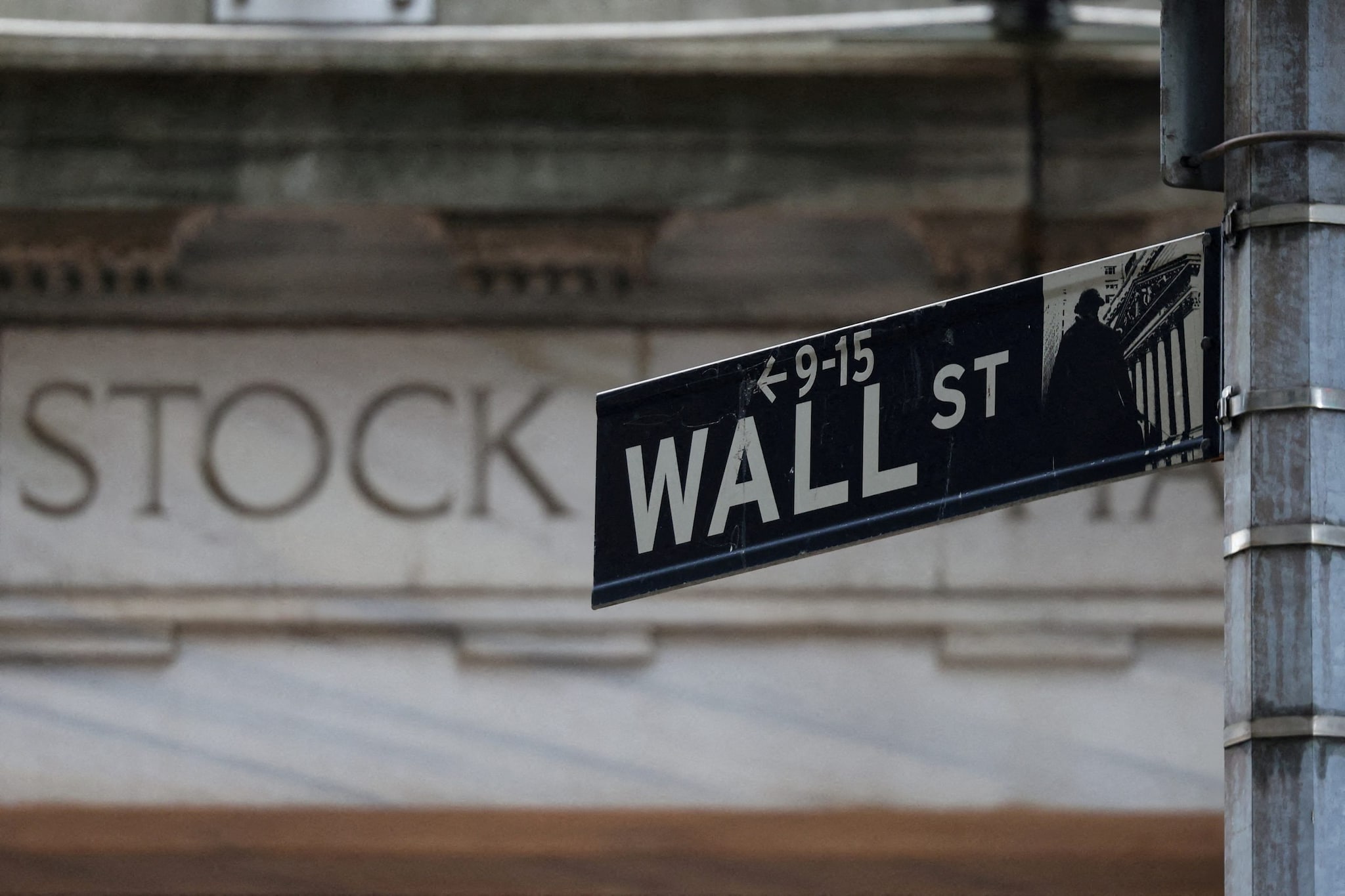
US Stock Market Highlights: Dow slides more than 400 points Monday as new Trump tariffs incite sell-off
Published on 08/07/2025 01:56 AM
We will now wrap up the blog. Bye, folks!
Stocks sold off to start the week on Monday (July 7) after President Donald Trump posted letters to countries indicating new tariffs on imported goods.
The Dow Jones Industrial Average tumbled 422.17 points, or 0.94%, and ended at 44,406.36. The S&P 500 fell 0.79% to close at 6,229.98, and the Nasdaq Composite lost 0.92%, settling at 20,412.52.
Imports from at least seven countries will face steep tariffs beginning Aug. 1, Trump revealed in a series of Truth Social posts on Monday. Trump shared screenshots of signed form letters to the leaders of South Korea, Japan, Malaysia, Kazakhstan, South Africa, Laos and Myanmar, that dictated new tariff rates for each nation.
White House press secretary Karoline Leavitt said that 14 letters will be sent on Monday, with more to be expected in the following days. She added that Trump will sign an executive order to delay his tariff deadline, previously anticipated to be sometime this week, until August 1.
Shares of Toyota Motor and Honda Motor fell 4% following Trump’s posts. Nvidia was slightly lower, while Apple, Alphabet and AMD shed over 2%.
Oil rose as Saudi Arabia surprised customers in Asia by hiking prices for its main crude grade, a vote of confidence that the market can absorb extra OPEC barrels.
West Texas Intermediate crude advanced more than 1% to settle just below $68 a barrel, erasing earlier losses, while Brent settled above $69 a barrel. Saudi state producer Aramco will raise the price for Arab Light crude, its flagship grade, by $1 a barrel to $2.20 a barrel more than the regional benchmark for Asian customers in August, according to a sheet from the company seen by Bloomberg.
The pricing move staved off a rout in oil after a simultaneous decision by eight OPEC+ nations to increase supply more rapidly than expected, adding 548,000 barrels a day in August, with more expected in September.
The US State Department is revoking the foreign terrorist designation of an Islamist rebel group that played a key role in the downfall of Bashar Al-Assad’s regime in Syria, a week after President Donald Trump ordered the termination of sanctions on the country.
Secretary of State Marco Rubio said the revocation of Hay’at Tahrir al-Sham’s terrorist status will take effect on July 8, following the “announced dissolution of HTS and the Syrian government’s commitment to combat terrorism in all its forms.”
In a statement, Rubio also noted the “positive actions” of the new Syrian government under President Ahmed Al-Sharaa. Al-Sharaa led HTS after his group, Nusra Front, publicly split from al-Qaeda in 2016.
A blaze that broke out in a Cairo central telecommunications building disrupted some services in Egypt, according to the National Telecom Regulatory Authority.
The regulator didn’t detail the scope of what it described as a “temporary” outage of telecommunication services. Users complained of unstable phone and internet service.
Netblocks, a London-based internet watchdog organization, said a “major” disruption had been registered in Egypt. “Network data show national connectivity at 62% of ordinary levels” after the fire was reported, it said in a post on X.
The fire began on the seventh floor of the 10-story telecom building in the capital’s downtown, Egypt’s state-run news agency MENA reported. It cited a security official as saying preliminary examination indicated the fire was likely caused by an electrical short circuit.
Figma Inc.’s expected US initial public offering is shaping up as a potential summer blockbuster first-time stock sale, as investors look to back a rare debut from a fast-growing software company.
The design software maker’s 46% year-on-year increase in first-quarter revenue, as well as high customer retention rates and gross margins, should see investors value the company alongside the top rung of the enterprise software sector, said Charlie Miner, senior analyst at research firm Third Bridge.
“It’s the kind of profile that commands a premium, even as the broader application software market becomes more selective,” Miner said in an interview with Bloomberg News.
If all goes well, Figma may even have a chance of reclaiming its $20 billion valuation from a failed acquisition by rival Adobe Inc. agreed in 2022. A tender offer two years later to allow employees to sell some shares valued Figma at a lower mark of $12.5 billion.
At least 11 people were killed in violent clashes between Kenyan police and protesters demanding the removal of President William Ruto. In addition to the fatalities, 63 people were injured and 567 arrested, the police said on X Monday.
The protests held to commemorate the July 7 marches that marked the beginning of multi-party democracy in the East African nation 35 years ago, took place in nearly half of Kenya’s 47 counties, with looting reported in at least six, Kenya National Commission on Human Rights said.
US President Donald Trump posted letters to five more countries outlining the tariffs they will face. Here are the levies:
Kazakhstan: 25% tariff rate
Malaysia: 25% tariff rate
South Africa: 30% tariff rate
Myanmar: 40% tariff rate
Laos: 40% tariff rate
Epic Games Inc. settled its antitrust case against Samsung Electronics Co. that alleged the company was conspiring with Alphabet Inc.’s Google to block rival app marketplaces through default settings on mobile devices sold by the electronics giant.
In a brief court filing Monday, the maker of the blockbuster shooter game Fortnite dismissed the claims against Samsung. Google remains a defendant.
“We are grateful that Samsung will address Epic’s concerns,” Epic Chief Executive Officer Tim Sweeney said in a post on X. He didn’t elaborate and an Epic spokesperson declined to offer further comment, while a Samsung spokesperson referred to Sweeney’s post. Representatives of Google didn’t immediately respond to a request for comment.
Gold pared losses after President Donald Trump said he’ll impose 25% tariffs on goods from Japan and South Korea starting August 1, the first announcements in what the US president promised would be a flurry of written warnings and trade deals on Monday.
The move is part of Trump’s rush to overhaul US trade policies that have served as a steady source of uncertainty for markets, which has helped bolster demand for gold, a safe-haven asset. The two Asian nations now have a narrow three-week window to open their markets to American products and manufacture more in the US to avoid his unilateral levies.
US President Donald Trump on Monday said the US will impose a 25% tariff on Malaysia.
US President Donald Trump on Monday said the US will impose a 30% tariff rate on South Africa and a 25% tariff rate on Kazakhstan.
US President Donald Trump on Monday announced that the US will impose a 40% tariff on Myanmar and Vietnam.
Donald Trump announces tariffs for Myanmar, Vietnam, South Africa, Malaysia and Kazakhstan.
Brazilian President Luiz Inacio Lula da Silva joined South Africa in blasting Donald Trump for his threat to slap extra tariffs against the BRICS, escalating a spat with the US leader during the final day of hosting the 10-member group.
Lula said the US president was “irresponsible for threatening tariffs on social media” before calling on world leaders to find ways to reduce international trade’s reliance on the dollar, a position shared by the group of emerging market nations.
The dollar rose to its highest level in more than a week, extending gains as President Donald Trump started to unveil his proposals for US trade tariffs.
The greenback strengthened 0.6% against a basket of peers in afternoon trading in New York, picking up steam after Trump moved to impose 25% levies on goods from Japan and South Korea.
The Bloomberg Dollar Spot Index hit its highest level since June 26 and most global currencies slumped, with Japan’s yen and South Korea’s won sinking more than 1%.
The US-listed shares of South Korean companies SK Telecom and LG Display slid in midday trading following President Donald Trump’s announcement of 25% on the country.
Shares of telecommunications company SK Telecom — which is part of SK Group, one of South Korea’s largest conglomerates — fell more than 7%.
Shares of LG Display, the maker of organic light-emitting diode display (OLED) products for notebooks and other electronics under LG Electronics, were down by more than 6%.
South Korean assets plunged to session lows after President Donald Trump announced a 25% tariff on the nation’s goods, ratcheting up tension with one of the most important trading partners to the US.
The won plunged as much as 1.1% to trade at 1,378 per dollar, the lowest in two weeks, after Trump announced the trade levy in a social media post. Shares for the $4.95 billion iShares MSCI South Korea (EWY) fell 3.6%, the most since April.
South Korean assets plunged to session lows after President Donald Trump announced a 25% tariff on the nation’s goods, ratcheting up tension with one of the most important trading partners to the US.
The won plunged as much as 1.1% to trade at 1,378 per dollar, the lowest in two weeks, after Trump announced the trade levy in a social media post. Shares for the $4.95 billion iShares MSCI South Korea (EWY) fell 3.6%, the most since April.
Copper and other industrial metals extended losses after US President Donald Trump injected fresh uncertainty into his trade agenda with a pledge to impose a 10% tariff on countries aligned with the BRICS bloc of nations.
The duty would be charged on top of any other tariffs and there would be no exceptions to the policy, Trump said in a Sunday-night post on Truth Social. BRICS is a grouping that includes Brazil, China, South Africa and India.
Treasury Secretary Scott Bessent said Monday that the US will make several trade announcements in the next 48 hours. The first announcement from Trump placed tariffs of at least 25% on goods from Japan and South Korea starting August 1. Details on sectoral tariffs geared toward boosting US industrial production, including of aluminum, steel and copper, are still under discussion.
President Donald Trump announced Monday that the US would hit products from Japan and South Korea with 25% tariffs, sending shares of Toyota and Honda down.
US-traded shares of Toyota Motor dropped more than 4%, while Honda Motor shares slid nearly 4%.
Blackouts in the US could double by 2030 amid an expected increase in power demand brought on by AI, according to a Trump administration report that blames the expected energy shortfall on the closures of coal and natural gas power plants and overreliance on renewable energy.
A 100% “surge in power outages” is expected within five years if planned power plant closures remain on schedule without new units to replace them, the Energy Department, which is releasing the report on Monday, said in a statement. “Staying on the present course would undermine U.S. economic growth, national security, and leadership in emerging technologies,” it said.
The report backs President Donald Trump’s pro-coal and anti-renewable approach to energy generation, painting wind and solar as unreliable and part of a “radical green agenda of past administrations.” It also comes as the Energy Department has been using emergency authority to extend the life of coal and other plants, citing concerns about shortages of electricity as data centers, which power artificial intelligence models, require more supply.
The Federal Reserve can’t assume its benchmark lending rate won’t return to zero at some point in the future, according to a group of New York Fed researchers including the bank’s president, John Williams.
The authors, in a blog post published Monday, found a 9% probability the federal funds rate would hit the so-called zero lower bound, or ZLB, over a seven-year horizon, with the current high level of interest-rate uncertainty contributing to that risk.
“Compared with the past decade, current data show that expected levels of future interest rates are high,” Williams and his co-authors wrote. “Nevertheless, ZLB risk remains significant over the medium to long term, similar to levels observed in 2018, due to recent elevated uncertainty.”
Now that Congress has lifted the US debt ceiling, the Treasury is preparing to replenish its cash buffer, though it likely won’t need to raise as much as it did in 2023.
Wrightson ICAP expects the Treasury to issue roughly $450 billion in net bills during the third quarter — far below the $1.1 trillion issued in the same period two years ago, following the suspension of the debt ceiling in June 2023.
Front-end investors will be closely monitoring the Treasury’s efforts to rebuild its cash balance at the Federal Reserve, as the influx of new bills is expected to drive yields higher across a range of instruments, from Treasury-backed repurchase agreements to agency debt.
European natural gas prices edged higher as traders eyed US President Donald Trump’s fast-approaching tariff deadline and the impact levies will have on global economic activity.
Benchmark futures added 0.5% on Monday, after posting a small weekly gain through Friday. The US is preparing to start delivering letters to dozens of countries in the coming days, with the Trump administration’s 90-day pause on higher duties set to expire on Wednesday.
The initial rollout of Trump’s so-called reciprocal tariffs in early April sparked fears of a US recession and sent energy prices tumbling on expectations that a weaker economy will curb demand. For Europe, which competes with other nations for liquefied natural gas cargoes, a further drop in prices could help ease its efforts to replenish fuel stockpiles ahead of next winter.
Tom Homan, the border czar for President Donald Trump, said that immigration agents will ramp up arrests in New York City as part of a broader crackdown on sanctuary jurisdictions that limit cooperation with federal authorities.
“We’re going to be in New York City,” Homan told reporters at the White House on Monday. “President Trump said it two weeks ago — we’re going to double down and triple down on sanctuary cities. Why? Not because it’s a blue city or a blue state, but because we know that’s where the problem is.”
His remarks came just days after New York City mayoral frontrunner Zohran Mamdani, a state assemblyman from Queens, vowed to sever all ties between city agencies and ICE if elected in November.
Tesla Inc. shares fell after Elon Musk announced he’s forming a new political party, digging deeper into a pursuit that’s been a drag on his most valuable business.
The chief executive officer announced over the weekend that he’ll take on Republicans and Democrats with the “America Party,” focusing on House and Senate seats for the next 12 months. After that, backing a candidate for president isn’t out of the question, Musk wrote on X.
Tesla’s stock slid 7.4% as of 11 a.m. Monday in New York, wiping out $16.7 billion from his net worth, according to the Bloomberg Billionaires Index. If that drop were to hold, it would be the biggest decline for the shares since Musk’s initial falling out with Donald Trump over the president’s tax bill in early June.
The stock has declined 28% this year as the CEO’s politicking has hurt Tesla’s standing with car buyers.
The United States will impose 25% blanket tariffs on imports from Japan and South Korea starting August 1, President Donald Trump revealed Monday.
Trump, in a pair of Truth Social posts, shared screenshots of letters apparently sent to Japanese Prime Minister Ishiba Shigeru and South Korean President Lee Jae-myung dictating the new tariff rates.
Both letters say that the 25% tariffs are separate from additional sector-specific duties on key product categories.
The letters also note, “Goods transshipped to evade a higher Tariff will be subject to that higher Tariff.” Transshipping in this case appears to refer to the practice of transferring goods to an interim country prior to their final shipment to the U.S. in order to skirt tariffs.
Stocks fell Monday as traders weighed the latest developments on the trade front to start the week.
The Dow Jones Industrial Average slipped 447 points, or 1%. The S&P 500 fell 0.8%, and the Nasdaq Composite lost 0.9%.
Treasury Secretary Scott Bessent said Monday on CNBC’s “Squawk Box” that there would be several trade announcements over the next 48 hours, adding that he expects “it’s going to be a busy couple of days.” However, Bessent did not specify which countries would be involved.
Chilean copper mines had their best month of export revenue in more than three years in June, with the increase in value outstripping price gains in a sign of rising production.
The country that accounts for about a quarter of the world’s mined copper shipped $4.7 billion worth of the metal last month, the biggest haul since December of 2021, according to data released by the Chilean central bank on Monday.
That’s 17% more than the same month last year, signalling that at least part of the increase was the result of higher volume given prices rose 11% on average over the same period. Chile is yet to report June production.NewsLive TVMarketPopular CategoriesCalculatorsTrending NowLet's Connect with CNBCTV 18Network 18 Group :©TV18 Broadcast Limited. All rights reserved.