US Stock Market Live: Dow futures down 150 points ahead of Trump tariffs; Gold, crude decline
Published on 07/07/2025 10:59 AM
Gold fell as traders sought to track shifts in US trade policy, with bullion edging lower as President Donald Trump signaled an additional 10% tariff would apply to countries aligned with the BRICS group of nations.
Bullion lost as much as 0.9% to near $3,306 an ounce following the president’s threat, which gave the US dollar a small lift. With the US negotiating deals ahead of an initial July 9 tariff deadline, Treasury Secretary Scott Bessent indicated a possible extension to negotiations, and Commerce Secretary Howard Lutnick said country-by-country tariffs would take effect Aug. 1.
Bullion remains more than a quarter higher this year, trading about $190 shy of a record set in April, with investors seeking safety in the metal amid heightened geopolitical and trade tensions. The rally has been supported by flows into bullion-backed exchange-traded funds, plus strong demand from central banks.
Oil extended declines after OPEC+ agreed to a bigger-than-expected production increase next month, raising concerns about oversupply just as US tariffs fan fears about the demand outlook.
Brent slid as much as 1.6% toward $67 a barrel after falling 0.7% on Friday, and West Texas Intermediate was near $66. The group led by Saudi Arabia decided on Saturday to increase supply by 548,000 barrels a day, putting OPEC+ on track to unwind its most recent output cuts a year earlier than planned.
Alliance officials cited summer demand as one reason for their optimism that the extra barrels could be absorbed by the market, with the move answering President Donald Trump’s calls for lower fuel costs.
The Thai baht’s four-month rally is likely to falter as political turmoil is expected to weigh on the economy, according to the currency’s top forecaster.
The local currency may trade at 32.30 per dollar at the end of the year and into the first quarter of 2026, said Christoper Wong, senior FX strategist at Oversea-Chinese Banking Corp. That implies the baht would be just 0.7% stronger than its level on Monday, after surging more than 5% in the four months through June.
“In the coming months, slower tourism, subdued domestic demand, political developments and tariff uncertainty are some factors that may hinder the baht’s appreciation path,” Wong said in an interview on Friday. “Relative to other Asian peers, I’m of the view that the baht may continue to stay back-footed.”
President Donald Trump said he would put an additional 10% tariff on any country aligning themselves with “the Anti-American policies of BRICS,” injecting further uncertainty into global trade as the US continues to negotiate levies with many trading partners.
“Any Country aligning themselves with the Anti-American policies of BRICS, will be charged an ADDITIONAL 10% Tariff,” Trump said Sunday night in a Truth Social post. “There will be no exceptions to this policy.”
The comments come as the US prepares to send tariff letters to dozens of countries in the coming days, with the Trump administration’s 90-day pause on higher duties set to expire on Wednesday. Trump said in a separate post that the letters would start being delivered from noon Monday, Washington time.
President Donald Trump said he would put an additional 10% tariff on any country aligning themselves with “the Anti-American policies of BRICS,” injecting further uncertainty as the US continues to negotiate levies with trading partners.
“Any Country aligning themselves with the Anti-American policies of BRICS, will be charged an ADDITIONAL 10% Tariff,” Trump said Sunday night in a Truth Social post. “There will be no exceptions to this policy.”
BRICS is a grouping of nations that includes Brazil, China, Russia, South Africa and India. Over the weekend, the group’s leaders agreed to continue talks on a cross-border payment system for trade and investment — a project they’ve been discussing for a decade, though progress has been slow. Chinese Premier Li Qiang and Indian Prime Minister Narendra Modi are among those attending the BRICS summit.
Asia-Pacific markets traded mixed on Monday after US President Donald Trump confirmed that “reciprocal” tariffs, first announced in April, will take effect on Aug. 1 for countries that haven’t struck a deal.
Japan’s benchmark Nikkei 225 slipped 0.53% while the Topix declined 0.57%. South Korea’s Kospi added 0.19% and the small-cap Kosdaq rose 0.16%.
Hong Kong’s Hang Seng index lost 0.61%, and mainland China’s CSI 300 dipped 0.12%.
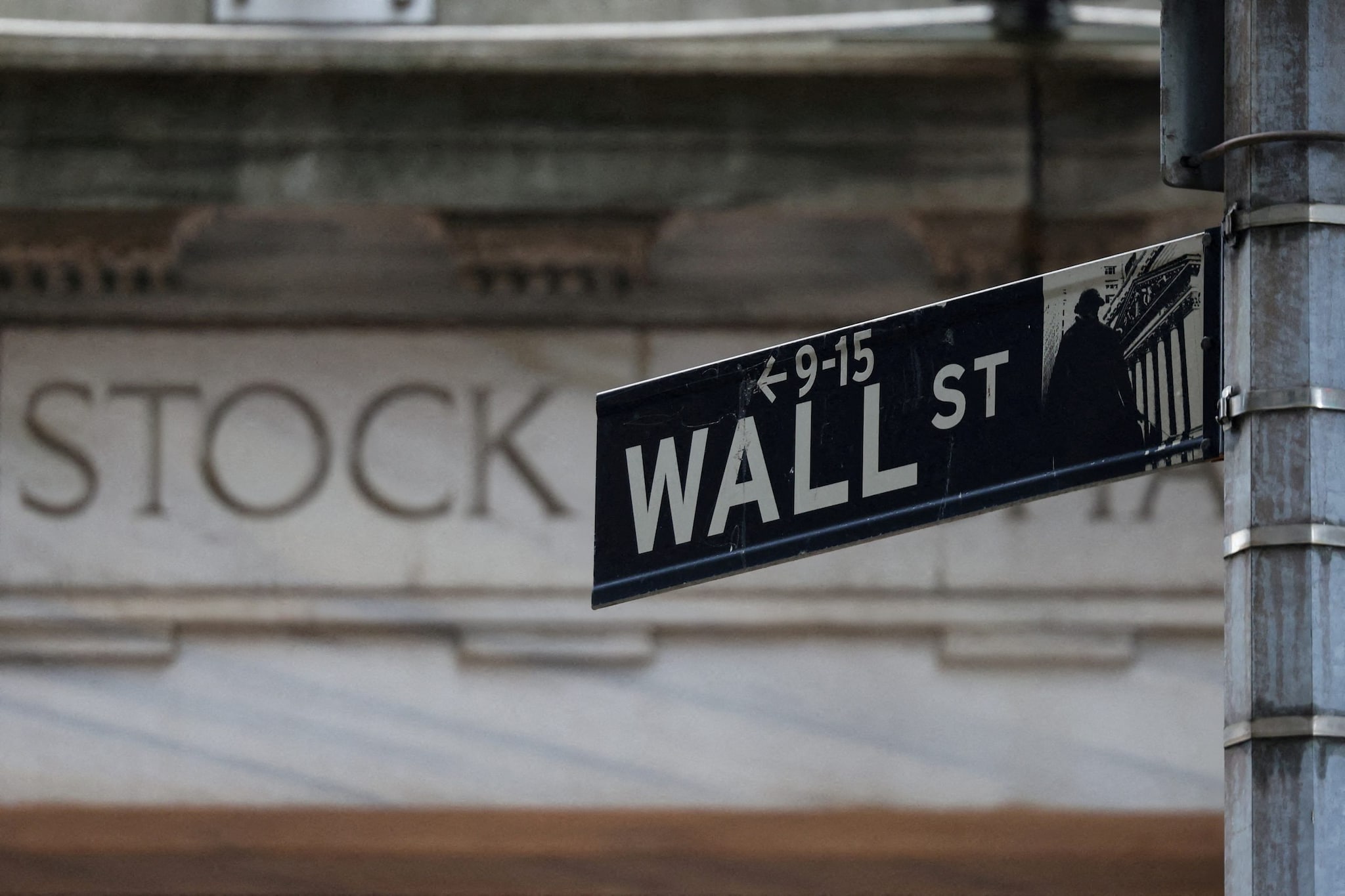
Futures on Wall Street are trading with losses at the culmination of the long Independence Day weekend ahead of US President Donald Trump’s looming reciprocal tariff deadline.
The Dow futures are currently trading 170 points lower, while futures of S&P 500 and the Nasdaq are down 30 points and 110 points respectively.
Good Morning!
US futures are falling ahead of President Donald Trump’s tariff announcements.
Multiple news bits have emerged over the weekend and this morning.
Watch this space for all the live updates.NewsLive TVMarketPopular CategoriesCalculatorsTrending NowLet's Connect with CNBCTV 18Network 18 Group :©TV18 Broadcast Limited. All rights reserved.