US Stock Market Live: Dow futures recover early losses; Oil prices rise despite output hike
Published on 08/07/2025 07:52 AM
“At the current time, there are some points on which the United States and Japan cannot reach agreement still remaining, and therefore no agreement has yet been made. This is because we, as the government of Japan, have avoided making easy concessions and have pursued robust talks, seeking what we ought to seek and defending what we ought to defend.”
China’s Zhejiang Huayou Cobalt Co. Ltd expects to report record half-year earnings, as it ramps up nickel projects in Indonesia and enjoys the tailwind from rising cobalt prices.
The major battery materials supplier will post net income for January through June of between 2.6 billion yuan ($360 million) and 2.8 billion yuan, according to preliminary earnings posted on Monday. At the low end, that’s a 56% jump from a year earlier.
Huayou’s shares in Shanghai rose as much as 3.9% in early trading on Tuesday.
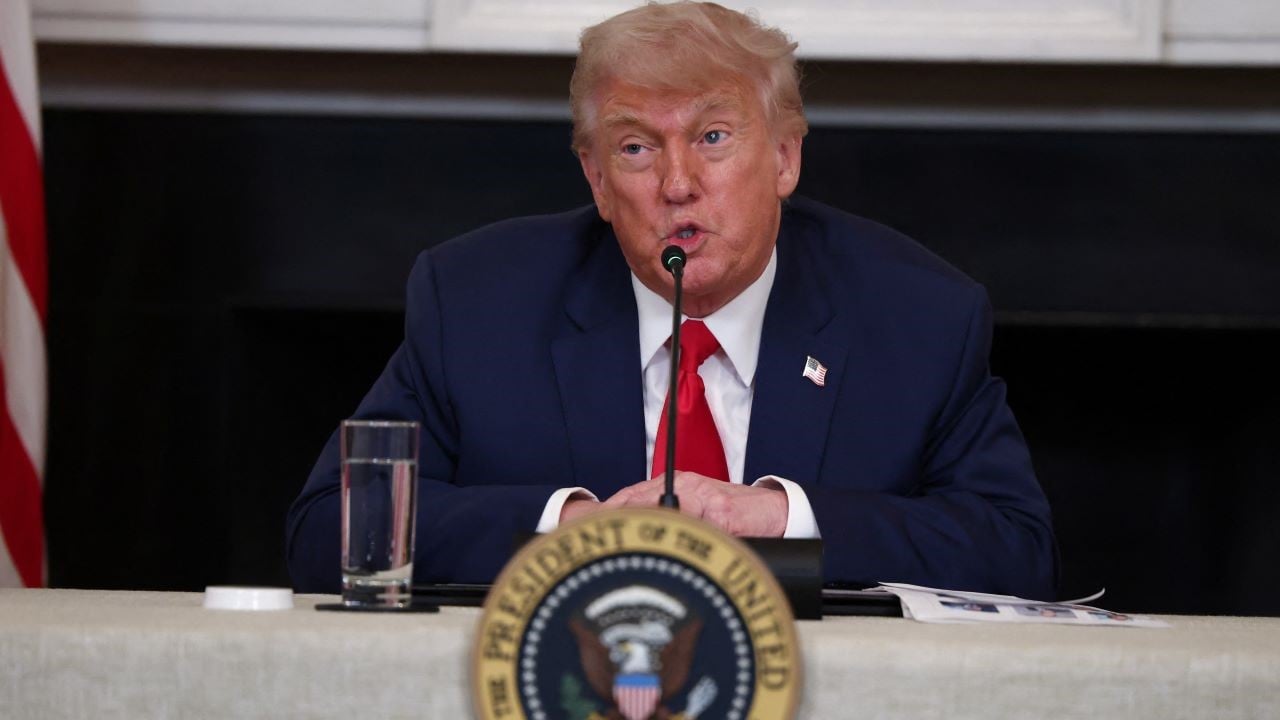
Emerging market currencies recovered some of their losses after US President Donald Trump signaled he is open to negotiations shortly after setting tariff rates for more than a dozen countries.
The South Korean won led a pullback in Asian currencies, rising around 0.6% to pare part of its overnight decline while the Thai baht erased losses from early morning trading. These moves were part of a tentative rebound across emerging markets, with the South African rand also edging higher after heavy losses Monday.
Trump sent letters to a variety of countries setting tariff rates on Monday but suggested he was open to negotiations, saying that the levies were “firm, but not 100% firm.” That has left markets playing a now familiar guessing game about how bad the damage could be.
Oil steadied as investors turned their attention to the potential fallout from US levies and an escalation of hostilities in the Red Sea.
Brent held near $69 a barrel after advancing 1.9% on Monday, and West Texas Intermediate was below $68. US President Donald Trump unveiled the first in a wave of higher tariff rates on trading partners, but suggested that he was still open to negotiations. The duties won’t take effect until at least Aug. 1.
The oil market has been volatile in recent weeks after the war between Israel and Iran, with a fragile truce now in place, but tensions in the Middle East are starting to rise again following attacks in the Red Sea. A second vessel was targeted near Yemen on Monday, hours after Iranian-backed Houthis claimed responsibility for an earlier attack on a ship in the same area.
Japanese and South Korean equities rose in early Tuesday trading on cautious hopes that the countries can reach trade deals ahead of Donald Trump’s newly-extended tariff deadline.
The yen was fractionally stronger after dropping about 1% overnight. The won gained.
Japan’s blue-chip Nikkei 225 rose as much as 0.5% as of 9:30 a.m. in Tokyo, while Korea’s Kospi gained as much as 1.5% after Trump sent letters to his counterparts in Tokyo and Seoul threatening levies of 25% beginning Aug. 1.
Gold steadied after reversing losses in the previous session when President Donald Trump began informing a suite of nations of their latest tariff rates, with concerns about a growing US-led trade war bolstering haven demand.
The precious metal ended Monday little changed after earlier falling as much as 1.2%, and on Tuesday remained flat at around $3,335 an ounce. The president said Japan and South Korea would face 25% levies on goods, with other rates issued for different trading partners, triggering a selloff in currencies of targeted nations and boosting the dollar. A stronger greenback typically makes gold more expensive for most buyers.
The Asian nations were the first in what the president promised would be a flurry of unilateral warnings and trade deals announced on Monday, with investors bracing for further potential fallout as the White House prepares to impose higher tariffs on countries that do not reach agreements with the US. Still, Trump’s move to delay the new rates until August 1 effectively buys each affected nation an extra three weeks to cut a deal.
Asia-Pacific markets mostly rose after U.S. President Donald Trump announced steep tariffs on 14 trading partners, including Japan and South Korea.
Japan’s Nikkei 225 benchmark added 0.36% in early trade while the broader Topix index ticked up 0.31%.
In South Korea, the Kospi index increased by 0.44% while the small-cap Kosdaq was up 0.19%.
Futures for Hong Kong’s Hang Seng index stood at 23,886 pointing to a marginally weaker open compared to the HSI’s last close of 23,887.83.
The dollar jumped the most in three weeks after President Donald Trump unveiled a wave of proposed tariffs, a sign investors are confident the US economy can largely withstand the impact of trade disputes.
The greenback strengthened 0.5% against a basket of peers on Monday, picking up steam after Trump announced levies on a handful of countries. The Bloomberg Dollar Spot Index rose the most since June 17 and currencies across the globe slumped, with Japan’s yen, South Korea’s won and Brazil’s real among those sinking more than 1%.
“The fact that some of the more problematic policies from the US administration have been dialed back — and there are deals getting done — means that the economic pain for the US won’t be as bad as originally feared,” said Skylar Montgomery Koning, a currency strategist at Barclays.
South Korea’s Samsung Electronics on Tuesday forecast a 56% fall in profits for the second as the company struggles to capture demand from artificial intelligence chip leader Nvidia.
The memory chip and smartphone maker said in its guidance that operating profit for the quarter ending June was projected to be around 4.6 trillion won, down from 10.44 trillion Korean won year over year.
According to the smart estimates, Samsung was expected to post an operating profit of 6.26 trillion won ($4.57 billion) for the quarter. Meanwhile, Samsung projected its revenue to hit 74 trillion won, falling short of LSEG smart estimates of 75.55 trillion won.
US President Donald Trump announced sweeping tariffs across 14 nations on Monday, from Japan to South Korea, Myanmar to Bangladesh, among others.
The White House has also mentioned that more letters will be sent out over the next few days.
The President also signed an official declaration delaying the imposition of the new tariffs to August 1.
Stocks fell from all-time highs and the dollar climbed after President Donald Trump began unveiling his tariff plans, with the US setting levies for nations such as Japan, South Korea and South Africa starting in August — triggering a selloff in their currencies.
The S&P 500 slid about 1%, with megacaps leading losses as Tesla Inc. tumbled nearly 7% after Elon Musk announced he’s formed a political party, raising concern about his company’s outlook.
Treasuries dropped, with longer-dated bonds underperforming. Emerging markets got hit as Trump warned he’d add extra tariffs on countries aligning with “the Anti-American policies of BRICS.”
Futures on Wall Street are extending losses after benchmark indices witnessed selling pressure at the start of the new trading week.
The Dow futures are currently down 110 points, while those on the S&P 500 and Nasdaq are down 15 and 25 points respectively.
Good Morning!
Futures on Wall Street are down after Monday’s sell-off.
US President Donald Trump has announced tariffs for 14 countries overnight.
Clarity still awaited on the US-India trade deal.
Watch this space for all the live updates.NewsLive TVMarketPopular CategoriesCalculatorsTrending NowLet's Connect with CNBCTV 18Network 18 Group :©TV18 Broadcast Limited. All rights reserved.