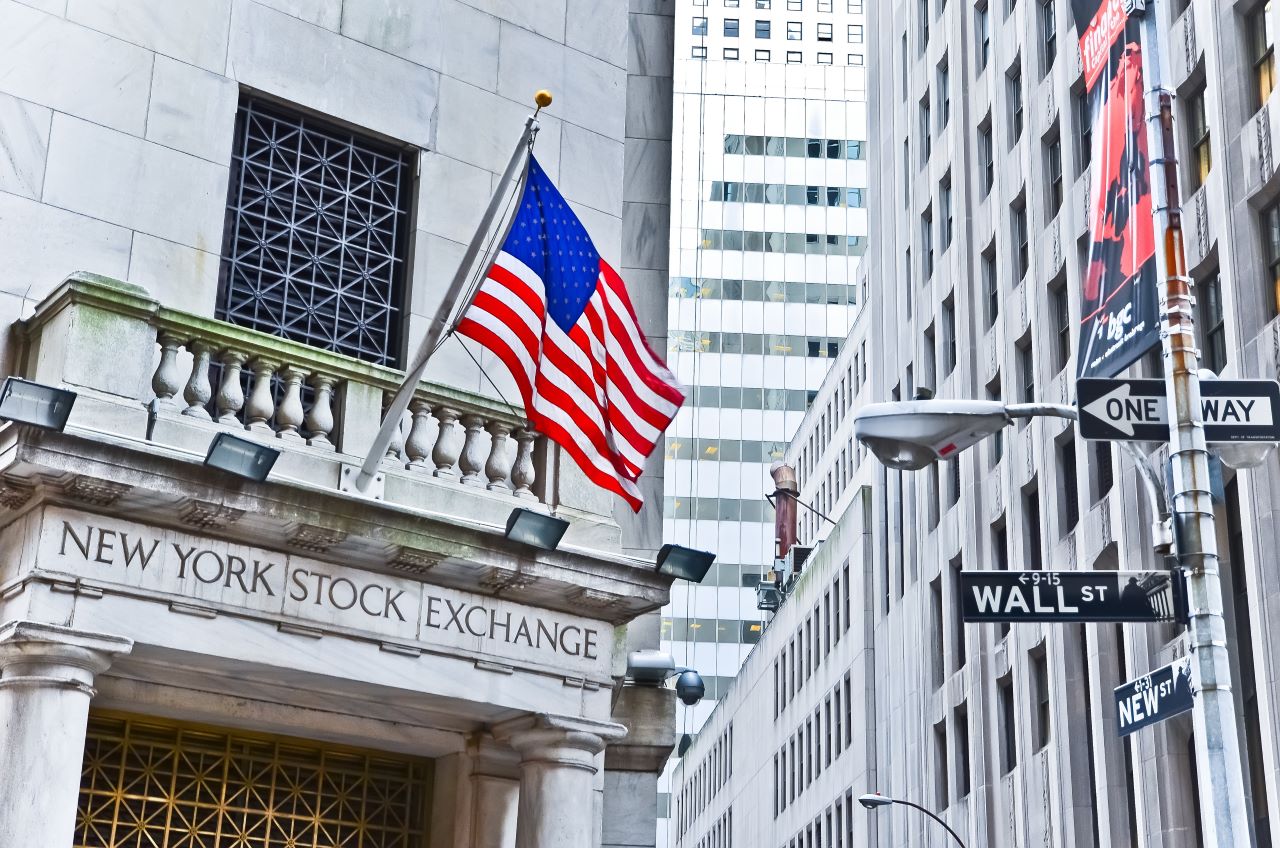
US Stock Market Live: Dow futures recovering from lows ahead of inflation data, 10-year bond auction
Published on 11/06/2025 01:05 PM
Power prices across Europe jumped as nuclear giant Electricite de France SA reported signs of “stress corrosion” at a reactor, renewing fears that generation may be curtailed once again.
The French utility in 2022 and 2023 was forced to halt part of its atomic fleet, the backbone of western Europe’s electricity market, to fix cracked pipes. That sent energy prices soaring as the repairs coincided with dwindling Russian gas supplies to the continent.
On Tuesday, the ASNR nuclear safety authority said “hints” of corrosion had again been found on pipes at the Civaux 2 reactor in central France. That drove French year-ahead power up as much as 8.4% on Wednesday, the most in two years, according to the European Energy Exchange.
North Korea appears to have constructed a new building within its main nuclear complex, satellite imagery showed, in what could be an additional enrichment facility to ramp up the country’s ability to produce nuclear weapons.
The new structure at Yongbyon, some 100 kilometers (62 miles) north of Pyongyang, resembles an enrichment facility at Kangson, another North Korean nuclear site near the capital, the satellite image analyzed by weapons expert Jeffrey Lewis showed.
Rafael Grossi, the director general of the International Atomic Energy Agency, said in a report to the board of governors this week that the nuclear watchdog is monitoring the construction of a new building at Yongbyon “which has dimensions and features similar to the Kangson enrichment plant.”
European natural gas prices reversed a three-day slide as above-normal temperatures started covering the continent, potentially driving up fuel use for air conditioning.
Benchmark futures gained as as much as 2.2% on Wednesday. Temperatures across Europe are set to remain above average during the next two weeks, with cooling demand set to spike to its highest level since July 2022, according to data from Atmospheric G2. In London, temperatures will reach the heat wave threshold, exceeding 30C.
With the approach of peak summer temperatures, gas markets in Europe and Asia risk tightening a limited pool of global fuel supplies. Citigroup Inc. analysts see an inconclusive outlook in parts of Asia, with eastern China being potentially milder and Japan and Korea likely hotter than normal, they wrote in a note.
Marelli Holdings Co., the struggling auto parts supplier for Nissan Motor Co., Stellantis NV and other carmakers, has filed for Chapter 11 bankruptcy protection in the US as it seeks to slash its debt burden and restructure under new ownership.
About “80% of the company’s lenders have signed an agreement to support the restructuring, which will deleverage Marelli’s balance sheet and strengthen its liquidity position,” Marelli said in a statement. It added it does not expect the process to have any operational impact on its business.
Marelli has received a commitment for $1.1 billion in debtor-in-possession financing from its lenders. Upon Court approval, this amount, coupled with cash generated from the company’s ongoing operations, is “expected to provide sufficient liquidity to support the company through the Chapter 11 process,” Marelli said.
The European Union believes trade negotiations with the US could extend beyond President Donald Trump’s July 9 deadline, even as the speed of the talks has increased over the past week.
The EU sees reaching an agreement on the principles of a deal by July 9 as a best-case scenario, which would allow further talks to work out the details, according to people familiar with the matter. The US is expected to respond to the latest round of negotiations in the coming days and provide clarity on the next steps.
The transatlantic allies have been rushing to clinch a deal before the July deadline, when Washington will hit nearly all the bloc’s exports with a 50% tariff, likely triggering retaliation. The EU estimates that the duties adopted by Trump now cover €380 billion ($434 billion), or about 70%, of its exports to the US.
BYD Co. and Zhejiang Geely Holding Group Co. joined several of China’s government-backed automakers in a pledge to standardize bill payment for their suppliers to 60 days as authorities’ scrutiny of the industry’s health shifts to supply chain financing.
At least three carmakers, including Dongfeng Motor Group Co., Guangzhou Automobile Group Co. and China FAW Group Co. issued similar statements on Tuesday saying their payment plans are aimed at promoting efficient capital flows across supply chains in the automotive industry. That was followed by other major industry names including Chongqing Changan Automobile Co. and Great Wall Motor Co., which also vowed to conform to the 60-day payment period.
Rounding out the flurry of pledges were US-listed startup Nio Inc., XPeng Inc., Li Auto Inc. and Stellantis NV’s partner Zhejiang Leapmotor Technology Co. Domestic tech giant Xiaomi Corp., which just launched its first model last year, also agreed to the standardized period.
The US and China capped two days of high-stakes trade talks with a plan to revive the flow of sensitive goods — a framework now awaiting the blessing of Donald Trump and Xi Jinping.
After some 20 hours of negotiations in London, US Commerce Secretary Howard Lutnick said both sides had established a framework for implementing the Geneva consensus that last month brought down tariffs. “First we had to get sort of the negativity out,” he said. “Now we can go forward to try to do positive trade, growing trade.”
Capping a marathon round of haggling that stretched over 12 hours on Tuesday, Lutnick said the Chinese had pledged to speed up shipments of rare earth metals critical to US auto and defense firms, while Washington would ease some of its own export controls — suggesting progress was made on two of the thorniest issues in bilateral ties.
Asia-Pacific markets climbed Wednesday as trade discussions between the U.S. and China led to an agreement, representatives from both sides said.
Mainland China’s CSI 300 index advanced 0.77% higher while Hong Kong’s Hang Seng Index rose 0.9%.
Japan’s benchmark Nikkei 225 added 0.45% while the broader Topix index was flat.
In South Korea, the Kospi index advanced 0.71%, briefly nearing its highest level in 42 months earlier in the session, while the small-cap Kosdaq popped 1.71%.
There’s no longer-term advantage to being a bully on global commerce, according to European Central Bank President Christine Lagarde.
“Coercive trade policies are not a sustainable solution to today’s trade tensions,” she said Wednesday in a speech at the People’s Bank of China in Beijing.
Lagarde, who served as French trade minister early in her career, spoke just hours after the US and China agreed to a preliminary plan to ease tensions in cross-border commerce, which are near an all-time high — primarily due to President Donald Trump’s on-again-off-again tariffs.
Oil fell for a second day, as traders digested a welter of headlines on US trade policy, including an appeal court ruling that US President Donald Trump can press on with his global tariffs.
Brent fell toward $66 a barrel, while West Texas Intermediate was near $65. Trump can continue to enforce his global tariffs for now, a federal appeals court held. Elsewhere, the US and China de-escalated tensions, agreeing to a deal on how to implement a consensus reached in Geneva in earlier talks.
Crude has dropped this year as the Trump administration’s aggressive trade agenda clouded the outlook for global growth and hurt appetite for risk assets, including commodities. At the same time, OPEC+ moved to restore idled capacity at a faster than expected pace, boosting concerns about a glut later this year.
Gold edged higher even after the US and China said they had agreed on a plan to ease trade tensions during talks in London.
Bullion traded near $3,330 an ounce, and is up modestly for the week. US Commerce Secretary Howard Lutnick and China’s trade representative Li Chenggang said the two sides had agreed in principle on a framework to implement the consensus they reached in Geneva.
The detente between the world’s two biggest economies should be negative for haven assets like gold, and the lack of downward movement in bullion suggests investors are waiting for more developments.
Donald Trump can continue to enforce his global tariffs for now, a federal appeals court held in a win for the president on one of his signature economic policies.
The order Tuesday by the US Court of Appeals for the Federal Circuit extends an earlier, short-term reprieve for the administration as it presses a challenge to a lower court ruling last month that blocked the tariffs. The Justice Department had argued that US officials’ concerns about ongoing trade negotiations outweighed the economic harm claimed by the small businesses that sued.
The Washington-based court put the case on an expedited track, citing the “issues of exceptional importance” at stake, and scheduled arguments for July 31. The court didn’t offer a detailed reason for siding with the administration at this stage, indicating in the order that the government had met its burden for showing that keeping the lower court’s injunction on hold was “warranted.” No judge noted a dissent.
Chinese stocks rose on Wednesday, after the world’s two largest economies agreed on a plan to reduce trade tensions following a two-day meeting in London.
The onshore benchmark CSI 300 Index gained as much as 1.2%, the most in nearly a month, while a gauge of Chinese stocks listed in Hong Kong rose as much as 1% to the highest since March. Both measures were among the best performers in Asia.
The US and China agreed to a preliminary deal on implementing the consensus reached in Geneva. Full details of the pact weren’t immediately available and officials from both nations said they will take the proposal back to their respective leaders for approval.
Benchmark indices took another step forward to reclaim their record highs. The S&P 500 and Nasdaq outperformed aided by a third straight day of gains in Tesla, which has nearly recovered all the losses the stock had seen during June 4 and 5.
Futures on Wall Street are sulking this morning despite both US and China reaching a broad consensus to implement the Geneva trade agreement that both countries had arrived on last month.
The Dow futures are down 110 points, S&P 500 futures are trading below the flat line, while the Nasdaq futures are down 60 points.
Good Morning!
Welcome to our coverage on the US markets and the latest global developments.
US and China have reached a broad consensus to implement the Geneva agreement but futures are sulking.
Watch this space for all the live updates.NewsLive TVMarketPopular CategoriesCalculatorsTrending NowLet's Connect with CNBCTV 18Network 18 Group :©TV18 Broadcast Limited. All rights reserved.