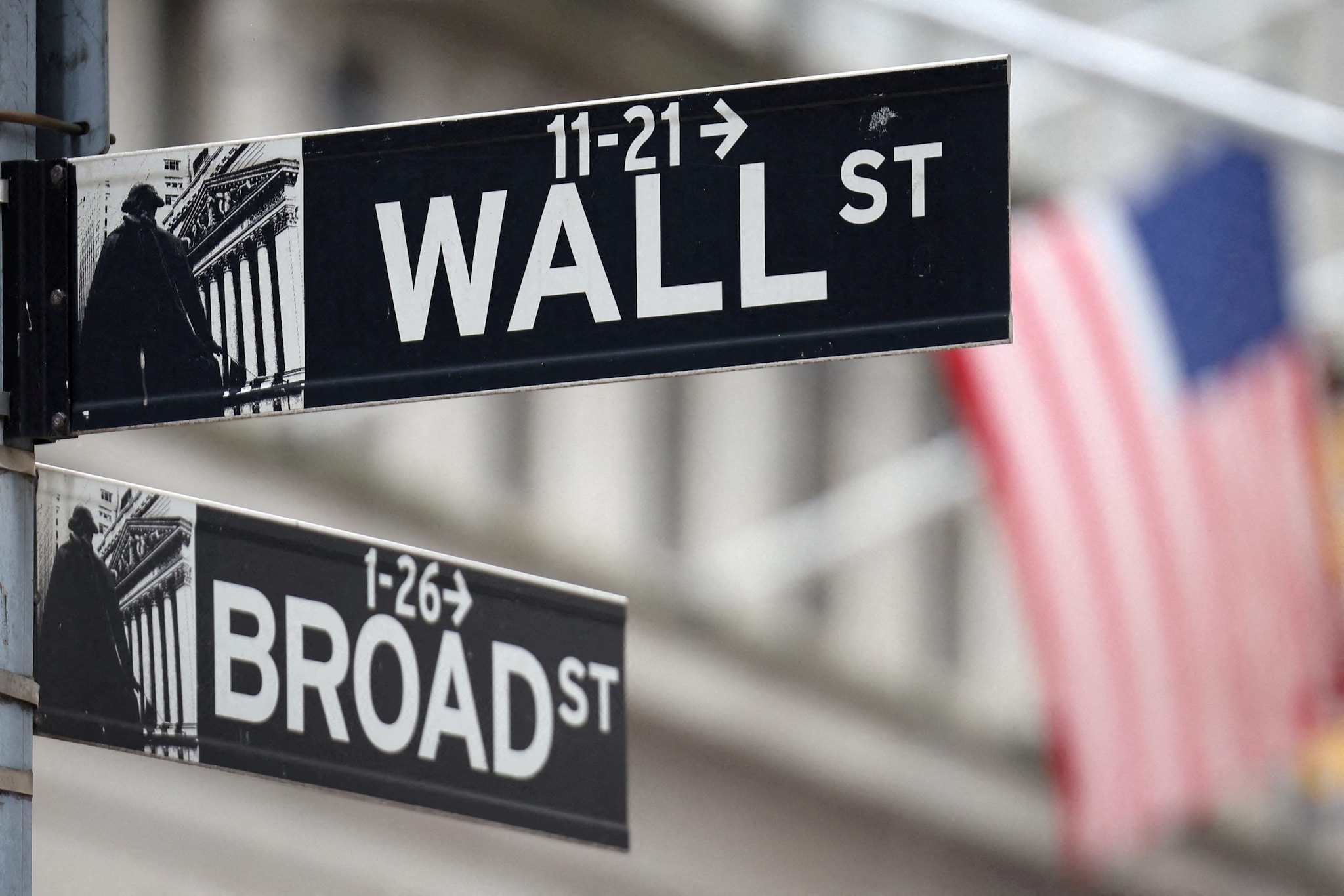
US Stock Market Live: Dow futures trim losses to 120 points ahead of PPI data; Dollar extends slump
Published on 12/06/2025 12:00 PM
The UK economy shrank for the first time in six months, calling into question whether Prime Minister Keir Starmer can achieve the growth he is counting on to fund his government’s spending ambitions.
Gross domestic product dropped 0.3% in April after healthy growth in the previous two months, the Office for National Statistics said Thursday. Economists surveyed by Bloomberg had predicted a 0.1% decline. Services and manufacturing shrank, while construction grew.
The figures set the stage for a tepid second quarter as firms and consumers navigate mounting job losses, tax rises and Donald Trump’s tariffs. Economists expect growth of just 0.1%, a reality check for Starmer who has repeatedly hailed Britain outperforming the Group of Seven in the first quarter as evidence that the economy has turned a corner.
Thai exporters and importers risk more than $600 million in added annual logistics costs as congestion worsens at the country’s main deep-sea port, driven by a surge in shipments ahead of potential steep US tariffs.
The Thai National Shippers’ Council has urged the government to address the growing congestion at Laem Chabang Port in Chonburi province. The call comes after the Land Transport Federation of Thailand announced plans to raise trucking fees starting in July, according to a statement Thursday from the council.
A sharp increase in shipment orders — spurred by a 90-day pause in high tariffs proposed by the Trump administration in April — led to a 14% rise in Thai exports during the first four months of the year. The export growth has provided a lift to an economy weakened by declining tourist arrivals and sluggish domestic consumption.
Japanese Prime Minister Shigeru Ishiba said he won’t rush into a trade deal with the US that would hurt the nation’s interests, although he’d welcome any progress made before an expected summit with US President Donald Trump.
“If there’s progress before I meet the president, that’s in and of itself good,” Ishiba told reporters in Tokyo Thursday. “But what’s important is to achieve an agreement that’s beneficial to both Japan and the US. We won’t compromise Japan’s interests by prioritizing a quick deal.”
Ishiba is expected to meet Trump on the sidelines of the Group of Seven leaders gathering in Canada starting Sunday, but Ishiba said the time and date for the bilateral hasn’t been set. The prime minister spoke following a gathering with opposition party leaders to discuss US tariffs. Collaborating beyond party lines is necessary to deal with what can be considered a national crisis, Ishiba said.
President Donald Trump remains open to communications with North Korean leader Kim Jong Un, the White House said in its latest comments expressing willingness to resume dialogue with the nuclear-armed North, despite little signal from Kim seeking engagement.
“The President remains receptive to correspondence with Kim Jong Un and he’d like to see the progress that was made at that summit in Singapore,” White House Press Secretary Karoline Leavitt told reporters on Wednesday when asked about a media report that said Trump tried to send a letter to Kim but was rebuffed.
The renewed call for dialogue comes as US ally South Korea seeks to reduce tensions on the Korean peninsula following the inauguration of new liberal President Lee Jae-myung last week. In one of the first conciliatory steps since Lee’s tenure began, South Korea suspended the broadcast of loudspeakers criticizing the Kim regime near the border this week.
Foreign investors accelerated purchases of South Korean bonds at a record pace in May, highlighting growing appetite for the asset class in the run-up to the presidential election and ahead of the addition to a major global index.
Overseas investors snapped up a net 11.34 trillion won ($8.3 billion) of listed bonds last month, according to a statement from the Financial Supervisory Service. That marks the largest monthly inflow since Bloomberg began compiling the data in 1998, extending April’s strong momentum. Foreign holdings of outstanding listed bonds rose to 300.5 trillion won during the period.
Overseas investors have been net buyers of South Korean bonds for 31 consecutive sessions through June 10, the longest streak since 2023.
The premium that Chinese stocks command over their Hong Kong-traded peers has narrowed to a five-year low, suggesting that some investors may look to snap up onshore stocks that have become cheaper.
Stocks listed on mainland exchanges, known as A-shares, are now trading at a 27% premium to their counterparts across the border, according to the Hang Seng Stock Connect China AH Premium Index. The valuation gap often widened again when the premium dipped to below 30% in previous occasions.
The CSI 300 Index, a benchmark for onshore shares, has lagged the Hang Seng China Enterprises Index this year, set for the widest underperformance since 2003. While the HSCEI gauge entered a bull market earlier this week, the rebound on the mainland has been much more tepid as the market lacks policy catalysts to draw fresh money.
The dollar extended its decline versus major peers as worries over US tariffs increased after President Donald Trump said he would notify trading partners soon of unilateral levy rates.
Bloomberg’s gauge of the dollar slid as much as 0.3% on Thursday to touch its lowest level since July 2023 following the news, with the safe-haven yen and Swiss franc leading the advance against the greenback. The dollar was already under pressure from a weaker-than-expected US inflation print, which helped spur traders to fully price in two quarter-point Federal Reserve interest rate cuts this year.
“The weak US CPI reasserts the soggy dollar backdrop, while the Middle East headlines also failed to spur a bounce in the dollar, which reflects its waning status as a haven currency during geopolitical flare-ups,” said Alex Loo, macro strategist at TD Securities in Singapore.
US President Donald Trump’s tariffs threaten to batter Japan’s vital auto industry and derail the country’s long-standing efforts to engineer a sustainable economic recovery.
With the 25% US tariff now in place on cars and auto parts, Japan’s major automakers — including Toyota Motor Corp., Honda Motor Co., Mazda Motor Corp. and Subaru Corp. — are bracing for a collective hit of more than $19 billion this fiscal year alone. And it’s not just the household names feeling the pain.
Northwest of Tokyo in Gunma Prefecture, where Subaru operates its main factory, the effects are already being felt. With costs rising, Yoshiyuki Nakajima, president of Shoda Seisakusho Co. — a supplier to Subaru — warned that his firm will be forced to slash profit margins if the tariffs persist. Worst case, layoffs will be unavoidable. “We’ll have no choice,” he said.
President Donald Trump said he intended to send letters to trading partners in the next one to two weeks setting unilateral tariff rates, ahead of a July 9 deadline to reimpose higher duties on dozens of economies.
“We’re going to be sending letters out in about a week and a half, two weeks, to countries, telling them what the deal is,” Trump told reporters Wednesday at the John F. Kennedy Center for the Performing Arts in Washington where he was attending a performance.
“At a certain point, we’re just going to send letters out. And I think you understand that, saying this is the deal, you can take it or leave it,” he added.
Gold gained for a second day on increased tensions in the Middle East, with its haven status also supported by President Donald Trump’s comments that he will inform trading partners on tariff rates within two weeks.
Bullion rose as much as 0.6% to around $3,373 an ounce, extending a 1% gain from the earlier session when it was also boosted by a declining dollar. Buying interest increased after the US ordered some embassy staff to depart Baghdad and allowed military families to leave the Middle East, after Iran threatened to attack US bases if talks over its nuclear program fell through.
Separately, Trump said he intended to send letters to trading partners in the next one to two weeks setting unilateral tariff rates, ahead of a July 9 deadline to reimpose higher duties on dozens of economies. The president also said a trade framework with China has been completed, with levies between the two largest economies to be maintained at their current levels.
Asia-Pacific markets traded mixed as investors assessed U.S. President Donald Trump’s declaration that a trade deal with China was “done.”
Japan’s Nikkei 225 was down 0.10% while the broader Topix added 0.12%. South Korea’s Kospi climbed 0.34%, and the small-cap Kosdaq was little changed.
Futures for Hong Kong’s Hang Seng index last traded at 24,252, pointing to a weaker open compared to the HSI’s last close of 24,366.94.
US stocks fell off the highs of the day, despite a better-than-expected inflation report.
The Dow Jones fell 250 points off the highs of the day to end flat, while selling in tech stocks meant both S&P 500 and Nasdaq underperformed.
The US Dollar fell to 2023-lows, while Gold prices saw a rebound from lower levels.
Futures on Wall Street are down even after US President Donald Trump announced that a deal with China is “done” and is only subject to approval from leaders of both countries.
However, Dow futures are currently down 100 points, S&P 500 futures are below the flat line, while the Nasdaq futures are down 60 points.
Good Morning!
Welcome to CNBC-TV18’s Live coverage of global market developments.
Dow futures are currently down on two key issues.
Watch this space for all the live updates.NewsLive TVMarketPopular CategoriesCalculatorsTrending NowLet's Connect with CNBCTV 18Network 18 Group :©TV18 Broadcast Limited. All rights reserved.