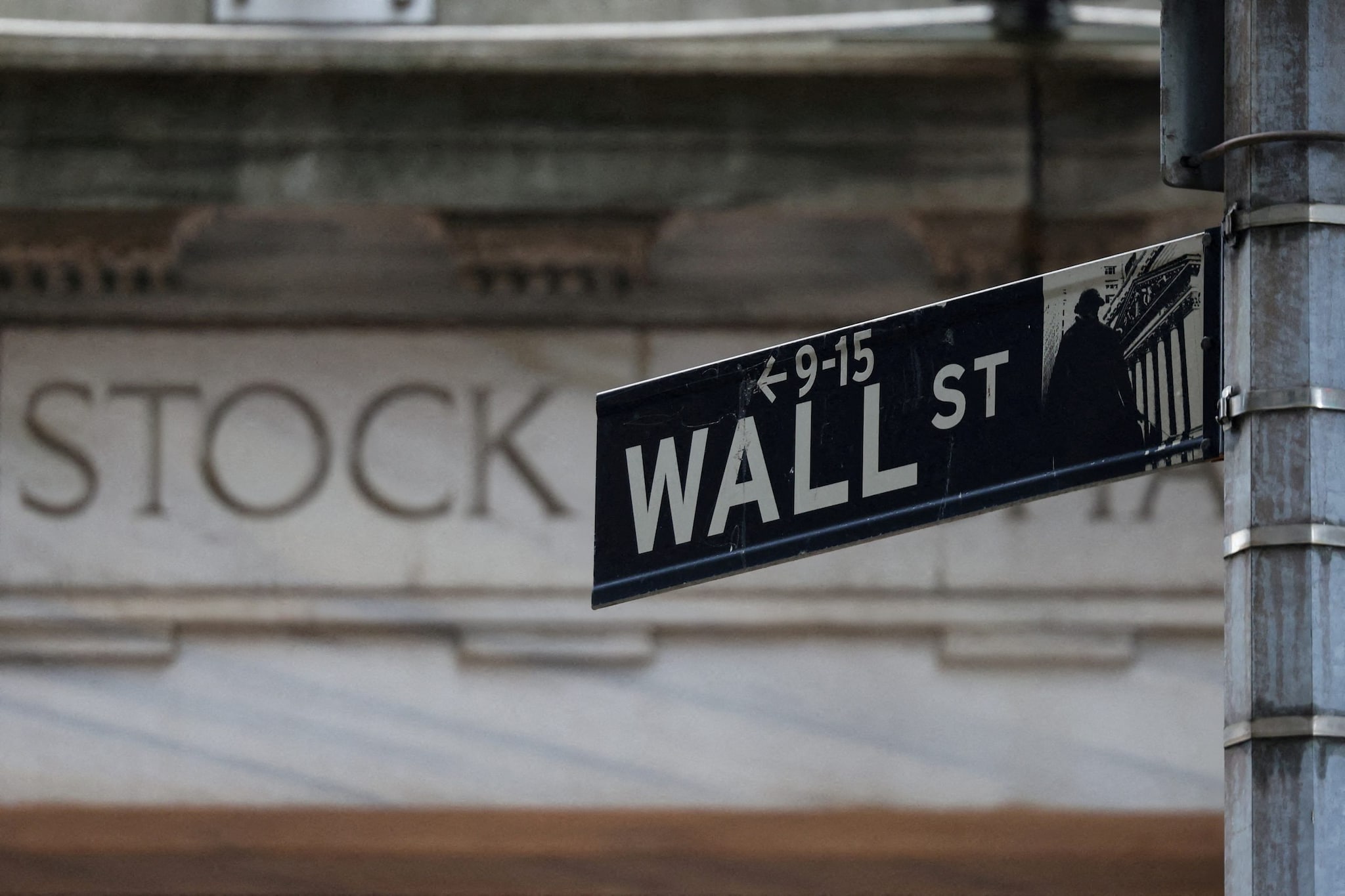
US Stock Market LIVE Updates: Dow drops 200 points, S&P retreats from record as Trump escalates trade battles
Published on 11/07/2025 07:03 PM
Stocks dropped Friday, a day after the S&P 500 posted a new record high, after President Donald Trump announced a 35% tariff on Canada and threatened higher tariffs across the board.
The Dow Jones Industrial Average lost 222 points, or 0.5%. The S&P 500 slid 0.4%, and the Nasdaq Composite dipped 0.3%.
Trump cited fentanyl as a reason for higher Canadian duties, adding that they would go higher if the country retaliates. “If Canada works with me to stop the flow of Fentanyl, we will, perhaps, consider an adjustment to this letter,” Trump said in a letter posted on Truth Social.
A German steelmaker became the latest stock to benefit from a surge in European defense spending this week after getting the go-ahead for one of its products to be used for military purposes.
Salzgitter AG shares are up 30% since last Friday’s close, with a large part of the gains coming after Germany approved the company’s Secure 500 product, which has a level of steel hardness that can withstand ballistic attacks. Cautious comments from analysts failed to quell investor enthusiasm as the stock traded 14% above its average price target and headed for its best weekly gain this year.
Salzgitter’s gains offer the latest example of investors seizing on companies with any links to defense as Europe diverts billions toward increasing military budgets. Goggle makers, chemicals producers, and even a printing company, are among stocks to have gotten a boost.
The cost of default insurance on Oman’s government debt fell to a record low after Moody’s Ratings upgraded the government to investment grade. The country’s bonds rallied.
Credit default swaps for Oman’s debt risk in the next five years fell 3.8 basis points to 86.4 on Friday, taking its weekly slide to almost 13 basis points. The gauge has narrowed on 15 of the past 16 days.
Oman’s 2047 sovereign dollar bond rose as much as 1 cent on the dollar to the highest level since March. Five of the country’s securities figure among the top 10 performers in the Bloomberg EM Sovereign Total Return Index.
Louis Vuitton UK said hackers have stolen some customer data as the luxury brand becomes the latest target in a string of cyberattacks against retailers.
On July 2, an unauthorised third party accessed the systems of the British unit of LVMH Moet Hennessy Louis Vuitton SE’s flagship brand and took information such as names, contact details and purchase history. No financial data, like bank details, were accessed, the company said in an email to customers on Friday.
“While we have no evidence that your data has been misused to date, phishing attempts, fraud attempts, or unauthorised use of your information may occur,” the email said. The company has notified relevant authorities, including the Information Commissioner’s Office.
The Canadian economy shrugged off tariff uncertainty and added the largest number of jobs in six months, with the unemployment rate falling for the first time since January.
Employment grew by 83,100 positions in June, and the jobless rate fell 0.1 percentage points to 6.9%, Statistics Canada data showed Friday. Both figures far exceeded even the most optimistic projection in a Bloomberg survey of economists. Part-time work, however, was responsible for 84% of employment growth last month.
June marked the first time in five months when the economy created enough jobs to keep unemployment from rising, after months of tepid gains and losses. At the same time, Canada added a net of 143,800 jobs over the last six months, the slowest first-half year pace since 2018, excluding the pandemic, with a monthly average of 24,000 job gains.
HSBC Holdings Plc has left the world’s biggest climate alliance for banks, which was rocked earlier this year by an exodus of the biggest lenders in the US.
In a statement announcing its departure from the Net-Zero Banking Alliance, which was posted Friday, HSBC said it remains “resolute” in its long-term ambition to achieve net-zero financed emissions by 2050.
HSBC said NZBA played an important role in helping banks develop frameworks for setting emissions reductions targets, and “with this foundation in place, and as we work towards updating and implementing our Net Zero Transition Plan later in 2025, we, like many of our global peers, have decided to withdraw from the NZBA.”
The skeptics are being left in the dust amid Bitcoin’s record-breaking rally, with over $1 billion in bearish crypto bets being liquidated over the past 24 hours.
More than 279,00 traders had positions wiped out over that period as Bitcoin surged to an all-time high of $118,847, according to data compiled by Coinglass. The largest single Bitcoin liquidation, valued at $88.5 million, was on the exchange HTX. Overall, about $1.29 billion in positions were wiped out across all tokens, the most this year.
“The conditions for a slow grind higher have been in place for some time,” said Augustine Fan, a partner at crypto trading platform SignalPlus. “Today’s move appears to be a product of that setup.”
Bitcoin broke out of a nearly two-month lull late Thursday, just as US President Donald Trump unleashed a trade salvo that sent stocks lower. By early Friday in London, the original cryptocurrency topped $118,000 for the first time and some options traders were targeting levels as high as $150,000. The crypto gains were widespread, with a host of tokens from Ether to Cardano notching big advances.
US President Donald Trump threatened a 35% tariff on some Canadian goods and raised the prospect of increasing levies on most other countries, ramping up his trade rhetoric in comments that weighed on stocks and boosted the US dollar.
The tariff level on Canada would take effect from Aug. 1, the president said. The announced rate is an increase from the current 25% tariff that’s imposed on US imports from Canada that aren’t shipped under the terms of the US-Mexico-Canada Agreement.
Russia’s coal industry has slipped into crisis under the weight of high borrowing costs and sanctions as slowing demand in China compounds with falling prices to expose deeper cracks in the economy.
Only half of Russia’s coal companies remained profitable in 2024, according to the Federal Statistics Service, and the situation is continuing to deteriorate. One top miner, Mechel PJSC, said on June 30 that it may cut sales by a quarter this year and has already begun scaling back output as each newly mined ton deepens losses. Some mines in Siberia have had to halt output.
US Secretary of State Marco Rubio said a summit between President Donald Trump and Chinese leader Xi Jinping is likely after having his first face-to-face meeting with his Chinese counterpart in Malaysia.
Rubio said he had a “very constructive and positive” sit-down with Chinese Foreign Minister Wang Yi on Friday, building on momentum in bilateral ties after Trump earlier this week described their recent relations as “really good.” The gathering was seen as a prelude to a possible leadership summit, which Trump said he’d like to happen this year.
“There’s a strong desire on both sides to do it,” Rubio told reporters in Kuala Lumpur, where the envoys attended a gathering hosted by the Association of Southeast Asian Nations. “I think the odds are high,” he said, adding that the two countries will find a “mutually acceptable date.”
Tesla Inc. will open its first showroom in India on Tuesday and begin deliveries as early as next month, according to people familiar with the matter, as the Elon Musk-led electric vehicle maker looks to tap potential demand in the third-largest automobile market to counter slowing sales elsewhere.
The opening of the Mumbai showroom will mark the formal entry of Tesla into the market, giving prospective customers access to pricing, available variants, and trim options, according to one of the people, who asked not to be identified as the information is private, as well as documents seen by Bloomberg News.
Deliveries are expected to start from late August, a separate person familiar with the development said. Customers will be able to configure and order their Tesla EVs from next week, the person added.
The pound headed for a sixth straight drop, its worst streak this year, with a downturn in the UK’s economic growth leading traders to bet on further losses.
Sterling traded 0.4% down at $1.3522, the lowest since June 24, taking the shine off a strong rally in 2025. While part of the decline reflects a broader dollar rebound in recent days, data on Friday showing the UK economy contracted for a second month has added momentum to the move.
Silver jumped to its highest level since 2011, as US premiums rise and the spot London market shows signs of tightness.
Silver rose 1.6% to $37.59 an ounce, the most since September 2011. US silver futures climbed even higher, with September contracts hitting $38.46 an ounce. Such a wide price gap is unusual, as it is typically eliminated quickly through arbitrage.
Silver last experienced a price dislocation between its two major markets at the beginning of the year, when the prospect of US tariffs on silver imports drove US futures prices higher.
The arbitrage opportunity also pushed leases up, as traders looked to secure metal for shipment to Comex-linked warehouses in New York. The rush to move silver ended abruptly once the White House confirmed that bullion would not be exempt from the levies.
North Korea is now supplying as much as 40% of Russia’s ammunition for the war in Ukraine as the partnership between Pyongyang and Moscow deepens, according to the head of Ukrainian military intelligence.
Kim Jong Un’s regime is also sending other weapons to Russia, including ballistic missiles and artillery systems, Kyrylo Budanov said in an interview with Bloomberg News. Russia is providing money and technology to North Korea in return, helping to ease Pyongyang’s international isolation, he said.
Oil swung as traders await US President Donald Trump’s announcement on Russia and weigh surging supplies from Saudi Arabia.
Brent traded above $68 a barrel, fluctuating between gains and losses following a drop of more than 2% on Thursday. Trump said he plans to make a “major statement” on Russia on Monday, reiterating criticism of President Vladimir Putin. He also threatened a higher tariff on some Canadian goods and to double the baseline universal levy.
Meanwhile, Saudi Arabia raised crude output far above its OPEC+ quota last month, joining other producers in a rush to export oil out of the Persian Gulf, according to the International Energy Agency. So far, summer demand is supporting prices.
Vietnam’s leadership was caught off guard by US President Donald Trump’s announcement last week that it agreed to a 20% tariff, and the Southeast Asian nation is still seeking to lower the rate, according to people familiar with the matter.
Straight after last Wednesday’s call with Trump, Vietnam’s party chief To Lam told his negotiating team to keep working to bring the tariff rate down, the people said, asking not to be identified as the talks are confidential. The 20% figure came as a surprise as Vietnam believed it had secured a more favourable tariff range, the people said.
Before the call, Vietnam had been pushing for a tariff in the 10%-15% range.
A gauge of volatility in US Treasuries fell to its lowest level in nearly three-and-a-half years, adding to evidence that the market is stabilising after months of turmoil.
The ICE BofA MOVE Index, a measure of expected fluctuations in yields, closed at its lowest level since early 2022 on Thursday. In another sign of optimism, auctions this week for US 10-year and 30-year government bonds received ample demand.
Government bonds have seen bouts of volatility this year in response to President Donald Trump’s tariff threats and concerns over increased fiscal spending. Those headwinds haven’t entirely gone away, though, and 10-year yields rose on Friday, putting the bonds on track to fall for a second consecutive week.
Dow ended 0.43% higher
S&P 500 rose 0.27%
Nasdaq up 0.09%
Vietnam’s leadership was caught off guard by US President Donald Trump’s announcement last week that it agreed to a 20% tariff, and the Southeast Asian nation is still seeking to lower the rate, according to people familiar with the matter.
Straight after last Wednesday’s call with Trump, Vietnam’s party chief To Lam told his negotiating team to keep working to bring the tariff rate down, the people said, asking not to be identified as the talks are confidential. The 20% came as a surprise as Vietnam believed it had secured a more favorable tariff range, the people said.
Before the call, Vietnam had been pushing for a tariff in the 10%-15% range.
US President Donald Trump threatened to double the baseline universal tariff to 20%, citing record stock gains to dispel fears that such a move would hammer the global economy.
Financial markets edged lower, but the relatively subdued reaction showed the extent to which traders have become desensitised to the economic dangers – something that could lead to a reckoning in markets further down the line.
With global markets increasingly nervous over renewed trade tensions and resilient US data, Deutsche Bank believes the US Federal Reserve is unlikely to cut interest rates before December. The next FOMC meeting is scheduled for July 30.
here
In a message that read in all caps, the US State Department said, “ATTN ALL AMERICAN CITIZENS AND DUAL-NATIONALS: DO NOT TRAVEL TO IRAN!” Iran is not safe for anyone, the warning read and added that there were “severe risks” associated with visiting the country, particularly for US citizens of Iranian heritage.
The UK economy shrank again in May, data showed Friday.
The latest monthly growth figures from the Office for National Statistics showed UK gross domestic product (GDP) contracted 0.1% month-on-month in May. Analysts polled by Reuters had expected a 0.1% expansion.
Weakness was concentrated in production output, down 0.9%, and construction, which fell 0.6%. The figures will come as a blow to Finance Minister Rachel Reeves, who has made rebooting economic growth and reducing the UK’s budget deficit her core aims.
US President Donald Trump threatened to double the baseline universal tariff to 20%, citing record stock gains to dispel fears that such a move would hammer the global economy.
Financial markets edged lower but the relatively subdued reaction showed the extent to which traders have become desensitized to the economic dangers – something that could lead to a reckoning in markets further down the line.
In a message that read in all caps, the US State Department said, “ATTN ALL AMERICAN CITIZENS AND DUAL-NATIONALS: DO NOT TRAVEL TO IRAN!” Iran is not safe for anyone, the warning read and added that there were “severe risks” associated with visiting the country, particularly for US citizens of Iranian heritage.
Vietnam’s leadership was caught off guard by US President Donald Trump’s announcement last week that it agreed to a 20% tariff, and the Southeast Asian nation is still seeking to lower the rate, according to people familiar with the matter.
Straight after last Wednesday’s call with Trump, Vietnam’s party chief To Lam told his negotiating team to keep working to bring the tariff rate down, the people said, asking not to be identified as the talks are confidential. The 20% figure came as a surprise as Vietnam believed it had secured a more favorable tariff range, the people said.
Russia’s deteriorating crude and oil product exports cast doubt on the nation’s ability to support its production capacity, the International Energy Agency said in its monthly report.
“Volumes of both crude and products remained at exceptionally weak levels in June, at a five-year seasonal low,” the Paris-based agency said, adding that flows have been deteriorating throughout most of 2024 and 2025. It “raises questions about Russia’s ability to sustain its upstream production capacity,” the IEA said.
European stocks declined for the first time this week as Trump escalated his trade offensive.
urope’s Stoxx 600 declined 0.5%. The dollar strengthened against all major peers, with the yen posting the steepest decline.
Tariff tensions have increased after Trump spent the week sending missives to trading partners about new rates that will kick in next month if they fail to negotiate better terms. Letters to members of the European Union are expected shortly after Trump said Thursday he would impose a 35% levy on some goods from Canada.
Vietnam’s leadership was caught off guard by US President Donald Trump’s announcement last week that it agreed to a 20% tariff, and the Southeast Asian nation is still seeking to lower the rate, according to people familiar with the matter.
Straight after last Wednesday’s call with Trump, Vietnam’s party chief To Lam told his negotiating team to keep working to bring the tariff rate down, the people said, asking not to be identified as the talks are confidential. The 20% came as a surprise as Vietnam believed it had secured a more favorable tariff range, the people said.
Before the call, Vietnam had been pushing for a tariff in the 10%-15% range.
The UK economy shrank again in May, data showed Friday.
The latest monthly growth figures from the Office for National Statistics showed UK gross domestic product (GDP) contracted 0.1% month-on-month in May. Analysts polled by Reuters had expected a 0.1% expansion.
Weakness was concentrated in production output, down 0.9%, and construction, which fell 0.6%. The figures will come as a blow to Finance Minister Rachel Reeves, who has made rebooting economic growth and reducing the UK’s budget deficit her core aims.NewsLive TVMarketPopular CategoriesCalculatorsTrending NowLet's Connect with CNBCTV 18Network 18 Group :©TV18 Broadcast Limited. All rights reserved.