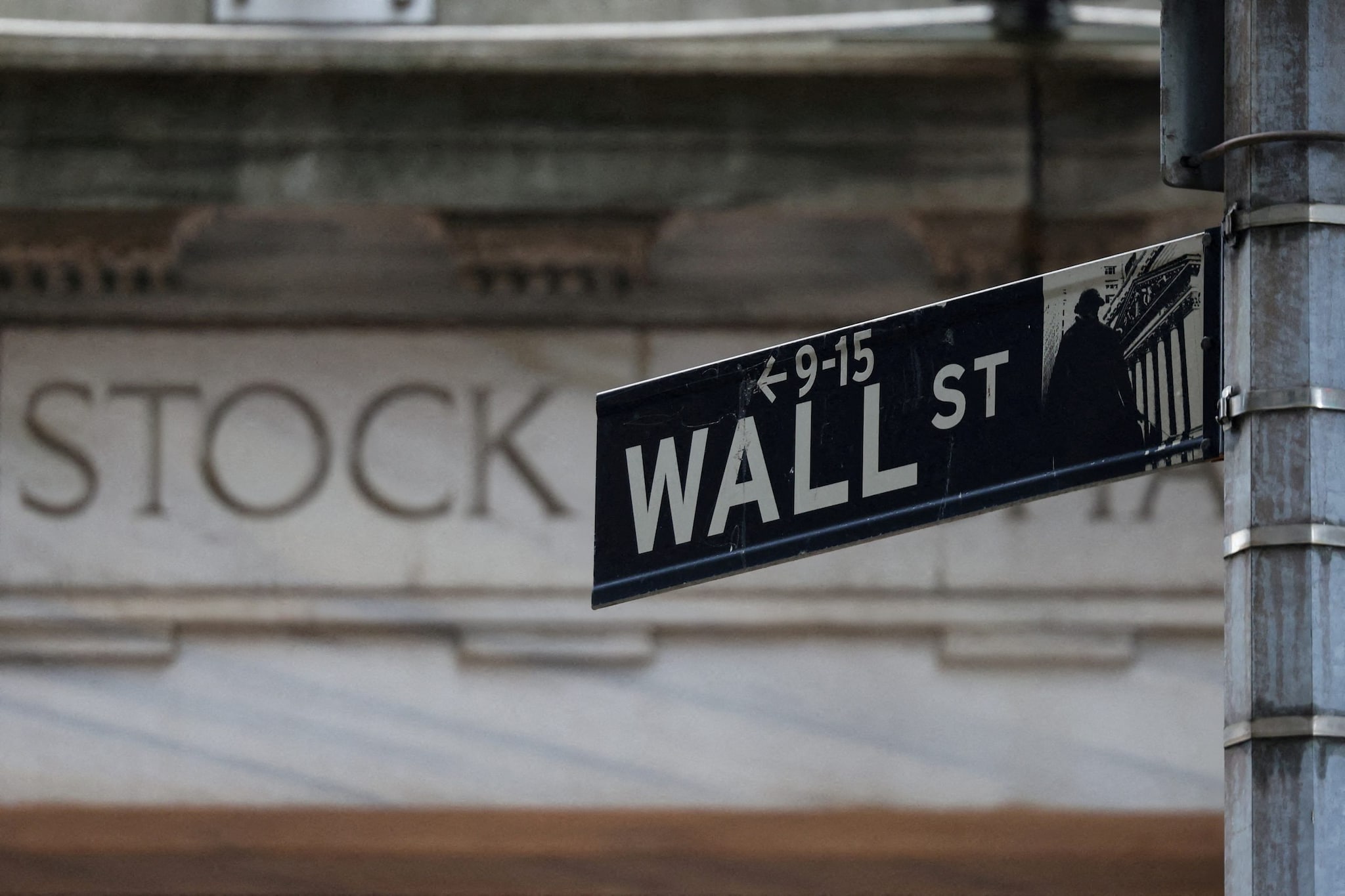
US Stock Market LIVE Updates: Dow futures down 260 points; European stocks decline first time this week
Published on 11/07/2025 04:46 PM
North Korea is now supplying as much as 40% of Russia’s ammunition for the war in Ukraine as the partnership between Pyongyang and Moscow deepens, according to the head of Ukrainian military intelligence.
Kim Jong Un’s regime is also sending other weapons to Russia, including ballistic missiles and artillery systems, Kyrylo Budanov said in an interview with Bloomberg News. Russia is providing money and technology to North Korea in return, helping to ease Pyongyang’s international isolation, he said.
Oil swung as traders await US President Donald Trump’s announcement on Russia and weigh surging supplies from Saudi Arabia.
Brent traded above $68 a barrel, fluctuating between gains and losses following a drop of more than 2% on Thursday. Trump said he plans to make a “major statement” on Russia on Monday, reiterating criticism of President Vladimir Putin. He also threatened a higher tariff on some Canadian goods and to double the baseline universal levy.
Meanwhile, Saudi Arabia raised crude output far above its OPEC+ quota last month, joining other producers in a rush to export oil out of the Persian Gulf, according to the International Energy Agency. So far, summer demand is supporting prices.
Vietnam’s leadership was caught off guard by US President Donald Trump’s announcement last week that it agreed to a 20% tariff, and the Southeast Asian nation is still seeking to lower the rate, according to people familiar with the matter.
Straight after last Wednesday’s call with Trump, Vietnam’s party chief To Lam told his negotiating team to keep working to bring the tariff rate down, the people said, asking not to be identified as the talks are confidential. The 20% figure came as a surprise as Vietnam believed it had secured a more favourable tariff range, the people said.
Before the call, Vietnam had been pushing for a tariff in the 10%-15% range.
A gauge of volatility in US Treasuries fell to its lowest level in nearly three-and-a-half years, adding to evidence that the market is stabilising after months of turmoil.
The ICE BofA MOVE Index, a measure of expected fluctuations in yields, closed at its lowest level since early 2022 on Thursday. In another sign of optimism, auctions this week for US 10-year and 30-year government bonds received ample demand.
Government bonds have seen bouts of volatility this year in response to President Donald Trump’s tariff threats and concerns over increased fiscal spending. Those headwinds haven’t entirely gone away, though, and 10-year yields rose on Friday, putting the bonds on track to fall for a second consecutive week.
Dow ended 0.43% higher
S&P 500 rose 0.27%
Nasdaq up 0.09%
Vietnam’s leadership was caught off guard by US President Donald Trump’s announcement last week that it agreed to a 20% tariff, and the Southeast Asian nation is still seeking to lower the rate, according to people familiar with the matter.
Straight after last Wednesday’s call with Trump, Vietnam’s party chief To Lam told his negotiating team to keep working to bring the tariff rate down, the people said, asking not to be identified as the talks are confidential. The 20% came as a surprise as Vietnam believed it had secured a more favorable tariff range, the people said.
Before the call, Vietnam had been pushing for a tariff in the 10%-15% range.
US President Donald Trump threatened to double the baseline universal tariff to 20%, citing record stock gains to dispel fears that such a move would hammer the global economy.
Financial markets edged lower, but the relatively subdued reaction showed the extent to which traders have become desensitised to the economic dangers – something that could lead to a reckoning in markets further down the line.
With global markets increasingly nervous over renewed trade tensions and resilient US data, Deutsche Bank believes the US Federal Reserve is unlikely to cut interest rates before December. The next FOMC meeting is scheduled for July 30.
here
In a message that read in all caps, the US State Department said, “ATTN ALL AMERICAN CITIZENS AND DUAL-NATIONALS: DO NOT TRAVEL TO IRAN!” Iran is not safe for anyone, the warning read and added that there were “severe risks” associated with visiting the country, particularly for US citizens of Iranian heritage.
The UK economy shrank again in May, data showed Friday.
The latest monthly growth figures from the Office for National Statistics showed UK gross domestic product (GDP) contracted 0.1% month-on-month in May. Analysts polled by Reuters had expected a 0.1% expansion.
Weakness was concentrated in production output, down 0.9%, and construction, which fell 0.6%. The figures will come as a blow to Finance Minister Rachel Reeves, who has made rebooting economic growth and reducing the UK’s budget deficit her core aims.
US President Donald Trump threatened to double the baseline universal tariff to 20%, citing record stock gains to dispel fears that such a move would hammer the global economy.
Financial markets edged lower but the relatively subdued reaction showed the extent to which traders have become desensitized to the economic dangers – something that could lead to a reckoning in markets further down the line.
In a message that read in all caps, the US State Department said, “ATTN ALL AMERICAN CITIZENS AND DUAL-NATIONALS: DO NOT TRAVEL TO IRAN!” Iran is not safe for anyone, the warning read and added that there were “severe risks” associated with visiting the country, particularly for US citizens of Iranian heritage.
Vietnam’s leadership was caught off guard by US President Donald Trump’s announcement last week that it agreed to a 20% tariff, and the Southeast Asian nation is still seeking to lower the rate, according to people familiar with the matter.
Straight after last Wednesday’s call with Trump, Vietnam’s party chief To Lam told his negotiating team to keep working to bring the tariff rate down, the people said, asking not to be identified as the talks are confidential. The 20% figure came as a surprise as Vietnam believed it had secured a more favorable tariff range, the people said.
Russia’s deteriorating crude and oil product exports cast doubt on the nation’s ability to support its production capacity, the International Energy Agency said in its monthly report.
“Volumes of both crude and products remained at exceptionally weak levels in June, at a five-year seasonal low,” the Paris-based agency said, adding that flows have been deteriorating throughout most of 2024 and 2025. It “raises questions about Russia’s ability to sustain its upstream production capacity,” the IEA said.
European stocks declined for the first time this week as Trump escalated his trade offensive.
urope’s Stoxx 600 declined 0.5%. The dollar strengthened against all major peers, with the yen posting the steepest decline.
Tariff tensions have increased after Trump spent the week sending missives to trading partners about new rates that will kick in next month if they fail to negotiate better terms. Letters to members of the European Union are expected shortly after Trump said Thursday he would impose a 35% levy on some goods from Canada.
Vietnam’s leadership was caught off guard by US President Donald Trump’s announcement last week that it agreed to a 20% tariff, and the Southeast Asian nation is still seeking to lower the rate, according to people familiar with the matter.
Straight after last Wednesday’s call with Trump, Vietnam’s party chief To Lam told his negotiating team to keep working to bring the tariff rate down, the people said, asking not to be identified as the talks are confidential. The 20% came as a surprise as Vietnam believed it had secured a more favorable tariff range, the people said.
Before the call, Vietnam had been pushing for a tariff in the 10%-15% range.
The UK economy shrank again in May, data showed Friday.
The latest monthly growth figures from the Office for National Statistics showed UK gross domestic product (GDP) contracted 0.1% month-on-month in May. Analysts polled by Reuters had expected a 0.1% expansion.
Weakness was concentrated in production output, down 0.9%, and construction, which fell 0.6%. The figures will come as a blow to Finance Minister Rachel Reeves, who has made rebooting economic growth and reducing the UK’s budget deficit her core aims.
It seems that nothing Canada has tried so far has shielded it from the threats of Donald Trump.
Barely a week after Trump and Prime Minister Mark Carney restarted trade talks, with Canada targeting an agreement by July 21, Trump published a new broadside on one of the US’s largest trading partners, threatening a 35% tariff.
The letter reiterated Trump’s complaints about dairy quotas, fentanyl and the US trade deficit, which is mostly fueled by US refineries’ thirst for Canadian oil. His social media post caused the Canadian dollar to immediately tumble, indicating the market wasn’t expecting this escalation.
– Strong institutional demand, ETF Inflows corporate adoption support
– Supportive policies from Trump administration
– Trump media &Tech group filed with SEC to launch crypto ETF
– Crypto week begins July 14
The US made its biggest move yet to push back against China’s weaponization of rare earths, with the Pentagon buying into a key American producer to secure supply of magnets critical for military and other applications.
The Department of Defense agreed a $400 million equity investment in MP Materials Corp., the company that revived a dormant mine in California. Together with $1 billion in funding from JPMorgan Chase & Co. and Goldman Sachs Group Inc., the commitment will fund a major new plant making rare-earth magnets.
MP’s shares soared as much as 60% in New York, while other rare earths firms also spiked on the prospect of government underwriting for the industry. Australia’s Lynas Rare Earths Ltd., which is building a refinery in Texas, rose as much as 20% — the most in more than five years.
Oil steadied after falling more than 2% on Thursday as traders shifted focus toward a planned announcement on Russia by President Donald Trump next week, while digesting another volley of US tariff threats.
Brent held below $69 a barrel and West Texas Intermediate was near $67. The US president said he planned a “major statement” on Russia on Monday, and reiterated criticism of his counterpart Vladimir Putin over continued attacks on Ukraine. He made the remarks in an interview with NBC News.
Trump also flagged blanket levies of as much as 20% on most trading partners, continuing a week of tariff threats that have raised concerns his policies could dent economic growth. The duties are set to take effect August 1.
Chinese traders are pulling back from the dollar, helping ease a shortage that has rattled the banking system and setting the yuan up for further gains.
The dollar’s premium over the yuan, as reflected in 12-month swap points, has narrowed by 25% since the end of December. Chinese state-owned banks have gradually shifted from wanting dollars to reducing their demand for it, to offering it out, according to traders who declined to be identified as they’re not authorized to speak publicly.
The change underscores how a shift in the dollar’s fortune — it posted a 10.7% slide in the first six months as Donald Trump’s tariff and fiscal policies fueled uncertainty — is easing the pressure on the Chinese yuan. That’s giving Beijing room to ease up on their efforts to support the currency.
Goldman Sachs Group Inc. strategists raised their forecast for Asian stocks, citing a more favorable macro environment and greater certainty around tariffs.
The 12-month target on the MSCI Asia Pacific ex-Japan Index was lifted by 3% to 700, implying a 9% return in dollar terms during the period, strategists led by Timothy Moe wrote in a note Friday.
The team also upgraded Hong Kong stocks to market-weight, touting them to be among the key beneficiaries of the dollar weakness resulting from the Federal Reserve’s easing cycle. The Philippines and Taiwan are the other regional markets “most positively sensitive” to these factors, they added.
South Korea’s top trade official said negotiations with the US on tariffs have entered a critical phase, after wrapping up meetings in Washington and returning to Seoul late Thursday.
Trade Minister Yeo Han-koo held talks with US Trade Representative Jamieson Greer and Commerce Secretary Howard Lutnick, pressing for an extension of the suspension of the proposed 25% across-the-board tariffs, now scheduled to take effect on August 1. South Korea is also seeking reductions in sectoral tariffs on industries like autos and steel.
“We’re focusing on swiftly reaching a landing zone,” Yeo told reporters in a televised briefing after arriving at Incheon airport on Thursday. “There’s now trust built to accelerate negotiations in the next three weeks, covering both tariff and non-tariff issues.”
Gold steadied after a two-day climb as traders focused on tariff threats from President Donald Trump and the outlook for US monetary policy.
Bullion traded above $3,332 an ounce, after posting modest gains on Wednesday and Thursday that pared a weekly drop. The president proposed a slew of country-specific tariffs this week, including moves against Canada and Brazil, while pushing the overall deadline for implementation to Aug. 1. In addition, he’s planning a substantial levy on imports of copper.
Elsewhere, investors were considering the outlook for US interest rates. Policymakers have held borrowing costs steady this year, though a divide has emerged over how many rate cuts officials expect this half. Fed Bank of San Francisco President Mary Daly said she still views two reductions as likely, with a greater chance that the price effects from tariffs may be more muted than anticipated. Lower borrowing costs tend to benefit bullion.
President Luiz Inacio Lula da Silva insisted Brazil can survive without trade with the US and will look to other partners to replace it, a sharp response to Donald Trump after the American leader threatened 50% tariffs against the nation.
“We’re going to have to look for other partners to buy our products. Brazil’s trade with the US represents 1.7% of its GDP,” Lula said in a broadcast interview with Record TV on Thursday evening. “It’s not like we can’t survive without the US.”
In a pair of televised interviews, the leftist leader struck a defiant tone toward his American counterpart, reiterating his stance that Trump must respect Brazil’s sovereignty and that the US president cannot act as if he owns other nations.
He made clear that he had no intentions of standing down, saying during an interview on Globo TV that the tariff fight could be “endless.”
President Donald Trump will levy a 35% tariff on some goods coming into the US from Canada, in a blow to Canadian Prime Minister Mark Carney’s bid to avoid punishing levies on goods sold to the US. The tariff level would take effect from August 1.
“Fentanyl is hardly the only challenge we have with Canada, which has many Tariff, Non-Tariff, Policies and Trade Barriers, which cause unsustainable Trade Deficits against the United States,” Trump said in a letter to Carney posted Thursday.
The announced rate is an increase from the current 25% tariff on Canadian imports not covered by the trade deal negotiated between the US, Canada and Mexico, which do not face additional tariffs. That exclusion would remain unchanged, according to a official, who spoke on condition of anonymity to discuss the matter.
– I’m Disappointed In Russia, But We’ll See What Happens Over The Next Couple Of Weeks
– I Think I’ll Have A Major Statement To Make On Russia On Monday
– We’re Sending Weapons To Nato, And Nato Is Paying For Those Weapons, 100%
– NATO is going to be giving those weapons (to Ukraine)
Futures on Wall Street have tanked in the early hours of Friday morning Indian time, after US President Donald Trump teased a ‘major statement’ he intends to make on Russia on Monday.
The Dow futures are down over 220 points, while those on the S&P 500 and Nasdaq have dropped 30 points and 120 points respectively.
The futures were flat exactly 30 minutes prior.NewsLive TVMarketPopular CategoriesCalculatorsTrending NowLet's Connect with CNBCTV 18Network 18 Group :©TV18 Broadcast Limited. All rights reserved.