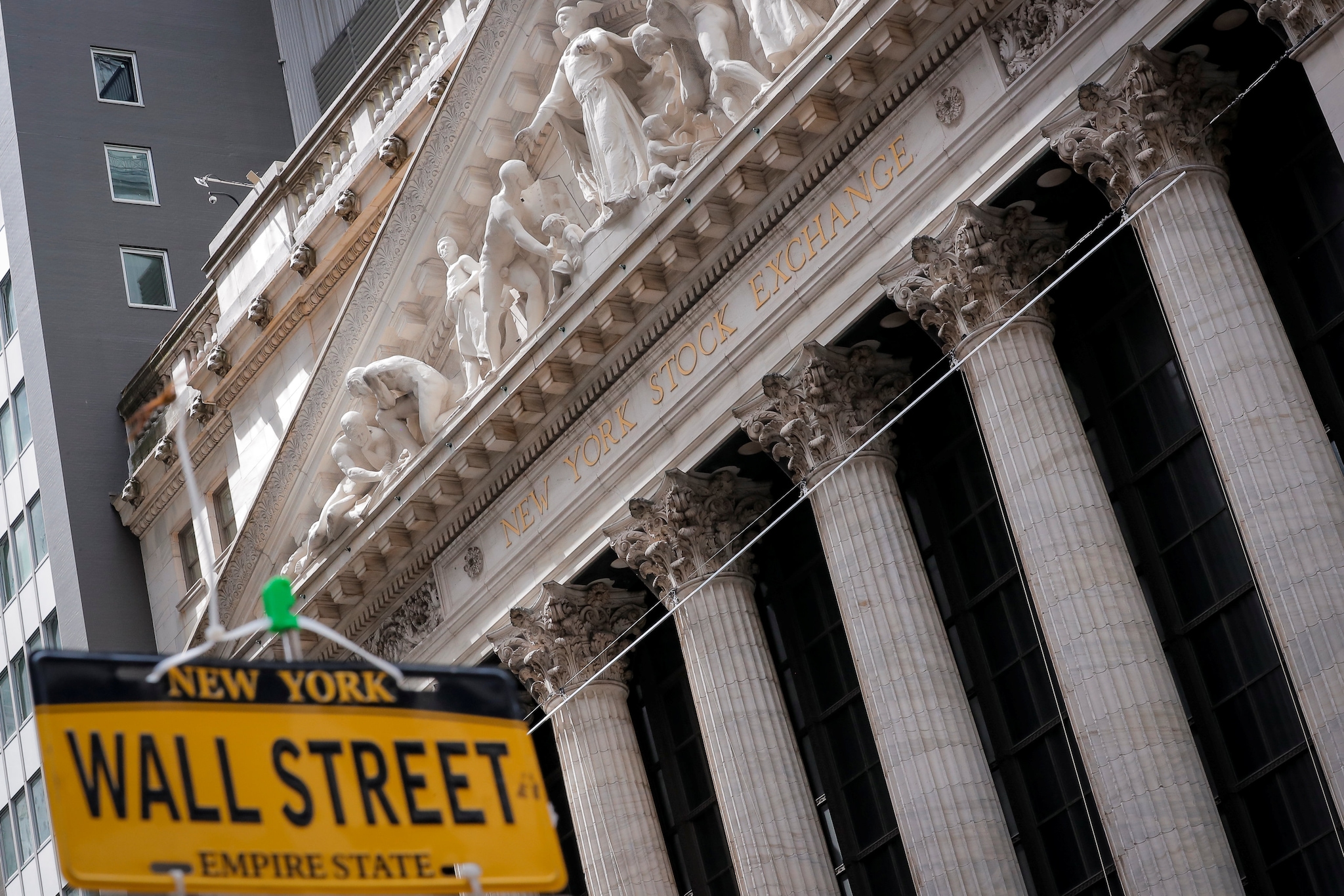
US Stock Market LIVE Updates: Dow Jones jumps 440 points; Tesla shares drop
Published on 02/07/2025 01:04 AM
French President Emmanuel Macron and Vladimir Putin agreed to coordinate their approach on Iran in their first phone call since 2022, marking a rare overture from a European head to the Russian leader.
The call is part of an effort to forge a common approach between the five permanent members of the United Nations Security Council on Iran, according to people familiar with the matter, who asked not to be identified discussing sensitive information. Paris informed allies, including Ukraine’s President Volodymyr Zelenskiy, of the conversation, two people said.
“The two presidents decided to coordinate their approaches and to speak to each other in the near future in order to follow up on this issue together,” the French presidency said in a statement Tuesday after the call, which lasted for more than two hours. Putin called the talks “substantive.”
Copper rose to a three-month high, boosted by buying toward the close of trading in China, on signs factory activity is recovering in the world’s second-largest economy.
The three-month contract on the London Metal Exchange climbed as much as 1.3% to $10,000 a ton on Tuesday, aligned with gains seen in the final hour of trading in Shanghai.
An improvement in Chinese manufacturing last month suggests the top copper consumer is benefiting from a truce in the trade war with the US.
“It has been a China bid which has really spurred the moves today,” said Al Munro, an analyst at Marex Group. “Regardless of any speculation around the state of the macro, the flows and data this desk observes remain positive.”
The euro’s relentless rally stalled on Tuesday as US data failed to support an imminent interest-rate cut by the Federal Reserve, prompting traders to buy the dollar.
The greenback’s recovery pressured the common currency, leading it to trade slightly weaker on the day after it touched the highest level since September 2011 earlier in the session. If it were to close higher on Tuesday, it would have been the longest streak since 2004 and eclipsed only twice since the currency’s inception in 1999.
The Bloomberg Dollar Spot Index advanced to a session high after Donald Trump’s $3.3 trillion tax and spending cut bill passed the Senate. It was also gaining after the first of this week’s three reports on US labour market conditions failed to provide justification for a Fed cut as soon as next month.
Banco Santander SA has agreed to buy Banco Sabadell SA’s UK unit for £2.65 billion ($3.63 billion), a deal that will make it the UK’s third-largest lender by some measures.
The all-cash transaction will see the combined bank serve nearly 28 million customers in the UK, according to a statement by Santander. It adds 218 branches and £35 billion of customer deposits to Santander UK’s 349-strong network and £183 billion of customer deposits.
The combination is expected to lead to cost savings of at least £400 million or 13% of the two lenders’ cost base, Santander said. The enlarged firm will be the third-largest UK bank by personal current account balances and the fourth-largest by mortgage value, placing the Spanish lender’s UK retail operations alongside NatWest Group Plc, HSBC Holdings Plc, Barclays Plc and Lloyds Banking Group Plc.
Vanguard Group is planning its debut into an increasingly competitive corner of the $11.6 trillion US exchange-traded fund arena.
The Vanguard High-Yield Active ETF would trade under the ticker VGHY and invest at least 80% of its portfolio in high-yield debt, according to a Tuesday filing with the Securities and Exchange Commission. The fund’s proposed fee is 0.22% — cheaper than any existing actively managed high-yield ETFs, data compiled by Bloomberg showed.
VGHY looks set to mark Vanguard’s first foray into the junk-bond ETF universe. The Jack Bogle-founded firm, which oversees more than $10 trillion globally, has zeroed in on active fixed-income as an avenue for growth. But it faces stiff competition: just last week, JPMorgan Asset Management — which ranks as the fastest-growing asset manager — launched its first active high-yield ETF with a $2 billion investment from a mystery anchor.
Ghana plans to ask India for support to develop a vaccine hub when Prime Minister Narendra Modi visits the West African nation this week.
The two countries are expected to hold talks and sign agreements covering agriculture, defense and a vaccine hub, Foreign Affairs Minister Samuel Okudzeto Ablakwa told reporters in the capital, Accra.
The African nation, which aims to become self-sufficient in inoculations by 2030 and a hub for vaccine production will seek to capitalise on the South Asian country’s vast experience in pharmaceuticals, he said.
Modi will arrive in Ghana on Wednesday to start an eight-day visit to the West African nation, Namibia, Brazil, Argentina and Trinidad & Tobago.
A little-known nuclear agency signed off on a proposal that clears the way for a major lithium expansion over the coming decades in Chile, the nation with the biggest reserves.
The Chilean Nuclear Energy Commission, or CCHEN by its Spanish initials, approved a request by Codelco for extraction at the Atacama salt flat operation — currently controlled by SQM — from 2031 to 2060.
To be sure, that time frame is a long way off in a market currently characterised by strong demand and even stronger supply.
But it allows a partnership between Codelco and SQM to continue ramping up supply of the battery metal from about 200,000 metric tons of lithium carbonate equivalent a year to as much as 330,000 tons. The venture is betting on low expenses to keep expanding as higher-cost producers cut back.
Medical technology company Brainlab postponed its initial public offering in Frankfurt on Tuesday after some investors withdrew their orders, according to people familiar with the matter, the latest deal to be shelved as Europe’s market for new listings remains subdued.
An IPO at a later time for the Munich-based firm remains under consideration, according to a statement, which did not give a reason for the postponement. The deal had been expected to price at the low end of its marketed range, with enough investor demand to cover the offering multiple times at that level, according to terms of the offering seen earlier by Bloomberg.
Some investors pulled orders on Monday night over concerns that the stock would fall after it started trading, the people said, asking not to be identified as the information isn’t public. Representatives for Deutsche Bank AG and Berenberg, who were leading the deal, declined to comment. A spokesperson for Brainlab didn’t immediately respond to a request for comment.
US bank stocks rose to their highest level in three years as investors continued to pile into the group amid speculation they will begin to boost buybacks and dividends after the lenders comfortably cleared the Federal Reserve’s stress test last week.
The KBW Bank Index gained as much as 1.6% Tuesday, hitting the highest level since February 2022 and about 4% from its early 2022 all-time high. The gauge is also on pace for a ninth consecutive day of gains, matching its longest winning streak on record. All but four of the gauge’s 24 members were higher, led by Western Alliance Bancorp, Zions Bancorp NA and East West Bancorp Inc.
AstraZeneca Plc’s Chief Executive Officer Pascal Soriot wants to move the drugmaker’s stock listing to the US, the Times reported, in what would be another sign of the UK’s waning status as a magnet for global capital.
The pharma chief is frustrated at the UK’s regulatory regime for drugs and concerned that the country’s life sciences industry is falling behind the US and China, the newspaper said, citing people familiar with the situation. Soriot has also discussed moving AstraZeneca’s domicile, the Times said.
Genesis AI, a startup working on software for robots, has raised $105 million in a funding round with both US and Chinese backers — a rarity in an industry split along geopolitical lines.
The company, which lists its headquarters in Paris and Palo Alto, California, announced the investment in a statement on Tuesday. Venture capital firms Khosla Ventures and Eclipse Capital led the financing, which also included participation from French public bank Bpifrance, tech billionaires Eric Schmidt and Xavier Niel, and HongShan, the fund formerly known as Sequoia China.
Investors are rushing into robotics, hoping that the latest generative AI will lead to dexterous autonomous machines capable of navigating battlefields or ironing clothes. While China has advanced rapidly with humanoid robot production, Europe has lagged behind China and the US in robotics and AI has alarmed analysts and politicians.
Donald Trump’s $3.3 trillion tax and spending cut bill passed the Senate Tuesday after a furious push by Republican leaders to persuade holdouts to back the legislation and hand the president a political win.
Senators voted 51-50 to pass the bill, with three Republicans — Susan Collins of Maine, Thom Tillis of North Carolina and Rand Paul of Kentucky, defying Trump to oppose the legislation. Vice President JD Vance cast the tie-breaking vote. The package, which now goes to the House, combines $4.5 trillion in tax cuts with $1.2 trillion in spending cuts.
“This was a team effort,” Senate Majority Leader John Thune told reporters immediately following the vote on Tuesday. “In the end we got the job done.”
The package — informally known as the “One Big Beautiful Bill” — includes the entirety of the president’s legislative agenda in a single package. Trump personally lobbied lawmakers to quickly move the legislation through Congress.
Treasury yields rose after the first of this week’s three reports on US labour-market conditions failed to provide justification for a Federal Reserve interest-rate cut as soon as next month.
Yields across maturities extended their rebound from the lowest levels in two months, led by shorter-dated tenors that are most sensitive to Fed policy shifts.
The two-year note’s yield exceeded 3.78% — after having fallen below 3.70% for the first time since May 2 in anticipation that employment data to be released this week could warrant a rate cut at the next Fed meeting in late July.
Euronext NV said it is in talks to buy the Athens stock markets operator, a move it says would help integrate Greek capital markets into the Eurozone and increase their international development.
In a statement Tuesday, Euronext said it has entered discussions with the board of directors of Hellenic Exchanges-Athens Stock Exchange S.A., or ATHEX, about a possible offer to acquire as much as 100% of its shares.
The potential offer would be structured as a share exchange valuing ATHEX at €6.90 per share. It would value ATHEX at €399 million on a fully diluted basis.
“The interest of Euronext for ATHEX reflects the strong confidence of Euronext in the development of the Greek economy and the growth potential coming from further integration of Greek capital markets into the Eurozone and the European Union,” Euronext said in the statement.
Scott Kapnick could afford to swagger as he feted his partners at The Modern, the elegant restaurant at the Museum of Modern Art in Manhattan.
So could his colleagues: Kapnick’s HPS Investment Partners, a major player in the fast-growing market for private credit, was about to join forces with the world’s largest money manager, BlackRock Inc. And with that, Team Kapnick would score a cool $12 billion.
With MoMA’s famous sculpture garden framed outside the window that evening in May, the financiers toasted — and planned their next move. The $11.6-trillion BlackRock, everyone knew, dwarfed HPS. But private credit, their specialty, is where the big money is nowadays. And on Wall Street, the people who make the big money get a say.
US auto sales are losing momentum after a springtime surge fueled by shoppers racing to buy cars before President Donald Trump’s auto tariffs drove up prices.
Ford Motor Co.’s second-quarter sales jumped 14.2%, helped by its employee-pricing-for-everyone discount program, though it saw the pace of growth moderate last month.
Hyundai Motor Co. said deliveries rose 10% in the second quarter, with a 3% gain in June after sales soared 19% in April. Toyota Motor Corp.’s sales in April-through-June period rose 7.2%, despite volumes being essentially flat last month.
Airbus SE delivered about 60 aircraft in June, people familiar with the matter said, requiring the European planemaker to step up output in the second half of the year to achieve its full-year target.
Including June, Airbus has now handed over slightly more than 300 aircraft in the first six months, said the people, asking not to be identified, discussing preliminary numbers. That’s well short of the halfway point of the 820 units that Airbus plans to deliver this year, though output typically picks up speed in the final few months.
Airbus declined to comment ahead of the official publication of the data.
Six years after enforcing a tax on air travel, Sweden is reversing course as the government seeks to revive the country’s ailing commercial aviation industry.
The government will scrap a levy of as much 517 kronor ($54) for flights, depending on the distance flown, effective July 1. The move runs counter to neighbouring Denmark, which aims to introduce an aviation tax by the end of the year.
The about-face by Sweden’s center-right government highlights the shifting priorities and waning public support for environmental activism popularised by Greta Thunberg, the Swedish standard bearer of a young generation of environmental activists.
In recent years, Sweden has seen a steady erosion of air traffic, particularly to smaller airports in far-flung parts of the country like the thinly populated North, as airlines scaled back their service to the biggest Scandinavian economy.
Europe’s heat wave is set to peak over the coming days, triggering red alerts from France to the Swiss Alps, warning people to take extra precautions against the extreme conditions.
The top of the Eiffel Tower will be shut to visitors over the next two days, as temperatures in Paris climb as high as 41C (105.8F) on Tuesday. Red alerts have been issued for the French capital and 15 other departments due to the heat wave that’s been baking the country since June 19. London could hit 34C, before cooling from Wednesday.
Temperatures across the Iberian peninsula could climb even higher, with 43 °C forecast for parts of Spain, where an unusually persistent weather pattern made last month the hottest June on record. Similar highs could be reached in Beja in Portugal, where a June record of 46.6C was recorded in Evora on Sunday.
US factory activity contracted in June for a fourth consecutive month as orders and employment shrank at a faster pace, extending the malaise in manufacturing.
The Institute for Supply Management’s manufacturing index edged up 0.5 point last month to 49, according to data released Tuesday. Readings below 50 indicate contraction. A measure of prices paid for raw materials showed slightly faster inflation.
Bookings contracted by the most in three months and have been shrinking for the past five months, likely a reflection of higher tariffs and a general slowdown in the economy. An index of order backlogs fell 2.8 points, the most in a year, to 44.3. Backlogs have contracted a record 33 straight months.
A trio of ex-Mizuho International Plc government bond traders accused by the UK’s City watchdog of market abuse lost their bid to challenge their ban from financial services.
Diego Urra, Jorge Lopez Gonzalez and Poojan Sheth had sought to challenge the Financial Conduct Authority, which said the three engaged in manipulation by spoofing the market. The men were accused of placing large “misleading” orders for certain trades that they had no intention of executing in the weeks before and after the Brexit vote in 2016.
“We have concluded that Mr. Urra, Mr. Sheth and Mr. Lopez each engaged in an abusive trading strategy and their conduct was dishonest,” the judge said in a decision published Tuesday. Two of the three saw their penalties reduced. They were fined a combined total of £381,000 ($522,750).
Russia’s crude shipments remained near the lowest in more than two months as declines in flows from smaller ports offset a rebound in cargoes from bigger terminals, helping to suppress the weekly value of Moscow’s exports.
Seaborne crude cargoes averaged 3.21 million barrels a day in the four weeks to June 29, an increase of only 1% from the period to June 22, which saw the lowest flows since mid-April. The more volatile weekly figure rose by a similar amount.
The faltering volumes came as lower traffic from the smaller terminals offset a recovery in shipments from the key export ports of Primorsk in the Baltic and Kozmino in the Pacific.
Russian oil prices fell sharply after the US bombed Iranian nuclear facilities, tracking moves in the wider market. That drop sent the gross value of Moscow’s crude shipments to the lowest in a month, though the four-week average moved higher.
President Vladimir Putin signed a decree in an attempt to attract new foreign investment into Russia’s financial markets, despite sweeping sanctions over the war in Ukraine.
Under the new rules, foreign investors — including those from so-called “unfriendly” countries — will be allowed to invest in Russian securities without having their funds trapped in special Type C accounts, according to the document published Tuesday on the government’s legal portal.
Instead, new investors will be able to use foreign nominee accounts labelled Type IN, which would allow for the repatriation of capital outside of Russia. The decree makes clear that restrictions Russia imposed after the start of Putin’s 2022 invasion of Ukraine, which forced investors to hold funds in blocked accounts in the country, won’t apply to fresh investments.
Boeing Co. said Stephen Parker will oversee the defense, space and security unit on a permanent basis, as Chief Executive Officer Kelly Ortberg molds his top leadership team, including the appointment of a new chief financial officer.
Parker had run the subsidiary on an interim basis since September of last year, after Ortberg removed the previous head of that business, Ted Colbert. On Monday, Boeing also announced that Jesus “Jay” Malave, a former finance chief at Lockheed Martin Corp., will take over from Brian West next month.
Ortberg himself only joined Boeing last year in August. He took over a company in crisis after a near-catastrophic accident at the start of 2024 threw Boeing and its factories into turmoil. Ortberg then had to quickly contend with a debilitating labour strike that eroded its finances and disrupted production further, though he’s since been credited with steadying the manufacturer.
US job openings unexpectedly rose in May to the highest level since November and layoffs declined, pointing to a stable labour market despite economic uncertainty.
Available positions increased to 7.77 million from a revised 7.4 million reading in April, according to Bureau of Labour Statistics data published Tuesday. That exceeded all estimates in a Bloomberg survey of economists.
Euro-area inflation settled at the European Central Bank’s target in June, strengthening arguments to press pause on a year-long campaign of interest-rate cuts.
Consumer prices rose 2% from a year ago, up from May’s 1.9%, Eurostat said Tuesday. That matched the median estimate in a Bloomberg survey. Core inflation held steady at 2.3%, as expected, while the closely watched services gauge edged up to 3.3%.
A stronger euro and lower energy costs are helping keep price pressures in check, as is lackluster expansion by the region’s 20-nation economy. June saw an unexpected slowdown in inflation in Germany, slight upticks in France and Spain and an unchanged reading in Italy.
Wolfspeed Inc., a chipmaker caught in President Donald Trump’s push to reshape Biden-era tech subsidies, filed bankruptcy to enact a creditor-backed plan to slash $4.6 billion in debt.
The North Carolina-based company filed petitions for reorganization under Chapter 11, according to a statement released on Monday. It expects to emerge out of bankruptcy by the end of the third quarter, it said.
The filing marks one of the largest bankruptcies so far this year, behind only Brazilian airline Azul SA and satellite company Ligado Networks, according to data compiled by Bloomberg.
A restructuring agreement is supported by a majority of holders of its senior secured notes, its convertible debtholders and Renesas Electronics Corp., a major customer in Japan, the company said. Renesas became a major creditor after giving Wolfspeed a $2 billion deposit as part of a 10-year supply deal.
Federal Reserve Chair Jerome Powell said Tuesday that the U.S. central bank would have easier monetary policy by now if not for President Donald Trump’s tariff plan.
When asked during a panel if the Fed would have lowered rates again by now had Trump not announced his controversial plan for levies on many foreign trading partners earlier this year, Powell said, “I think that’s right.”
“In effect, we went on hold when we saw the size of the tariffs and essentially all inflation forecasts for the United States went up materially as a consequence of the tariffs,” Powell added at the event, which took place during a European Central Bank forum in Sintra, Portugal.
Oil edged higher from near the lowest level since early June, with the focus turning to OPEC+ potentially boosting output quotas this weekend.
Brent crude traded near $67 a barrel, while West Texas Intermediate was above $65. The dollar eased, making commodities priced in the currency more appealing.
The Organization of the Petroleum Exporting Countries and its allies are expected to agree to a fourth monthly major supply increase during discussions on Sunday, according to a Bloomberg survey, as the group’s de facto leader Saudi Arabia continues its bid to reclaim market share.
Stocks slipped Tuesday to kick off the second half of 2025 after the S&P 500 notched another record to close out a stunning quarter. The S&P 500 shed 0.3%, while the Nasdaq Composite lost 0.4%. The Dow Jones Industrial Average fell 33 points, or 0.1%.
Electric vehicle maker Tesla fell 7% after President Donald Trump suggested in a post on Truth Social that the Department of Government Efficiency (DOGE) should look into the government subsidies that CEO Elon Musk’s companies have received.NewsLive TVMarketPopular CategoriesCalculatorsTrending NowLet's Connect with CNBCTV 18Network 18 Group :©TV18 Broadcast Limited. All rights reserved.