US Stock Market LIVE Updates: Dow Jones jumps 500 points; Tesla shares drop
Published on 01/07/2025 09:57 PM
Donald Trump’s $3.3 trillion tax and spending cut bill passed the Senate Tuesday after a furious push by Republican leaders to persuade holdouts to back the legislation and hand the president a political win.
Senators voted 51-50 to pass the bill, with three Republicans — Susan Collins of Maine, Thom Tillis of North Carolina and Rand Paul of Kentucky, defying Trump to oppose the legislation. Vice President JD Vance cast the tie-breaking vote. The package, which now goes to the House, combines $4.5 trillion in tax cuts with $1.2 trillion in spending cuts.
“This was a team effort,” Senate Majority Leader John Thune told reporters immediately following the vote on Tuesday. “In the end we got the job done.”
The package — informally known as the “One Big Beautiful Bill” — includes the entirety of the president’s legislative agenda in a single package. Trump personally lobbied lawmakers to quickly move the legislation through Congress.
Treasury yields rose after the first of this week’s three reports on US labour-market conditions failed to provide justification for a Federal Reserve interest-rate cut as soon as next month.
Yields across maturities extended their rebound from the lowest levels in two months, led by shorter-dated tenors that are most sensitive to Fed policy shifts.
The two-year note’s yield exceeded 3.78% — after having fallen below 3.70% for the first time since May 2 in anticipation that employment data to be released this week could warrant a rate cut at the next Fed meeting in late July.
Euronext NV said it is in talks to buy the Athens stock markets operator, a move it says would help integrate Greek capital markets into the Eurozone and increase their international development.
In a statement Tuesday, Euronext said it has entered discussions with the board of directors of Hellenic Exchanges-Athens Stock Exchange S.A., or ATHEX, about a possible offer to acquire as much as 100% of its shares.
The potential offer would be structured as a share exchange valuing ATHEX at €6.90 per share. It would value ATHEX at €399 million on a fully diluted basis.
“The interest of Euronext for ATHEX reflects the strong confidence of Euronext in the development of the Greek economy and the growth potential coming from further integration of Greek capital markets into the Eurozone and the European Union,” Euronext said in the statement.
Scott Kapnick could afford to swagger as he feted his partners at The Modern, the elegant restaurant at the Museum of Modern Art in Manhattan.
So could his colleagues: Kapnick’s HPS Investment Partners, a major player in the fast-growing market for private credit, was about to join forces with the world’s largest money manager, BlackRock Inc. And with that, Team Kapnick would score a cool $12 billion.
With MoMA’s famous sculpture garden framed outside the window that evening in May, the financiers toasted — and planned their next move. The $11.6-trillion BlackRock, everyone knew, dwarfed HPS. But private credit, their specialty, is where the big money is nowadays. And on Wall Street, the people who make the big money get a say.
US auto sales are losing momentum after a springtime surge fueled by shoppers racing to buy cars before President Donald Trump’s auto tariffs drove up prices.
Ford Motor Co.’s second-quarter sales jumped 14.2%, helped by its employee-pricing-for-everyone discount program, though it saw the pace of growth moderate last month.
Hyundai Motor Co. said deliveries rose 10% in the second quarter, with a 3% gain in June after sales soared 19% in April. Toyota Motor Corp.’s sales in April-through-June period rose 7.2%, despite volumes being essentially flat last month.
Airbus SE delivered about 60 aircraft in June, people familiar with the matter said, requiring the European planemaker to step up output in the second half of the year to achieve its full-year target.
Including June, Airbus has now handed over slightly more than 300 aircraft in the first six months, said the people, asking not to be identified, discussing preliminary numbers. That’s well short of the halfway point of the 820 units that Airbus plans to deliver this year, though output typically picks up speed in the final few months.
Airbus declined to comment ahead of the official publication of the data.
Six years after enforcing a tax on air travel, Sweden is reversing course as the government seeks to revive the country’s ailing commercial aviation industry.
The government will scrap a levy of as much 517 kronor ($54) for flights, depending on the distance flown, effective July 1. The move runs counter to neighbouring Denmark, which aims to introduce an aviation tax by the end of the year.
The about-face by Sweden’s center-right government highlights the shifting priorities and waning public support for environmental activism popularised by Greta Thunberg, the Swedish standard bearer of a young generation of environmental activists.
In recent years, Sweden has seen a steady erosion of air traffic, particularly to smaller airports in far-flung parts of the country like the thinly populated North, as airlines scaled back their service to the biggest Scandinavian economy.
Europe’s heat wave is set to peak over the coming days, triggering red alerts from France to the Swiss Alps, warning people to take extra precautions against the extreme conditions.
The top of the Eiffel Tower will be shut to visitors over the next two days, as temperatures in Paris climb as high as 41C (105.8F) on Tuesday. Red alerts have been issued for the French capital and 15 other departments due to the heat wave that’s been baking the country since June 19. London could hit 34C, before cooling from Wednesday.
Temperatures across the Iberian peninsula could climb even higher, with 43 °C forecast for parts of Spain, where an unusually persistent weather pattern made last month the hottest June on record. Similar highs could be reached in Beja in Portugal, where a June record of 46.6C was recorded in Evora on Sunday.
US factory activity contracted in June for a fourth consecutive month as orders and employment shrank at a faster pace, extending the malaise in manufacturing.
The Institute for Supply Management’s manufacturing index edged up 0.5 point last month to 49, according to data released Tuesday. Readings below 50 indicate contraction. A measure of prices paid for raw materials showed slightly faster inflation.
Bookings contracted by the most in three months and have been shrinking for the past five months, likely a reflection of higher tariffs and a general slowdown in the economy. An index of order backlogs fell 2.8 points, the most in a year, to 44.3. Backlogs have contracted a record 33 straight months.
A trio of ex-Mizuho International Plc government bond traders accused by the UK’s City watchdog of market abuse lost their bid to challenge their ban from financial services.
Diego Urra, Jorge Lopez Gonzalez and Poojan Sheth had sought to challenge the Financial Conduct Authority, which said the three engaged in manipulation by spoofing the market. The men were accused of placing large “misleading” orders for certain trades that they had no intention of executing in the weeks before and after the Brexit vote in 2016.
“We have concluded that Mr. Urra, Mr. Sheth and Mr. Lopez each engaged in an abusive trading strategy and their conduct was dishonest,” the judge said in a decision published Tuesday. Two of the three saw their penalties reduced. They were fined a combined total of £381,000 ($522,750).
Russia’s crude shipments remained near the lowest in more than two months as declines in flows from smaller ports offset a rebound in cargoes from bigger terminals, helping to suppress the weekly value of Moscow’s exports.
Seaborne crude cargoes averaged 3.21 million barrels a day in the four weeks to June 29, an increase of only 1% from the period to June 22, which saw the lowest flows since mid-April. The more volatile weekly figure rose by a similar amount.
The faltering volumes came as lower traffic from the smaller terminals offset a recovery in shipments from the key export ports of Primorsk in the Baltic and Kozmino in the Pacific.
Russian oil prices fell sharply after the US bombed Iranian nuclear facilities, tracking moves in the wider market. That drop sent the gross value of Moscow’s crude shipments to the lowest in a month, though the four-week average moved higher.
President Vladimir Putin signed a decree in an attempt to attract new foreign investment into Russia’s financial markets, despite sweeping sanctions over the war in Ukraine.
Under the new rules, foreign investors — including those from so-called “unfriendly” countries — will be allowed to invest in Russian securities without having their funds trapped in special Type C accounts, according to the document published Tuesday on the government’s legal portal.
Instead, new investors will be able to use foreign nominee accounts labelled Type IN, which would allow for the repatriation of capital outside of Russia. The decree makes clear that restrictions Russia imposed after the start of Putin’s 2022 invasion of Ukraine, which forced investors to hold funds in blocked accounts in the country, won’t apply to fresh investments.
Boeing Co. said Stephen Parker will oversee the defense, space and security unit on a permanent basis, as Chief Executive Officer Kelly Ortberg molds his top leadership team, including the appointment of a new chief financial officer.
Parker had run the subsidiary on an interim basis since September of last year, after Ortberg removed the previous head of that business, Ted Colbert. On Monday, Boeing also announced that Jesus “Jay” Malave, a former finance chief at Lockheed Martin Corp., will take over from Brian West next month.
Ortberg himself only joined Boeing last year in August. He took over a company in crisis after a near-catastrophic accident at the start of 2024 threw Boeing and its factories into turmoil. Ortberg then had to quickly contend with a debilitating labour strike that eroded its finances and disrupted production further, though he’s since been credited with steadying the manufacturer.
US job openings unexpectedly rose in May to the highest level since November and layoffs declined, pointing to a stable labour market despite economic uncertainty.
Available positions increased to 7.77 million from a revised 7.4 million reading in April, according to Bureau of Labour Statistics data published Tuesday. That exceeded all estimates in a Bloomberg survey of economists.
Euro-area inflation settled at the European Central Bank’s target in June, strengthening arguments to press pause on a year-long campaign of interest-rate cuts.
Consumer prices rose 2% from a year ago, up from May’s 1.9%, Eurostat said Tuesday. That matched the median estimate in a Bloomberg survey. Core inflation held steady at 2.3%, as expected, while the closely watched services gauge edged up to 3.3%.
A stronger euro and lower energy costs are helping keep price pressures in check, as is lackluster expansion by the region’s 20-nation economy. June saw an unexpected slowdown in inflation in Germany, slight upticks in France and Spain and an unchanged reading in Italy.
Wolfspeed Inc., a chipmaker caught in President Donald Trump’s push to reshape Biden-era tech subsidies, filed bankruptcy to enact a creditor-backed plan to slash $4.6 billion in debt.
The North Carolina-based company filed petitions for reorganization under Chapter 11, according to a statement released on Monday. It expects to emerge out of bankruptcy by the end of the third quarter, it said.
The filing marks one of the largest bankruptcies so far this year, behind only Brazilian airline Azul SA and satellite company Ligado Networks, according to data compiled by Bloomberg.
A restructuring agreement is supported by a majority of holders of its senior secured notes, its convertible debtholders and Renesas Electronics Corp., a major customer in Japan, the company said. Renesas became a major creditor after giving Wolfspeed a $2 billion deposit as part of a 10-year supply deal.
Federal Reserve Chair Jerome Powell said Tuesday that the U.S. central bank would have easier monetary policy by now if not for President Donald Trump’s tariff plan.
When asked during a panel if the Fed would have lowered rates again by now had Trump not announced his controversial plan for levies on many foreign trading partners earlier this year, Powell said, “I think that’s right.”
“In effect, we went on hold when we saw the size of the tariffs and essentially all inflation forecasts for the United States went up materially as a consequence of the tariffs,” Powell added at the event, which took place during a European Central Bank forum in Sintra, Portugal.
Oil edged higher from near the lowest level since early June, with the focus turning to OPEC+ potentially boosting output quotas this weekend.
Brent crude traded near $67 a barrel, while West Texas Intermediate was above $65. The dollar eased, making commodities priced in the currency more appealing.
The Organization of the Petroleum Exporting Countries and its allies are expected to agree to a fourth monthly major supply increase during discussions on Sunday, according to a Bloomberg survey, as the group’s de facto leader Saudi Arabia continues its bid to reclaim market share.
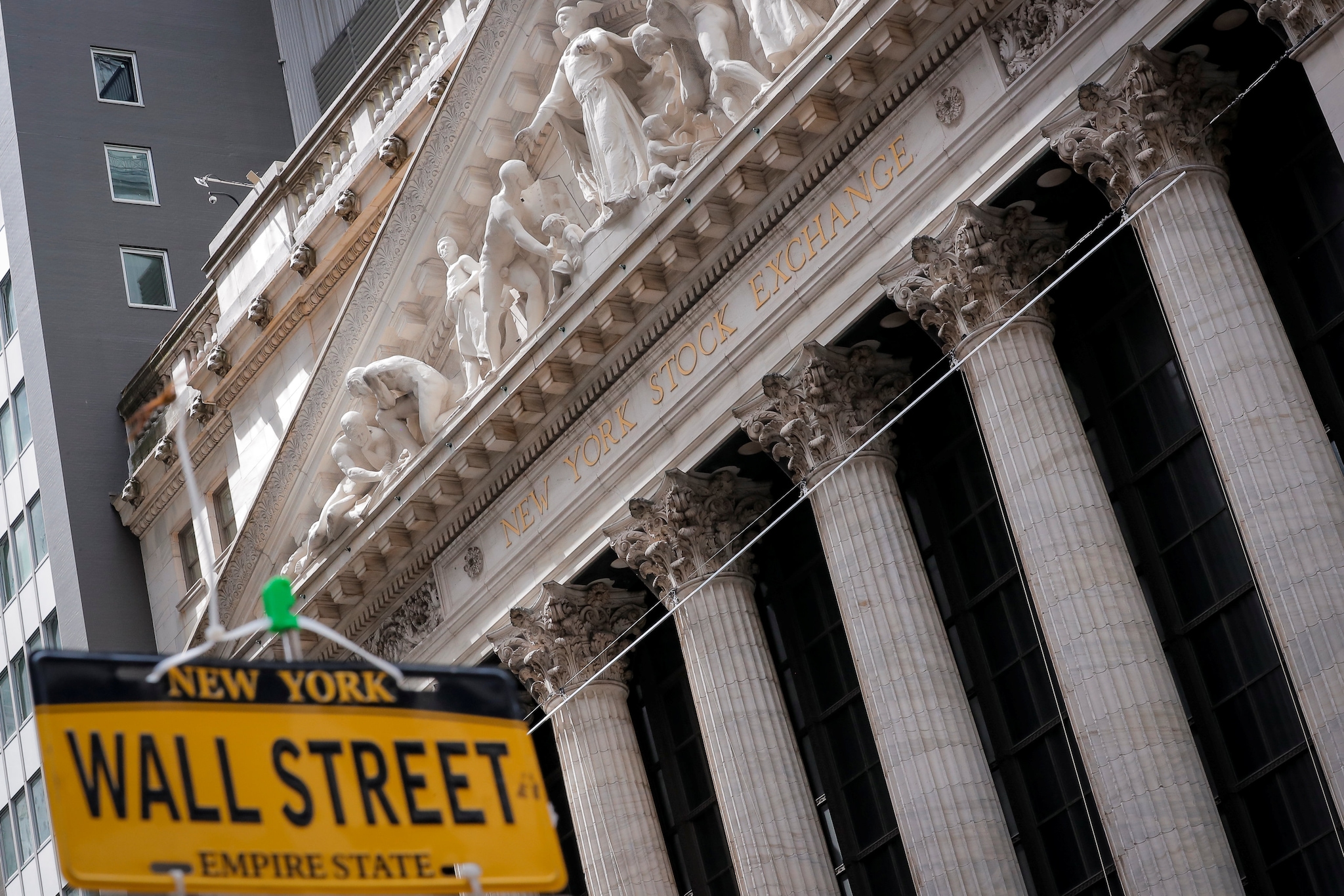
Stocks slipped Tuesday to kick off the second half of 2025 after the S&P 500 notched another record to close out a stunning quarter. The S&P 500 shed 0.3%, while the Nasdaq Composite lost 0.4%. The Dow Jones Industrial Average fell 33 points, or 0.1%.
Electric vehicle maker Tesla fell 7% after President Donald Trump suggested in a post on Truth Social that the Department of Government Efficiency (DOGE) should look into the government subsidies that CEO Elon Musk’s companies have received.
Tesla Inc. Chief Executive Officer Elon Musk has assumed oversight of sales in Europe and the US, leaving deputy and senior vice president Tom Zhu over Asia, following the high-profile departure of Omead Afshar, people familiar with the matter said.
Afshar had been responsible for sales and manufacturing operations in North America and Europe, but the longtime Musk lieutenant left the EV maker last month, the latest senior executive to exit during a difficult time for Tesla as it battles falling sales in most of its major markets.
With Afshar out, Musk and Zhu are essentially divvying up his responsibilities and Zhu, based in China, will oversee Tesla’s manufacturing operations globally, the people familiar said, declining to be identified discussing private information.
Representatives for Tesla didn’t respond to requests for comment.
KKR & Co.-backed venture capital firm Catalio Capital Management gathered more than $400 million for its latest fund, a marginally larger amount than the biotech company raised for its prior vehicle.
This year has been “the toughest, most brutal fundraising climate ever,” Catalio co-founder George Petrocheilos said in an interview. The fund received major backing from current and new investors, including registered investment advisers, foundations and endowments, the firm said in a statement Tuesday.
Venture capital fundraising for biotech firms has dropped significantly from its 2018 peak, partly due to a market correction, according to a recent report from private-market data firm PitchBook. Like other VC firms, those focused on biotech are also constrained by elevated interest rates and a subdued market for initial public offerings.
UniCredit SpA will offer its professional clients a structured product tied to BlackRock Inc.’s iShares Bitcoin Trust ETF that features full protection against losses, as European banks seek new ways to tap into appetite for digital assets.
The bank plans to issue a five-year, dollar-denominated investment certificate linked to the iShares Bitcoin Trust ETF which will offer a 100% capital protection at maturity, according to an internal memo seen by Bloomberg News and confirmed by the bank.
The maximum return is capped at 85% of the ETF’s performance and the minimum investment threshold is $25,000, according to the memo. Bitcoin has gained about 14% this year in sharp contrast to many smaller crypto tokens, which have suffered steep declines.
UnitedHealth Group Inc. and Memorial Sloan Kettering Cancer Center resolved a contract dispute that threatened to interrupt treatment for thousands of cancer patients in the New York City area.
The largest US health insurer reached a deal Tuesday morning with one of the nation’s highest-profile cancer centers. The pact was reached just after a July 1 deadline, meaning Sloan Kettering was briefly no longer in the insurer’s network for about 19,000 patients currently in treatment there.
UnitedHealth said the new agreement with Memorial Sloan Kettering is for several years, without specifying how many.
Health insurers and hospital systems frequently deadlock in negotiations until the brink of when a contract runs out, only to make a deal at the last minute.
Microsoft Corp. has signed a cloud computing deal with the Premier League, a pact that will let the software company tout its AI technology to a captive audience of sports fans.
A five-year “strategic partnership” will see the UK soccer league, the world’s most watched, migrate its “core technology infrastructure” to Microsoft’s Azure cloud-computing service, the company and league said in a statement on Tuesday. The Premier League’s mobile apps and website will feature an artificially intelligent chatbot powered by Microsoft’s AI services, as will the league’s fantasy games.
“This is the future of football,” Microsoft UK chief Darren Hardman said in an interview with Bloomberg Television. “It’s data-driven drama, it’s smarter stats, it’s deeper stories, it’s a better connection of the fan to what’s going on.”
Saudi Arabia-based quick delivery firm Ninja has become the kingdom’s newest tech unicorn after raising around $250 million from local investors, according to people familiar with the matter.
The funding round, led by asset manager Riyad Capital, values the three-year-old company at about $1.5 billion, the people said, asking not to be named as the information is private. Ninja is targeting an initial public offering by 2027, Bloomberg News reported in March.
Representatives for Ninja and Riyad Capital declined to comment.
A portfolio of valuable California properties, including a hotel in the exclusive enclave of Laguna Beach, may be forced into liquidation at fire-sale prices because of a bitter court fight between the owners.
Some of the properties were once valued at a collective $360 million and sales of these assets should cover debt put on them over the years, according to court filings. But a court-supervised sale process has fallen apart because of a fight for control of the company that manages the real estate.
“Each is holding a gun to their own head and saying, ‘Do this, or I’ll shoot’,” US Bankruptcy Court Judge Brendan Shannon said during a court hearing Monday in Wilmington, Delaware. “I am aware of the potential for value loss or destruction.”
A turf war is breaking out in the vast world of digital payments — and the incumbents are suddenly on defense.
Tech firms and crypto start-ups are moving in on territory long dominated by Visa Inc. and Mastercard Inc., powered by a new type of currency — the stablecoin — and a pitch merchants can’t ignore: lower fees, faster settlement and a way to bypass the big two altogether.
It’s a tech threat and a financial threat. Digital tokens, which are typically pegged to the dollar, allow consumers to pay merchants directly from their crypto wallets — without routing payments through a bank or card network. Last year alone, US businesses paid an estimated $187 billion in swipe fees, most of it via Visa and Mastercard’s systems. Stablecoins promise to make that toll much lower, or even obsolete.
“It’s clear that eventually this entire space could be a threat to TradFi providers,” said Christian Catalini, founder of MIT Cryptoeconomics Lab. “But credit card networks aren’t sitting on the sidelines. The card networks will push to work with many stablecoins, so they retain their central role.”
Investors are flocking to the riskiest parts of the US stock market, raising questions about the sustainability of its record-setting rebound and pointing to potential losses for retail traders.
“The second quarter snap-back rally was led by the perceived lower quality baskets — the Dash to Trash,” said Mark Taylor, a sales trader at Panmure Liberum Limited. “This pointed to retail buyers continuing to buy dips aggressively and the pain trade of positioning flipping to performance chasing.”
Bitcoin-linked firms have rallied 78%, while quantum computing shares are up 69% and meme stocks have advanced 44% — all volatile corners of the market where investors are betting on future returns that may not materialise. A basket of highly shorted securities rallied 29%.
Turkey is discussing loosening limits on some commercial loans, according to people familiar with the matter, signalling policymakers are comfortable starting to ease financing conditions.
Raising monthly limits on loan growth to small and medium-sized enterprises is the central focus of discussions, the people said, asking not to be named as the talks are confidential. Banks’ monthly loan growth to SMEs is currently capped at 2.5%.
Saddled with higher spending on loans, some Turkish businesses have been forced to slow production and calls for financing costs to be lowered have become louder. Data compiled by Bloomberg shows the weighted average interest rate for commercial loans in the week ending June 20 stood at 63%.
JPMorgan Chase & Co. and Morgan Stanley are advising clients to buy Turkish bonds and the lira, after the postponement of a court ruling on a key opposition figure offered a reprieve from political risks. Strategists at both banks expect investors to shift their focus to Turkey’s slowing inflation and the prospect for interest-rate cuts, which should bolster markets in the coming months.
“Domestic and external geopolitical risks are fading,” JPMorgan strategists Michael Harrison and Anezka Christovova said in a note, adding that “conditions are in place” for a rates rally over the summer. They recommended clients buy four-year lira-denominated bonds on an unhedged basis, and said they are overweight the lira.
The lira rallied Monday and the yields on local bonds plunged after the court postponed its ruling on a case that could unseat opposition leader, Ozgur Ozel. The case centers on alleged irregularities in the 2023 convention that elected Ozel as chairman of the Republican People’s Party, or CHP, and will now be heard on September 8.NewsLive TVMarketPopular CategoriesCalculatorsTrending NowLet's Connect with CNBCTV 18Network 18 Group :©TV18 Broadcast Limited. All rights reserved.