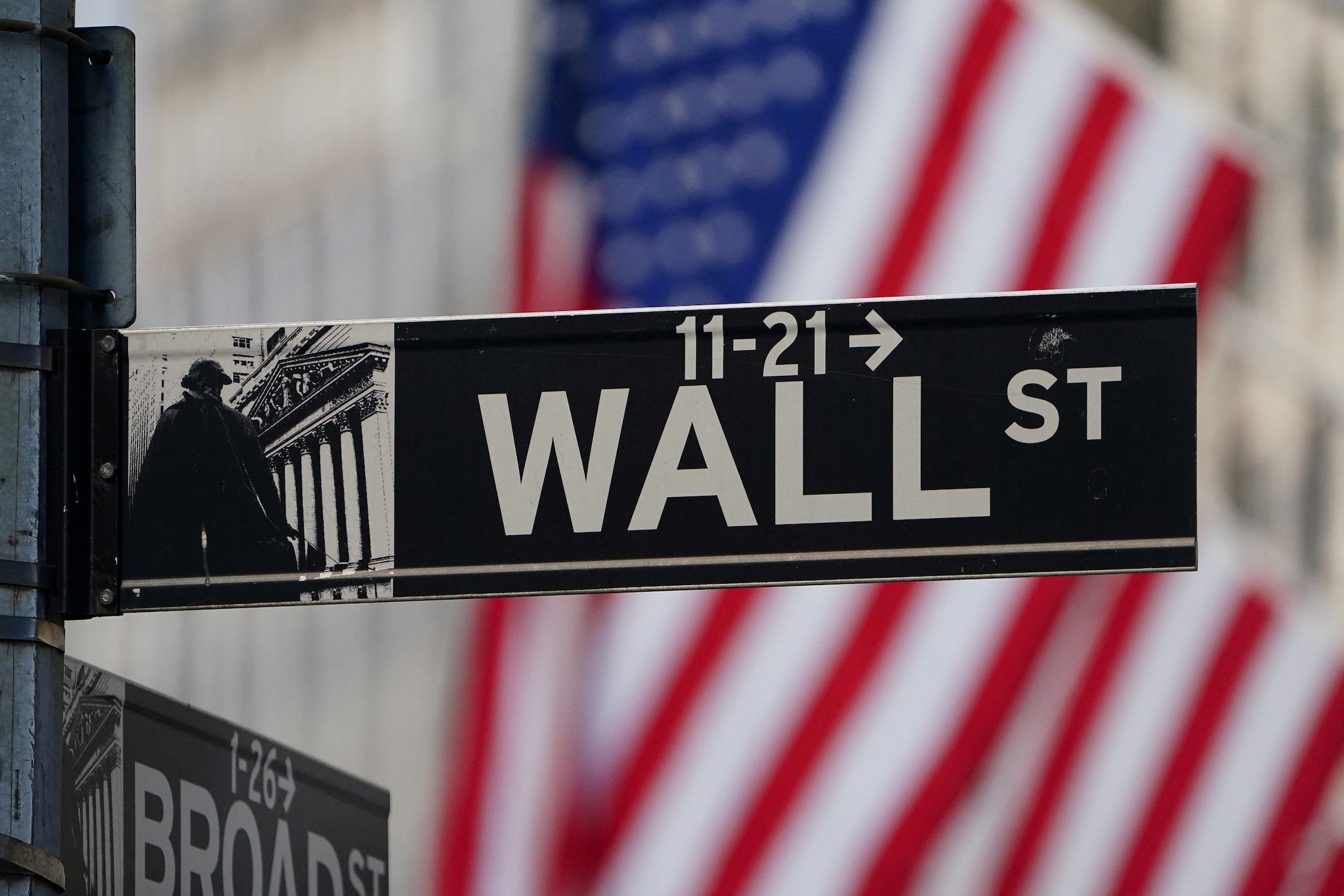
US Stock Market LIVE Updates: Dow Jones slides over 600 points as spike in brent oil prices keeps investors wary
Published on 28/03/2026 12:06 AM
US Stock Market LIVE Updates: US stocks trade under pressure as President Donald Trump delayed threatened strikes on Iran’s energy infrastructure, as rising oil prices kept investors on edge. The tech‑heavy Nasdaq Composite fell 2%, slipping deeper into correction territory, while the Dow Jones Industrial Average and the S&P 500 each dropped over a precent, extending losses from Thursday’s sell‑off.
Oil markets moved sharply higher, with prices climbing more than 2% amid ongoing attacks across West Asia and mounting fears the conflict could drag into April and beyond. Brent crude traded above $103 a barrel, while WTI crossed $97, driven by concerns over lost supply as traffic through the Strait of Hormuz remains disrupted.
Trump extended Iran’s deadline by 10 days to April 6, signalling a softer tone that leaves room for de‑escalation, though doubts remain given Tehran’s continued resistance. Separately, the US Senate passed a funding bill for TSA and most of the Department of Homeland Security, paving the way to end a partial shutdown that has strained airports and rattled the economy.
Stay tuned for live updates.
Bitcoin dropped 4% to about $66,650 on Friday, erasing nearly all the gains accumulated during the Iran war. The selling was due in part to outflows from spot bitcoin exchange-traded funds, along with the expiration of $14 billion in options contracts, which forced traders to unwind or adjust their positions.
The German automotive giant has already invested a little more than $3 billion in Rivian as part of the joint venture. And there’s more to come. Rivian will be able to borrow up to $1 billion from Volkswagen Group starting in October. Rivian also gets another $460 million equity investment from Volkswagen after the first vehicle goes on sale using the joint venture’s tech. All told, the deal could be worth as much as $5.8 billion to Rivian.
Apple on Friday said it has hired Lilian Rincon, who previously spent nearly a decade at Google overseeing its shopping and assistant products, as the vice president of product marketing for artificial intelligence, reporting to its marketing chief Greg “Joz” Joswiak. The hire comes as Apple is readying an improved version of Siri, its virtual assistant, for release this year, rebuilt with technology from Alphabet’s Gemini AI model.
Microsoft Corp. is at the intersection of two troubling trends roiling the technology sector, which has the stock on track for its worst quarterly performance since the global financial crisis two decades ago. First, the software giant is doubling down on capital expenditures as Wall Street increasingly asks when investments in artificial intelligence infrastructure will produce more dramatic payoffs in revenue growth. And second, investors are selling software stocks over fears that AI startups like Anthropic and OpenAI are creating agents that can replace products made by companies like Microsoft. Microsoft fell 1.7% after the market opened on Friday, putting it on track for a fourth straight session in the red.
At 11.17 pm IST, the Dow Jones traded over 625 points lower, or 1.4%, at 45,335, while the tech-heavy Nasdaq was down by over 410 points, or 1.9%, at 20,998. The S&P 500 dropped 88 points, or 1.4%, to trade at 6,388.
The 10-year Treasury yield jumped to 4.46% on Friday, its highest level since July, as President Trump’s postponement of strikes on Iranian infrastructure failed to calm the bond market and lower oil prices. The move is significant, given that the 10-year Treasury was around 3.96% before the start of the Iran conflict.
Cruise-liner giant Carnival Corporation (CCL) cut its 2026 full-year outlook on Friday, sending shares falling by roughly 4%. In a press release on Friday, Carnival set its adjusted earnings estimate for fiscal year 2026 at $2.21 per share from a previous forecast in December of $2.48, noting the “impact from recent changes in fuel prices.” Analysts are looking for $2.37 per share, according to consensus estimates compiled by S&P Capital IQ.
Gold prices staged a sharp rebound on Friday, rising about 3%, though the metal is still headed for its fourth straight weekly loss. Gold futures climbed to around $4,540 an ounce after a steep sell‑off that began with the escalation of the Iran war. The recent correction has wiped out most of gold’s gains for the year, following a strong start to 2025. Higher US bond yields, expectations that interest rates will stay elevated for longer, and a stronger US dollar have reduced the appeal of gold, which does not offer interest income. As the dollar strengthens, gold also tends to become more expensive for buyers.
Citigroup strategists have dialed back their US small-cap overweight “back to zero” as part of a broader effort to reduce equity exposure. The bank also cut its overall equity allocation to neutral, citing a series of negative macro signals now flashing caution.
In a note to clients, Citi said, “With most of our negative equity macro risk signals triggering, we continue to cut equity exposure, taking our allocation to neutral.” The strategists added that “the incentives for both Iran and Israel do not necessarily align with a quick end,” highlighting ongoing geopolitical uncertainty as a key risk factor.
The move underscores growing caution among major banks as market volatility rises amid the protracted Middle East conflict and its potential impact on energy prices, bond yields, and investor sentiment.
CNBC
Cruise giant Carnival Corporation lowered its full-year 2026 earnings outlook on Friday, sending shares down roughly 4%.
The company now expects adjusted earnings of $2.21 per share, down from its December forecast of $2.48 and below analysts’ $2.37 consensus estimate (S&P Capital IQ). Carnival cited the impact of rising fuel costs as the main driver of the revision.
Fuel assumptions include Brent crude averaging $90/barrel through May, $85 in Q3, and $80 in Q4. The company added that a strong first quarter boosted its operational outlook by nearly $150 million, partially offsetting higher fuel expenses.
Consumer sentiment in the US slipped in March as concerns over the Iran conflict pushed inflation expectations slightly higher, according to the University of Michigan’s Survey of Consumers.
The headline reading fell to 53.3, down 5.8% from February and slightly below economists’ estimate of 54.0. The current conditions index dipped to 55.8, while the expectations index dropped sharply to 51.7.
On inflation, the one-year outlook rose to 3.8%, up 0.4 percentage points from February, while the five-year outlook edged down to 3.2%. The readings suggest heightened price worries, though consumers do not foresee dramatic spikes despite rising energy costs.
“Consumers may not expect recent negative developments to persist far into the future,” said survey director Joanne Hsu, noting that views could shift if the Iran conflict prolongs or energy prices feed into broader inflation.
CNBC
The UK’s main stock indexes are headed for a fourth straight weekly loss, as investor caution deepened over the ongoing West Asia conflict and fears of rising inflation.
US President Donald Trump extended his deadline for Iran to reopen the Strait of Hormuz or face potential strikes on its energy facilities, after Tehran rejected Washington’s 15-point proposal to end the war.
At 1125 GMT on Friday, the blue-chip FTSE 100 index slipped 0.7%, while the midcap FTSE 250 fell 1.2%. Both indexes are also set for significant monthly losses, highlighting sustained pressure on UK equities amid global uncertainty.
The US 10-year Treasury yield rose to 4.46% on Friday, marking its highest level since July, as bond markets remained on edge despite US President Donald Trump delaying potential strikes on Iran’s infrastructure.
The spike suggests investors are not fully convinced that the pause in escalation will ease geopolitical risks or cool rising oil prices.Wall Street opened Friday on the back foot, with investors refusing to buy into a temporary pause in geopolitical tensions.The Dow Jones Industrial Average slipped 418 points (0.91%) to 45,542.08 at the opening bell. The S&P 500 declined 0.72% to 6,430.50, while the Nasdaq Composite fell 0.86% to 21,223.88, extending Thursday’s sharp selloff that pushed the tech-heavy index into correction territory.The trigger remains a simmering West Asia conflict that markets can’t price in with any certainty. US President Donald Trump may have delayed potential strikes on Iran’s energy infrastructure by 10 days, but the move has done little to calm nerves. If anything, it has prolonged the uncertainty.
Brent crude rises to $111 per barrel
Citi has downgraded its equity stance to neutral, citing the oil-led market turmoil and fading hopes of meaningful resolution to end the war.
“We had already cut our equity risk in half in week two of the US-Iran war, bringing our US small cap overweight back to zero,” strategists at the bank wrote.
Welcome back to tracking the US market on Day 28 of the war in West Asia, triggered by the US and Israeli attacks on Iran.
NewsLive TVMarketPopular CategoriesCalculatorsTrending NowLet's Connect with CNBCTV 18Network 18 Group :©TV18 Broadcast Limited. All rights reserved.