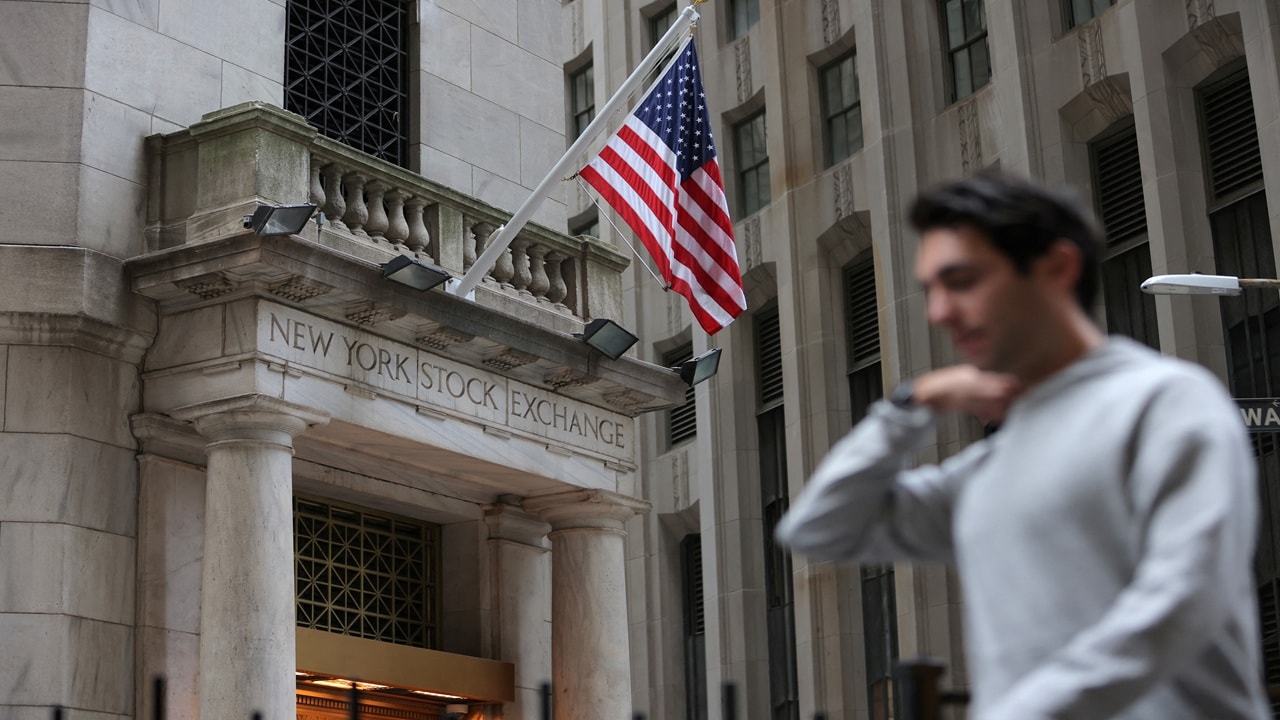
US Stock Market LIVE Updates: Nasdaq futures rise 25 points ahead of big bank earnings, inflation data
Published on 15/07/2025 05:00 PM
The European Union has finalised a second list of countermeasures to target US goods worth €72 billion ($84 billion), including Boeing Co. aircraft, automobiles and bourbon if it decides to retaliate against Donald Trump’s tariff policy.
Trump on Monday said he is still open to more trade negotiations with the EU after announcing over the weekend a 30% levy on EU imports that will kick in on August 1 if the two sides fail to agree on a better deal. EU trade chief Maros Sefcovic was planning to speak with US Commerce Secretary Howard Lutnick late Monday as he pushes for a settlement that the EU insists must be mutually beneficial to both sides.
“We’re always open to talk,” the US president told reporters at the White House. “We are open to talk, including to Europe. In fact, they’re coming over. They’d like to talk.”
US Treasury Secretary Scott Bessent said a “formal process” is already starting to identify a potential successor to Federal Reserve Chairman Jerome Powell.
“Well, look, there’s a formal process that’s already starting,” Bessent said in an interview on Bloomberg Surveillance on Tuesday morning, when asked if such efforts had already begun.
“There are a lot of great candidates, and we’ll see how rapidly it progresses,” Bessent added. “It’s President Trump’s decision, and it will move at his speed.”
Bessent also said it would be confusing for Powell to remain at the Fed after his term as chair ends.
“Traditionally, the Fed chair also steps down as a governor, and there’s been a lot of talk of a shadow Fed chair causing confusion in advance of his or her nomination,” Bessent added. “And I can tell you, I think it’d be very confusing for the market for a former Fed chair to stay on.”
BlackRock Inc. pulled in $46 billion to its investment funds, and assets hit a record $12.5 trillion as clients rode out the volatility of President Donald Trump’s tariff policies in the second quarter.
Investors added $85 billion to exchange-traded funds and $29 billion to equities overall, New York-based BlackRock said in a statement on Tuesday. Net flows into long-term investments missed the $61 billion average estimate of analysts surveyed by Bloomberg, as a single institutional client redeemed $52 billion from a lower-fee index product.
“Our expanding client relationships are resonating in higher, more diversified organic base fee growth,” Chief Executive Officer Larry Fink said in the statement.
Overall net flows into the company’s funds were $68 billion, including $22 billion to cash-management and money-market funds and $14 billion into digital-asset ETFs.
Russia rejected pressure from Donald Trump after the US president threatened to impose stiff economic penalties on Moscow if it doesn’t end hostilities with Ukraine within 50 days, though the Kremlin indicated it would review his latest stance.
“We first and foremost note that any attempts to make demands — especially ultimatums — are unacceptable for us,” Russian Deputy Foreign Minister Sergei Ryabkov said on Tuesday, according to the state-run Tass news service. Kremlin spokesman Dmitry Peskov said Trump’s statement was “serious,” and Moscow needed time to study it, Tass reported.
Trump said on Monday that he’d apply levies in the form of “secondary tariffs” if the Kremlin didn’t cease fighting. The US president didn’t provide details, but has used the term in the past to describe duties imposed on countries for trading with American adversaries. The threats echo punishment spelled out in a bipartisan bill in Congress that would impose 500% tariffs on countries that buy Russian oil and gas such as China and India.
The UK will not create its own framework for sustainable investments, abandoning years of work to focus on other green policies.
Britain’s government has not found sufficient evidence that a so-called taxonomy would help stop greenwashing and channel investments to more sustainable economic activities, it said in a consultation document published Tuesday. Instead, the UK said it would focus on sustainability reporting standards and corporate transition plans.
Such taxonomies, which classify what a government deems to be “green,” have spread across the globe, though they’ve also faced pushback from companies and investors due to their complexity. The UK’s taxonomy plans were first announced in 2020, but last year it released a consultation on whether it should continue with the project.
Iron ore dropped after data showed China’s crude steel output has plummeted as the nation’s property sector struggles under a prolonged downturn.
Futures of the steel-making ingredient fell as much as 1.6% after traders weighed a slew of key economic prints from the biggest metals-consuming nation on Tuesday. The data showed China’s growth exceeded expectations but other figures painted a picture of weak demand, while uncertainty lingers on whether the resilience of its export market can be maintained.
China’s steel output had its biggest drop in 10 months in June, falling 9.2% from the year before to 83.2 million tons. That left first-half production at its weakest since 2020.
The company reported its second-quarter results on Tuesday. The revenue came in at $45.68 billion.
The shares of the financial services company fell 0.8% in premarket. The company lowered its net income guidance to approximately 2024 levels.
The June consumer price index is expected today. The investors are also eying stock movement following better than expected earnings season.
The shares of NVIDIA are up 4.5% in premarket trade. On the sale of H20 chips to China, the company said in a statement, “The US government has assured NVIDIA that licenses will be granted, and NVIDIA hopes to start deliveries soon.”
Hong Kong’s Hang Seng Index closes 1.6% higher at 24,590.12
China’s CSI 300 index flat at 4,019.06
Japan’s Nikkei 225 benchmark closes 0.55% at 39,678.02
Topix index flat at 2,825.31
South Korea’s Kospi index up 0.41% at 3,215.28
Australia’s S&PASX 200 benchmark ended 0.7% higher at 8,630.30
The dollar hovered near a three-week high versus major peers on Tuesday (July 15) as traders awaited the release of US inflation data later in the day that could provide clues on the path for monetary policy.
here
Fund managers are rushing back into risky assets at a record pace on optimism over economic growth and strong corporate profits, according to a monthly survey by Bank of America Corp.
The risk level in investor portfolios is the highest ever on a three-month basis going back to 2001, the bank’s survey showed. The poll also pointed to strong increases in allocations to US and European stocks, as well as tech shares.
Gold prices inched up on Tuesday, July 15. Investors are waiting for fresh US inflation data to gauge the Federal Reserve’s next move on interest rates.
here
Stocks advanced after Nvidia Corp. secured US assurances to resume sales of some artificial intelligence chips to China, lifting sentiment on a busy day that will also feature inflation data and big bank earnings.
European stocks edged 0.2% higher, with technology shares among the session’s top performers. Futures for the Nasdaq 100 gained 0.5% while those for the S&P 500 climbed 0.3%. Nvidia rose 4.5% in early trading. Bitcoin fell as traders took profit after a record-setting surge.
The yield on 10-year Treasuries declined two basis points to 4.41%, with government bonds rising broadly in positioning-led moves ahead of June’s consumer price index report. The dollar dropped 0.2%.
Japan’s long-term government debt yield touched the highest level since 2008, as a raft of election tax-cut pledges puts investors on edge and risks higher costs all around in the country.
Tuesday’s rise of 2.5 basis points in the 10-year yield — to 1.595% — while modest, is a reminder that it’s not just bonds of 20 to 40 years that are under pressure, even if the most extreme moves have been in these super-long maturities.
The uptick shows the increased vulnerability of Japan’s bond market after its central bank started pulling back from massive purchases that placed a protective cushion around yields for more than a decade. An upper house election on Sunday that could see the ruling coalition lose its majority is further fueling concerns that the government will loosen its grip on its finances even more, adding to pressure on yields.
Fund managers are rushing back into risky assets at a record pace on optimism over economic growth and strong corporate profits, according to a monthly survey by Bank of America Corp.
The risk level in investor portfolios is the highest ever on a three-month basis going back to 2001, the bank’s survey showed. The poll also pointed to strong increases in allocations to US and European stocks, as well as tech shares.
China’s economic growth exceeded expectations in the second quarter but a more pronounced slowdown is becoming likely in the months ahead, made worse by risks to global trade and sluggish consumer demand at home.
Gross domestic product expanded 5.2% in April-June from a year earlier, after a gain of 5.4% in the first quarter, according to data released Tuesday by the National Bureau of Statistics. That compares with a 5.1% median forecast from economists surveyed by Bloomberg.
The world’s second-largest economy has so far held up well in the face of higher tariffs, thanks to front-loading by exporters and resilient shipments to markets outside the US. But deflationary pressures are intensifying, with retail sales growth falling short of forecasts and home prices dropping at a faster pace in June.
The CSI 300 Index, a benchmark for onshore shares, pared early gains after the data and ended little changed. The yuan was steady.
President Donald Trump’s threat to impose financial penalties on Russia has put the spotlight on the two biggest buyers of Moscow’s crude — India and China — but markets remain skeptical of disruption, for now.
India became a major importer of Russian oil since the invasion of Ukraine in early 2022. More than a third of overall purchases have been from the OPEC+ producer this year, compared with less than 1% prior to the war, according to data from Kpler. China’s imports have also climbed over the same period.
Still, the initial reaction from the market to Trump’s remarks was nonchalance. Global benchmark Brent fell almost 2% to close below $70 a barrel on Monday, suggesting little concern around the potential impact to crude flows.
European natural gas edged lower as traders digested US President Donald Trump’s threat to hit Russia with financial penalties if there’s no deal on peace in Ukraine.
Benchmark futures hovered near €35 a megawatt-hour after Trump threatened to impose “severe tariffs” of about 100% if Russia doesn’t strike an agreement to end hostilities within 50 days. For now, market participants don’t see the pressure posing a meaningful obstacle to Moscow’s energy exports.
European stocks edged up 0.2%, led by gains in the technology sector. Futures for the Nasdaq 100 rose 0.5% while those for the S&P 500 climbed 0.3% Asian equities were also higher. Bitcoin fell as traders took profit after a record-setting surge. US Treasuries nudged higher while the dollar fell.
China’s economic growth exceeded expectations in the second quarter, but strong exports to markets outside the US masked deepening pressure caused by weak consumer demand at home.
Gross domestic product expanded 5.2% in April-June from a year earlier, after a gain of 5.4% in the first quarter, according to data released Tuesday by the National Bureau of Statistics. That compares with a 5.1% median forecast from economists surveyed by Bloomberg.
Benchmark Chinese stock indexes in Hong Kong and on the mainland pared their early gains after the data. The yuan was steady while the yield on China’s 10-year government bond was little changed.
Nvidia Corp. plans to resume sales of its H20 artificial intelligence accelerator to China based on assurances from Washington that such shipments would be approved, a dramatic reversal from the Trump administration’s earlier stance.
US government officials have told Nvidia that they would green-light export licenses for the H20, the company said in a blog post on Monday. That China-specific variant of Nvidia’s AI chips was created to comply with earlier trade curbs, but has since April also been blocked from sale in China. A spokesperson for the Commerce Department, which oversees semiconductor export controls, did not immediately respond to a request for comment.
Nasdaq futures surged after Nvidia’s announcement, with Hong Kong and Chinese stocks also reacting positively. The Hang Seng Tech Index rose as much as 2.2%, while data center operators like Beijing Sinnet Technology Co. jumped as much as 7.6%.
Futures on Wall Street reversed early losses and are trading with gains, particularly those on the Nasdaq.
Futures on the Dow Jones are up 35 points, while those on the S&P 500 are currently above the flat line, having recovered losses of close to 70 points in early trading.
On the flip side, the Nasdaq futures are up over 110 points.
Futures on Wall Street are surging after reversing earlier losses.
Nasdaq futures are leading the surge.
All eyes are on big bank results and US CPI later this evening.
Watch this space for all the live updates.NewsLive TVMarketPopular CategoriesCalculatorsTrending NowLet's Connect with CNBCTV 18Network 18 Group :©TV18 Broadcast Limited. All rights reserved.