US Stock Market LIVE Updates: S&P 500 futures bounce back as markets price in softer tariffs from Trump
Published on 08/07/2025 06:00 PM
The cyberattack that derailed Marks and Spencer Group Plc’s operations for weeks was the result of a “sophisticated impersonation” of one of the retailer’s third-party users, according to Chairman Archie Norman.
The hackers entered M&S’s systems on April 17 and the company detected them two days later, Norman told members of the UK Parliament’s business and trade committee Tuesday. That triggered a “traumatic” period, with the cyber team getting barely any sleep as they grappled with the fallout, he said.
“It’s fair to say that everybody at M&S experienced it,” he said. “We’re still in the rebuild mode and will be for some time to come,” though things would return to normal for customers by the end of this month, Norman added.
JPMorgan Chase & Co. will soon open a new office in Amsterdam after the bank’s stricter return-to-office mandate coupled with an expansion in the region left the biggest Wall Street lender short of desks in the Netherlands.
The move into a larger space in Amsterdam’s World Trade Center became “necessary” after JPMorgan’s push to bring employees back into the office five days a week, said Wendy Hohmann, the newly appointed head of the bank’s Dutch business and one of the few female investment banking leaders in Europe.
“We have a rotation scheme because we simply don’t have enough desks,” Hohmann said in an interview. “It’s also a consequence in terms of the growth we have delivered.”
As businesses around the world start to ditch pandemic-era flexible work policies, they are also confronting a paucity of real estate to accommodate all the staff heading back to office.
Russia’s crude shipments fell to the lowest since February as refinery runs are rising faster than production, eating into exports.
Seaborne crude cargoes averaged 3.12 million barrels a day in the four weeks to July 6, down by 3% from the period to June 29, tanker-tracking data compiled by Bloomberg show.
On this measure, flows have fallen to the lowest since the period ending February 23 and are down by 200,000 barrels a day from March, before eight members of the OPEC+ producer group, including Russia, began easing output cuts they made in 2023.
Over the closest comparable period, production increased by about 60,000 barrels a day, one-third of the headline increase in the country’s OPEC+ output target. Meanwhile, refinery runs rose by 140,000 barrels a day.
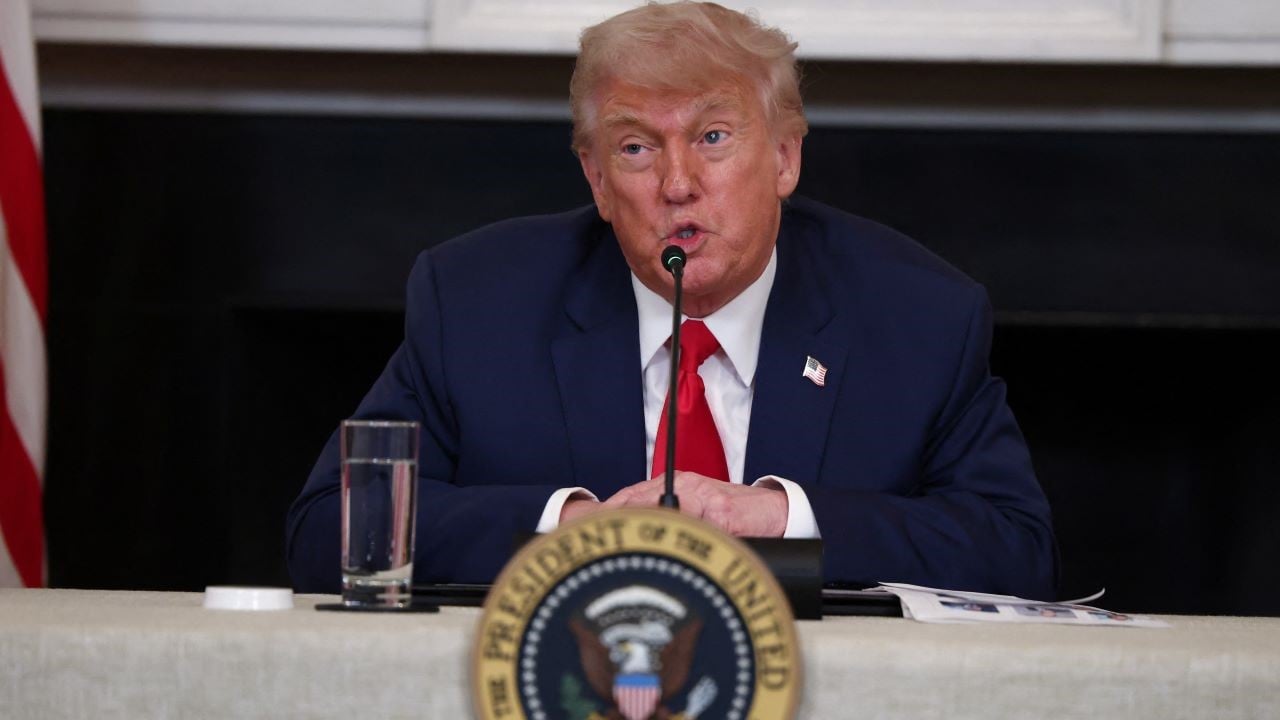
On “Liberation Day” on April 2, Donald Trump gushed about how trade was finally going to tilt in America’s favor after decades of its workers and companies being “plundered.” For the president, unfettered tariffs would soon make the US “an entirely different country.”
Spelling out his policy of so-called reciprocity with trading partners, he said, “that means they do it to us and we do it to them, very simple, can’t get any simpler than that.”
Three months later, the transformation is proving harder and slower to execute than advertised.
As Wednesday’s tariff deadline approached with less than a handful of agreements — or mere frameworks of them — ready to announce, the Trump administration is effectively conceding that its self-imposed deadline was too optimistic for a full teardown and rebuilding of the old architecture of the US-led global trading system.
The southern Indian state of Kerala has sued MSC Mediterranean Shipping Co. for the environmental damages caused by a ship capsizing off its coast, according to a court document.
The government is seeking 95.31 billion rupees ($1.1 billion) from the Geneva-based shipping giant, whose Liberian-flagged MSC ELSA 3, which was carrying chemicals and hundreds of tons of fuel, sank due to flooding in May.
The High Court of Kerala, in its Monday order, asked port operator Adani Vizhinjam Port Pvt to seize another container belonging to the Swiss firm until the amount is deposited or initiated by the vessel owner. MSC didn’t immediately reply to an email seeking comment.
Indonesian sovereign wealth fund Danantara appointed four banks to coordinate a multicurrency borrowing of as much as $10 billion, in what could be Southeast Asia’s largest loan, according to people familiar with the matter.
DBS Group Holdings Ltd., HSBC Holdings Plc, Natixis SA and Standard Chartered Plc will be acting as coordinators for the facility, the people said, who asked not to be identified discussing private matters.
Danantara, formally known as Daya Anagata Nusantara, sent a request for proposals to regional and international banks for the loan last month with tenors of around three to five years, Bloomberg reported earlier.
Daimler Truck Holding AG plans to establish an assembly plant in Senegal, with production of Mercedes-Benz trucks scheduled to begin next year.
It will assemble the vehicles in a partnership with the Senegalese government using components supplied from abroad by Daimler, the company said in a statement on its website. The Ministry of Defense, police, fire brigades and private-sector clients will use the trucks.
A joint venture between Senegal and Global Truck Systems will oversee operations, and it’s expected to start producing the first prototypes later this year, with series production in 2026, a spokesman for Daimler said.
The government is providing land, tax incentives and worker training, according to the statement.
German exports sank more than anticipated in May as the value of shipments to the US plunged to their lowest level in more than three years amid President Donald Trump’s tariff threats.
Total exports declined 1.4% from the previous month, the statistics office said Tuesday. That’s worse than the -0.5% median estimate in a Bloomberg survey and followed a revised 1.6% decline in April.
Imports sank 3.8%, including a more than 10% drop in sales from the US. The trade balance increased to €18.4 billion ($21.6 billion) from a revised €15.7 billion.
The European Union is set to rebuke the Italian government for imposing harsh conditions on UniCredit SpA’s takeover of Banco BPM SpA, setting up a power struggle between Brussels and Rome over the fate of the deal.
EU regulators will soon issue formal findings to the Italian government saying it had no right to weigh in on UniCredit’s planned acquisition of Banco BPM, according to people familiar with the matter. The European Commission will say that under the bloc’s merger rules, only Brussels had the legal powers to impose conditions on the deal, which won EU approval last month.
Representatives for the European Commission, UniCredit, Banco BPM and the Italian government all declined to comment.
Billionaire Chris Rokos’ macro hedge fund extended gains in June to cap the first half of the year with double-digit returns.
Rokos Capital Management gained almost 2.6% in June, according to a person familiar with the matter. That boosted the macro hedge fund’s returns for the first six months to 12.3%, the person said, asking not to be identified because the details are private.
A representative for the hedge fund firm, which manages more than $22 billion, declined to comment.
Known for high-conviction macro trades, Rokos made money during what turned out to be a tough stretch for some in the industry in April, when markets convulsed following US President Donald Trump’s unveiling of a roster of tariffs.
June is typically a slow period for car sales in China as the warmer weather kicks in but last month bucked that trend, with buyers seeking to take advantage of a government trade-in subsidy before it was suspended in key cities, pushing transactions to a record.
Retail vehicle sales touched 2.1 million in June, a 7% increase from the previous June peak of 1.9 million in 2022, China’s Passenger Car Association said Tuesday. Wholesale and production figures also hit record highs for the month.
The strong growth during a traditional off-peak season shows that the trade-in subsidy, which provides a 20,000 yuan ($2,800) rebate for newer model cars, made a large contribution to domestic consumption, the PCA said. Some 70% of personal car purchases utilised the sweetener.
European Commission President Ursula von der Leyen accused China of distorting trade and limiting access for European firms two weeks ahead of a summit between the economic powers.
“If our partnership is to move forward, we need a genuine rebalancing: fewer market distortions, less overcapacity exported from China, and fair, reciprocal access for European businesses in China,” von der Leyen told the European Parliament in Strasbourg on Tuesday.
Beijing has imposed export controls on rare earth magnets, hitting European Union industries hard and compounding an increasingly unbalanced trading relationship. The move has dashed signs of a thaw earlier this year between the EU and China because of US President Donald Trump’s tariff policies.
“Broader participation is important,” said Ari Wald, senior analyst at Oppenheimer, who conducted the analysis. “Rallies with most stocks participating, both large and small, are the rallies that typically continue.”
“I thought that off of the lows, with such a ferocious run, you’d find a broader move during that period,” said independent market strategist Jim Paulsen.
Donald Trump’s delay of tariff increases until Aug. 1 may have just softened the price impact for Christmas by pushing it into 2026, according to UBS Group AG Chief Economist Paul Donovan.
Speaking on Bloomberg Television, he said the 10% levy affecting all trade will drive higher inflation numbers in July and August, but extra duties applied to specific countries under the US president’s policies may not now affect shoppers until much later.
“By the time you’ve got the goods shipped to the United States, you’ve got through the supply chain, given that a lot of retailers obviously order early for Christmas,” Donovan said. “That’s obviously something that will lessen some of the damage to US consumers in the second half.”
Taiwan’s exports are on a tear, powered by global demand for artificial intelligence — but the boom is becoming a flashpoint in trade relations with Washington and a growing risk for the economy.
Shipments hit a record $154 billion in the second quarter, according to official data released Tuesday. For June alone, exports hit a new high for any month of $53 billion, topping the previous record set in May.
Although it’s unclear whether the surge could continue through the year as Trump’s tariffs could kick in, Taiwan’s government has previously forecast that net exports will contribute the most to gross domestic product this year since 2021. But the strength is also creating problems, including a rapidly strengthening Taiwan dollar and a widening trade surplus with the US, just as Washington is turning up the pressure on key trading partners.
Nigeria’s currency appears to be decoupling from the price of oil, the nation’s main foreign-exchange earner.
After some initial volatility in the first half, the naira stabilized even as oil prices fell. Analysts from Deutsche Bank AG to Cardinal Stone expect the Nigerian currency to end the year near 1,556 per dollar — its average exchange rate in the first six months of 2025 after it slumped 41% in 2024. It traded around 1,530 on Tuesday, largely flat on a year-to-date basis.
The change in the naira’s fortunes can be attributed to its undervaluation, higher non-oil exports and lower import demand, said Ayo Salami, chief investment officer at Emerging Markets Investment Management Ltd. in London. The currency is trading below its fair value based on purchasing power parity, he said.
European sectors are mixed Tuesday morning, though stocks are generally moving higher despite trade uncertainty hanging over the region.
The Stoxx 600 index is up 0.05% shortly after the open, with Germany’s DAX up 0.15% and France’s CAC 40 and the UK’s FTSE 100 both just above the flatline.
Retail is among the worst performers, down 0.3%, while mining stocks are 0.5% higher.
Oil steadied as investors weighed the fallout from US trade levies and a decision by OPEC+ to restore more idled capacity.
Brent was near $69 a barrel and West Texas Intermediate below $68. President Donald Trump threatened new tariff rates on trading partners, while suggesting that he was still open to negotiations. The duties on countries including Japan and South Korea won’t take effect until at least August 1.
“Traders are watching Trump’s new tariff threats and global growth risks, which could soften demand,” said Haris Khurshid, chief investment officer at Karobaar Capital LP. “Looking ahead, we should be paying attention to any new OPEC+ signals about extending or adjusting supply cuts.”
Hungary’s inflation accelerated in June, with a jump in the cost of food, household energy and services despite the government’s regulatory curbs.
The consumer price index increased to 4.6% year-on-year, matching the median estimate in a Bloomberg survey and making it the highest reading since March. Prices rose 0.1% from the previous month, the Budapest-based statistics office said Tuesday.
The latest data will support Hungarian policy makers’ cautious approach to interest rates this year even as some regional peers have been easing. The central bank in Budapest kept its key interest rate unchanged for a ninth month in June, with its fresh forecasts pointing to persistent inflation and faltering economic growth.
German exports sank more than anticipated in May as the value of shipments to the US plunged to their lowest level in more than three years amid President Donald Trump’s tariff threats.
Total exports declined 1.4% from the previous month, the statistics office said Tuesday. That’s worse than the -0.5% median estimate in a Bloomberg survey, and followed a revised 1.6% decline in April.
Imports sank 3.8%, including a more than 10% drop in sales from the US. The trade balance increased to €18.4 billion ($21.6 billion) from a revised €15.7 billion.
Emerging market currencies recovered some of their losses after US President Donald Trump signaled he is open to negotiations shortly after setting tariff rates for more than a dozen countries.
The South Korean won led a pullback in emerging currencies on Tuesday, rising as much as 0.9% to pare most of its overnight decline. The Philippine peso, the Thai baht and the South African rand also rose to pull back some of their losses from Monday. MSCI’s gauge of emerging market stocks rose 0.1%.
These moves came after mixed messages from Trump on Monday: The president sent letters to a variety of countries setting tariff rates but also suggested he was open to negotiations. Trump added that the levies were “firm, but not 100% firm.” That has left markets playing a now familiar guessing game about how bad the damage could be.
Iron ore gained as President Donald Trump signaled he was open to more negotiations after unveiling his first wave of letters threatening to impose higher tariffs on US trading partners.
Futures of the steel-making ingredient rose as much as 0.9%, as Trump teased the possibility of additional negotiations and delayed the new rates until Aug. 1 for all nations facing his “reciprocal” tariffs.
Ferrous markets have been sensitive to Trump’s tariff announcements as fears of an impact to global growth weighs on prices. Iron ore has shed around 12% since reaching a 2025 peak in mid-February, although prices got some support last week after China vowed to phase out outdated capacity.
Australia’s central bank surprised investors and economists by keeping interest rates unchanged on Tuesday and signaled a wait-and-see approach on policy as US tariff plans stoke uncertainty across the world.
The Reserve Bank held its key rate at 3.85%, a decision that only five of 32 economists had predicted, while the rest in survey, along with most traders, expected another quarter-point cut. The RBA has cut twice in its current easing cycle and economists have been debating how much further easing is likely given the tightness of the labor market and poor productivity growth.
Six of nine members voted in favor of the decision that sent the Australian dollar up the most in more than a month. Policy-sensitive three-year government bond yields extended an earlier gain as traders trimmed bets on rate cuts this year. Markets priced a roughly 75% chance of three rate cuts by year-end shortly after the decision, down from those cuts being fully priced.
South Korea said it will look at regulations raised by the US and press ahead with trade negotiations after President Donald Trump sent a letter to the Asian ally with a new August deadline for imposing 25% across-the-board tariffs.
The South Korean government didn’t elaborate on what regulations would be reviewed, but its trade officials have said rules in the digital sector that impact big US tech companies have been a major topic in talks.
“We will use this opportunity to advance key industries through the manufacturing renaissance partnership between our two countries, while also enhancing domestic systems and regulations — areas of particular interest to the US in its efforts to reduce trade deficits,” South Korea’s Industry Ministry said in a statement Tuesday following Trump’s letter.
Australian bonds attracted the largest inflow from Japanese investors in more than two years as lower currency hedging costs boosted the attractiveness of the Antipodean bonds.
Japanese funds bought ¥213.6 billion ($1.5 billion) of Australian sovereign bonds, the most since April 2023 and the first net purchase this year, Japan’s latest balance-of-payments data showed on Tuesday. Sovereign debt refers to securities issued by governments, government agencies and local governments.
“Japanese investors like popular Australian state bonds such as those issued by New South Wales and Queensland,” said Shoki Omori, chief desk strategist at Mizuho Securities Co. in Tokyo. “The Australian dollar and bonds both offer attractive yield pickup for Japanese investors including life insurers and pensions.”
China’s Shenzhen Stock Exchange has urged brokers to speed up applications for companies to list on the ChiNext board as officials seek to boost private enterprise and reignite the economy under threat from rising tariffs.
The exchange, China’s second largest after Shanghai, called in a dozen investment banks to a meeting last month to get them to quicken the pace of applications for companies seeking to sell shares on the tech board, according to people familiar with the matter.
At the meeting, the bourse indicated it would expedite the approval process and loosen some requirements, the people said, asking not to be identified discussing private information. The regulator aims to ensure that all enterprises that have submitted applications can receive a review and feedback this year, the people said.
US Treasury Secretary Scott Bessent said that he expected to meet with his Chinese counterpart in the coming weeks to advance discussions on trade and other issues between the world’s two largest economies.
“I’m going to be meeting with my Chinese counterpart at sometime in the next couple of weeks,” Bessent said in an interview Monday on CNBC. “We had good meetings in Geneva, in London. We both approached it with great respect”
“I think there are things for us to do together if the Chinese want to do it,” he added. “So we will discuss whether we are able to move beyond trade into other areas.”
Thailand remains optimistic about securing a lower tariff rate than the 36% levy announced by President Donald Trump based on an offer to bring down import tax on most US goods to zero, according to Finance Minister Pichai Chunhavajira.
The Southeast Asian nation expects to wrap up trade negotiations before the Aug. 1 deadline set by the US, Pichai told a local television channel on Tuesday. Trump has set the levy on Thailand without taking into account its revised proposals to increase market access by removing tariff and non-tariff barriers on a number of goods, he said.
In a last-minute bid to avoid the punitive tariff, Thailand had submitted a revised proposal to the US on Sunday to boost bilateral trade volume and reduce its $46 billion trade surplus by 70% within five years. The offers included greater market access for US farm and industrial goods, as well as increased purchases of energy and Boeing Co. jets.
Malaysia will continue to engage with the US for a “mutually beneficial” trade agreement after President Donald Trump threatened to impose a 25% tariff on the Southeast Asian nation, higher than the 24% announced in April.
“Malaysia is committed to continuing engagement with the US towards a balanced, mutually beneficial, and comprehensive trade agreement,” the Ministry of Investment, Trade and Industry said in a statement.
Malaysia will continue discussions with the US to address outstanding issues, clarify the scope and impact of the announced tariffs, and pursue avenues for the timely conclusion of negotiations, the ministry said. The efforts are ongoing and reflect Malaysia’s willingness to reach a fair and sustainable outcome, it added.
“At the current time, there are some points on which the United States and Japan cannot reach agreement still remaining, and therefore no agreement has yet been made. This is because we, as the government of Japan, have avoided making easy concessions and have pursued robust talks, seeking what we ought to seek and defending what we ought to defend.”NewsLive TVMarketPopular CategoriesCalculatorsTrending NowLet's Connect with CNBCTV 18Network 18 Group :©TV18 Broadcast Limited. All rights reserved.