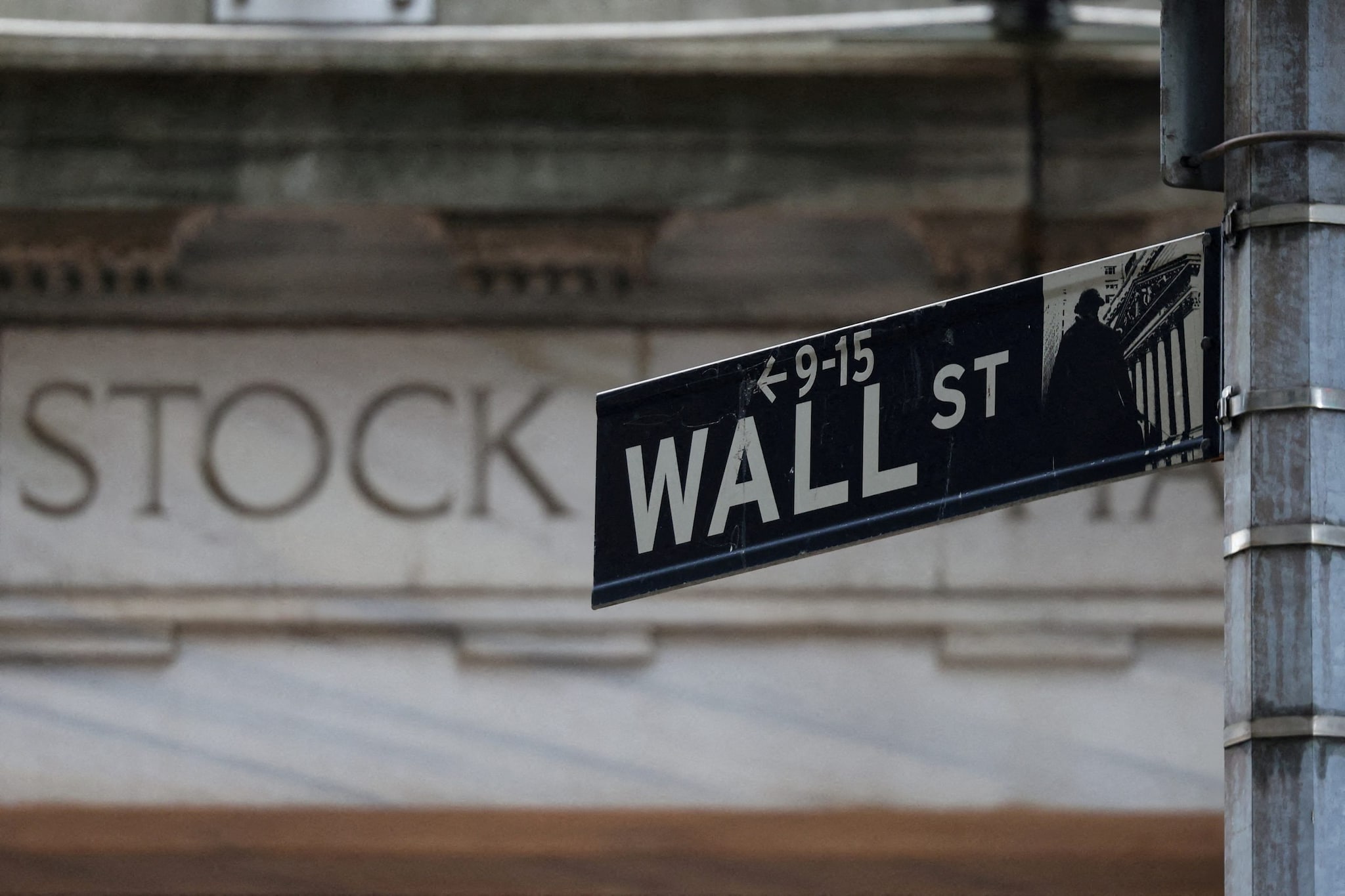
US Stock Market LIVE Updates: S&P 500 futures fall slightly as Bessent says several trade announcements are ahead
Published on 07/07/2025 05:59 PM
Nissan Motor Co. plans to sell about $5 billion in debt to help fund Chief Executive Officer Ivan Espinosa’s turnaround of the ailing automaker, part of a broader financing initiative to keep operations on track.
The Japanese carmaker will sell ¥150 billion ($1 billion) of convertible bonds for investment in new products and technologies, the company said on Monday.
Nissan also plans to issue a total of $4 billion in unsecured dollar- and euro-denominated junk bonds for general corporate purposes, including refinancing debt, according to a person familiar with the matter who asked not to be identified as they’re not authorised to speak publicly. The notes are expected to price later this week.
Canadians are becoming less optimistic about their job prospects as the economy struggles to find momentum.
The percentage of Canadians who believe their jobs are “secure” or “somewhat secure” has fallen below 60% for the first time in more than a year, according to polling for Bloomberg News by Nanos Research. About 30% say they’re unsure, the biggest proportion since 2023.
The Canadian labour market has softened, with four straight months of either minimal job growth or outright losses. The unemployment rate was 7% in May, the highest level since 2016 excluding the Covid-19 pandemic period. Employment in manufacturing and other trade-sensitive areas of the economy has been affected by US tariffs.
Blackstone Inc. has agreed to purchase Allegiant Travel Co.’s Sunseeker Resort for about $200 million, far less than the $720 million that the parent of Allegiant Airlines spent building the beleaguered retreat, according to people familiar with the matter.
A deal for Sunseeker could be announced as soon as Monday, said the people, who asked to not be identified because the details are private. Bloomberg News first reported that Blackstone was in talks to buy the resort in June. Representatives for Blackstone and Allegiant declined to comment.
Allegiant has been seeking to offload the 785-room compound for about a year, announcing in July 2024 that it had retained an adviser to explore options for the resort. Allegiant built the Port Charlotte, Florida resort to extend its travel business into hospitality.
However, the project was built over budget and four years behind schedule. Hobbled by the coronavirus pandemic and hurricane damage, the resort has struggled to produce sufficient returns.
The European Union said it’s closing in on a framework trade agreement with the US after the head of the bloc’s executive arm, Ursula von der Leyen, held a call with President Donald Trump on Sunday.
“They had a good exchange,” EU Spokesman Olof Gill told reporters in Brussels Monday. “We’re at the beginning of the end game, at least for an agreement in principle.”
The EU has been rushing to clinch a trade arrangement with Trump before tariffs on nearly all of its exports to the US jump to 50%. Trump has imposed tariffs on almost all US trading partners, saying he wants to bring back domestic manufacturing, needs to pay for a tax-cut extension and stop other countries from taking advantage of the US.
KalVista Pharmaceuticals Inc. shares rose 19% early Monday after the company said it received US Food and Drug Administration approval for its pill for hereditary angioedema, a rare and potentially deadly condition that causes severe swelling throughout the body.
KalVista said last month that regulators had delayed making a decision on its drug due to the agency’s “heavy workload and limited resources” after the FDA told the company it would miss a June deadline for approval.
The drug industry has been on high alert for signs that recent government downsizing is slowing drug approvals. FDA Commissioner Marty Makary has said publicly the agency “will have no problem” reviewing drugs on time.
Signs that US equities are overheating are cropping up everywhere, foreshadowing trouble for the nascent rebound in some of the riskiest stocks.
As the S&P 500 Index roared to a record high in the past month, shares of small-cap companies — which typically carry a higher debt load and are less profitable than their larger counterparts — surged even more.
They handily outpaced bigger peers as investors shed their defensive stance and rushed into more speculative nooks. But history shows that when enthusiasm tips over into euphoria, it’s a bad omen for small caps.
European markets have been open for almost an hour now, and oil and gas stocks are still leading regional losses.
The Stoxx Oil and Gas index was last seen trading 1.3% lower. Oil prices fell after the OPEC+ alliance agreed to a bigger-than-expected production increase.
Ukrainian President Volodymyr Zelenskiy discussed replacing the current ambassador to the US during his phone call with President Donald Trump on Friday, according to a person familiar with the matter.
Prime Minister Denys Shmyhal is on the list of potential candidates to become Kyiv’s envoy to Washington alongside Deputy Prime Minister Olha Stefanishyna, Defense Minister Rustem Umerov and Energy Minister German Galushchenko, the person said speaking on condition of anonymity as the talks are private.
The replacement of the current envoy Oksana Markarova comes at a delicate moment in Ukraine’s relations with the US. Trump administration last week halted suspend the transfer of artillery rounds and air defense to Ukraine, a move that took Zelenskiy’s government and allies off guard.
German industrial production unexpectedly rose in May, suggesting companies rushed production before potentially much higher tariffs on exports to the US.
Output increased 1.2% from April, the statistics office said Monday. Economists had predicted a 0.2% dip, according to the median estimate in a Bloomberg survey. Car, pharmaceuticals and energy production all rose.
While businesses rallying to fill export orders to get ahead of new trade rules handed Germany a bumper start to 2025, the outlook for the rest of the year is less upbeat. Europe’s largest economy is expected to tread water in the best case scenario following two consecutive annual contractions. If trade tensions escalate, the Bundesbank projects it could shrink in 2025 and 2026 as well.
Shell Plc said its second-quarter results will be undermined by weaker contributions from the energy giant’s fabled oil and gas trading operation.
The contributions from trading and optimization are expected to be “significantly lower” for the second quarter compared with the first for segments that span oil and gas trading, London-based Shell said in a statement on Monday.
Shell’s sprawling but secretive in-house trading business is often one of its biggest profit drivers, and Chief Executive Officer Wael Sawan said in March that its traders haven’t lost money in a single quarter over the past decade.
European natural gas prices steadied as traders eyed US President Donald Trump’s fast-approaching tariff deadline and the impact levies will have on global economic activity.
Benchmark futures hovered near €33 a megawatt-hour Monday, after posting a small weekly gain through Friday. The US is preparing to start delivering letters to dozens of countries in the coming days, with the Trump administration’s 90-day pause on higher duties set to expire on Wednesday.
The initial rollout of Trump’s so-called reciprocal tariffs in early April sparked fears of a US recession and sent energy prices tumbling on expectations that a weaker economy will curb demand. For Europe, which competes with other nations for liquefied natural gas cargoes, a further drop in prices could help ease its efforts to replenish fuel stockpiles ahead of next winter.
UK house prices failed to grow for a second straight month, as the housing market struggles to gain traction after a tax break expired and a sharp increase in sellers coming to market, according to one of the country’s biggest lenders.
Halifax said that average prices were unchanged in June at £296,665 ($404,220) after declining 0.3% the previous month.
Prices have grown in only two months so far this year. Values rose 2.5% from a year earlier, the slowest annual growth since July last year.
Israel’s central bank is set to hold interest rates for a 12th consecutive time, with policymakers waiting to see if the shekel’s recent rally helps tame inflation and paves the way for a cut.
A ceasefire with Iran announced by President Donald Trump last month — halting Israeli and US strikes on the Islamic Republic’s military and nuclear programs — drove a rally in the shekel. Last week, the currency was at its strongest against the dollar in three years, erasing drops following Prime Minister Benjamin Netanyahu’s judicial overhaul attempts and Hamas’ October 7 attacks which triggered a 21-month war.
The Bank of Israel is expected to keep its base rate at 4.5% on Monday, according to all but one of 11 economists in a Bloomberg survey. A single projection points to a cut of 25 basis points.
Indonesia, the world’s second-biggest wheat buyer, plans to purchase more wheat from the US as it seeks to secure a trade deal ahead of the looming tariff deadline.
The Southeast Asian nation will sign a memorandum of understanding for wheat purchases during 2025-2030 with the US in Jakarta on Monday, Franciscus Welirang, the chairman of the Indonesian Flour Mills Association — known as Aptindo — said in a phone interview.
Indonesia may buy at least 800,000 tons of wheat from the US this year, up from 740,000 tons in 2024, and a minimum of 1 million tons annually from 2026, he said. The US last sold more than 1 million tons of wheat to Indonesia in 2020, when it shipped about 1.2 million tons, USDA figures show.
China hit back at the European Union’s restrictions on its medical device makers while maintaining key exceptions, adding uncertainty to ties ahead of a high-stakes summit later this month.
Beijing will exclude EU-based companies from Chinese government procurement for certain medical devices, according to a Sunday statement by the Ministry of Finance.
Crucially, the move doesn’t apply to products made in China, according to a separate statement from the Ministry of Commerce. This offers some relief for major European companies such as Siemens Healthineers AG and Royal Philips NV, which have increasingly localized their production in the world’s second-largest economy.
Gold fell as traders sought to track shifts in US trade policy, with bullion edging lower as President Donald Trump signaled an additional 10% tariff would apply to countries aligned with the BRICS group of nations.
Bullion lost as much as 0.9% to near $3,306 an ounce following the president’s threat, which gave the US dollar a small lift. With the US negotiating deals ahead of an initial July 9 tariff deadline, Treasury Secretary Scott Bessent indicated a possible extension to negotiations, and Commerce Secretary Howard Lutnick said country-by-country tariffs would take effect Aug. 1.
Bullion remains more than a quarter higher this year, trading about $190 shy of a record set in April, with investors seeking safety in the metal amid heightened geopolitical and trade tensions. The rally has been supported by flows into bullion-backed exchange-traded funds, plus strong demand from central banks.
Oil extended declines after OPEC+ agreed to a bigger-than-expected production increase next month, raising concerns about oversupply just as US tariffs fan fears about the demand outlook.
Brent slid as much as 1.6% toward $67 a barrel after falling 0.7% on Friday, and West Texas Intermediate was near $66. The group led by Saudi Arabia decided on Saturday to increase supply by 548,000 barrels a day, putting OPEC+ on track to unwind its most recent output cuts a year earlier than planned.
Alliance officials cited summer demand as one reason for their optimism that the extra barrels could be absorbed by the market, with the move answering President Donald Trump’s calls for lower fuel costs.
The Thai baht’s four-month rally is likely to falter as political turmoil is expected to weigh on the economy, according to the currency’s top forecaster.
The local currency may trade at 32.30 per dollar at the end of the year and into the first quarter of 2026, said Christoper Wong, senior FX strategist at Oversea-Chinese Banking Corp. That implies the baht would be just 0.7% stronger than its level on Monday, after surging more than 5% in the four months through June.
“In the coming months, slower tourism, subdued domestic demand, political developments and tariff uncertainty are some factors that may hinder the baht’s appreciation path,” Wong said in an interview on Friday. “Relative to other Asian peers, I’m of the view that the baht may continue to stay back-footed.”
President Donald Trump said he would put an additional 10% tariff on any country aligning themselves with “the Anti-American policies of BRICS,” injecting further uncertainty into global trade as the US continues to negotiate levies with many trading partners.
“Any Country aligning themselves with the Anti-American policies of BRICS, will be charged an ADDITIONAL 10% Tariff,” Trump said Sunday night in a Truth Social post. “There will be no exceptions to this policy.”
The comments come as the US prepares to send tariff letters to dozens of countries in the coming days, with the Trump administration’s 90-day pause on higher duties set to expire on Wednesday. Trump said in a separate post that the letters would start being delivered from noon Monday, Washington time.
President Donald Trump said he would put an additional 10% tariff on any country aligning themselves with “the Anti-American policies of BRICS,” injecting further uncertainty as the US continues to negotiate levies with trading partners.
“Any Country aligning themselves with the Anti-American policies of BRICS, will be charged an ADDITIONAL 10% Tariff,” Trump said Sunday night in a Truth Social post. “There will be no exceptions to this policy.”
BRICS is a grouping of nations that includes Brazil, China, Russia, South Africa and India. Over the weekend, the group’s leaders agreed to continue talks on a cross-border payment system for trade and investment — a project they’ve been discussing for a decade, though progress has been slow. Chinese Premier Li Qiang and Indian Prime Minister Narendra Modi are among those attending the BRICS summit.
Asia-Pacific markets traded mixed on Monday after US President Donald Trump confirmed that “reciprocal” tariffs, first announced in April, will take effect on Aug. 1 for countries that haven’t struck a deal.
Japan’s benchmark Nikkei 225 slipped 0.53% while the Topix declined 0.57%. South Korea’s Kospi added 0.19% and the small-cap Kosdaq rose 0.16%.
Hong Kong’s Hang Seng index lost 0.61%, and mainland China’s CSI 300 dipped 0.12%.
Futures on Wall Street are trading with losses at the culmination of the long Independence Day weekend ahead of US President Donald Trump’s looming reciprocal tariff deadline.
The Dow futures are currently trading 170 points lower, while futures of S&P 500 and the Nasdaq are down 30 points and 110 points respectively.
Good Morning!
US futures are falling ahead of President Donald Trump’s tariff announcements.
Multiple news bits have emerged over the weekend and this morning.
Watch this space for all the live updates.NewsLive TVMarketPopular CategoriesCalculatorsTrending NowLet's Connect with CNBCTV 18Network 18 Group :©TV18 Broadcast Limited. All rights reserved.