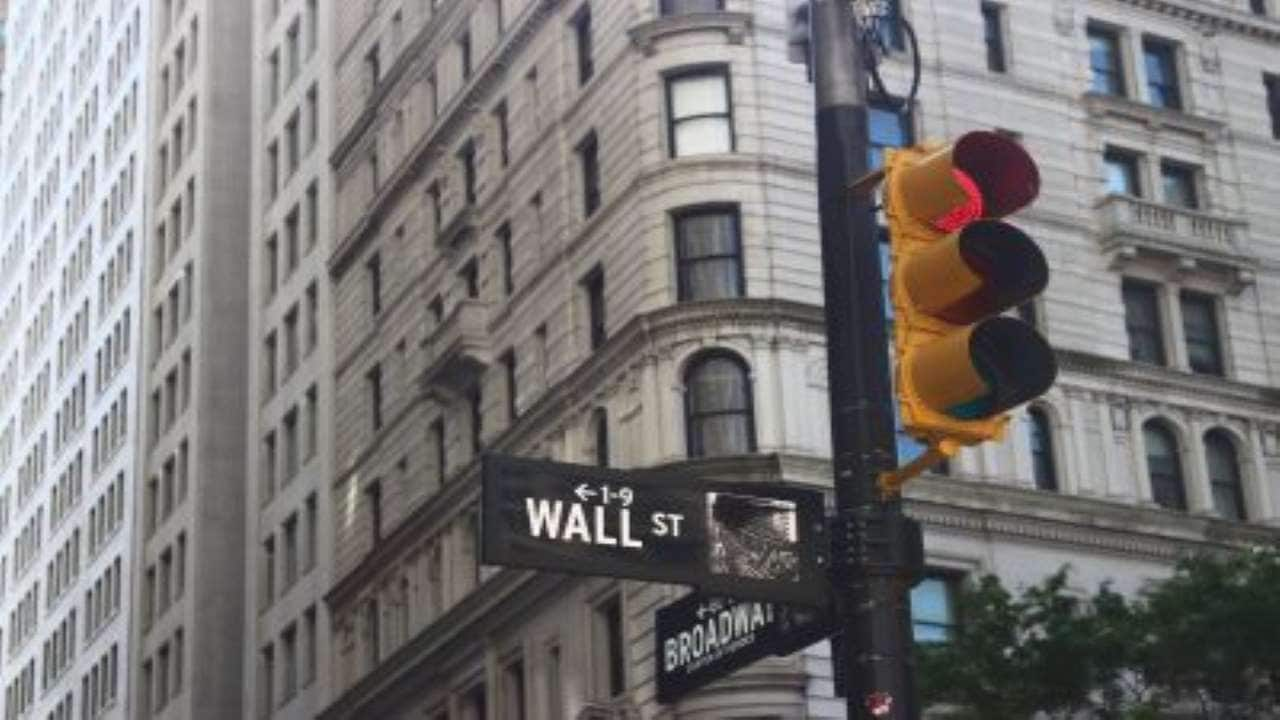
US Stock Market Live Updates: S&P 500 turns positive for 2026 as markets price in Iran conflict cooling
Published on 13/04/2026 11:00 PM
US Stock Market Live Updates: Wall Street opens in red on Monday after Donald Trump ordered a naval blockade of the Strait of Hormuz, following the collapse of US-Iran talks in Islamabad. Losses, however, narrowed as markets steadied.Dow Jones Industrial Average opened 251 points, or 0.5% lower. The S&P 500 and Nasdaq Composite also declined 0.2% each in early trade, indicating a cautious start to the week.However, the S&P 500 and Nasdaq Composite shed losses to currently trade in green. Dow was still hovering near a fall of 250 points. In a Truth Social post, Trump said the US Navy would begin blocking ships entering or leaving the strait from 10 a.m. ET, with support from other countries. The move came after Vice President JD Vance exited talks, citing Iran’s refusal to curb its nuclear programme. Iran, in turn, pushed for control of the strait, war reparations and access to frozen assets.The escalation lifted oil prices. Brent crude rose as much as 9% to near $104 per barrel before easing to above $101. West Texas Intermediate crossed $104 and remained up over 7%–8%.Higher oil prices have revived concerns around inflation and global growth. Iran warned it would target Persian Gulf ports if its energy infrastructure is hit, calling the US move “an act of piracy.”It is pertinent to note that last week’s ceasefire had driven a strong rally, with the S&P 500 gaining 3.6%, the Nasdaq rising 4.7% and the Dow adding 3%. The truce appears to be holding for now, even as tensions persist.Focus now shifts to earnings. Goldman Sachs is set to report Monday, followed by JPMorgan Chase, Citigroup, Wells Fargo, Morgan Stanley and Bank of America later this week.
The S&P 500 briefly turned positive for the year in Monday’s session, marking a sharp turnaround from earlier losses driven by geopolitical tensions.
The index rose about 0.5% on the day, nudging it marginally into the green for 2026 after being down more than 7% at the height of the US-Iran war. The recovery reflects improving investor sentiment as fears around the conflict begin to ease.
However, the broader market picture remains mixed. The Nasdaq Composite and Dow Jones Industrial Average are still in negative territory for the year.
The rebound has been driven by expectations that the economic impact of the conflict will remain limited, with inv
LVMH reported weaker-than-expected quarterly sales, highlighting continued pressure on the global luxury sector amid geopolitical and demand challenges.
Organic sales rose just 1% in the March quarter, falling short of analyst expectations of 1.5%. The company said the ongoing Middle East conflict shaved about 1 percentage point off growth, underscoring the sector’s sensitivity to global uncertainty.
Despite the miss, LVMH pointed to resilience in a disrupted economic environment and flagged a strong start to the year in the US market.
The update comes as luxury players attempt a comeback after a post-2022 slowdown, when aggressive price hikes and shifting strategies pushed some consumers away. While demand from China remains soft, analysts expect growth to recover in the coming quarters as brands recalibrate and try to win back shoppers.
The CBOE Volatility Index, Wall Street’s key fear gauge, climbed back above the 20 mark on Monday, signalling a return of market nervousness after last week’s sharp drop.
The index rose to an early high of 21.58, reversing a steady decline seen after the U.S.-Iran ceasefire. The VIX had fallen sharply through the latter half of last week, dropping below 20 for the first time since tensions escalated earlier this year.
Markets had briefly calmed on hopes that geopolitical risks were easing, but Monday’s uptick suggests investors are not fully convinced.
Since the onset of the conflict in late February, the VIX has seen heightened volatility, peaking above 31 in March. While still below those highs, the latest move indicates that uncertainty continues to linger, with traders bracing for potential swings in the S&P 500.
Existing home sales in the US dropped sharply in March, hitting their lowest level since June 2025 as elevated borrowing costs continued to weigh on demand. Data from the National Association of Realtors showed sales fell 3.6% month-on-month to a seasonally adjusted annual rate of 3.98 million, missing market expectations.
The slowdown coincided with a spike in mortgage rates, with the average 30-year loan touching 6.64% late in the month, according to Mortgage News Daily. While rates have since eased slightly following geopolitical de-escalation linked to the US-Iran ceasefire, affordability pressures remain.
Despite weaker sales, home prices continued to rise. The median price increased 1.4% year-on-year to $408,800, underscoring persistent supply constraints even as buyer activity cools.
Shares of Circle rallied sharply at the start of the week, climbing over 9% as optimism returned around regulatory clarity for crypto assets in the US. The move comes as the Senate reconvenes after a two-week recess, with unresolved discussions on the proposed Clarity Act back in focus.
The bipartisan bill aims to clearly define oversight of digital assets, but negotiations have been held up by disagreements over stablecoin regulation. Still, investors appear to be betting on progress.
Coinbase, a key partner in the USDC ecosystem, also rose more than 2%, reflecting broader sentiment across crypto-linked stocks.
Analysts say the rally is driven by expectations that the bill could soon be taken up by the Senate Banking Committee. There is also growing belief in markets that the Clarity Act could be passed within the year, offering long-awaited regulatory certainty.Donald Trump warned that Iranian vessels approaching the US-enforced blockade in the Strait of Hormuz would face immediate military action, escalating tensions in a critical global oil corridor.The warning came on the sidelines of the blockade’s implementation, with the US aiming to restrict vessels entering or leaving Iranian ports as part of efforts to curb Tehran’s oil exports. Trump also claimed significant damage to Iran’s naval capabilities, while noting that smaller “fast attack” boats had not been targeted.The development underscores rising geopolitical risks in the region, with potential implications for global oil supply and shipping routes through one of the world’s most vital energy chokepoints.
The United States military has officially begun enforcing a “blockade” of the Strait of Hormuz, targeting vessels entering or departing Iranian ports, while maintaining that navigation to non-Iranian destinations will not be disrupted.
The move comes at a time when Iran had been exporting over 2 million barrels of oil per day, with ports largely operational despite existing restrictions. A successful enforcement could significantly curb these exports, tightening global oil supply.
The development has raised concerns over energy markets, with US gasoline prices now expected to climb above $4.25 per gallon as supply risks intensify.
Amazon is leading the rebound among the “Magnificent 7” stocks, rallying sharply to test a crucial resistance zone after its strongest three-day surge in five months.The stock is now approaching a key technical hurdle around the $238–$240 range, which has capped gains multiple times since early 2025, while also facing a broader downtrend from previous highs. This places the stock at an important inflection point, with recent weakness suggesting a potential pause near resistance.A decisive breakout above $240 could pave the way for a retest of all-time highs near the $255–$260 zone. On the downside, the $220–$225 range remains a key support area, aligning with the 200-day moving average and recent buying interest.CNBCBitcoin pulled back to the $70,000 level over the weekend after ending the previous week on a strong note, as geopolitical tensions weighed on sentiment.The flagship cryptocurrency had closed above $73,000 on Friday, gaining around 9% for the week, marking its second straight weekly advance and its best performance since early October.Meanwhile, exchange-traded funds tracking Bitcoin saw robust investor interest, recording net inflows of $786.31 million for the week, the highest since late February.
US equities opened Monday’s session in the red, with the Dow Jones Industrial Average falling 251 points, or 0.5%. The S&P 500 and Nasdaq Composite also declined 0.2% each in early trade, indicating a cautious start to the week.The United Kingdom has said it is “not supporting” the United States blockade of Iranian ports, with Prime Minister Keir Starmer stressing that Britain will not be “dragged into” the ongoing Iran conflict.The remarks come as Emmanuel Macron confirmed that France and the UK will co-host a conference in the coming days aimed at restoring freedom of navigation in the Strait of Hormuz.Macron indicated the initiative would focus on a “peaceful multinational” and “strictly defensive” mission, positioning it as separate from any direct military involvement linked to the blockade.Shares of Williams-Sonoma rose over 2% after Goldman Sachs upgraded the stock to “buy,” citing attractive valuations and highlighting the company’s strong portfolio of retail brands.Meanwhile, Best Buy fell about 4% after Goldman downgraded the stock to “sell.” The brokerage flagged potential downside risks to sales beyond the first quarter, noting that rising memory costs could push up laptop and computer prices, impacting demand.Shares of Fastenal declined more than 4% despite reporting first-quarter results in line with Street expectations. The company posted earnings of 30 cents per share on revenue of $2.2 billion, matching analyst estimates.NewsLive TVMarketPopular CategoriesCalculatorsTrending NowLet's Connect with CNBCTV 18Network 18 Group :©TV18 Broadcast Limited. All rights reserved.