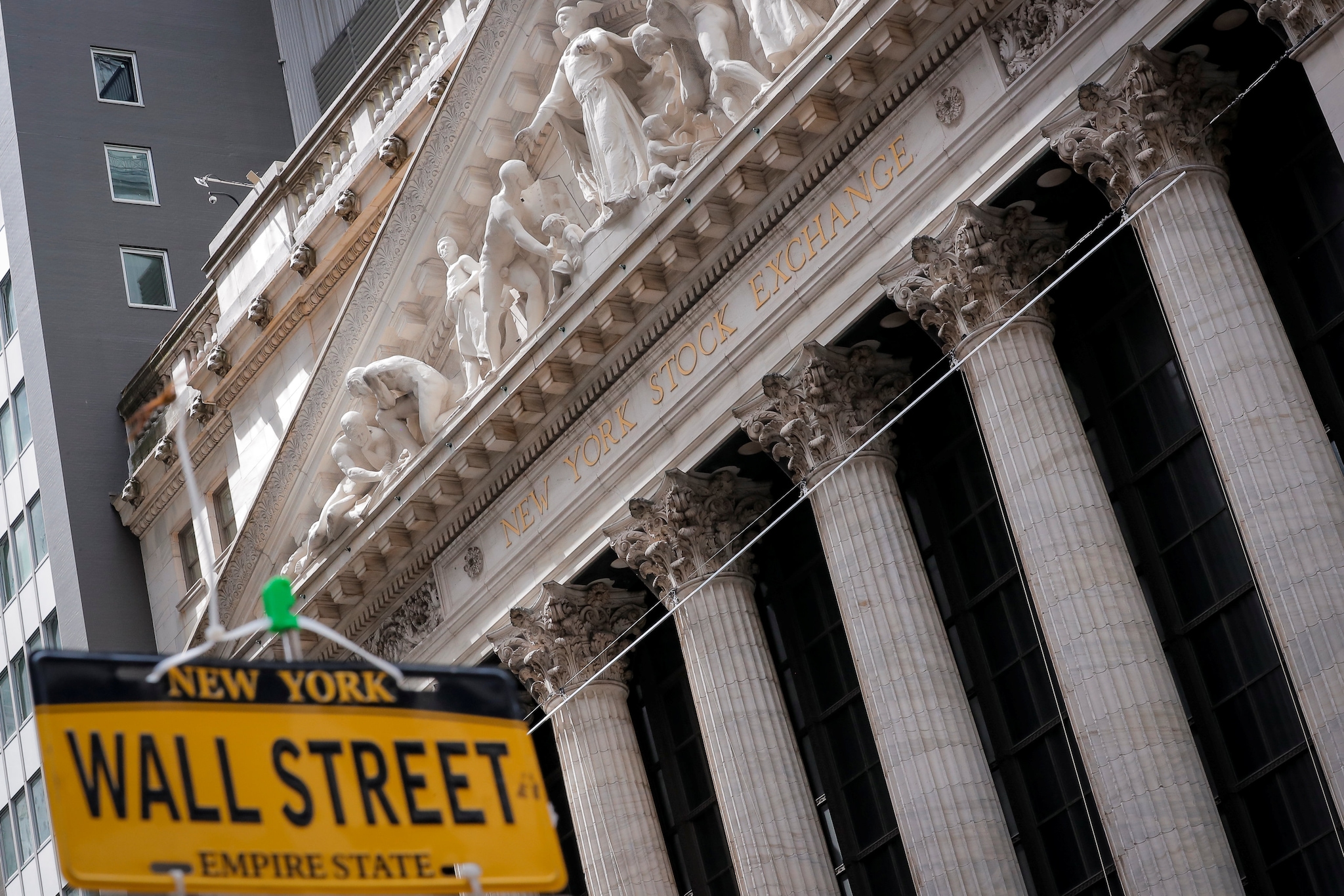
US Stock Market LIVE Updates: Stock futures retreat after back-to-back records; Tesla shares drop
Published on 01/07/2025 06:56 PM
Tesla Inc. Chief Executive Officer Elon Musk has assumed oversight of sales in Europe and the US, leaving deputy and senior vice president Tom Zhu over Asia, following the high-profile departure of Omead Afshar, people familiar with the matter said.
Afshar had been responsible for sales and manufacturing operations in North America and Europe, but the longtime Musk lieutenant left the EV maker last month, the latest senior executive to exit during a difficult time for Tesla as it battles falling sales in most of its major markets.
With Afshar out, Musk and Zhu are essentially divvying up his responsibilities and Zhu, based in China, will oversee Tesla’s manufacturing operations globally, the people familiar said, declining to be identified discussing private information.
Representatives for Tesla didn’t respond to requests for comment.
KKR & Co.-backed venture capital firm Catalio Capital Management gathered more than $400 million for its latest fund, a marginally larger amount than the biotech company raised for its prior vehicle.
This year has been “the toughest, most brutal fundraising climate ever,” Catalio co-founder George Petrocheilos said in an interview. The fund received major backing from current and new investors, including registered investment advisers, foundations and endowments, the firm said in a statement Tuesday.
Venture capital fundraising for biotech firms has dropped significantly from its 2018 peak, partly due to a market correction, according to a recent report from private-market data firm PitchBook. Like other VC firms, those focused on biotech are also constrained by elevated interest rates and a subdued market for initial public offerings.
UniCredit SpA will offer its professional clients a structured product tied to BlackRock Inc.’s iShares Bitcoin Trust ETF that features full protection against losses, as European banks seek new ways to tap into appetite for digital assets.
The bank plans to issue a five-year, dollar-denominated investment certificate linked to the iShares Bitcoin Trust ETF which will offer a 100% capital protection at maturity, according to an internal memo seen by Bloomberg News and confirmed by the bank.
The maximum return is capped at 85% of the ETF’s performance and the minimum investment threshold is $25,000, according to the memo. Bitcoin has gained about 14% this year in sharp contrast to many smaller crypto tokens, which have suffered steep declines.
UnitedHealth Group Inc. and Memorial Sloan Kettering Cancer Center resolved a contract dispute that threatened to interrupt treatment for thousands of cancer patients in the New York City area.
The largest US health insurer reached a deal Tuesday morning with one of the nation’s highest-profile cancer centers. The pact was reached just after a July 1 deadline, meaning Sloan Kettering was briefly no longer in the insurer’s network for about 19,000 patients currently in treatment there.
UnitedHealth said the new agreement with Memorial Sloan Kettering is for several years, without specifying how many.
Health insurers and hospital systems frequently deadlock in negotiations until the brink of when a contract runs out, only to make a deal at the last minute.
Microsoft Corp. has signed a cloud computing deal with the Premier League, a pact that will let the software company tout its AI technology to a captive audience of sports fans.
A five-year “strategic partnership” will see the UK soccer league, the world’s most watched, migrate its “core technology infrastructure” to Microsoft’s Azure cloud-computing service, the company and league said in a statement on Tuesday. The Premier League’s mobile apps and website will feature an artificially intelligent chatbot powered by Microsoft’s AI services, as will the league’s fantasy games.
“This is the future of football,” Microsoft UK chief Darren Hardman said in an interview with Bloomberg Television. “It’s data-driven drama, it’s smarter stats, it’s deeper stories, it’s a better connection of the fan to what’s going on.”
Saudi Arabia-based quick delivery firm Ninja has become the kingdom’s newest tech unicorn after raising around $250 million from local investors, according to people familiar with the matter.
The funding round, led by asset manager Riyad Capital, values the three-year-old company at about $1.5 billion, the people said, asking not to be named as the information is private. Ninja is targeting an initial public offering by 2027, Bloomberg News reported in March.
Representatives for Ninja and Riyad Capital declined to comment.
A portfolio of valuable California properties, including a hotel in the exclusive enclave of Laguna Beach, may be forced into liquidation at fire-sale prices because of a bitter court fight between the owners.
Some of the properties were once valued at a collective $360 million and sales of these assets should cover debt put on them over the years, according to court filings. But a court-supervised sale process has fallen apart because of a fight for control of the company that manages the real estate.
“Each is holding a gun to their own head and saying, ‘Do this, or I’ll shoot’,” US Bankruptcy Court Judge Brendan Shannon said during a court hearing Monday in Wilmington, Delaware. “I am aware of the potential for value loss or destruction.”
A turf war is breaking out in the vast world of digital payments — and the incumbents are suddenly on defense.
Tech firms and crypto start-ups are moving in on territory long dominated by Visa Inc. and Mastercard Inc., powered by a new type of currency — the stablecoin — and a pitch merchants can’t ignore: lower fees, faster settlement and a way to bypass the big two altogether.
It’s a tech threat and a financial threat. Digital tokens, which are typically pegged to the dollar, allow consumers to pay merchants directly from their crypto wallets — without routing payments through a bank or card network. Last year alone, US businesses paid an estimated $187 billion in swipe fees, most of it via Visa and Mastercard’s systems. Stablecoins promise to make that toll much lower, or even obsolete.
“It’s clear that eventually this entire space could be a threat to TradFi providers,” said Christian Catalini, founder of MIT Cryptoeconomics Lab. “But credit card networks aren’t sitting on the sidelines. The card networks will push to work with many stablecoins, so they retain their central role.”
Investors are flocking to the riskiest parts of the US stock market, raising questions about the sustainability of its record-setting rebound and pointing to potential losses for retail traders.
“The second quarter snap-back rally was led by the perceived lower quality baskets — the Dash to Trash,” said Mark Taylor, a sales trader at Panmure Liberum Limited. “This pointed to retail buyers continuing to buy dips aggressively and the pain trade of positioning flipping to performance chasing.”
Bitcoin-linked firms have rallied 78%, while quantum computing shares are up 69% and meme stocks have advanced 44% — all volatile corners of the market where investors are betting on future returns that may not materialise. A basket of highly shorted securities rallied 29%.
Turkey is discussing loosening limits on some commercial loans, according to people familiar with the matter, signalling policymakers are comfortable starting to ease financing conditions.
Raising monthly limits on loan growth to small and medium-sized enterprises is the central focus of discussions, the people said, asking not to be named as the talks are confidential. Banks’ monthly loan growth to SMEs is currently capped at 2.5%.
Saddled with higher spending on loans, some Turkish businesses have been forced to slow production and calls for financing costs to be lowered have become louder. Data compiled by Bloomberg shows the weighted average interest rate for commercial loans in the week ending June 20 stood at 63%.
JPMorgan Chase & Co. and Morgan Stanley are advising clients to buy Turkish bonds and the lira, after the postponement of a court ruling on a key opposition figure offered a reprieve from political risks. Strategists at both banks expect investors to shift their focus to Turkey’s slowing inflation and the prospect for interest-rate cuts, which should bolster markets in the coming months.
“Domestic and external geopolitical risks are fading,” JPMorgan strategists Michael Harrison and Anezka Christovova said in a note, adding that “conditions are in place” for a rates rally over the summer. They recommended clients buy four-year lira-denominated bonds on an unhedged basis, and said they are overweight the lira.
The lira rallied Monday and the yields on local bonds plunged after the court postponed its ruling on a case that could unseat opposition leader, Ozgur Ozel. The case centers on alleged irregularities in the 2023 convention that elected Ozel as chairman of the Republican People’s Party, or CHP, and will now be heard on September 8.
The Trump administration’s tactics to swiftly detain and deport immigrants has businesses and advocates in New York City bracing for a crackdown, even as new data shows fewer arrests than other big cities with large immigrant populations.
More than 1,900 people have been arrested in New York City by federal immigration authorities since President Donald Trump took office, a 31% increase from the same period last year, according to figures obtained by the Deportation Data Project and analysed by Bloomberg. That’s far less than the increases in Los Angeles (112%), Chicago (97%) and Miami (238%).
But there’s an atmosphere of anxiety in New York, fueled in part by suspicions that city officials would increase cooperation with immigration agents and undermine sanctuary protections. “People have no idea if there are ICE vans driving around the city,” said Dave Giffen, executive director of the Coalition for the Homeless, which has worked to resettle asylum seekers in New York.
New York City Mayor Eric Adams reached a deal with the City Council on a $115.9 billion budget, adding new funding for legal services for migrants and more money for early childhood education.
The spending plan for the fiscal year that starts July 1, which the City Council approved on Monday, is the final one in Adams’ first term. The budget is more than $3 billion larger than the $112 billion spending plan the city approved last year, and it comes as the mayor, who was elected as a Democrat, is seeking reelection as an independent in November.
Saudi Arabia is exporting crude at the fastest rate in over a year as the OPEC+ leader presses on with a strategy to recoup its share of global oil markets.
The kingdom bolstered crude exports by 441,000 barrels a day, or about 7%, this month to 6.36 million a day, according to a preliminary analysis of tanker-tracking data compiled by Bloomberg.
The surge comes as the OPEC+ alliance speeds up plans to revive oil production, offering relief for consumers. It shows that shipments through the Persian Gulf and its critical choke-point, the Strait of Hormuz, remain unimpeded despite consequences stemming from the conflict between Israel and Iran, including electronic interference of regional shipping.
Italy’s bond spread over Germany has shrunk to the smallest since 2010 as investors bet that the era of political stability under Prime Minister Giorgia Meloni will continue.
The difference between Italy and Germany’s 10-year yield now stands below 0.9 of a percentage point, down from 1.3 percentage points in April. Back in 2022, the spread was as wide as 2.5 points.
Investors are scooping up Italian debt, buoyed Meloni’s policies and faster economic growth. For years, the bonds came with a much higher yield than other countries in Europe because investors demanded compensation for a tumultuous political backdrop and a mountain of government debt.
Saudi Arabia is exporting crude at the fastest rate in over a year as the OPEC+ leader presses on with a strategy to recoup its share of global oil markets.
The kingdom bolstered crude exports by 441,000 barrels a day, or about 7%, this month to 6.36 million a day, according to a preliminary analysis of tanker-tracking data compiled by Bloomberg.
UK utility Southern Water Ltd. has secured a £1.2 billion ($1.7 billion) equity package from its owners, led by Macquarie Asset Management, a move that could spare the company a ratings downgrade.
The deal comprises an initial £655 million of binding equity commitments with a further £545 million slated for December, Southern Water said in a statement on Tuesday. Discussions ran until the last minute after S&P Global Ratings indicated an equity-raise agreement was needed by the end of June to meet its ratings criteria.
The amount pledged by Macquarie and others is greater than the £900 million announced in February, but it will be provided in stages and a portion will come with conditions attached.
The deal comes as the sector faces widespread public anger over sewage leaks into rivers and lakes throughout Britain. While the risk of investing remains strong, the commitment is positive for Southern Water, which has the biggest investment program in the sector.
Michael Saylor’s Strategy is likely to register an unrealised gain of about $14 billion in the second quarter, putting the once floundering enterprise software maker turned leveraged Bitcoin proxy among the select ranks of corporate titans such as Amazon.com Inc. and JPMorgan Chase & Co.
Unlike the ten or so US multinationals whose operating profits are expected to exceed $10 billion last quarter by generating billions of dollars in sales, the former MicroStrategy Inc. can attribute the eye-popping results to a rebound in the price of Bitcoin and a fairly recent accounting change when it comes to valuing its massive holdings of the cryptocurrency.
Strategy is forecast to post only about $112.8 million in second-quarter revenue from the software business, according to analysts surveyed by Bloomberg News.
When a tariff bill for almost $11,000 arrived without warning, Robert Keeley reached for one of his last financial lifelines and cashed in 1.83 million American Express reward points to pay it.
“It’s like a needle pin holding back a crack in the dam,” said Keeley, who runs Keeley Electronics, a guitar-pedal manufacturer with 35 employees in Oklahoma City.
Keeley’s scramble is part of a broader reckoning for America’s smaller businesses, which are being whipsawed by volatile trade policies. Another blow could land on July 9, the deadline President Donald Trump has imposed on other countries to secure trade deals with the US to avoid higher tariffs.
The Senate killed a controversial effort to prevent US states from regulating artificial intelligence, marking a loss for the Silicon Valley leaders and White House officials who pushed the measure.
Senators voted 99-1 early Tuesday to strip the language out of President Donald Trump’s signature tax legislation during a marathon all-night voting session. The overwhelming opposition came despite widespread support for the pause on state AI legislation from GOP allies in Silicon Valley and White House technology advisers Michael Kratsios and David Sacks.
BYD Co. registered its best month for car sales this year in June, after slashing prices across its range in a move that drew criticism from government authorities and industry groups.
The Chinese carmaking juggernaut sold 377,628 vehicles last month, including 206,884 passenger battery electric cars. That was up 10% from a year earlier, helping to push first-half volumes to 2.1 million units, according to a statement Tuesday.
Rival Geely Automobile Holdings Ltd. Meanwhile, sold more than 193,000 cars in June, a 59% year-on-year increase. The showing prompted Geely to raise its delivery target for 2025 by 11% to 3 million.
BYD’s discounting of as much as 34% across some models in late May may not have resulted in the sales bump it hoped for, and has certainly come with other costs.
Watch this space for all the live updates on the US Stock Market.
Stock futures fall to kick off the second half of 2025.
Euro zone inflation edges higher, hitting ECB’s 2% target in June.NewsLive TVMarketPopular CategoriesCalculatorsTrending NowLet's Connect with CNBCTV 18Network 18 Group :©TV18 Broadcast Limited. All rights reserved.